June 24, 2009

Stunner In South Africa

Many sports fans in the United States have little idea of just how big it is that the U.S. national team is in the finals of the Confederation Cup. We lost our first two games against powerhouse Brazil and the defending world champions, Italy.

In order to edge Italy out for the right to advance to the semifinal game, we needed to beat a strong Egypt team by three or more goals, and Brazil needed to beat Italy by three or more goals. The chances of that happening were roughly one in a thousand. But it happened.

For that, we got the privilege of going up against Spain. Spain, the best team in Europe. Spain, the heavy favorite to win the World Cup next year. Spain, who hadn't lost a match in 35 meetings, since the team formed in more or less its current incarnation.

Well, tonight we won, 2-0. Maybe Spain can't play well in cold weather (it's the dead of winter in South Africa right now).
This is the first time the U.S. national team has progressed to the finals of any international soccer tournament; Brazil and South Africa play for that tomorrow. I could have sworn I saw somewhere that winning the Confederation Cup generates an automatic bid to the World Cup, but maybe I was wrong. In any event, this is by far the best the U.S. has ever done, and it's done it by somehow getting past three of the four best teams in the world. (Germany is not in the Confederation Cup.) I'm kind of rooting for South Africa tomorrow.

Hope It Was Worth It

Man, that's one expensive trip Mark Sanford just took to Buenos Aires. I don't mean the airfare, hotel, and car rental. He'll be paying that price in the future.

June 22, 2009

No Jokes Here

D.C. Metro crash -- very bad news. At least nine people dead and fifty seriously injured. I've got many friends who live in D.C. and they all seem to be okay, for which I'm grateful. But that's no consolation to the families who lost their loved ones and breadwinners today and of course my heart goes out to all of them.

People die in auto accidents all the time and we don't seem to think much of it. Certainly it's not newsworthy on a national level. But that doesn't really make sense. Dead is dead, whether it's by way of a commuter-rail accident or an auto versus auto collision. But something about mass transit deaths seems to be more horrific. The victims had absolutely no ability to control what was happening; they just got on the train to go home from work, the same as they do every day, and then this happens. Again, for a lot of people, there isn't a lot of control or choice in an auto accident, but that still somehow feels different.

Well, maybe it doesn't have to be rational.

Soldiering On

Iran falls into national paralysis as the nation reels from apparently-corrupted elections. Initially, there's little way for us in the West to tell if the elections were less democratic than expected, but over time we learn that the returns came in way too fast and many cities reported more votes counted than there were people registered to vote, and that pretty much can't help but look suspicious. The candidate who officially lost the election, Mousavi, issues statement after statement denouncing the election and the government of the Islamic Republic. Ahmadinejad sends out thugs to break up the resulting street protests. Mousavi's denouncements continue, the protests continue. Then, Supreme Leader Khameni tells Mousavi, "Toe the line, bitch."* Mousavi replies, in effect, "Or what? You gonna kill me? Dude -- you think I'm more dangerous to you alive... or dead?" Just then, a young woman is shot to death by one of Ahmadinejad's thugs and the event is captured on a cell phone's camera and tweeted all over the world. Gasoline, meet fire.
All this has been a little bit overwhelming to see. I'm not entirely sure that the importance of this youth revolution in Iran is of such surpassing importance. The young voters are not protesting the institutions of the Islamic Republic. They are not protesting against theocracy, at least not yet. They are mad because they thought their guy was going to win and it looks like they got the election stolen from underneath them. So far the clerics who ultimately run the show there haven't given them any reason to be worthy of trust. If the kids were out in the streets demanding a secular democracy, I'd be very excited. Until then, this really looks to me like election violence as we'd see pretty much anywhere. It would be really cool if Iran stopped being a theocracy but at this point it doesn't look to me like that's in the cards.
President Obama, meanwhile, takes his daughters out for ice cream on Father's Day, and seems to be concentrating on a health care reform package of at-best questionable wisdom and at-most dubious affordability -- so much so that even Democrats are starting to be concerned about the price tag.
Well, what's he supposed to do? The U.S. and its leaders have been demonized for more than a generation in Iran. Whatever we say or do, Iranians reflexively want to do the opposite. And we're a huge political bogeyman against whom the worst of the bad guys over there rally their minions. Silence is about the best possible policy imaginable from the White House. I may not be real fond of the health care reforms coming down the pike, but give the President the credit he's due when he's making the right call and keeping his mouth shut on this one. Maybe he should be concentrating on...
As the nation sinks further into crushing debt, a preview of what's to come appears to be playing out in Sacramento. The nation's largest state is still far away from making the additional cuts and tax hikes needed to solve what has now grown to a $23 billion budget deficit. That's a deficit on the order of what the United States had to deal with as deficits -- within living memory. Ultimate cuts are clearly going to be made in law enforcement, education, social welfare, and infrastructure. There is talk of a constitutional convention to re-structure the state government from the ground up.
Well, I've been saying for a long time that we need to make cuts and that they're going to be painful. I'm of two minds about the idea of a constitutional convention -- on the one hand, yeah, we clearly need something radically different than what we've got right now, but on the other hand, what evidence is there for the proposition that a convention be any better-equipped to solve the problems of the state than the Legislature is right now? Who gets to pick the delegates to the Convention, anyway, and if it's going to happen, where do I sign up?
Oh, and the mayor of Los Angeles will not be running for Governor in 2010. Not that I blame him; I wouldn't want the job, either. Tom Campbell and Meg Whitman have both got to be insane if they think they stand a snowball's chance in Death Valley of winning the general election. It'll either be San Francisco Mayor Gavin Newsom or Attorney General (and former Governor) Jerry Brown.
What? Didn't I say a year and a half ago that it was the 1970's all over again? Huge budget deficits, revolutions in Iran, disco music, a popular Demcoratic President unable to rein in a runaway liberal Democratic Congress, teenagers with really bad shaggy haircuts and strange clothing, inflation, politicians arguing about abortion and gun control, massive pop-culture resentment to the previous Republican Administration, John Travolta a major star falling into obscurity, unemployment, and tiny unattractive cars -- and it looks like Jerry Brown is going to be the Governor of California. Anything I miss? Oh, yeah, this time around no one's talking about the metric system, other than now everyone knows how much soda you get in a two-liter bottle.
South Carolina's governor, a widely-touted Presidential candidate in 2012, vanishes. No one's seen or heard from him since Thursday. His wife has no idea where he is, but she says she's "not concerned," he's just "recharging" after a tough political battle. His political enemies are ready to start drawing blood. His bodyguards have, well, some egg on their face. And his Presidential prospects are at serious risk.
If the guy is sane, he's looking out at world events and looking ahead to the debt the country will be saddled with from 2013-2016, and the bizarrely high level of popularity President Obama enjoys despite the Carter Administration-like problems that are emerging during his Presidency. I'd be on a flight to Vegas, saying "F*@% that noise. You want it in '12, Sarah Palin? It's all yours. I try and do the right thing and get stabbed in the back by my own party? No thanks, I'll take wall-to-wall hookers and desktops full of blow instead of dealing with this government crap. Oh, what, my future? Shit, even Elliot Freaking Spitzer's making a comeback, so maybe I'll just grab me a room at the Venetian, have them send up a baseball steak medium rare, a fifth of Jimmy Beam, and a brunette. I'll come back when I'm good and damn ready to."

...Oh, wait, he's hiking the Appalachian Trail? Damn, that's not nearly as interesting as what I wrote. It's not even in South Carolina at all.
Pat Buchanan was the keynote speaker at an English-only event. The banner misspelled the word "conference."
Sometimes these things just write themselves. In fact, no one would have paid much attention to the English-only conference if it hadn't been for the amusing mistake.
So that's my news roundup from the past four days or so.
Truth be told, it's exhausting keeping up with current events. I've considered putting the blog on hiatus for a week or two because I need to recharge my creative batteries and focus on some other projects instead. Hell, if Mike Reynolds can go for three months doing nothing but a squib bragging about referring to "sport peppers" in a British newspaper, then damnit, I can take a week off, too. You don' t owe us anything, but we miss you, M. Takhallus.

* An admittedly loose translation from the original Farsi.

Publishers Clearing House Sweepstakes Sells Some Strange Stuff

So we got our entry for the Publishers Clearing House Sweepstakes. Mostly, this contains a tremendous amount of advertisements for a tremendous amount of crap that no one wants and a tremendous number of magazines that you are unlikely to want to read. And if you want to enter the sweepstakes without actually buying any of this crap, the entry form still makes you have to pick something from the approximately fifty slips of filmy, slick paper advertising all of this crap and say that if you were going to buy something, this would be it. Naturally, my eye was attracted to the inserts pictured to the left.

Hmm. Thinly-disguised "instructional" pornography, or eighteen ounces of pomegrante-flavored jelly beans. Both available for the same price of $15.96 (plus S&H). If I were going to buy something from Publishers Clearing House in exchange for the infinitesimal chance of winning one of their fantastic prizes, which of the two would I pick?

Notice how it appears you can get these things for only $3.99 each. That's until you read that it's "4 easy payments" of $3.99 for your product selection. Which makes me ask myself -- "Self, do I really need to buy jelly beans on credit?" Ah, but I still haven't revealed whether I picked the jelly beans or the DVD.

Well, seeing as a human being (specifically our postal carrier) is going to be inspecting the results of this choice, of course I picked the jelly beans. But just think of how interesting our mail could have been otherwise. Who knows, maybe we'll get both! What kind of demographic choices pop up on marketing computers when you order both porno and candy at the same time?

It's A Fine Line Between Discretion And Cowardice

Scene: [The office, by the coffee machine. Morning. ENTER Transplanted Lawyer and a Co-Worker.]

Transplanted Lawyer: "Hey, 65-year-old co-worker, I see you got a tattoo on your forearm this weekend! That's very cool!"

Co-Worker: "Yeah, Younger Co-Worker gave it to me over the weekend! See, here's the cross, on top of the Star of David, and behind them, the flag with the original thirteen stars. I didn't want to get all fifty because she did them last and it was starting to hurt."

TL: "I think thirteen would have been enough! The bruising doesn't look too bad."

CW: "No, and I usually bruise up pretty good. But it was kind of fun."

[ENTER Paralegal]

Paralegal: "You know, I've thought about getting a tattoo myself. But I'd want an anklet, something that looks like an anklet. Isn't there a rule here at work about no visible tattoos?"

CW: "Well, no one's said anything to me about that. If they want me to roll down my sleeve, I'd do it at work, but I got this tattoo for a reason."

TL: [Waves hands and shakes head at Paralegal in "no-no-no-no-no-no" gesture. Is ignored.]

PA: What was that?

CW: [Progressively faster and louder] "Our President really pissed me off when he said that this wasn't a Christian nation. So I said--"

TL: [Interrupts] "Hold it, hold it. We need to stop here."

PA: [To TL] "Huh?"

CW: [To PA] "What I said was, the President said this wasn't a--"

TL: "This is the part of the conversation where everyone can still go back to work happy. I'd like it to stay that way."

[All pause for a beat.]

CW: "Oh. I mean, this is my way of saying --"

TL: [Interrupts again] "And you're absolutely entitled to say it. I'll just head on over to my office now and get back to work on that motion." [EXITS.]

[CUT TO NEXT SCENE]

Bear in mind two things:

First, TL is not a partner of this firm but does have quasi-supervisory authority over both CW and PA. This means he can tell them to do things, and they're supposed to do them. But TL does not have the independent authority to impose discipline or dispense rewards, although he is known to have the ear of those who do hold that authority.

Second, no one actually articulated an opinion on the "Christian nation" issue. Some might say this is a distinction without a difference, since at least as to the basic issue, it was perfectly obvious how both TL and CW felt, and it should have been obvious that both had very strong feelings.

Now, do you think TL was...
A) ...exercising appropriate discretion and wisdom for a workplace, or
B) ...passing up a good opportunity for a productive exchange of thoughts, or
C) ...shrinking needlessly from a confrontation?

Follow-up question: If you think TL did the wrong thing here, what would you have done in his place?

June 20, 2009

Real Life Badasses

Here's fifteen real people who did stuff just like big-time heroes from the movies. Only more impressive in some cases. Not all of them are attractive like movie stars. But it's somehow more interesting to know that people have really done extraordinary things than it is to watch Hollywood's version of them.

See also Badass Of The Week.

June 19, 2009

Brilliant. Absolutely Brilliant.

Dr. Seuss explains the Iranian election protests.

(Source here.)

Literal Video: Head Over Heels

Theme And Variations

It's almost as if neglect of the responsibility of filing tax returns (and paying taxes) is a qualification for service in the Obama Administration. I can't say that this is a "take-a-swipe-at-Democrats" thing because I don't recall an unusually-high number of Clinton or Carter appointees who had failed to file or pay their taxes. I certainly can't remember an unusually-high number of Republican appointees in the past three GOP Administrations. Before that, my political memory is somewhat hazy -- the last prominent Republican politician I can think of who got in serious tax trouble was Spiro Agnew.

Yes, that was some pretty serious tax trouble the Vice President got into back in the day. It wasn't as if Agnew could say, "Oops! My bad. Here, let me file an amended return and pay a penalty, that'll make it a-a-a-a-a-allll better." This most recent Obama appointee can get out of her problems in this more easy, less punitive way. Which is the way it should be -- if someone is willing to make it right with the government financially, and pay a heavy but not crushing penalty as a deterrent to others, that ought to be the end of pretty much any tax problem.

But somehow, Obama seems to be picking a lot of people like this. This is particularly galling, of course, given that this Administration (made up of a lot of people who couldn't be bothered to fill out a return much less write a check to pay their legally-required share of the burden of government) is very soon going to have no choice but to ask the rest of us to pay more than we have been.

If we had a consumption-based tax regime instead of an income tax, of course, none of this would have ever been a problem. I'm not a big fan of Mike Huckabee on a lot of things, but this was a pretty good idea he got floated out into the political dialogue. I hope other politicians -- of both parties and a wide variety of ideological stripes -- look at it seriously.

Schizephrenic Schwarzenegger

I don't get it.

First the Governorator says he likes same-sex marriage.

Then, he says that he won't let the City and County of San Francisco issue same-sex marriage licenses because Prop. 22 was the decision of the people of the state, whether he liked the peoples' decision or not.

So far, I can kind of see that. "Yah, I like the gay marriage but that's my personal preference and the people disagreed with me, so I have to do what the people want." I can see that.

But then, the state Supreme Court overruled Prop. 22 and said that gays can get married after all, Prop. 22 be damned. And the Governator says he accepts the Supreme Court's ruling and congratulates gay couples.

And then the people pass Prop. 8, amending the Constitution, and again, Schwarzenegger's attitude is all "okay, that's how they want it after all, so that's what the people said."

But then the latest passive reversal from the Governor's office is this -- he sees that Attorney General Jerry "Moonbeam" Brown supported the plaintiffs in Perry v. Schwarzenegger, urging the overturn of Prop. 8. And yesterday, Schwarzenegger himself elected to not oppose the plaintiffs. This means that there are no state officials who are defending Prop. 8.

I'm not complaining; it pleases me to see moves that make it easier for same-sex marriage to become a reality here again. But the people amending the state constitution is not insignificant, and that's important, too. Attorney General Brown is taking a stand that there are federal rights violated by Prop. 8. At least he's taking a stand, even if he isn't defending the state in his capacity as the state's top lawyer. If Schwarzenegger joined Brown, that would be his position. Or, Schwarzenegger could take a position consistent with his statements that regardless of his personal appearance, his intent as a public servant is to fulfill the desires of the people and seek to uphold the law as written. That makes sense, too.

But the passivity is maddening. To be sure, the Governor's top priority has to be getting the state's finances back on track -- but at the same time, the issue is of great importance to a lot of people, on both sides of the issue. It's disappointing at best to see him ducking the issue completely.

June 18, 2009

A Bite At Some Low-Hanging Fruit, Namely, The Arrogance Of A California Democrat Holding Public Office

I'm hearing slow burn here in my elected representative's voice:

Apparently, she Senator Boxer didn't realize that "Ma'am" is a formal title which military people call women who outrank them in the hierarchy, the equivalent of using the honorific "Sir" to address a man. Or maybe, she Senator Boxer let that little factoid slip her mind. Seems to me that he was being respectful of Senator Boxer by using the phrase "Ma'am." I know that there is a way to use a phrase like "Sir" or "Ma'am" to convey condescension, but I'm not hearing that in the clip; it sounds like he was trying to answer her question in good faith.

It also seems to me that in the U.S. military, a star on your shoulder signifies something more than a reward for perfect attendance and good penmanship, so it's not as if the General himself is insensitive to title and honorifics. And he's earned a right to be given a degree of respect himself. He might have reason to believe that he was midly disrespected by, um, his interlocutor, She-Who-Must-Be-Titled.

I've little to add to this well-drafted blog post from the Christian Science Monitor describing the incident, including the apt reference to South Park. But I also would like to take the time to find a clip of the "shopping on Rodeo Drive" scene from Pretty Woman in which the snooty shopkeeper asks Richard Gere if everything is going well and he says,"We're going to need more sucking up, please. Not me. Her."

A Cooler, Wetter Earth

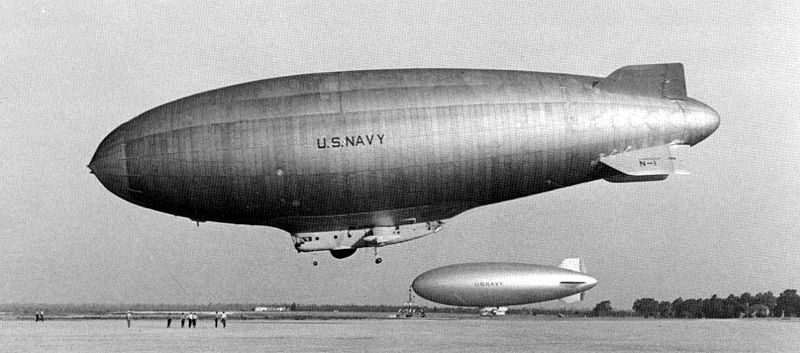
From two separate sources on the same day -- news that we possess, right now, the technological ability to reduce global temperatures by several degrees. The Wall Street Journal and The Atlantic both discuss two proposals -- the first and apparently the more interesting one being the distribution of sulfur dioxide into the stratosphere, mimicking the effects of a major volcanic explosion. The second one is the creation of a fleet of ships that would churn and spray ocean water into the atmosphere, creating increased evaporation and increased cloud cover.

Several caveats, and both articles forcefully include the most important one -- this would not be a fix for global warming, only a band-aid. The fix is the reduction and control of industrial processes, however that is accomplished. Fewer pollutants have to make their way into the atmosphere, no matter how many zeppelins we use to distribute sulfur to the stratosphere and no matter how many ships churn up seawater. Unfortunately, you have to read the whole articles in order to get to that point because both writers and both editors chose to put this information towards the end.

But the good news is, we don't have to cook ourselves to death just yet. And as time passes we may think of newer things to do or find cheaper ways to get the job done. The methods discussed would be expensive but (from a governmental or inter-governmental scale) not impossibly so.

From an expense and political angle, the seawater option seems more interesting than the zeppelins. We could devise ways to retrofit existing vessels to do the job while they are engaged in other kinds of activities -- if every cargo carrier in the world churned up clouds in their wake, while moving our goods around the planet, that would apparently be enough to reverse mean global temperatures to what they were in the 1950's. It's also probably more politically salable because it doesn't involve strange-looking hoses shooting fifty thousand feet into the sky and belching sulfur into the environment we're allegedly trying to protect. Retrofitting all these ships would take some time and money, and presumably would be subsidized by the government(s) and benefactors funding the project.

Making a fifty-thousand-foot long, gas-impermeable hose would be a challenge from an engineering perspective. The hose would have to be damned strong -- strong enough, probably, to anchor the zeppelin to which it would be attached, and still be flexible enough to handle the swirling winds of the lower and middle atmosphere. Whatever sheaths the skeleton of the hose would need to be, again, both strong and flexible while not allowing the gas inside to escape. But it doesn't seem like the sort of thing that engineers would be unable to get done. The real problem would be fixing the hose when something breaks on it, especially above helicopter-accessible altitude.

We'd also have to make our air traffic control practices significantly more complex in order to prevent aircraft and spacecraft from hitting the hoses and the zeppelins. Again, this is more demanding than what we're doing now, but fairly obviously within our reach if we were to really try.

Besides, hoses twisting their way into the sky just look creepy, like something from The Matrix.

Satellites would become somewhat less useful with increased cloud cover. Many satellites do not do things for which visibility is an issue -- television relays, for instance, operate at a frequency for which visible light matters. But observation and weather satellites do use optical data of the Earth, and if we cloud up our skies, they will be less useful. One of the unintended side-effects of these ideas would be increased use of reconnaissance aircraft, both for military and governmental purposes as well as for scientific and other "peaceful" sorts of activities. Reconnaissance aircraft are, however, quite expensive to fly, even as compared to other sorts of air traffic, and there is nothing other than petroleum-based fuel that can effectively power an aircraft.

Increased cloud cover would also result in increased rainfall. From where I'm sitting in a state savaged by a seven-year drought, more rain sounds pretty good. For places watching their glaciers and snowpack recede -- things that are necessary to keep enough fresh water in their ecosystems -- that also sounds pretty good. But if I were in places like Bangladesh, portions of the American and Canadian midwest, which are prone to very destructive flooding every couple of years, increased rainfall would sound like a significant threat.

On the other hand, increased rainfall and snowfall would mean increased access to fresh water globally. Water is life, and more rain means more crops -- and less reason for countries to intrude on one another to get the water. It's not hard to imagine that wars will take place, this century, for control of fresh water. Some people believe that China is acting the way it is towards Tibet (that is to say, incorporating it into metropolitan China, sometimes forcefully and in a way destructive of Tibetan culture) in order to make sure that it controls the fresh water sources in the northern Himalayas and the Tibetan plateau -- China has a billion people who need to drink and its primary agricultural product is rice, possibly the most water-intensive crop available. If there were not a perceived need to protect this source of water, the PRC might be more willing to permit Tibet the status of a semi-autonomous region like some other provinces in its northwestern deserts.

The phenomenon of global warming is real enough. The causes of it are as-yet indeterminate but likely to be based in industrial and/or vehicular pollution. Sulfate-spewing stratospheric zeppelins and cloud-seeding sea vessels are not the answer. And they would have indirect consequences, which I've only explored a little bit here. But they might buy us time to solve environmental problems while we work out how to balance our economic needs with environmental imperatives.

Pretty Much The Least He Could Do

Yesterday, President Obama signed an executive order extending just-barely-non-trivial benefits to same-sex couples employed by the Federal government. It's better than nothing, but it's hardly treating a same-sex couple equally with a married opposite-sex couple.

Which is why the population intended to be politically mollified by this gesture, gays and lesbians, are the ones griping most loudly about it. As well they should. They were promised an effort to repeal DOMA and inclusion as a protected class in the Civil Rights Act. What they're getting is allocation of housing for overseas job postings.

President Obama says this is only "one small step" but has yet to articulate anything resembling a plan towards a multi-step approach to giving these Americans the same treatment from their government which their heterosexual peers all too often take for granted.

June 17, 2009

A Newly-Minted Mediator's Reflections On Negotiation Training

I've just completed a mediator certification program and now I, like hundreds if not thousands of other lawyers around Los Angeles County, am a certified mediator. My name will be appearing soon on computer-generated lists of people who handle various kinds of cases and I will have to volunteer three hours a month to mediate some local cases.

In fact, the mediation school is excellent training for a litigator. There are some very good insights into how negotiations work, both from a technical and psychological perspective. I have never had a negotiation that proceeded along the lines described as a "traditional" sort of haggle, but I have had several that proceeded along the general pattern -- and I suspect I could have had better results, or at least had more control of the situation, if I'd understood not only the formal framework but more importantly, how the particular negotiation I was in had deviated from that framework. For that alone, the training was well worth my time.

Now, the real value here is in the fact that as a mediator, I can charge a premium rate, and the volunteer mediations are the manner in which those services are advertised. The next challenge will be to create a series of appropriate documents and procedures to get this new part of the practice set up properly.

Still unanswered, however, is the question of how to deal with the guy who says "It is not enough that I win. You must lose." I think there are a lot of people out there who are strangers to confrontation, people who have avoided confrontation all their lives. When it comes and smacks them in the face and they can no longer avoid it, they have no other way to deal with it other than to completely demonize their opponent, no way to understand the conflict other than as a deeply personal and potentially bloody and life-threatening fight. They turn into sadists. I still don't know, and no one could tell me, how to get a sadist to compromise.

And an otherwise-excellent program was marred by the suggestion that resolution of conflict is facilitated by getting the parties to talk directly to one another, to explain how they are hurting as a result of the dispute and the resulting conflict -- the idea that this will make fundamentally good people see one another as fundamentally good, build rapport and empathy, and make them more likely to want to compromise and work with one another. I scoff at this idea because far too often, I have seen people scoff at their adversary's pain. They want their adversary to be hurt, they like it. For many people -- not necessarily even the ones who turn sadistic -- measuring their adversary's discomfort is an indication to them of their own strength, their own progress towards realizing their own objectives.

Figuring out how to break through this is something that I rather strongly suspect will take experience rather than education. In the meantime, a good nuts-and-bolts training on what happens most of the time when people haggle is a very good background. (You'd think they would teach more of this sort of thing in law school, but no; all too often law students wind up in useless specialty classes like "The Law Of Prime Numbers" or "Intermediate Arboreal Law.")

I suspect a good number of the cases I'll have to handle, at least on a volunteer basis, will be soft tissue personal injury cases. Those are generally not hugely emotional and are driven not by the parties but rather by the attorneys and insurance adjusters. That's a process of getting them to first make reasonable offers favorable to themselves and then working through the dance of direct numbers negotiation, which is really an exercise in patience and in discerning between real and feigned frustration on the part of the negotiators.

Seriously, I think most lawyers should take a class like this and the reason they don't is hubris. Very few of us have actually done this. None of us are so good at what we do that we can't benefit from learning other people's perspectives. None of us are such good negotiators that an abstract understanding of how negotiation works would not be profitable. And if you think you're already so good at it that the class would be a waste of your time, then chances are very good that for a good part of your career, you've been leaving a lot more money on the table than you think.

See What Happens, Republicans!

Moderates respond well to messages of fiscal conservatism, when they are devoid of social authoritarianism. The appropriate response to this revelation is not to explain why moderates should become more conservative.

June 15, 2009

Iranian Democracy

Just a few quick thoughts on the elections in Iran.

First, has it occurred to anyone that maybe Ahmadinejad actually won? That the results are genuine? This doesn't even seem to have been considered as a possibility in the western media. That doesn't mean I doubt for a second that the mullahs wouldn't rig the election or that Ahmadinejad wouldn't, either -- but just because they would do it doesn't mean they had to, or that they actually did.

Second, and on a related note, the irritating thing about democracy is that sometimes voters make the wrong choices, for the wrong reasons. Deft politicians are able to sway voters to support them based on appeals to emotion rather than appeals to their self-interest, and that's true here in the U.S. as well as Iran and anywhere else. Democracy was a great way for the Palestinians to govern themselves until Hamas won the elections.

Third, we in the west wanted Mousavi to win, and to try to bring reform to Iran so badly that we have almost certainly projected our desires onto our willingness to see reality with a clear eye. We want very much for the young people in Iran to take action, seize power, and open their nation up to the west so that it can become a more responsible member of the community of nations. That doesn't mean it's going to happen.

Fourth, brutal dictatorship does not necessarily mean an impoverished and brutalized public. Iran has been doing pretty well for twenty-five years -- sure, we believe that an alternative path could be even better for it, but it would not be unreasonable for the man on the street in Tehran to look around his circumstances -- he likely has a job that pays enough money for him to keep a roof over his family's head, put good food on the table, keep gas in his car, and see periodic demonstrations of national pride and power -- and think, "You know, it could be a whole lot worse." High demand for petroleum in the industrialized west is the principle reason why Iran is prosperous despite its oppressive and theocratic government. As long as that is the case, it will seem safer to many Iranians to simply go along with things in order to get along as they have been.

Finally, suppose there was election fraud. Really, so what? Everyone knows that a council of clerics holds the real ultimate power in Iran, that the alliance between the religious institutions and the military is the force that keeps that country's status quo going. The more or less democratically-elected government is entrusted with a variety of tasks and given varying amounts of latitude to do a variety of things -- but it is always kept on a leash. In Ahmadinejad's case, the lease is long and slack, but do not think for a second that it's not there. The self-appointed, unelected power brokers exercise veto power over anything that the government does as a practical matter, so even if Mousavi had won or somehow invalidates the results of the maybe-it-was-maybe-it-wasn't-stolen election, there's only going to be so much he could do anyway.

So while Iran moves into its third day of post-election violence and government crackdowns -- eerily reminiscent of China's crackdown on its pro-democracy movement twenty years ago -- we in the west can really only stand back and watch Iran try to solve its own problems. The Iranians do not want our help, they have sufficient resources to resolve their situation on their own, and if we don't like how they do it or the result they settle on, well, they have their own country so their response to us will be, in so many words, "Tough noogies. What are you going to do about it, invade us?"

We can't do that, and they know it, so that leaves us with only the ability to cluck at them disapprovingly. Which, as it turns out, only plays into the hands of the people we would prefer didn't hold power there in the first place.

Sports Morning

1. Why doesn't the NHL time its playoff schedule so that they are separated from the NBA playoffs by several weeks? Haven't they figured out by now that putting the Stanley Cup finals out in head-to-head competition with basketball finals is a loser move for hockey?

2. At 11:300 today, the U.S.A. plays Italy in a pre-qualification round for the World Cup. U.S. versus Italy leaves me deeply conflicted. It's too bad they can't both win.

June 12, 2009

For Shame, Mr. President

In the first of a rash of federal lawsuits filed against the federal Defense Of Marriage Act (1 U.S.C. and 28 U.S.C. 1738c) has just been made the subject of a strongly-worded motion to dismiss filed by the United States Department of Justice. This is not the high-profile case filed by David Boies and Ted Olson (called Perry v. Schwarzenegger) but rather a case involving a gay couple who were married under the pre-Prop. 8 Marriage Cases law, which means that under California law, they still are married. Note also that the brief (linked below) is signed by political appointees of President Obama.

The U.S. Attorney has argued that indeed, these men are married under California law, but that doesn't matter a bit in Federal court because DOMA prohibits the Federal government from recognizing the state-law proclamation that they are married. This represents a reversal of position from President Obama, who in his campaign promised to push for a repeal of DOMA:
I support the complete repeal of the Defense of Marriage Act (DOMA)– a position I have held since before arriving in the U.S. Senate. While some say we should repealonly part of the law, I believe we should get rid of that statute altogether. Federal law should notdiscriminate in any way against gay and lesbian couples, which is precisely what DOMA does.

Well, that's not what his Administration argued in court today. Today, lawyers acting at his behest argued for the Court to uphold DOMA, and did so in fairly strong terms, terms which wpuld please Prop. 8 supporters:
  • DOMA is Congress exercising its powers under the Full Faith and Credit Clause, not a violation of it.
  • DOMA was not passed as a result of discriminatory animus towards gay people.
  • DOMA is non-discriminatory because it still allows gay people to marry people of the opposite sex.
  • DOMA is justified because it's okay to have laws against marrying children and prohibiting incest.
  • DOMA is consistent with the Equal Protection and Due Process clauses, Roemer v. Colorado and Lawrence v. Texas notwithstanding.
  • DOMA saves the Federal government money by restricting the scope of Federal benefits provided to married couples.
  • There is no constitutional right of gay people to marry one another; any contrary analogy to Loving v. Virginia is not well-taken.
Don't believe me? Read the brief here. About the only thing I can say in DOMA's defense, myself, is that it seems to be deferential to the states on a matter that is traditionally left to state law, and therefore presumptively appropriate from a federalism point of view. Which is not an insignificant concern, but in fact DOMA is about as nationalised as a law can get. What happens when a state (like, say, Iowa or New Hampshire) adopts same-sex marriage? Doesn't deference to state law and local political decisions made under a state's plenary police power compel the Federal Government, under the Tenth Amendment, to recognize that marriage as valid?

And why is he doing this? The claim is that the Department of Justice is required to defend the law regardless of what anyone in the Department or the White House thinks about it, and the President wants to see Congress repeal DOMA rather than eschew his duty as the chief executive mandated by Congress with enforcing the law as written. This, however, is complete bullshit. Administrations of both parties and a wide spectrum of political beliefs have taken positions that various laws were unconstitutional and urged the courts to strike them down as such.

I don't know how else to say this. Barack Obama is not a friend of gay people. He doesn't care about them and knows he doesn't have to do anything to gain their support. He takes their political support for granted, because he knows that the Republicans have made themselves so odious to gay people that they'll never throw their political support there. Which, of course, is a gift Republicans have given Obama; he's simply using that gift he's been given. About all he has to do is say nice things about gay people every once in a while, and blame Congress for not repealing DOMA the way he asked it to (despite arguing that it should be upheld).

If a Republican were to come along and say "I think that leaving the decision to the states means just that, and the Federal government ought to defer to the states on this issue, whether it's for gay marriage or against it," that would be a vast improvement from a same-sex marriage rights perspective over the Obama Administration's position. The problem is that the social conservatives have made it impossible for a Republican to make that pitch, make that bid for gay voters, and still survive politically as a Republican.

Shame on you, Mr. President. You courted the votes of gay people and same-sex marriage proposals. Now, these Americans who have done nothing wrong, broken no law, and for the most part given you their political support, look to you to protect their civil rights, asking you only to keep your promises to them. But in fact you talked out of both sides of your mouth on this issue during your campaign, you're talking out of both sides of your mouth on the issue now, and you are betraying the trust of these Americans by attacking instead of defending their rights. For shame.

The Best-Sounding Bad Idea To Come Along In A Long Time

Reading at Left Coast Rebel about a month ago, I was dismayed to learn last month that the Cash for Clunkers program was gaining political purchase. I can see the logic behind the initiative -- subsidize the ability of people who are driving around old gas guzzlers for newer, more fuel-efficient vehicles -- and I can see that there would be some environmental good done by realizing the objective of updating our fleet of personal vehicles.

But this is definitely a thing to do when times are prosperous, when there is excess money to be spent on this sort of thing. Right now, we're only seeing subtle macroeconomic hints that the recession may be receding, but that doesn't mean times are getting better and it certainly doesn't mean times are good. We're deficit-spending ourselves into fiscal anemia and paying people between $3,000 and $4,000 for what Congressional sponsors hope will be 625,000 vehicles is $2.5 billion that we simply don't have right now.

But even under the best of theoretical circumstances, it is also not clear that the policy would work, or that its benefits would not be swamped by unintended adverse consequences. As I wrote at LCR, if we were in a budget surplus condition, I could call this policy proposal defensible, at least in the abstract; but still a luxury we can't presently afford.

Now, the bill that the House of Representatives just passed has been so compromised that it seems unlikely that it would effect so little advancement towards its policy goal that it seems like a waste of time. In its current form, "cash for clunkers" will benefit almost no one. There are simply not a lot of people who own crappy old cars and who are looking to buy brand-new cars to replace them. So who would be cashing in on this program? As Prof. Steven Levitt writes in today's Gray Lady:

If any vehicles are going to qualify under this program, I suspect it will be because enterprising people who already plan to buy new cars will go out and buy old junkers on the used-car market and then trade them in under the program. But those transactions won’t represent incremental new car sales; it will just be a way for people who were already going to buy a car to rip off the government.
Prof. Levitt points out that, although about ten percent of the total fleet in the United States get low enough mileage to meet the initial threshold for subsidy eligibility status, the bulk of those vehicles are light-duty pickup trucks. Now, light-duty pickup truck owners tend to hang on to those vehicles longer than car owners do because light-duty pickup trucks have utility as cargo carriers in addition to their ability to move passengers around. They therefore become auxiliary rather than primary vehicles, part of the reason why there are more vehicles than drivers registered in nearly every state. The incentive to get rid of a high-utility auxiliary vehicle is much lower than the incentive to upgrade a personal-transportation-only primary vehicle.

Additionally, the person asking for a subsidy on the clunker trade-in will need to prove that the vehicle was registered and insured for the previous year. Well, here's a couple of facts for you coming from a guy who sometimes serves as a traffic judge -- between 20% to 25% of the vehicles on the road are not insured and about one in thirty don't have current registration. They aren't insured and they aren't registered because the people who own and drive them are poor and cannot afford to pay the money to insure and register their vehicles. The vehicles that are uninsured and unregistered tend to be old-model vehicles, the ones that this subsidy is aimed at, because those low-quality vehicles are the only ones that poor people can afford to buy in the first place to meet their transportation needs.

In other words, I would predict that the insurance and registration requirement would substantially narrow the number vehicles that will qualify for the subsidy in the first place. And of those vehicles, the true economic incentives to part with them may be lower than the cash price for such vehicles available on the open market and indeed may be lower than the subsidy offered by this program.

When it's the only car you've got, even if it's a clunker, and you probably can't scrape together enough money to buy a replacement, the utility value of that crappy old car is very high. Higher than the marginal value of $500 to $1,000 in cash that you could get on the open market for it, and probably higher than the $3,500 to $4,500 subsidy you could get for trading it in to be crushed into a small, heavy metal cube. And since you can't scrape together enough cash to replace your junker-with-a-market-value-of-$1,000, you're not in the market for a new car anyway, so the $3,500 to $4,500 subsidy is a non-issue.

In other words, the transactions Congress intends to incentivize are simply never going to happen. Let's consider what would really happen.

If you had maybe $6,000 in available cash, you could buy up a dozen junkers at $500 each, and trade them all in at once, getting a $3,500 subsidy for each trade-in. You'd use that money to get new car worth $42,000. You could then re-sell the new car to a third party without ever putting the key in the ignition, realizing a profit of $36,000.

Given an infinite number of $500 cars eligibile for the subsidy available to purchase, your $36,000 in profit from the first turn-around would buy you 72 more junkers, which for your next cycle of purchases and trade-ins, would be worth $252,000 in new car purchase subsidies. Even after paying sales tax, re-registration fees, and rental on property large enough (and zone appropriately) to store 72 crappy old cars at a time, you could theoretically wind up with something like $200,000 in profit.

What makes this worth doing is the government subsidizing the junkers to seven times their open-market value -- paying $3,500 for a car that would sell for $500 on the open market. In real life, you'd be shelling out cash for more than eighty crappy old cars to make this work. Also in real life, the universe of people who are actually selling $500 vehicles that get mileage below eighteen miles per gallon and who have been able to keep their cars registered and insured for an entire year is not infinite; indeed, it is relatively small.

These owners would respond to your market activities by demanding higher prices for the suddenly-desirable subsidy-eligible cars they had to sell -- I'll go so far as to predict that the supply side portion of this market is small enough that even a single entrepreneur behaving this way would, in short order, move the demand curve of that market and drive up the market cost of these vehicles.

This assumes, moreover, that you're the only person in the area clever enough to have figured this out and exploit it -- which wouldn't be the case; this is a pretty easy business model for pretty much anyone to puzzle out. That would also create upward pressure on the demand curve. So it wouldn't take long before sellers began demanding $1,000 or more for the same cars they had previously willing to sell for $500; eventually, the market price would rise to something very close to the subsidy and now all of these middle-men would be out of business.

What's amazing is not that this happens, but rather how fast it happens. Frankly, I doubt that you'd be able to make it through the first cycle of purchases and re-sales before the market price rose to a point that made the business model unworthwhile. You'd never get to the point that you could pocket $200,000 in after-tax profits because you'd have run out of subsidy-eligible cars to buy at any price.

What's more, all of these owners of subsidy-eligible cars would be out of customers. So they would hang on to, and drive, their old junkers until they were in a position to buy new cars for themselves and exploit their own subsidies. That's what the new equilibrium would look like -- people holding on to old, crappy, inefficient cars for longer, creating an even older, less-efficient fleet of cars than we have now. I don't think this is what Congress intends.

Ah, the pernicious and perverse effects of government intervention in the economy!

The only people who would find practical value to this program, as Prof. Levitt suggests, are entrepreneurial sorts who would look to exploit both the government and the economically-disadvantaged owners of the junkers who are intended to be the beneficiaries of the program. I'll go a step further than him and predict that these entrepreneurial sorts will wind up being the auto dealers themselves. They'll "sell" the junkers to their customers who are buying new cars anyway. Then, their customers will "trade them in" and use the voucher to underwrite new car purchases. The dealers will keep a portion of the subsidy for themselves as an "administrative fee," or build that fee into the ultimate purchase price of the new car.

I don't think this is what Congress intends to happen with this program, either. But I could be wrong about that.

Finally, bear in mind that each and every transaction under this program would be a piece of the $2.5 billion line-item of deficit spending, which will also incur transaction costs, paying for clerks and administrators to make the subsidy happen, and of course the cost of creating a new branch of the Department of Transportation and training the people who will work there to do the job. All of that will also be paid for out of deficit spending.

Could the idea be made better? Yes. Remove the insurance and registration requirement for subsidy eligibility. Expand the scope of the subsidy to allow for the purchase of a previousy-owned vehicle with improved mileage instead of only to brand-new cars. Render vehicles sold to the subsidy claimant in the previous six months ineligible for the subsidy to deter exploitation by middlemen and the economic drag that would produce. These things would steer the subsidy back towards the intent of the bill, which is to help people upgrade crappy old cars to more fuel-efficient ones.

But even then, it's still spending billions of dollars that our government just plain doesn't have in the first place. Cash for clunkers -- a creative idea, to be sure, but not one that I can endorse.