Showing posts with label Interesting Reading. Show all posts

January 19, 2011

Three Classes

This post is about what exists in reality and how I've seen it, not what I think that reality ought to be or my moral approval or disapproval of it. On balance, I'm not particularly happy with seeing the world this way but I believe it to be a useful and accurate lens with which to understand things.

Class And Personal Experience

Perhaps the most consistent thing about the many phases of my own law practice has been the very wide spectrum of people that I have met, people from all sorts of walks of life in so many different phases of their lives. It's hard to say whether one's own experience is truly representative of the world under the best of circumstances, and my experiences have comes from people who are facing legal troubles. And you get a good sense of what people really are made of when you see them grappling with their troubles. So a substantial part of what I have to say here is based on the least reliable sort of evidence, which is anecdotal. I've little else other than media to rely on for observations about broad social classes, however – media both popular and academic, to be sure, but really, what other sources of information does anyone have about the way one's own society is structured?

Also having substantial weight on my observations here is a book which has been influential among my peer group, Paul Fussell's Class. Prof. Fussell wrote this slim and trenchant observation on American society in 1983, in an attempt to explode the myth that the United States enjoys a classless society. Fussell identified nine primary socio-economic classes in the modern United States – five of which he described as "proletarian" or less – and asserted that upward mobility between the classes was extraordinarily difficult even if one overcame the odds and acquired sufficient money to afford the kinds of things that members of the next rank up might acquire with minimal difficulty.

For instance, Fussell posited that a "high proletarian" would simply never be comfortable or fit in as part of a world of "middle class" people, because the high prole's recreational preferences, aesthetic tastes, educational experiences, and socialization habits would not match those of her neighbors. She would leave Christmas lights on the eaves of her house all year, change her own oil in the driveway of her house rather than take it to a mechanic, buy cheap beer to serve at a party when her guests would be expecting imports and white wine, prefer televised stock car racing to the Super Bowl, and so on. But more to the point would be that the high proletarian would in all probability never even get to the point that she would be in a position to make such a series of faux pas to her new neighbors because the kind of jobs she would need to get in order to make that kind of money would never open up to her – there would be formal qualifications for education and work experience that she could not meet, and social hurdles during job-selection processes which she could not overcome because of her lack of a peer group in the class to which she aspired.

The highest and lowest economic classes were, according to Fussell, at such economic extremes as to be functionally invisible to the rest of society – the very poor living under bridges, committing petty theft and scrounging garbage cans for their very survival and keeping out of sight of others so as to avoid detection by a world that hates them for their poverty; the very wealthy living in rarefied and isolated enclaves having isolated dinners served to them by their servants, in which the only subject able to generate any emotion was the pressing imperative for the preservation of capital.

The basic observation that the United States is a classified society, and that class boundaries are by this phase of our history significantly ossified and impermeable, seems so true as to be beyond reasonable dispute.

Real-Life Experience

In later editions of the book, Fussell added a new chapter, alleging the instance of a "Class X" which transcended the nine-tier system originally posited. "Class X'ers" engaged in the arts for their existence, could come from nearly any of the classes, and 'enjoyed' social mobility. Wealth to them would be irrelevant and if they exhibited skill at their craft, they could gain both fame and fortune and in that sense find easy acceptance in nearly every level of society. I have always been of the opinion that Fussell was induced to add this by his editors, who found the overall thesis of the original book too depressing despite Fussell's interjection of acidly humorous observations about the behaviors of specimens from all nine classes. The existence of such a class is in too great of contrast, too blandly optimistic, and too obviously calculated to please editors of large New York publishing houses, to enjoy substantial credibility.

Real-life experience shows that there are artists and then there are artists. There is an economic spectrum within the arts and the great, great majority of those who make their career in the arts do so in exchange for shockingly low amounts of money and live in tremendous obscurity. Those who seek entrée into the elite levels of the arts world need the right kind of education (not necessarily found in a university, mind you) before undertaking their careers and the right kind of peer network so as to be noticed by the right kinds of people. In other words, they already need to at least be in the proximity of other elites in order to become elite themselves – which is, ultimately, the definition of a class.

Real-life experience contrasts with Fussell's nearly thirty-year-old observations in many other ways. I look at myself – as a lawyer enjoying a good income and a superior education, I should fit in to what Fussell described as the "upper middle class," the third-highest tier in Fussell's taxonomy – a collection of people who have significant economic comforts, who actually want for nothing, but do not consider themselves wealthy and aspire to greater wealth than they have. But my neighbors are an aircraft engineer, a postal worker, an assistant human resources manager at a community college, a termite exterminator, a drywall applicator, and a retired plumber. Some have been to college, one (other than I) has completed graduate school. These people span the sorts of professions from "middle prole" to "upper middle"; but unlike the "upper middle" Fussell described, I actually know and socialize with my neighbors periodically. We all enjoy professional football, wear similar kinds of clothing when off work, we all sporadically enjoy nights out at various performing arts venues, and we all drink high-end beer and mid-range wines when we get together. The traits and backgrounds of these people (myself included) are all blended together.

This is not to disparage Fussell, who provides a useful framework upon which to build. But it is to say that economically, it's not necessarily any great shakes to be a lawyer anymore and it's entirely possible to have a very comfortable existence without the kind of educational and professional background that Fussell associated with the middle or upper middle class. Fussell's regime is not fundamentally incorrect – but it is too compartmentalized. It describes a continuum, not a stratification.

Capital And Class

At the same time, Fussell observed that there are people of fantastic wealth, people for whom money is so plentiful as to never be an issue. These people, he says, behave differently than those who have to work for a living. Real-life experience bears that observation out and it is enduring. They have to do something with their money and they typically put it in things like real estate and securities. Thus, I encounter such people as clients. For them, money is like air – there is always a lot of it around and even if they don't have it themselves at a particular moment, there will always be more around. There are differences in behavior and world view that come from that background.

Such people sometimes seem to lack anything one could identify as a "job." They own stuff, they do things, but there seems to be little by way of structure or pattern to it. Some day-trade online for a few hours a day, some scour real estate opportunities in something like an orderly way, but for the most part they don't pay a lot of attention to what other people do to support their activities. Like their lawyers – they hire me to do certain things and leave me alone to do them. This is pleasant enough for my practice, but in dealing with them they seem to lack a realistic understanding of what is happening on the ground with their own assets. Indeed, they are often unaware of the value of their own assets or the (highly variable for both better and worse) extent of their own creditworthiness.

More importantly, they don't always have, or at least have access to, the money which so permeates their existence. And they don't always live particularly well. I'm not talking about Mitt Romney flying coach to the winter Olympics because coach seats were the only ones available for the flight he wanted. I'm talking about trust fund babies who continually mooch money from their accountant friends while smoking a lot of pot and buying new guitars to ornament their beach houses. I'm talking about people on the make who try to put together eight-figure business deals based on half-baked ideas, and who have temper tantrums when their lawyers present them with bills for a few thousand dollars.

Those tantrums seemed inexplicable to me when I first encountered them, before I realized that my clients simply didn't have the money and were using their emotions as a substitute for the money I had requested. All the shell games with future money and investors' money they promised me at the end of the tantrums were proof that for them, the money was like the air – it was simply there, somewhere, and its presence was sufficient. Beyond that, they had never given thought about money at all.

The takeaway is that proximity to capital is the key to this class. Most of the people I'm referring to here earned their money the old-fashioned way – they got it from their parents, who got it from their parents, and so on and so on. Consequently, ready access to liquid money is not always a defining trait of this class, but money permeates their existence in a way that it does not for those who make their living like me and most likely like you, my Reader, by exchanging some kind of useful work – whether that is manual labor, intellectual work, or professional services – for money and thus survive.

Entitlement And Class

On the other end of the spectrum, I get to see people – middle-aged, sometimes even elderly – who seem to have little experience at all working. Their entire economic lives revolve around various kinds of entitlement payments from a variety of governmental agencies. Perhaps there is relatively more of this here in relatively generous California than in other parts of the country. But my experience living in Tennessee tells me that such people are found there in appreciable numbers as well. These are the apparently able-bodied people who always pay their rent late because they're waiting for their Social Security and state disability payments, which despite being electronically wired to bank accounts, always seem to arrive late.

What amazes me about dealing with this collection of people is not so much that they can survive on this kind of existence. The governmental entitlement programs are designed to achieve that goal and while the shoe doesn't always fit well, it does seem to fit most of the time. There are two things that stand out for me. First, a significant number of those who live in this way seem to do so with little real understanding of, and sometimes even apparent contempt for, people who exchange labor for money.

I say "contempt" rather than "resentment" because when I encounter them (either when they solicit my services or when I am evicting them from the homes they have failed to pay rent on) they do not evidence any real jealousy for either my station in life or my clients'. As best I can perceive, for them working is for suckers; why work when you can get the same money for doing the stuff you would rather be doing anyway? These are people in the entitlement system who grew up within it, who never really leave it for very long, and who seem to consider the ability to navigate it a fundamental life skill. They view others who lack those skills the same way I view people who do not understand the importance of having a driver's license or a checking account. This is why I refer to this group of people as a class – they are born into it, socialized into its values, and consequently face significant difficulties migrating out of it.

The second observation is that for some of these people, there seems to be a pretty substantial skill set, a collection of experiences and shared knowledge passed from person to person – a curriculum, if you will – that leads to a lifestyle that seems almost enviable.

An unemployed person lacking formal educational credentials can live in section 8 housing, in a bigger house and a nicer neighborhood than I do, paying double-digit monthly rent out of pocket, which may or may not be paid at all. AFDC provides enough money for the entire family to eat on – and indeed in many cases to eat out at restaurants with some frequency. General relief provides money. State disability and social security disability payments provide more money. Periodic low-end employment results in continuing eligibility for unemployment benefits, as well as opportunities to make workers' compensation and wrongful termination claims, from which both money and disability eligibility is extracted. The end result is that for one who is able to navigate the paperwork, one can achieve a comfortable lifestyle not involving work but including material comforts such as new cars, new clothing, state-of-the-art cell phones in near-constant use text messaging friends, and cable television. Should the rent go unpaid, they can frequently stall out the eviction for six months or more, and there is little lasting consequence for them as a result. When they get sick, their medical care and medications are paid for by a panoply of public assistance programs.

This may seem a lot when taken at first glance, but it really isn't all that improbable. In terms of absolute dollars, cable TV, cell phones, clothing, and even auto leases are not terribly expensive anymore. One suspects that the cars lack insurance, that cash is not always readily available, and credit is on a downward spiral. Still, it's hard to feel sorry for such folks because their lifestyles – the actual consuming they do – appears to exceed that of a large number of people who exchange their labor for money; they are able to engage in such consumption in exchange for conforming the patterns of their lives (how many children they have, where they live, etc.) to incentives created by the government and filling out the appropriate paperwork.

Abuse, Not Cheating

I hesitate to call such people "welfare cheats," however, because it's clear that they aren't cheating the system – they are working within it, conforming to its rules, exercising their rights. They comply with the law. That's not cheating. It might be something else we don't like (call it "abuse"), it might be a cynical manipulation of the system beyond its intent, but particularly if your ethic is that the system permits something and therefore you can do it, it is more than possible to work the system into a life that features things that many people who actually work for a living cannot afford to enjoy – not the least of which is substantial amounts of free time.

This is not to say that everyone who is enrolled in government entitlement programs behaves in such a way, which when cumulated in that fashion looks very dishonest. Not everyone possesses either the skill set or the – how to put this politely? – disposition towards the government's role in society necessarily to manipulate the system in this fashion. I'm telling myself that this sort of thing is exceeding rare. But I can't say it's nonexistent, having seen it with my own eyes. What I tell myself is that my own view of things is skewed; my own personal sampling of what's out there in the world comes from being in the courthouse more days than not, and the population of a courthouse is, by definition, selective to include people who have legal problems and therefore not representative of the population as a whole.

The Tennessee Taxonomy

What all of this demonstrates to me is that wealth and affluence are different things. There are those who do not need to work, those who do need to work, those who lack the ability to work. But one's degree of poverty or affluence is a variable independent of one's ability or need to work for a living. My observation is that there are three classes of people – those who do not need to work for a living because of their association with (although not necessarily personal possession of) capital; those who exchange their labor for money in order to survive; and those who get what they need to live by way of governmental entitlements. This is a continuum, not a stratification. One might have access to capital but still either need or want to work for a living in order to secure cash flow. One might have a background of life "in the welfare system" but genuinely seek real employment.

What's more, within each of these three broad bands of ways of life, there are degrees of affluence and poverty. Some "capital-class" people live very affluent lives, some have kind of sketchy existences. As common experience for most of us shows, some people make better money at their jobs than others. And some people are very good at working the system and some are not so good at it.

So it's not right to say we have an "upper class," a "middle class," and a "lower class." Fussell's term "proletarian" was intended to reach people who do manual labor, construction trades, and the like, and do not enjoy wealth. But it is possible to make a reasonably handsome living turning a wrench, if you do it the right way and in the right place. It is possible to engage in a traditionally high-status profession like law, and only reap a meager income.

One's class is determined not by one's social status, education, or even income, but rather in how one's subsistence is derived. This is a function of heredity.

One's affluence is not determined by one's income, but rather by one's consumption. This is much more widely variable than might appear at first glance and Fussell's taxonomy is either outmoded or was never actually right. This is why I've put together a new chart, a two-dimensional taxonomy that examines consumption separately from the means by which consumption is made possible.

The result is something that to my mind looks a little bit like a map of the state of Tennessee. I have it that way because it seems to me that those within the capital class will only be allowed to fall so low by their fellow class members – wealthy family, well-off associates, and so on – and will probably not wind up in abject, grinding poverty no matter what. And I want to reflect that while it is possible for those who live mainly on entitlements to live affluent lives, this is actually a pretty rare phenomenon.


Both axes of this taxonomy are not intended to be broken down into discrete units. If I had more skill at graphics, I'd show the colors fading smoothly in to one another. The curves of the left and right sides, representing the extremes of affluence and poverty, are not ones I'm married to, particularly, although the general shape is, I think, correct. So I'll ask your indulgence, Reader, in imagining it drawn more proficiently than I have done here.

Government entitlements and subsidies may also be perceived in certain kinds of tax incentives – home ownership, for instance, is subsidized by the home mortgage interest deduction. I include those who are employed by the government in the "Labor Class" because they do, in fact, exchange their labor for money, and therefore have the same intellectual system of what skills and activities are valuable as those who pursue employment in the private sector. They have simply chosen to exchange their labor for the government's money rather than a private employer's money.

I've struggled as to how to classify Social Security in this taxonomy; people say, "But I earned Social Security," and the benefits are derived, in part, on how much of the SSI tax one has paid throughout one's lifetime. But Social Security is also used for disability regardless of what one has (putatively) paid in to the system and the system exists to ensure at least minimal survival-level income for everyone no matter what they've paid in. One's retirement income also comes from savings and investments. The right way to treat it, as I see it, is to place it somewhere in between "Labor Class" and "Entitlement Class"; on my crudely-drawn chart, those who live mainly on Social Security would be right about the line between those two. One would move up or down based on what kind of other income was coming in.

Finally, should note that capital-class people will only be allowed to fall to a certain depth on the affluence-poverty scale, while entitlement-class people do eventually face an upper limit on how far they can rise on that scale. That is why my chart looks, roughly, like a map of the state of Tennessee. That is designed to represent the fact that there are floors and ceilings that apply based on how one's sustenance is derived.

The big point of all this is to define wealth not as either net capital or the size of one's income stream, but rather in terms of consumption – and to separate that level of consumption from the manner in which that consumption is obtained.

December 16, 2010

Work Product From The Questionable Methodology Department

I'm quite uncertain about the methodology reported upon here leading to the conclusions thus claimed. The results are interesting but I'm not entirely sure what they really prove -- and I doubt very much that they prove what is claimed. Nor am I at all confident that a study of Asian-Americans' cross-cultural identities first "primed" with respect to work ethics and then "tested" with respect to sexual ethics proves that all these Asian-Americans are somehow neo-Puritans.

Culture matters; the culture we create today will still echo hundreds of years into the future. I didn't need word-association experimental psychology reaching shaky conclusions to tell me that. Puritan culture survives in such a fashion today -- we are much more comfortable with violence than sex in our entertainments and quicker to identify sexual behavior as raising moral issues than almost any other kind. Puritans did not have a monopoly on the association of hard work with good moral behavior, however; nor did they have a lock on personal propriety being a profound virtue.

December 6, 2010

Why Google Maps Are Easy To Read

When I saw an episode of 60 Minutes pointing out the arrow embedded into the Federal Express logo, the subtlety of the design blew me away. Now, I can't stop seeing the arrow.  I suspect that after reading this article, Google Maps will never again look the same to me.

November 17, 2010

Life Of A Professional Writer -- Of Sorts

I know very well that if I were willing to, I could totally be this guy. It would involve a short-circuit of my ethics, of course. It wouldn't be all that different than being a lawyer, really, right on down to the primary source of annoyance with the work, which is of course interaction with clients. The essayist also has some interesting, and deeply cynical, points to make about higher education, as do commenters on this thread. It's well worth a read.

July 18, 2010

The Illusion Of Progressivism

At the suggestion of Ordinary Gentleman Rufus F., I undertook to read Chris Hedges’ new book The Empire of Illusion: The End of Literacy and the Triumph of Spectacle. I found it a seductively-written polemic, lacking in scholarly research but offering enough generalizations which I could not readily question that I was willing to read the whole thing and see what he had to say.  Like all polemicists, Hedges' great sin in the book is that he takes the worst examples of what he would criticize and conflates those to the whole -- it is a view of the world through a sharply polarized lens, one that permits of little nuance or shades of gray.  It is in those missing shades of gray that Hedges' book ultimately fails (although the last page or so, which speaks of the enduring and triumphal power of love, also is something of a polemic failure).

Hedges is an unabashed political progressive and a remarkably keen wordsmith. He offers five chapters, such as “The Illusion of Literacy,” “The Illusion of Wisdom,” and “The Illusion of America.” There are some piercing and incisive observations in each of them. The core thesis is that our society has produced illusions of things so pleasurable and enrapturing that we have come to prefer them to reality, with the result that we now occupy the bulk of our time in our entertainments while the elites who create and sell these entertainments pull the strings of our society and government so as to control and exploit us. Hedges’ book aims to pull this curtain of illusion aside, and expose the Great And Powerful Oz. 

Hedges’ unarticulated premise is that he is speaking clearly and directly about culture, government, and economics in fulfillment of the imperatives set out in George Orwell’s Politics and the English Language. He sees in the entertainments, comforts, and mythologies of the modern world – or more exactly in the immersive, pervasive, all-consuming sense he claims they are consumed – nothing less than the seeds of our society’s own self-destruction:
Cultures that cannot distinguish between illusion and reality die. The dying gasps of all empires, from the Aztecs to the ancient Romans to the French monarchy and the Austro-Hungarian Empire, have been characterized by a disconnect between the elites and reality. The elites were blinded by absurd fantasies of omnipotence and power that doomed their civilization.
I’m enough of a student of history that I question the veracity of each of those examples. The Aztecs may have initially thought Cortez was a god from their own legends, but it didn’t take them very long to figure out that no, he was a man from a place far away, and the danger he posed to them was not divine but martial in nature in that he was able to find friends and allies in the various peoples the Aztecs had previously subjugated. The Romans also had no illusions about their place in the world in the waning days of their Empire; they no longer harbored beliefs that they were superior to their “barbarian” foes, most of whom used Roman-style battle tactics, weapons, and armor, and many of whom had served in the legions. Similarly, the Austro-Hungarians had seen their influence and territories erode to the point that they were no longer the continent-striding giants they had been under their ancestors and become one of five members of the “Concert of Europe” which they knew all along could not remain balanced with the emergence of a unified Germany. The pre-revolutionary French nobility may not have perceived the growing threat to the ancien regime before the Tennis Court Oath, but they certainly did not consider themselves immune to internal threats or fail to appreciate the ideological threat that republicanism represented to either their own status as elites or France’s strength and wealth.

The most telling chapter is also the most difficult to read, the second chapter called “The Illusion of Love.” In it, Hedges advances the claim that pornography is taken for love when it is only an illusion. It is a manufactured product, sold to us to make us feel less lonely and to appeal to our appetite for sex, and thus becomes a poor substitute for the real value in life we should be pursuing, which is a happy, healthy relationship with chosen life partners that might include sex. Pornography is, Hedges claims, not only an empty vessel in which no true love can be found, a look at the way it is produced and the motives of its producers reveals a profound contempt of humanity and a crass desire for profit, profit, profit.

A far better topic for Hedges to make his point that our society only offers the illusion of love and not its reality would be to point out how, in movies and television, sex is used as a substitute for love. Characters who seem to dislike each other have sex, and then they are in love. Indeed, the rapid mutual dislike to sexual tension to sexual release to pair-bonding dynamic is so common it has become a predictable trope of most movie plots. From there, Hedges would need to take the next step and demonstrate how this shallow, unrealistic, and shopworn writer’s shorthand bleeds out from the screen into real life. Were he able to do this, he would more effectively and penetratingly illustrate the elevation of sex over love, indeed over happiness itself.

True love, as those who enter into long term relationships know, is not a constant rush of overwhelming passion and lust. To be sure, passion and lust are there and sometimes they reach to the top in often-enjoyable episodes of real life. But true love is also about partnership and understanding and accommodation. These things are harder for screenwriters to work in to twenty-three minute episodes of television shows with two or three dramatic “spikes” to keep the audience watching during commercial breaks. That is because working together with the one you love to build a life together is a process, not always a conflict, and one which at best lends itself to the dramatic model of a “slow burn”.  “Slow burn,” alas, is hard to write and harder to film, at least in a compelling way.

More to the point, it is also not something for which Hedges can find a clear, direct, and most of all, viscerally shocking anecdote with ease. Instead, he points to pornography. Even there, we can infer by omission that he cannot find something good enough within the boundaries of “mainstream” porno, and instead looks to gang bang films and love doll vendors. With a Puritanic streak that seems in stark contrast to the rest of his generally liberal diatribe, Hedges offers the claim that all pornography is about the degradation of the women, that they must be seen as being physically harmed (as in rape porn), fools to be exploited and deceived (in the “gonzo” videos), or rendered into disgusting untouchables (as in gang bang videos).

The issue that Hedges ignores here is the same one that he only barely acknowledges in his first chapter, and to which he pays scant attention elsewhere – all of the phenomena he finds so awful are driven by the market. In pornography, the “mainstream” of work is one guy and one girl getting it on. This may not be nearly as sexy to create as the finished product might indicate; there are certainly elements of guy-girl porn which can be described as exploitative and no sane person ought to confuse what is depicted in a porno video for love. Perhaps most interestingly from a cultural point of view is the suggestion of porno that sex is a glorious activity which bring rapturous pleasure to both (or all) parties participating therein, which is something of an exaggeration, indeed, sometimes a considerable one.

It ignores the fact that (at least according to my source) about a quarter of all porno produced is gay porn, depicting sex between men. With no women involved at all in gay porn – at least in front of the camera – it is difficult indeed to understand how gay porn exploits and degrades women.

Hedges would like to suggest that something new and very dangerous is going on in our society. He wants to point to pornography as a manifestation of this phenomenon, and in his last chapter we find out what that really is – the reduction of America to a corporate feudalism, albeit a feudalism based on economic loyalties rather than geographic location. (He also describes the “desired” end state of this process as a fascism, which is perhaps closer to the mark in that there are people out there who advocate what seems to be a fascist state in all but name today. More about this below.) Pornography, he points out, is sold by large and “mainstream” corporations like Time Warner and General Motors. Therefore, it must be bad, it must be aimed at ultimately tricking us to willingly enslave ourselves to… something.

And this point is ultimately one that Hedges could not make. If pornography is the use of visual images as a sexual stimulant, then is something that has been around for as long as there has been writing and illustration, it is something that societies around the world and throughout history, and in particular Western civilization, has been able to tolerate and indeed incorporate into their cultural ascents. Some kinds of literature and art have been considered pornographic when produced – D.H. Lawrence’s Lady Chatterly’s Lover, or Titian’s Venus of Urbino depicted as she is in what can only be called a masturbatory pose. No one has been economically or politically enslaved by this kind of art, and indeed some of this art is understood to be of profound importance to our society.

There are more subtle points to make about pornography.  Perhaps there are those who become addicted to pornography, and this is surely a bad thing.  But there are also those who become addicted to alcohol or tobacco or other substances, coincidentally also manufactured and sold by big corporations for many generations, and freedom has not become systemically endangered thereby even if individual lives have been degraded. But even if Hedges wanted to go down the rabbit hole of discussing the harm to individuals done by pornography addiction, it is a big stretch academically to say that this harm has a broader social effect; such research is inconclusive at best and subject to substantial refutation in most cases. And he wouldn't get to gross out his readers with his depiction of the aftermath of filming a particularly atrocious and unsexy piece of porno.  It is ironic indeed that he makes this journalistic choice immediately after he had so effectively excoriated the mass media industry for selling sensation over substance.

The corporations which produce it are also hardly a uniformly moral weight on society and not a danger to it. To be sure, especially in his description of pornography, Hedges finds some pornographers who make morally questionable, if not indefensible, statements. But the larger point is one which Hedges glosses over in his first chapter, with his references to Aldous Huxley, and misses the focal point of. In his references to Huxley, Hedges acknowledges and then fails to revisit the point later that we are willing participants in the creation of all of the illusions he so bitterly condemns. The focal point that he misses is that these illusions are things that people want and the “evil” corporations simply react to the demands of the marketplace.

If Hedges wanted, he could re-iterate the well-known fact that corporations are sociopathic and engender sociopathic decision-making by their officers. Corporations exist to maximize profit for their shareholders. There is perhaps no better way to make this point than a point Hedges does make, which is to point out that the CEO who chooses a smaller profit margin so that the corporation can have, for instance, a less deleterious environmental impact on the world is exposing himself to a substantial risk of being sued for millions of dollars by shareholders hungry for the extra profit that his decision caused them to forego. At the same time, such a point ignores the fact that such a corporation is likely already the target of such litigation, and most such litigation fails because of the highly deferential “reasonable business purpose” defense.

The corporations that make and sell pornography, professional wrestling, and indeed any other sort of entertainment or quasi-entertainment media are responding to a market demand. If people demanded “hard news,” corporations would produce it. Indeed, people do demand hard news. Corporations like Reuters, the New York Times, the BBC, and the Associated Press meet that demand. It is a legitimate and important question to ask how they go about producing that news and how they go about selling it to us. In a world where the business model supporting that activity is one where the news itself is given away for free and supported by paid advertising, a legitimate fear can and should be articulated that the news product becomes distorted; Hedges might point to, for instance, Fox News as an example of how the substance of the news becomes tailored to meet the market demands perceived by the profit-seeking controllers of the organization.
Ultimately, Hedges reveals his real orientation towards the end of his book, and while he would claim it is anti-capitalist, it is in fact ultimately anti-democratic:
Democracy and capitalism are antagonistic entities. Democracy, like individualism, is based not on personal gain but on self-sacrifice. A functioning democracy must often defy the economic interests of elites on behalf of citizens, but this is not happening.

Democracy seems best to Hedges when people make the same choices that he does. Were people to read the same kinds of news he does, watch the same kind of culturally-rich entertainments he does, and most of all were they to elect the kinds of progressive politicians he favors, America and by extension the world would be a much better place. Alas, democracy also compels those who lose elections to accept and live with the results, and not everyone always votes your way.  Sometimes the results are not to your liking and sometimes the people as a whole do not choose self-sacrifice.  This does not make the selfish (and thus capitalistic) choice any less democratic.  Less wise, perhaps.  Hedges does not acknowledge, but seems to trace, the long-worn objection of Plato to democracy, which is that eventually a democracy necessarily will deteriorate into a tyranny.  Nor does he acknowledge the fact that the results of democracy are that the American people have consistently chosen capitalism -- thus, his tut-tuts about the unwashed masses who continue to choose things that Hedges in his wisdom pronounces destructive and evil.

Hedges rails against the American polity as a whole, and Democratic party of Bill Clinton in particular, for failing to adopt the kinds of laws which would weaken what he sees as the creeping corporate state, which he alternatively describes as either feudal or fascistic.  The “fascism” moniker strikes closer to home because the real horrors of fascism are not so far removed in historical time from our own experience. Moreover, there are those who seem to advocate fascist kinds of governmental structures for the United States, although they do not use that label to describe the strong-state solutions to perceived problems they identify. The Republicans, by implication, seem to Hedges to have sold out so long ago and so completely that it’s not worth taking the time to describe them as anything other than jackbooted warmongering stormtroopers:
…the right today is a fundamentally illiberal and authoritarian movement. It endorses the systematic use of torture. It defends unchecked presidential power of matters of national security. It excuses massive violations of Americans’ civil liberties committed in the name of fighting terrorism. It supports bloated military budgets, preventive war, and open-ended, nation-building occupations. It calls for repressive immigration policies. Far from being anti-statist, it glorifies and romanticizes the agencies of government coercion: the police and the military. It opposes abortion rights. It opposes marriage equality. It panders to creationism. It routinely questions the patriotism of its opponents. It traffics in outlandish conspiracy theories. If you’re serious about individual freedom and limited government, you cannot stand with this movement.
There is truth to each of these accusations. But once again, Hedges identifies the worst of something and attributes it to the whole. He ignores the significant strains of libertarianism still extant within the Republican party because that would create ambiguity; his point is much stronger when the GOP is nothing but a bunch of Jerry Falwell acolytes and press representatives of defense contractors rather than the reality, which is that the GOP, like the Democratic Party, is a broad coalition of people with diverse interests and priorities who try to find some degree of common ground in the process of selecting and electing candidates to office.

However, he has no love for the Democrats, either. He accuses Democrats, acting under Bill Clinton’s leadership and continuing through to the Presidency of Barack Obama, of selling themselves out to the creeping corporate hegemony and thus placed us at risk of becoming within our lifetime a nation of mentally-numbed slaves. And our current economic travails are, in Hedges’ opinion, the most dangerous element of all, possibly leading to the specter of a statist, pro-corporate, fascist revolution under the hands of a Democrat claiming to act on behalf of the interests of the people as a whole:
It was the economic meltdown of Yugoslavia that gave us Slobodan Milosevic. It was the collapse of the Weimar Republic that vomited up Adolf Hitler. And it was the breakdown in czarist Russia that opened the door for Vladimir Lenin and the Bolsheviks. Financial collapses lead to political extremism.
But if we have an ineffective government in which there is no substantial difference between the parties who nevertheless do not communicate with each other, Hedges ignores the possibility that this is the result of society reaching a consensus on the issues he cares about and therefore this is the government that we the people have actually chosen.

After all, we like our big corporations. We participate in them by buying stock in them. More than once I’ve heard people talk about “my” grocery store, even though they only shop in it rather than owning stock in it. More people register as, and in recent elections vote for, Democrats than any other political affiliation. Barack Obama may not be as liberal as Hedges would have hoped but he is, in fact, a different kind of President than John McCain would have been and our country is in a different place now than it would have been had the election produced the other result. True, the differences may in some cases be incremental rather than qualitative and in some cases not as dramatic as sensationalist media might depict, but there are nevertheless important differences still out there.

And finally, Hedges comes very close to imputing an intentionality behind what he sees as the creeping corporate takeover of America. He flirts with paranoid conspiracy theories in so doing; while fun, such thoughts have so very little to do with reality that they are not worthy of serious consideration. There is no cabal of corporate titans having secret meetings to plot a generations-long takeover of the United States. That is not to say there are not now, nor never have been, corporate conspiracies with political implications; it is to say that the kind of massive conspiracy Hedges portrays is a bogeyman with no corporeal reality. Hedges hints at but stops short of avowing its existence, but no such intentionality exists. Hedges argues, more explicitly, that the intentionality is the result of class stratification and the elites of our society going to the same schools which are the effective preserve of the elites, running in the same elite social circles, and having large amounts of money.

Again, there are good points to be made here because it is true that our elites suffer from a homogeneity in their backgrounds, a homogeneity which is not shared with the unwashed masses Hedges claims to champion despite their disinterest in the form of his championship. And in each chapter, Hedges scores good and important points – too many of our people do consider entertainments to be more important than reality; too many of our schools, including allegedly elite universities, fail to properly educate students particularly in critical thinking skills; too many of our people are not involved in government and public policy, which gives disproportionate power to those who have a direct economic incentive to not be so passive about politics. He is right to complain that there is so little political dialogue:
More than the divides of race, class, or gender, more than rural or urban, believer or nonbeliever, red state or blue state, our culture has been carved up into radically distinct, unbridgeable, and antagonistic entities that no longer speak the same language and cannot communicate.
* * *
What counts today isn’t engaging the other side with reasoned arguments; it’s building a rabid fan base by demonizing the other side and stoking the audience’s collective sense of outrage and victimization. And that’s a job best performed not by serious thinkers but by hacks and hucksters. Rush Limbaugh, Glenn Beck, Sean Hannity, Mark Levin, Joseph Farah, Ann Coulter, Michelle Malkin: they adorn the cathedral of conservatism like so many gargoyles.
While Hedges is right to complain that this phenomenon of polarization is dangerous – because it is – and that charismatic quasi-entertainers like Limbaugh, Beck, and Hannity are guilty of perpetrating and encouraging that polarization for the purpose of lining their own pockets, he fails pointedly to note that the phenomenon has a mirror image on the other side of the coin – figures like Keith Olbermann, Rachel Maddow, and Dan Rather are as guilty of neglecting reality and offering propaganda instead of substance. The reason for this is that there is little appetite in the public for subtlety, nuance, or ambiguity. “Moderates” have no place in the world because “moderates” are characterizes as the other side of the debate whenever they disagree with your side of the debate – witness how U.S. Supreme Court Justice Anthony Kennedy, for example, is depicted as a “conservative” by liberals and as a “liberal” by conservatives. Kennedy is in reality a moderate who seeks to forge his own way and make up his own mind and is not a reliable vote for any “side” of an issue. He is likely to be the last of his kind in his institution for the foreseeable future – because, ultimately, the public has little appetite for moderation.

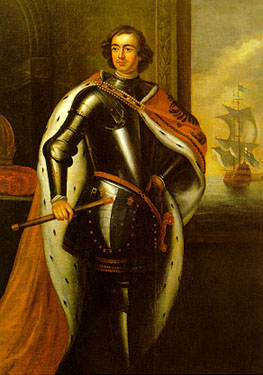
But if Hedges is the champion of the willingly-deluded masses (and I’m not so sure that they have lost the ultimate ability to distinguish between fantasy and reality as he is) he is a figure like Peter Romanov, attempting to pull the people towards his version of enlightenment while they kick and scream and object the whole way. Disturbingly, Hedges points to the failure of the government to take action to stop all of this – when “all of this” consists of the aggregation of millions of choices made by millions of people all purely voluntarily.

Hedges may think he’s doing it for the good of a free society, but at the end of the day, his impulses are as elitist and anti-democratic as those whom he condemns. We’ve been making bad choices, Hedges says, and it’s high time that the government intervenes and starting having us make better choices. It leaves me with the impression that Hedges would become a William Calley of our modern culture, destroying individual freedom in order to save it.

March 18, 2010

What Blogging Is All About

What I love about blogging is finding people who comment on weird combinations of interesting things.  Like the impact of facial hair on Presidential politics -- it's not a decisive advantage either way, but Republicans are always more hirsute than Democrats.  Or whether Cal-OSHA should mandate the use of condoms during the filming of adult movies.  Or finding a mash-up of Battlestar Galactica and the Beastie Boys:


It's the juxtaposition of differing areas of life that makes blogs so interesting to read.  Sometimes I just love the internet SO DAMN MUCH!

February 27, 2010

Geopolitical Strategy of the Byzantine Empire

One of the most fascinating, if not the most fascinating, books I have ever read about the ancient world was a rehash of Edward N. Luttwak's Grand Strategy of the Roman Empire.  Most military historians find the ancient world of only limited utility -- the bravery of the Spartans at Thermopylae remains remarkable and it is interesting to demonstrate the utility of restricting the enemy's ability to maneuver, but the world of modern combat will have few cognates to that tactical situation.  Strategically, there are a few interesting lessons that are studied with interest -- Scipio's gamble to end the Second Punic War has many interesting parallels with the Inchon Landing of 1950, for interest.

But when we think about large-scale strategy and the intersection of military activities and politics, it is easy to act like the world began when the Seven Years War ended, because that war and the earlier conflicts of the European Reformation were dominated by religion rather than what we think of today as geopolitics or economics.  Which is complete nonsense.

So Professor Luttwak rightly points out that it is insufficient to admire Rome's military might -- Rome lasted as long as she did, and was as dominant as she was, not because she had the strongest or the bravest soldiers or because the legions had the best armor, weapons, and training.  To be sure, legionnaires were strong and brave, but so were their opponents -- and a study of Roman history can tempt one to flippantly note that for much of the history of Rome, the legions fought other Roman legions rather than foreign enemies of the empire.  (This would be an exaggeration, but perhaps not all that great of one.)  And certainly the two-javelin, gladius, large shield, and the solid curiass cuirass makes for a good balance between deadliness, mobility, and defensibility for the individual infantryman in a pre-gunpowder set-piece battle.  But it wasn't the only good balance; the Greek phalanxer and the Persian cataphract also rightly survive as examples of powerful and feared ways for ancients to have fought.  Legionnaires were never invulnerable and after about the year 250, both Roman military technology and tactics were well-known to Rome's adversaries from the Atlantic to the Euphrates.

Rome was as powerful and durable as she was not because her soldiers were necessarily better than anyone else's (although for a time, they were) or because Rome had enough money to field huge armies (although that didn't hurt, either); Luttwak argues that Rome won for as long as she did because she was smart about deploying her resources.  He makes the case that Rome went through three large-scale methods of arraying her military to address challenges from outside the empire.

First, during the Julio-Claudian era, she took a forward-aggressive posture -- taking war to the lands of potential enemies and conquering them either before or during the time that they could coalesce into regional powers strong enough to resist Rome.  In the one case of an enemy far enough away that Roman logistics could not support such efforts -- against the Parthians in what is today Iraq and Iran -- a form of detente sufficed to keep conflicts minimized.

About a century later, under the Antonines (think Marcus Aurelius), the empire turned in to Fortress Rome, with a lengthy and well-supported network of fortress cities near easily-defensible features like the Rhine, the Danube, and the Zabros mountain range.  Where such defense-assisting geography was absent, the Romans built what they needed from stone and concrete -- Hadrian's Wall at the northern frontier of Roman Britain being perhaps the most dramatic example of this.  The point was to concentrate the firepower at all available points of entry and make breaching the borders of the empire as expensive and bloody as possible, which did a remarkably good job of deterring and, when necessary, defeating those groups that would have taken land from the Caesars.

The final phase of Roman defense strategy is easy to condemn but in fact made a great deal of sense at the time -- as Roman infantry tactics and technology became disseminated throughout Europe and Asia, forcing a major battle to defend against invasion proved gradually more difficult and eventually impossible.  The crisis year of 271 precipitated the decision to reform the way Rome defended herself.  Internal threats of the two breakaway empires required wider dispersal of the troops through what had been the unarmed interior of the empire, and thus, the hardened shell around the empire had to change -- now the borderlands would be easier to initially enter, but the deeper one tried to penetrate towards the heartlands of Greece, Italy, and Gaul, the more resistance one would find.  Attrition of the enemy through strategic-level swarming of multiple smaller defensive units along the way.  This worked pretty well, until eventually it didn't -- not because the strategic doctrine was bad, but because the individual units eventually became underpowered and gave their loyalties to their immediate commanders and not the central government.

The point is, the Romans found a way to adapt their strategic assets to survive a lot of crises and dispose of a lot of existential threats.  They were smart and they had a relatively continuous and intelligent doctrine.  While it's difficult to find any individual writer, imperial or otherwise, who would have described contemporary events like Luttwak does today, the archeological and documentary evidence demonstrates that these three phases of Imperial strategy were pretty consistent regardless of the identity or capability of the Emperor theoretically in charge of it all.  This suggests that while Rome didn't have an equivalent of West Point or the War College, the various generals and high-tier ministers in charge of the nuts and bolts of defense and diplomacy got their heads together, took a realistic assessment of the threats they had to deal with, came up with good answers to the challenges they faced, and most importantly, trained their successors in how they went about doing it.

Anyway, by way of previewing his long-awaited follow-up to Grand Strategy of the Roman Empire, Professor Luttwak offers in Foreign Policy:  Take Me Back To Constantinople, in which he analyzes the military and diplomatic strategies of the Byzantine Empire.

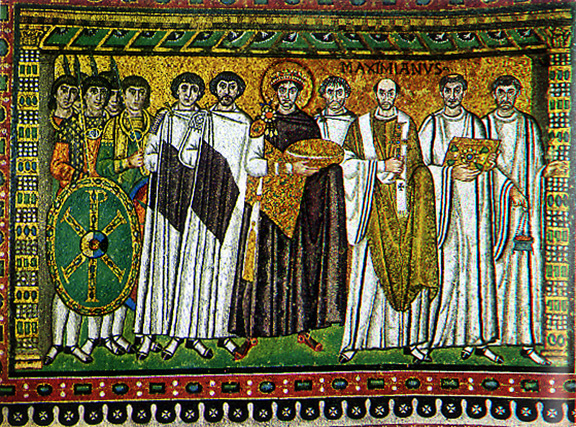
Let's set one thing aside right here.  The Byzantine Empire was not the "successor" to the Roman Empire.  It was the Roman Empire.  We think of Rome as "falling" in 476 when the Emperor's "Master of the Horse," meaning the guy who ran the military for the child-Emperor of the West Romulus Augustulus, decided that things would pretty much work better if he were simply in charge and made lil' Romulus an offer he couldn't refuse -- either abdicate and accept a retirement in a luxurious country estate, or get a sword through his liver after watching the rest of his family get the same treatment.  So the "fall" of Rome was really a transition from the Roman system of government to a model more closely resembling an early medieval monarchy.  And in fact, the Kingdom of Odoacer was really not all that different than the Empire it displaced.

But Romulus was the Emperor of the West.  What about the East?  In fact, the cultural, economic, military, and political heart of the Roman Empire had been relocated to Byzantium, renamed and rebuilt as Constantinople, for over a hundred years, by the time of Odoacer's coup d'etat.  Constantinople, not Rome, had become caput mundi and the loss of Italy from direct Roman political command was, for the still-existing Roman Empire, actually more of an inconvenience than anything else.  The citizens of this Empire called themselves Rhomani, taught their children to quote Virgil (even if Greek was their first language), and were ruled by a line of emperors who traced their line of succession back to Julius Caesar.  Even in 1453, as the walls were falling to the cannon bombards of the Ottoman Turks, the Emperor himself plunged in to battle to lead his troops shouting lines from the Aeneid to inspire the soldiers to fight as hard as they could and, if the odds were overwhelming, to at least make a claim for glory.  (Chilling.)  And where the unified and later Western Empire cleverly deployed its military and political resources to survive through four centuries of daunting challenges, the Byzantines used their military and political resources to last ten centuries longer than their counterparts in the West -- resources which over time became relatively more limited as compared with what the larger empire could have supported.

The immediacy of the example should be obvious.  As challenges and circumstances change, so should a dominant power's manner of dealing with them.  Luttwak identifies seven principles to Byzantine geopolitical and military strategy, and suggests that the US could learn a few lessons from what they did.  Like the Byzantines, our military is very expensive relative to those of our adversaries; like the Byzantines, we hold technological mastery over our adversaries but we hold our blood and treasure much more dearly than they.  So the Byzantines adopted a pragmatic, play-them-against-one-another strategy, placing great value in maneuvers in both the diplomatic and military spheres to corner the enemy and only unleashed the full strength of its army (or navy) when the advantage could be certain.  Espionage and political subversion of rival states were primary weapons, and questions of "honor" about using tactics like these were not allowed to reach a point that they were allowed to keep the Empire from doing what it needed to do to survive.

Of course, in the end, it was exactly this reaching for a new ally to play off against yesterday's-ally-turned-today's-rival that planted the seeds of the blow which ended the Empire as a geopolitical power, which was inviting the Franks and the Holy Romans into a religiously-based alliance against the Seljuk Turks to recapture Byzantine holdings in Syria and Palestine, using the ostensible goal of recapturing lost Jerusalem as the goal to trigger the religious fervor of the Europeans.  Strategically and economically, Jerusalem itself was nearly irrelevant to the Byzantines, but its cultural cachet was useful.  Unfortunately, the Europeans didn't play along with the Byzantines and kept the reconquered lands for themselves, and eventually turned on their former allies in a highly questionable military, diplomatic, and ethical decision to sack Constantinople in 1204.  While eventually Byzantium recovered and recaptured the urban jewel in its crown, it was never the same after that and by 1453, Rome ended for real.

But that does not mean that we could not learn from the examples set by the Byzantines.  There is wisdom in the past, the lessons of history are there for all who have eyes with which to read and minds with which to think.  I'll look forward to Luttwak's follow-up book very much.

February 22, 2010

Depressing Reality

The cover story from this month's Atlantic is deeply depressing.  And, I can tell you from my (comparatively) brief experience with unemployment, based on a very real psychological phenomenon.

Back after The Wife and I moved to Tennessee and discovered that what we'd thought was the promise of a good job was actually nothing but hospitality, it took a long time for me to find new work.  Not having productive work and not contributing much to the household led me to sink into a pretty deep funk, from which I had difficulty summoning the energy and hope to go out and take the necessary pro-active steps to get out from underneath our problems. 

And it took a toll on my marriage; The Wife and I had many more conflicts, and much more serious conflicts, than we had at any other point in our relationship either before or since.  We managed to stay together and get through our tough time, and now hopefully we have the roughest waters behind us.  At least, now I can have the optimism to seriously think such a thing even if the realist within me knows that there are no guarantees about anything important in this life other than that it will eventually end.  After many years together, I've never felt closer or more in love with my wife than I am now and I'm certain that both of us having productive careers and a sufficient level of material comfort is a factor in that.  But I remember what it was like when things went unexpectedly bad and how frustrating it was to feel like we were powerless to change them, so when I read in the Atlantic that prolonged unemployment can cause significant and lasting effects on family dynamics, it doesn't take much convincing at all to tell me that this is something real.

I'm also reminded of an old discussion from a few years ago at the firm.  One of the attorneys had read that there is a seventy to eighty year "long cycle" in economics, which the author of the book thought was approaching its end.  The end of the previous long cycle was the Great Depression beginning in 1929, and before it, the Crash of 1873, which led to a six-year depression and a wobbly economy for a twenty-five years after that, and the long cycle that at the time was thought to be coming to an end would have started a few years afterwards.  I sure hope we aren't re-creating 1873.  Re-creating 1929 would be bad enough.

Now, the bit in the Atlantic about how unemployment depresses one's future earning arc may be true for most but unless you're on a Biglaw career track, attorney incomes often rise and fall according to a set of rhythms within which simple employment longevity is often not a significant factor.  But that's more important in terms of setting long-term fiscal policy for the government than anything else; the marketplace will take care of consumers getting things like food and insurance even if incomes do not rise as much as they have for the previous generation.

What I'm saying is that it's right to take a close look at the social effects of extended periods of unemployment.  They're real and they will change our society whether we like it or not.

August 28, 2009

Sad To See

LeVar Burton may be most famous for playing Geordi LaForge on Star Trek, he may have made his mark playing Kunta Kinte in Roots, but he did his best work inspiring children to read books on Reading Rainbow, which after twenty-six seasons is finally coming to an end.

August 6, 2009

Would A Half Dozen F-35s Have Changed Pearl Harbor?

I found another free book for download on my Kindle: Weapons of Choice. It's apparently the first of three books in an alternative-history trilogy that has acquired a cult following by an Aussie journalist named John Birmingham. The idea is quite compelling -- in the year 2021, a United States Navy supercarrier group centered around the fusion-powered USS Hillary Clinton with a full complement of fifth-generation weaponry gets sent back in time to two days before the Battle of Midway.

I'm about halfway through the first book and I'm not sure if I'm going to keep up with it. The author did a nice job of finding a way to structure his story so that the Allies don't have a hugely overwhelming advantage -- the ships appear after a tramautic time-travel accident and the personnel are rendered unconscious for a while, and the 1942 U.S. Navy mistakes them for enemy vessels, resulting in both fleets attacking one another with devastating force for a time, while a few other examples of 21st century military technology -- and the personnel who know how to operate it -- fall into the hands of Axis powers.

It seems to me the intelligence the characters bring back into history with them is even more important than their technology. True warriors make a careful study of their mistakes and any warrior worth his salt would leap at the opportunity to learn from his own mistakes that he hasn't made yet. So I've reached the point where Yamamoto gets briefed on how the Battle of Midway was going to turn out, and he turns his forces around and keeps his navy intact to fight another day, and the Americans have been taken back to the States and are about to brief President Roosevelt.

The concept is hugely engaging. The execution, I'm afraid, isn't doing it for me. I hate to say it because I doubt I could have written it any better than the author did. His dialogue is about as good as I would do -- which is to say, despite editing, he still has too much exposition and it all feels kind of tinny. He has set up too large a cast of characters and failed to make any of them really come alive. I'm interested in what happens next strategically, to see how he has the war play out.

But I'm about done with the racial and gender tensions themes. Not that I think people from 1942 would have been shocked and appalled to find women in command of fighting vessels in the Navy and the racially integrated military we take for granted today, but because the book dwells ont he subject to the point that the story of the alternative-history war is being lost.

I suspect the fifth-generation weapons themselves will wind up being broken down and analyzed by both sides of the war rather than used directly -- that would be the smart way to do it under the circumstances the author sets up. If I were Roosevelt in this situation, I'd have to eventually appreciate that a single F-35 is only going to have so many missles on it, and each missile can only take out so many enemy planes or ships, and the enemy will always make more. Better to take the thing apart and use it to teach 1942's engineers how to make jet engines and good radar. But I might be wrong -- there are now nukes in Allied hands in 1942, and we know that historically, the U.S. was willing to use them pretty much as soon as they got them. What happens politically, however, will probably be a bigger question.Stumble Upon Toolbar

July 18, 2009

Time To Get Out Of The Water

I agree with the guy who says he won't dive with Humboldt squid for the same reason he won't walk into a pride of lions on the Serengeti. Some things in the water are dangerous and sharks are actually only about halfway down that list.

July 13, 2009

Confirmation Hearings Confirm Biases (A Post Including A Short Book Review)

I've just finished reading Jeffrey Toobin's book The Nine. In it, he paints a series of pictures -- moments in time in the institutional history of the Supreme Court, shifting focus between the political dimensions of the Court's work and the personalities and experiences of the individual Justices at the center of them. The picture one is left with at the end of the day is that of a very odd institution, one which seems to attract mentally gifted but highly eccentric people into its key positions.

Toobin is not quite explicit about his thesis, but it is right there under the surface like a goldfish eating food floating at the top the aquarium: the Court's decisions are the results not of study and deliberation on the law but instead are the sum total of the personality flaws of the individual justices, flaws which include political biases. Toobin also makes almost no bones about portraying the liberals on the Court as the good guys, the sentinels fighting a rear-guard action to protect the mighty triumphs of civil liberties and individual rights of the Warren Court, and reduces the entire efforts of conservatives as an effort to co-opt the Republican Party with the explicit and overriding goal of packing the Supreme Court with enough votes to overturn Roe v. Wade.

The result, as he describes it, is a court made up of judges who are all unprincipled activists; the question is not whether they will overturn precedent they find personally distaseful and seek a legal justification for doing so after the fact, but rather whether a majority of them wish to do so. It is legal realism of perhaps the most cynical sort.

Toobin's book ends with a portrait of conservatives ascendant after a twenty-year struggle, and liberals sputtering in protest. Any careful reader of the book itself is aware that in fact,the picture is considerably more complex than that, and more to the point, will be aware that the political tides appear to have shifted from the re-election of President Bush in 2004. One of Toobin's explicit claims is that despite the Court's undemocratic nature, it does track the political mood of the country with remarkable alacrity.

It is with this book fresh in my mind that I note the beginning of hearings leading up to the vote to confirm the appointment of Sonia Sotomayor to the Supreme Court.

First of all, we should bear in mind that Judge Sotomayor has left something of a record in the form of her judicial opinions. Her judicial philosophies are knowable and do not think for a moment that the White House has not read every opinion she has ever written. Or that the Senators evaluating her today have not, either. The questions she will be asked about them do not matter -- each and every Senator on that committee has made up their minds already, based on what she's written.

Secondly, the Supreme Court handles two kinds of cases: cases involving challenges to abortion rights, and every other case the Court handles. The confirmation process has become transformed into a political kabuki about only one of those two kinds of cases. Toobin points out, from the Alito confirmation hearings, the highly odd spectacle of every Senator on the Judiciary Committee giving a short speech about his or her opinion on abortion, and the nominee -- the only one whose opinion counts for anything -- sitting there saying nothing substantive in response out of ostensible concern for "pre-judging" a case that might come before him. We will almost certainly see a similar spectacle with Judge Sotomayor's confirmation, only the direction of the political wind will be opposite that of Alito's confirmation.

And finally, while the politics of the confirmaiton process are chiseled in stone and the result pre-determined, there is importance to the process. It is something of a test of the ability of Democrats to discipline themselves and run the Senate as they see fit. We may actually learn something interesting about Judge Sotomayor that we do not already know. We may get a sense of her personality -- the collection of quirks, eccentricities, displays of brilliance, and neuroses that seem to be the trademark of the singular set of personalities in question. She, like her eight Brother and Sister Justices, is much more than a figure in a black robe. And if Toobin is right, those personality traits, for good or for ill, are what will matter most in her decisions -- particularly in the second category of "everything else," including matters of criminal procedure, enlargement of executive power, reconciliation of conflicting state and circuit cases, and free speech and religion rights.

I'll say that Judge Sotomayor appears to be of exceptional intellectual ability and has the sort of background one would hope for. I'll say that I understand the political pressures the various Senators are under -- and if I could, I'd remind them that they asked for this job. But aside from that, I'm not going to take sides in this confirmation battle. That would be like taking sides against the wind.

June 30, 2009

Most Interesting Of 219 Accumulated Posts

When I let my blog reader utility go unused for more than 24 hours, the number of posts from the many blogs I read -- some political, some related to cooking, some of friends and family, some legal, some historical, and almost all of them hybrid or multi-subject -- accumulates precipitously. This afternoon I had some free time at lunch and no lunch date, so I ate at my desk and caught up on 219 accumulated unread posts.

This was, by far, the most interesting. Dave Schuler, usually a writer on matters political, suggests that there may have been no such thing as the Great Library at Alexandria. Rather, he thinks the phrase may refer to the fact that Alexandria was a center of learning and education in a more generalized sense -- the way a contemporary westerner might refer to, for example, "Cambridge." But was there a physical building, a single collection of books? The idea is firmly embedded in our historical consciousness but contemporaneous writings do not mention such an institution, at least in the way one might expect them to.

Even if there was a "library" it does seems to have been spread out in multiple locations throughout the city, including in schools, private homes, semi-private "gardens", pagan temples, and the Museum (which was, literally, the "house of the Muses," or a place for the arts). This would go a long way towards explaining the multiple destructions of the library referred to retrospectively in various histories, beginning with Julius Caesar and ending with the Muslim conquest.

Schuler's post was based on responses to the blogging equivalent of a parlor game: if you could change any single event in history, what would it be? All kinds of interesting things suggest themselves. Of course, it's hardly a new game. I first came across it in a wonderful book about a time-traveler in a relatively obscure period of history, and I've not settled on an answer for myself

June 5, 2009

Mandatory Vacation

While some of the commenters to this article act like this was common knowledge, I did not know this fact and I consider myself fairly sophisticated about employment matters. There are lots of reasons for "use it or lose it" policies regarding vacation or PTO, but this was not one that I had ever considered. It makes sense once explained, of course, it's just not intuitively obvious.

January 8, 2009

Book Review: The Diamond Age, or, A Young Lady's Illustrated Primer

This early novel by Neal Stephenson is ambitious in its scope and several times had me cursing him under my breath for anticipating some ideas I've been playing with in my free time. It is confusing, immersing, and thought-provoking, but at the end, I have to leave it with this verdict: "Dude, that's some trippy shit."

Nor am I the only one to have ambiguous feelings about the book, despite the fact that it won Stephenson the Hugo Award for best science fiction novel of 1996 for this book. And don't get me wrong. I enjoyed the book and it gave me a lot of interesting ideas to consider. This is ultimately a positive review. Here's the thing -- at 500 pages, I very much enjoyed the part that started around page 100 and lasted until about page 450. Before that, I was in too much of a fog to enjoy it, and after that, I was left with the impression that Stephenson didn't really know how to end it.

For people who are expecting a simple science-fiction adventure, the book is probably too deep and focused on other sorts of disciplines. At the end of the day, I think the book is best when it addresses what rapidly-advancing technology might do to society as a whole.

The book follows the early life of a girl in the late twenty-first century, a world transformed almost beyond recognition to late twentieth-century thinking. More about that below. We follow her as she grows up and we also follow the lives of people who affect her -- her educators, for lack of a better word. Along the way, we are treated to an examination of this future world and how it works, and to the kinds of conflicts and concerns that arise in it.

As written, the book owes much to William Gibson's Neuromancer. Neuromancer launched a movement in science fiction that came to be called "cyberpunk," and I think that in a very real way, this book ends that movement. The difficult thing about Neuromancer was that it didn't explain the new things in the world it described; you just had to read the story from the point of view of a person in that world who took its innovations and developments for granted, and the terms and phrases -- especially the slang -- for those new technologies and activities are not explained other than by context. The result is that it takes about a hundred pages before you get a really good idea of what's going on. Stephenson seems to almost consciously emulate that technique in The Diamond Age; the result is that the first quarter of the book left my head spinning and my mind in something of a daze as I tried to process all these ideas by gestalt.

Now, in terms of exploring concepts and teasing out the socio-economic effects of all this astounding new technology, The Diamond Age is sporadically brilliant and uniformly thoughtful. The basic premise of the book is the exploration of the world roughly a century into the future, when nanotechnology makes possible things that would seem miraculous to us and elevates a minimal standard of living for all so that hunger, homelessness, and grinding poverty are things of the past. The interesting parts of the book are an exploration of what the proliferation of that technology would do -- not just technically but how it could affect warfare, politics, sociology, medicine, economics, and the very existence and viability of nation-states. Where he explores these ideas, Stephenson is really a remarkable thinker and a better-than-average writer.

I've been thinking about that kind of a world for a while -- for instance, would there still be war? Stephenson offers the same depressing answer I would -- people would find other reasons to make war on one another, to be cruel to one another, to kill and hurt each other. If they could not find one, they would manufacture one. He identifies not only on religion (as I would have) but also nationalism, ideology, and most depressingly, race as motivating factors for conflict. While this is a dreary assessment of human nature, I suspect it is an accurate one as well. Many of the ways that abundance gets blended with the unavoidable stratification of society in Stephenson's vision of this future are eminently plausible and others, while fanciful, are at least within the boundaries of a willing suspension of disbelief.

Less plausible is Stephenson's vision of future politics. He wants to depict a world in which the difference between being in England and being in China is as trivial as the difference between being in Arizona or Maryland. He would like to suggest that people would affiliate into "tribes" rather than into nations, and that these "tribes" could be based on things like ideology, religion, or race. But at the end of the day, he cannot do that; nationality remains important and states do fight wars to protect or expand their geographic limits because they are still important.

Nor does Stephenson adequately describe (at least, to my satisfaction) the new sort of society he darkly hints at emerging as a result of the proliferation of nanotechnology in the realm of human biology. What he describes is certainly organic in nature but the concept is either too alien for me to understand, or was presented in too deadpan a manner for me to be able to step back and comprehend what was being illustrated.

On a related note, the very end of the book is bizarre in the extreme. I understand that Stephenson was trying to say that the ultimate values in such a world would be the love between individuals, and adherence to the personal codes of conduct and knowledge one has worked out for oneself. But I also think that the story betrays a certain hesitancy, a rejection of the ultimate conclusions of the premises that the book so richly explores. The ultimate destinations, and the ultimate choices that the characters make once they get there, are surprising but unsatisfying.

This is all rather elliptical, I know. That's because I don't want to have too many spoilers in my review, should you read the book. Not as good as the Baroque Cycle, but definitely thought-provoking and entertaining, The Diamond Age is probably the last word in the cyberpunk subgenre of science fiction.

This plot is ultimately kind of like the multi-season story arc of The Sopranos. That series was profoundly dissatisfying to this viewer because I wanted to know what was going on with Tony Soprano and his family. But all too quickly, the writers spent all their time following secondary characters like Bobby Baccala and Vito Spatafore. By the time the series got around to focusing back on the Sopranos again, the grand story arc felt like it got lost and had to be grafted back on to all the other stuff, until the end of the series dissolved in anticlimax.

The Diamond Age is ultimately like that. It's got a lot of great stuff built in to make the ride a lot of fun -- but there are too many "B" plots and the payoff at the end of the "A" plot is kind of like the end of a mid-1980's ITV-2 production of an obscure Edwardian tragedy -- it just kind of ends. The bulk of the book is very enjoyable. Like The Sopranos, it's well worth your time. But also like The Sopranos, The Diamond Age will leave you asking, "Where did the last chapter go?" But you'll enjoy the ride on the way there.

December 31, 2008

Casting The Baroque Cycle

If I were going to produce a movie -- more like an HBO mini-series, I should think -- based on Neal Stephenson's The Baroque Cycle, here's some ideas for who I'd like to cast (if money were not much of an object, of course):

Daniel WaterhousePeter Krause
Eliza de la ZeurMiranda Otto
Jack ShaftoeJamie Bamber
Isaac NewtonJohn Malkovich
Gottfried LeibnizPhilip Seymour Hoffman
Louis "Leroy" XIVRoger Moore
William of OrangeWillem Dafoe
Enoch RootJohnny Depp
Princess Caroline of AnsbachMichelle Monaghan
Sophie CharlotteKathy Bates
DappaDjimon Hounsou
Roger Comstock Kyle MacLachlan
Le Duc d'Arcachon Stellan Skarsgård
Etienne d'Arcachon Jeremy Sisto
Édouard de GexChristian Bale
Catherine Barton Kate Beckinsale
John Churchill, Duke of Marlborough Scott Glenn
Robert Hooke David Eigenberg
Peter Romanov, Tsar of all the Russias Hugo Weaving
Peter "Saturn" Hoxton Gary Oldman

Fellow Baroque Cycle fans are welcome to criticize my choices and suggest alternatives. Take your best shot.

Keep in mind that several of the characters would need lots of makeup to show them aging; the story takes place over the course of about seventy years. So for some of the actors, an age range (assisted by makeup and lighting) of something like forty years will need to be within reach.

Assuming that most of the dialogue will be in English, I'd prefer a mix of about half British actors and half Americans. Given that British English was accented to sound more like modern American than it does today back in the early 1700's, a blend of the two kinds of accents would be required of just about everyone -- but I'd want to give a feeling of old-world-meets-new, and mixing Americans and British would hopefully do that.

And the list of casting choices doesn't end at my list. But at some point the production would run out of money and this is a pretty expensive list -- even if the royalty figures aren't going to be on the set very long, the story would demand some time of Malkovich, Depp, Hoffman, and Oldman. Especially Malkovich, as Newton is a major figure in the novel. Other figures, though, would be "guest stars," so if I were going for an "all-star" cast to attract attention to the project, I'd look for people like Dame Judi Dench to make a guest appearance as Queen Anne Stuart, for instance. She'd probably only need to be on the set for one day or so, and it would give her a trifecta of British monarchs, which would be kind of cool -- she's already played Queen Elizabeth and Queen Victoria.

Of course, filming something with the epic sweep of The Baroque Cycle would be superlatively difficult and expensive. To do the story justice, each of the three volumes would take at least six hours -- so now we're out of the realm of movies and into the realm of things like series on HBO. If we're doing that, then there is probably enough material for a full traditional run of five seasons of thirteen one-hour episodes.

Some of the stuff would be pretty hard on the viewers, like the early Royal Society experiments. But HBO and Showtime will tackle stuff like that. It'll never happen; as I understand it, Neal Stephenson is not interested in licensing the film rights at all. But it's still fun to think about.

December 29, 2008

Breakup Of United States Imminent

Six countries where before there was one? That's what a Russian political scientist says is a little bit more likely than not to happen in the next twenty-four months.

My initial reaction is, "This guy doesn't understand much about American political culture." After all, there is a lot more that unites us than divides us. Californians are distrusted somewhat outside of California, both Texans and New Yorkers are thought to be boorish and pushy (in somewhat different ways) by a lot of Americans; and so on. But there's no doubt that we're all still Americans and we consider one another to be Americans. We root for the same ball teams that play one another and visit in other parts of the country. We are all more amused than perturbed by the local differences in food and speech patterns we exhibit.

Still, to the outside world, we've done a poor job of demonstrating our unity recently. We've had two Presidential elections that all seemed to be very close, and indeed the most recent one was very close until near the end. Before that, we seemed to have more than a dozen of our leaders and prominent citizens vying for the top job with no clear way to decide who it would be. Our political dialogue is marked by specimens of both sides of the spectrum who exhibit remarkably intemperate and intolerant speech. And there is some degree of regional clustering of patterns of thought -- the south and the midwest contrast with the Atlantic seaboard and the west coast. And the outright whining of Southerners that Barack Obama has been slow to name people from the Southern states to his Cabinet was quite unseemly.

Further, I myself have envisioned a deteriorating union in the country. I contemplated writing a story set in a future United States of America, some time in the mid-2050's, in which the Federal government was significantly weakened in power and various states had banded together in regional governmental compacts. My idea was for the South to secede again, this time based not on the idea of preserving slavery and its incident economic system, but rather because of the desire of Southerners to re-found their new country as an explicitly "Christian" nation, and have violence break out with elements in the other regional governments wanting to join the new Christian States of America. I gave up the idea because it quickly became too didactic, bureaucratic, and preachy.

But it also became more and more implausible as I ventured into the thought experiment. Even if people wanted to break away -- and the central government, which is still quite strong enough to enforce the no-secession rule that has prevailed since 1865 -- it seemed to me that no one would profit from spinning the country off into regional subdivisions. We're stronger and richer together than we are apart, and what's more, there is broad recognition and acceptance of that fact.

Now, if this Russian dude were to say that we'd be better off fragmented into smaller countries, that would be one thing. But he laments the spectre of a disunited America. (Which doesn't stop him from really wanting Alaska back.*) He recognizes that a dissolved America would be bad for Russia and destabilizing for the geopolitical balance of power. And he's absolutely right. While the world is moving towards a multi-polar economic and military model, a globalized version of what used to be called the Concert of Europe, the U.S. still has a leadership role to play in that world. Perhaps that role will be something more like "first among equals" than as the nation-state on top of the hierarchy. But that's not an entirely bad thing anyway.

But no, I think this is so much wishful thinking. And more than a little bit of projection. Other nations, with a less resiliant kind of nationalism than we have, might have faced internal violence over the political, social, religious, and economic tensions that we deal with all the time and have dealt with in sharp relief over recent years. But we Americans are made of different stuff. Our mythology involves submitting to democracy (I really wanted Prop. 8 to fail, but you don't see me throwing any Molotov cocktails because it passed), a commitment to the rule of law, and a commitment to be part of a common culture based on Western Europe and more particularly Engliand, but upon which we have amalgamated all sorts of things that our many immigrants have brought with them to our shores. Maybe Russia couldn't handle that without at least violence; maybe the USSR couldn't handle very strong economic pressures without breaking up. But America is different than that.

E pluribus unum. We really mean it.


* "Губернатор, почему вы квалифицированных быть президентом Российской Федерации?" "Поскольку я вижу Америку из моего дома!"