Showing posts with label France. Show all posts

May 6, 2010

Disproportionate Democracy


The results of today's election in the UK may look a little bit funny and it calls to mind a myth I was taught in college – the myth is that multi-party parliamentary democracies better represent the will of the people than the American two-party system.  I think this is a myth and the results from the UK bust that myth. I can't be 100% sure because I'm writing this post a day in advance of actual election results. But if those results look like the polls, there will be a hung Parliament, and two parties will need to form a coalition government. Indeed, projects overall looks like the Liberal Democrats got really screwed -- their popular polling will have been far in excess of the number of seats in Parliament which they actually won. Fivethirtyeight.com is running this projection as of the time I write:
 

Party
Popular Vote
Seats in Parliament
Disparity
Tory
34.2%
308
+13.18%
Labour
26.3%
198
+4.16%
Liberal Democrats
27.5%
113
-10.12%
All Others
12.0%
31
-7.23%


This may look a little, well, undemocratic in the sense that the results of representation in Parliament are significantly disproportional to the way the British electorate is predicted to have behaved. If the predictions are pretty much accurate, the Liberal Democrats will have outpolled the Labour Party but have significantly fewer members in Parliament than the just-tossed-out-of-power Labourites. And I suppose that in the pure sense of the word, this is indeed counter-democratic. If the Tories get 34.2% of the vote, they should get 34.2% of the seats in Parliament, right? If there were strict proportional representation, today's results (as projected yesterday by fivethirtyeight.com) would look like this:
 

Party
Popular Vote
Seats in Parliament
Disparity
Tory
34.2%
222
-0.05%
Labour
26.3%
171
+0.01%
Liberal Democrats
27.5%
179
+0.04%
All Others
12.0%
78
even


Now, the disparity between the popular vote and the representation in Parliament here is well within limits that any reasonable political analyst would find tolerable. But such a system would leave a badly-fragmented Parliament, with any two of the three major parties able to form a government if they could agree on how to do so – the Conservatives, despite winning a plurality, could find themselves "on the outs" as Labour and the LD's jam together a 25-seat majority. That, too, would be an undemocratic result, and is proof enough that strictly proportional democracy does not guarantee a democratic result.
 

How does this happen? It's a combination of the relative popularity of the minor parties, the regional and single-issue parties and the Greens, lumped together in the "All Others" category. It's also the "first past the post" rule, which really means that the plurality in a given district is going to be the one seated in Parliament. If the UK had, effectively, a two-party system with the Tories and the Labourites as the only realistic choices, it would look a lot like the USA. (More about that below.) But they don't, so in each district the minor parties drain votes from the major parties and diminish the margin of victory for the eventual winner, potentially even changing the identity of that winner. 

For U.S. Readers unfamiliar with the British political system, a few quick concepts to keep in mind.  First, the UK is divided into geographical districts, just like the various states and Congressional districts of the U.S.  The number of districts varies from election to election; this year, there are 650 districts so it takes 326 seats to have a majority of Parliament and form a government. Individual candidates from the various parties stand for election in the various districts.  It is not required, but helpful, that the candidate be a resident of the district.  Suffrage is universal, with a few exceptions -- most interestingly, members of the House of Lords are not allowed to vote, and while there is no law disenfranchising members of the royal family from voting, they traditionally do not vote.
 

My expectation is that the 538.com projections are going to be pretty good; they line up roughly with what the BBC is projecting too: by the time this article posts to the blog, the Tories will have won a plurality but not a majority of seats in Parliament. Thus, the Queen will invite the leader of the Tories, David Cameron, to form a government of some kind and serve as Prime Minister for the next term of Parliament.  So what I'm pretty sure is going to be standing out today is that the Liberal Democrats polled so well but got so few seats. But in fact, this is nothing new for the UK. In 2005, the British election results were as follows:
 

Party
Popular Vote
Seats in Parliament
Disparity
Labour
35.3%
308
+19.81%
Tory
32.3%
198
-1.65%
Liberal Democrats
22.1%
113
-12.50%
All Others
10.3%
31
-5.66%


Note that in 2005, there were 646 seats in Parliament, not 650 as in today's election. Although Labour won that election instead of the Conservatives, the same thing that was projected for today's election happened in 2005 – thanks to the rule that the individual candidate who gets the plurality of votes within the geographic district is the one who goes on to sit in Parliament, a very modest advantage in polling produces a significant positive disparity in legislative representation.  And it was at the expense of the LD's, who did pretty well at the polls but did not get anything like the reward this would seem to indicate in seats in the Commons.
 

So, is the UK an undemocratic place despite being the "Mother of all Democracies"? (Greek and Icelandic Readers may now justifiably bristle at this phrase.) Let's compare the UK with the last round of elections in the nearest analogue to the House of Commons that we can find in the United States – the House of Representatives, using figures from the 2008 Congressional elections:
 

Party
Popular Vote
Seats in House
Disparity
Democrats
53.06%
257
+6.02%
Republicans
42.44%
178
-1.52%
All Others
6.00%
0
-6.00%


The Republicans should have got proportionally more seats than they did, but not that much and they certainly were better treated by their system than the Liberal Democrats were by the UK's. It's the minor parties that get trod upon by the majority party in the U.S.'s two-party system. I would expect to see similar kinds of disparities in historical Congressional elections, looking back to the days when Republicans held the majority in the House – whichever party gets the most votes is going to do so at the expense of representation of parties getting the fewest. But the point here is that the U.S., with a two-party system, still suffers from disproportionate representation. It gets closer, though, to the popular preference than the UK system.
 

That suggests to me that the insertion of a third party skews things in favor of the plurality party and warps the translation from voting to representation.  To confirm that, let's take a look at a third parliamentary democracy, one in a multi-party system with geographic districts rather than a national proportional representation system, and one in which there are a lot of parties in play. 

France's National Assembly held elections in 2007, with 577 seats up for grabs between two major parties and a scad of minor parties. In France, a candidate must get an absolute majority to win a seat in the National Assembly, and if no candidate gets a majority in a particular district, there is a runoff election. In all but one case in 2007, the runoff election was a two-way contest between the top two candidates from the first round of elections. The results, on the same scale of comparison used for the UK and the USA, look like this:
 

Party
Popular Vote
Seats in National Assembly
Disparity
Union for Popular Movement (Sarkozy)
39.54%
313
+14.71%
Socialists (Royal)
24.73%
186
+7.51%
Democratic Movement (aligned with Sarkozy)
7.61%
3
-7.09%
Communist Party (aligned with Royal)
4.29%
15
-1.69%
New Centre (aligned with Sarkozy)
2.37%
22
+1.44%
Greens
3.25%
4
-2.56%
All others, both left and right
18.21%
34
-12.32%


So the French system is at least as skewed as the UK's. The proliferation of parties significantly distorts popular support for the various parties' platforms as compared to support for those platforms in the legislature.  

The US system seems to produce results closer to the preferences of the people, perhaps in part because the U.S. effectively narrows the choices down to two parties. Now, this isn't an in-depth comparison of a lot of systems. But it appears that the more parties are in play in a system whereby representatives are elected from specific geographic areas, the more the plurality party benefits in the form of disproportionately high representation in the legislature. The U.S., with its two-party system, winds up coming the closest to actual proportional representation of the three countries I looked at here.


Sigh.  Another myth from college busted. And too bad for Nick Clegg and his Liberal Democrats (barring an upset that I can't predict as I'm writing a day in advance of the actual results). Perhaps the LD's will be invited to form a government with the Tories, although it looks to me like the Tories will wind up being pretty close to a majority and therefore able to maybe throw a few bones to the regional or minor parties and put together a majority that way, which looks like the easiest thing for David Cameron, the likely new Prime Minister, to do.  After all, the "going it alone" strategy seems to have worked, albeit inelegantly, for Stephen Harper in Canada.

March 25, 2010

Visiting A Super-Secret Location

What to do with the large tax return the accountant tells us to expect?  I have an idea....


... but I'll have to see what The Wife thinks of my plan.

January 14, 2009

Nothing Stings Quite Like The Truth

The Czech Republic began its six-month term as the rotating host nation for the EU Presidency in January. So that means that bureaucrats, lawyers, legislators, and other politicians from around Europe are all traveling to Prague to conduct business. And when they do, they're seeing art that the Czechs have placed on public display, including the piece by David Cerny which is the subject of this article.

Cerny's piece, "Entropa," provides a graphical description of various EU countries. Except for the UK, which is conspicuous by its absence (reflecting Britain's vacillation about joining its continental sister nations and adopting use of the Euro). Some of it is immature, like the depiction of Romania as a Disneyland-style Count Dracula-themed roller coaster ride. But my favorite piece has to be France: "Grève" is French for "On strike." Which it seems someone in France always is, causing all sorts of annoyances when you want to do things in or concerning France like, say, send mail or buy something. But what can you do? Thirty-four hour work weeks, free health care, and mandatory month-long vacations are simply not enough for the oppressed and hardworking French laborer. Vive le prolétariat.

Oh, sure, he could have depicted France as a hexagon or a fleur-de-lis or used Marianne. But that's been done. This is much more contemporary -- and, bitingly accurate, which makes it funny.

July 14, 2008

Has The French Revolution Gotten A Bad Rap?

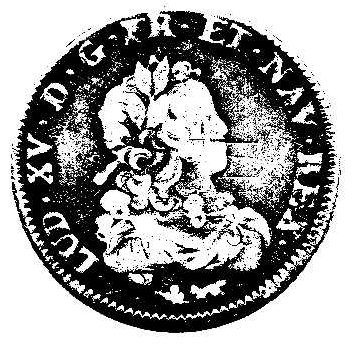
The French celebrate the anniversary of the storming of the Bastille as their equivalent of our Independence Day, the day that their history of free self-government began. Unlike America, however, France's history of free self-government has not run uninterrupted since then. More on that below, but for now it's probably more important to realize that July 14, 1789 was not so much the beginning of liberty in France as the end of the Ancien Régime.

What happened on July 14, 1789, was that the revolutionaries who had taken control of the Estates-General grew frustrated with dilatory tactics and intractable demands of the King, and for the first time presented themselves in public and with arms, making good on the implied threat of a popular uprising against the King. In a form better-organized than a mob but not as well-organized as a military unit, armed commoners took control of the Bastille, a combination military depot and prison in the southeastern portion of Paris left over from the medieval period. There, they seized a large stockpile of small arms and some cannon from a munitions depot, and freed seven inmates (including two noblemen) who they deemed to be "political prisoners" of His Most Christian Majesty. Contrary to popular myth, the infamous Marquis de Sade was not one of them -- he had been transferred to an insane asylum only ten days before.

So that's what happened on Bastille Day. The French people, for the first time, stood up and asserted themselves against their King and won a decisive victory. The military significance of the action itself was probably not all that much, but the political impact was immense -- Louis XVI lost more support that day from demoralization of his own troops than anything else and at that point it was really only a matter of time until some kind of republican government took real power in France.

Of course, how that happened is a complex and deeply depressing story. For we Americans, the French Revolution conjures up images of eighteenth-century urban violence, social chaos, lurid public executions accomplished by guillotine, and political paranoia. And the Reign of Terror did in fact have all of those things, in surplus, so much so that even Robespierre himself fell victim to the violent, insane world of political radicalism he more than anyone else helped create.

The French are well aware of that part of their past as well, which may help explain why none of them seem to care that the Bastille is now gone, torn down within a year of the original storming of the fortress. If you go to Place de la Bastille in Paris today, you will see a column commemorating the events of a subsequent revolution which took place in 1830. The only place where the actual structure survives (allegedly) is a few foundation stones which make up the wall of a tunnel leaving the metro station. Supposedly, it's marked with a plaque, but when I visited Paris I stayed at a hotel very near Place de la Bastille and used that metro station quite a bit, and I never saw any such plaque.

But while we Americans tend to dwell on the bloody, lurid aspects of the Revolution, we ignore two important facts about it. First, we ignore the fact that our own war for independence was a primary precipitating cause of the Revolution in France. Second, we ignore that the French Revolution was motivated by the same high-minded Enlightenment ideals that were the foundation of our own successful rebellion against an oppressive monarchy.

Our own role in causing the Revolution had a great deal to do with the fact that for nearly ten years, we had sent ambassadors and ministers to Versailles begging Louis XVI to underwrite our revolution against Britain -- and His Most Christian Majesty eventually agreed to do it. Tens of millions of livres -- in many cases, hard specie of gold and silver -- found their way back to America to buy weapons, gunpowder, cannon, ships, and to pay for the soldiers and sailors who would use them. Louis did this in the hopes of tearing away Britain's most populous and (then) largest colonies away from it as an indirect front of an undeclared extension of the Seven Years' War (what we call the French and Indian War). And America could not pay its debts back all at once. To make up for the depletion of the French Crown's treasury, high levels of taxes had to be imposed and after two bad harvests in a row, the heavy foot of the burden of taxation got to be too much and starvation broke out across the country. Other crops may have been available for import, but the average Frenchman had no food, no money, and no apparent means to get any.

So we didn't have anything to do with the weather, of course, but we had everything to do with the fact that the King was broke. France's treasure had been spent on too many guns, and not enough butter. And that's why the King had to call the Estates-General, to work out a way to replenish the treasury until we Americans could get our act together and start paying back our debts.

But we also forget that the basic ideas of both Revolutions were fundamentally the same. No taxation without meaningful representation in the government. Popular sovereignty. Subordination of the government to the popular will and to sacrosanct liberties of the individual. The rule of law and independent courts to protect and enforce individual rights. A rejection of the concepts of rule by divine right and the comingling of political power with religious authority. The fundamental equality of all people and the emerging nationalism of a people. These were the ideological causes of both revolutions, radical for the time but are shamefully taken for granted by Americans today.

France's tricolor flag represents the ideals of liberty, equality, and fraternity -- a citizen of France is a free individual, equal to any other citizen, and part of a greater whole that is the nation of France. It is hard to think of a better sort of national ideal; those are ideals that we (and the French) continue to try to improve ourselves towards, both as individuals and as nations.

The French have, like we Americans, fallen short of the ideals of their revolution at many times in their history. Unfortunately for them, their failings have caused them greater turmoil than ours. Our greatest failure as a nation to live up to our ideals came to tremendous and protracted violence for nearly four years in our Civil War. Nearly as many Americans died in our Civil War as in all of our other wars and military actions combined. But while I do not wish to minimize the horror and brutality, and the tremendous moral urgency, of that conflict, the price we have paid in blood does not compare to the price paid in both blood and turmoil by the French.

The First Republic, established in la grande révolution, produced an initially moderate but increasingly radical government, which degenerated into near-anarchy. by 1804. In 1804 In 1799, Napoléon Bonaparte became the First Consul and later Emperor of the First French Republic. He ruled a generally wartime nation for ten years, until the Bourbon monarchy was restored in 1814. With the exception of the Hundred Days of 1815 when Napoléon broke out of his exile on Elba and effected a brief coup, four Bourbon kings (Louis XVIII, Charles X, Louis XIX, and Henri V) ruled in a constitutional monarchy in a period called la Restoration until 1830.

Urban violence plagued France during the reign of the unpopular Charles X. When barricades were erected by radical republicans and people got shot in the street by both revolutionaries and the gendarmes, Charles X abdicated to keep the peace. His son Louis XIX likely holds the record for the shortest reign of any legitimate monarch of any throne in history, having "ruled" France for about twenty minutes, which he spent mainly listening to his father crying.

Charles' grandson, Henri, was proclaimed by some to be Henri V, King of France, but was only a small child at the time. He "reigned" for seven days and then the National Assembly declared a regency headed by his cousin, Louis-Phillipe Bourbon-Orleans, who was quickly named "King of the French." During all of this time, real political power was gravitating back towards the National Assembly, with the king serving as a British-style constitutional monarch. Louis-Phillipe, however, ceded even more power to the National Assembly. Problem was, the National Assembly at this point limited its membership to land-owning or significant tax-paying citizens. So disenfranchised citizens took to the streets and erected barricades again, and finally in 1848 another revolution took place, with still more death and violence that echoed across Europe, and which ended the Kingdom of the French.

In the place of the Kingdom of the French came the Second Republic, which had a near-universal franchise but the result of more than a generation of inexperience with widespread democracy resulted in clumsy political maneuverings and Louis-Napoléon, a second cousin of the great Napoleon Bonaparte, was elected President in 1848, and spent the next three years of his four year term securing the loyalty of the military. He staged a coup in 1851, held a referendum to legitimize his actions, and when he won, he dissolved the National Assembly and declared himself Emperor Napoléon III. Thus the Second Republic became the Second Empire.

Although the Second Empire was an overt military dictatorship, Napoléon III turned out to be a competent and generally benevolent dictator. But in 1870, three significant reverses hit France. Napoléon III himself had to surrender to the Prussians at the Battle of Sedan, losing the Franco-Prussian War, and then a mob stormed the National Assembly after another bloody urban riot. A brief government called the Government of National Defense uneasily shared power with a group called the Paris Commune for two months, and conducted a treaty with the Prussians, while a Third Republic was organized and more political violence within France kept the nation crippled. The Third Republic was thought by most to be a stopgap form of government until a constitutional monarchy could be restored; the problem was that there were by now two claimants to the French throne.

One group thought that Henri, the Comte de Chambord, the grandson of the former Charles X, should be King Henri V; contending that when his father Louis XIX had also abdicated, he was the next in line for the throne and conveniently, he was still alive and had technically been king for seven days back in 1830. Henri had become an impetuous young man and he did not want to be a figurehead king but rather wanted to exercise real political power as France's head of state. So he would not accept the limitations on royal power that had bound his cousin, Louis-Phillipe; insisting on a change of the national flag to return the fleur-de-lis of the old nobility. Louis-Phillipe, in the meantime, had died and his claim to the throne was held by his grandson, the Comte de Paris, who would have been Louis-Phillipe II, but the would-be king could not muster enough popular support to back his claim to the throne, and the National Assembly was unwilling to offer the throne to Henri V because of his monarchical ambitions. This younger Louis-Phillipe made a bid to be named Henri's designated heir-claimant to the throne but would not pledge loyalty to the fleur-de-lis flag, and so was passed over and had to be content with calling himself le Duc de France, and the possibility of a return to a British-style constitutional monarchy was stalemated.

So, instead of being a stepping-stone back to a constitutional monarchy, the Third Republic was formalized in 1875 and lasted until the Nazis invaded France in 1940. The national government of France was then replaced with the fascist Vichy Regime, or as it called itself, L'etat Francais, the French State. The Vichy Regime was quite simple the wartime puppet of Nazi Germany, and when the Allies invaded in 1944, it was overthrown and many of its leaders subsequently tried and executed for treason.

A provisional government was in place until 1946, when the Fourth Republic was enacted under wartime resistance leader Charles de Gaulle. The Fourth Republic tried to incorporate Algeria into the political unity of France but was not resilient enough to handle the tensions of the Algerian independence movement. When there were signs of the government giving in to Algerian revolutionaries, the military seized power in Algeria and threatened a coup in France itself, and the government collapsed. Thanks to the personal charisma of the still-living de Gaulle, the military, separatists, and nationalists all agreed to form a new Fifth Republic with a stronger executive branch which took effect in January of 1959, and that is the government that rules in France today.

It seems amazing that the French have gone through so many permutations of government since 1789, but the fact is that the trend of their government has been towards realizing the Enlightenment's ideals of universal franchise, equality, individual liberties, and the collective well-being of the French as a people and as a nation. And they shouldn't take it for granted, either; there are three pretenders to the throne of France alive today. Which in its own way, is even more amazing to me.

There are still people who want a Napoléon to rule France. For them, the rightful ruler would likely be the Prince Jean-Christophe Louis Ferdinand Albéric Napoléon, who would be styled Emperor Napoléon VIII. His father, Charles Marie Jérôme Victor Napoléon, is a banker and real estate developer and has been a largely unsuccessful politician. But the senior Napoléon was disinherited from the succession by his father (the would-have-been Napoléon-Bonaparte VI), in a fit of pique over changing his last name from Napoléon-Bonaparte to just Napoléon after a nasty divorce. Jean-Christophe Napoléon is twenty-two years old and is apparently working as a management consultant. How would you like that -- to have a management consultant named Napoléon telling you how to run your company?

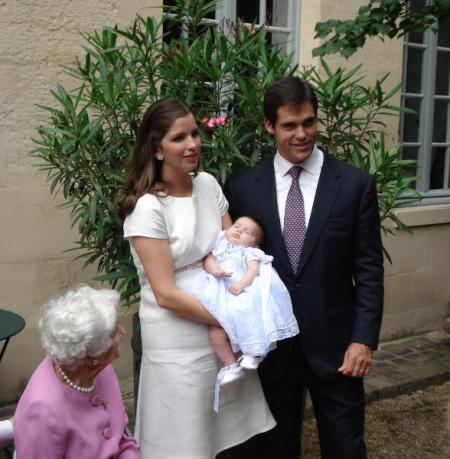
The "Legitimist" claims follow those of Henri V, and contend that his removal from office (and the abdications of Charles X and Louis XIX) were illegal. The current holder of this claim to the throne is a Spanish citizen and a cousin to the reigning King of Spain, one Luis Alfonso Gonzalo Víctor Emanuel Marco de Borbón y Martínez-Bordiú, le Duc de Anjou et le Duc de Bourbon, who would be Louis XX, King of France, Navarre, and Jerusalem. Seeing as his cousin is King of Spain, he might have to renounce his claim to the throne of Navarre were to become even a figurehead king, and the Latin Kingdom of Jerusalem was conquered in 1291 and, um, distinctly unlikely to be reinstated in the foreseeable future, but if there were such a kingdom, he'd be its King. So his likeliest claim to royalty would be in France, where he would have to beat out an actual French citizen for the throne. But for the time being, the would-be Louis XX is thirty-four years old and works as a commercial banker in Venezuela, where in the finest tradition of all would-be monarchs, he scored himself a wealthy wife. Their daughter was born in Miami and is therefore a U.S. citizen by birth, but because of the Salic Law, she could not become Queen of France in the event of a Bourbon restoration.

The "Orléanist" claims follow those of Louis-Phillipe, and are considered by those who care about such things to be the stronger claims today. The Orléanist pretender is the 75-year-old Henri Philippe Pierre Marie d'Orléans, Comte de Paris et Duc de France, who is the direct descendant of King Louis-Phillipe, who served honorably in the French military during the Algerian conflict and has written a number of respectable works of French history. On the royalist side of things, he has pursued litigation since the 1960's to restore and consolidate his family's wealth from those who have held it. Well, someone had to do it and he's managed to recapture several millions of dollars of his family's assets and rebuilt a respectable residential and commercial real estate venture out of it. He has also sued the Duke of Anjou (the would-be Louis XX's father) to resolve the claims to the French throne, but in 1989 the French courts held that they had no jurisdiction over such matters and since it didn't look like there would be kings again any time soon, it didn't much matter anyway.

After all, the French neither want nor need a monarch, which is what Bastille Day is all about. While I'm sure all three claimants to the French throne are perfectly nice guys (you know, for old money), and this guy seems like he's not all that bad, either, competing claims to the throne of France in the modern era have brought the French little but misery, civil strife, and bloodshed interrupted by periods of prosperity and peace that have prevailed generally only during the times of republican government. It all started on July 14, 1789 and it changed the course of history.

March 14, 2008

Numbers Don't Tell The Whole Story

Statisticians might make sense of this but even after some consideration of how it might work, I can come up way too many explanations for this dichotomy:

A [French] woman's average number of partners has risen from under two in 1970 to over five today, while a man's has remained the same for four decades, almost 13.
Shouldn't the numbers be approximately equal? It takes two to tango, after all.

One is left with the image of an extraordinarily complex French romantic comedy with a cast of eighteen people, five men and thirteen women, variously hooking up and splitting up, and the movie doesn't end until every possible male-female couple combination has, um, coupled and combined. A long movie, but then again the French (and their neighbors the Germans) seem to have more patience for that sort of thing than we Americans.

Obviously, that isn't what's really going on. Take a look again at the report, and note that the report deals with averages. Let's say the male portion of the survey population was 10,000 individuals. Each gives their own number in response to the question of "How many sex partners have you had in your life?" and the sum total of all those answers was (close to) 130,000. Divide that by 10,000 (the sample size) and you get an average of 13 partners. Because these are averages, maybe there is a portion of the female population that is skewing the midpoint with highly promiscuous behavior, while the rest of the population has only one or two partners in their lifetimes. For instance, if a sample of 10,000 women has an average of 5 partners, but they break down into two groups -- if 1,000 women have 40 sex partners each (they're the really promiscuous ones), 8,000 have only one partner in their entire lives (their husband or analagous lifelong mate), and the last 1,000 have only two sex partners each (a husband and a lover?), then that's an average (technically, a mean average) of 5 partners per woman. A similar dynamic may skew the average for men. This strikes me as unlikely, but it is a possiblity. This is also why the "average" is not always a useful statistic to help understand what's really going on.

None of which explains why the men have so many more partners than the women. So, why the dichotomy? I can think of lots of possible explanations and the news story reporting it doesn't illuminate which of them it might be:

  • A small portion of one (or both) populations in the sample may be unusually promiscuous, skewing the average, as described above.
  • The men are finding partners outside of the female population sample -- for instance, they might be choosing British or American women, eschewing French women, as sex partners, to a singificantly greater extent than French women are finding non-French men as partners.
  • There may be more gay or bisexual men than women in the sample size; however, this assumes that the gay men are more promiscuous than either the straight or gay women, which is not necessarily true.
  • One or both populations may be lying; the men exaggerating the true number of partners they have had to give the surveyors an impression of masculine virility, and the women downplaying their true numbers to give the surveyors an impression of modesty and chastity -- hinting that maybe the truth is more like men and women have about seven or eight partners each, which is sort of near what I would have speculated the answer would have been had the survey respondents been honest.
The truth is likely a blend of all four of these. Each is possible, but each also becomes quite unlikely when taken to an extreme. For instance, are French women really so repellent to French men that the men are all taking the Chunnel to get to London when they want a little action? I rather doubt that. But, it could be that a tourist in France for some length of time might be willing to have a "fling" while away from home, and since France is a popular tourist destination, maybe there are more opportunities for a French person to be the partner in that sort of thing than someone who lives in a less popular tourist destination like, say, Newfoundland. And we don't need to think too hard about the social incentives a person of either sex might have to misrepresent their level of sexual activity.

The point is, really understanding what's going on requires a better understanding of the ratio of the impact of these four variables. And the number that should be reported may not be the average but rather the median or in this case, maybe even the mode. Stepping back from the raw numbers one occasionally confronts and applying some thought to it reveals that the world is both more complex and interesting place than a simple number would otherwise suggest.

June 5, 2007

Pirates! (Real Ones)

It still astonishes me to think that international trade faces a live and real threat from pirates. For instance, pirates operating off the coast of Somalia seized a Danish ship today, possibly killing one or more of the sailors on board. A French warship loitered just outside of Somali territorial waters and did nothing to prevent the attack.

The joke is too easy to make: "Arr! Avast and yield up ye cargo, mateys! An' don't be expectin' no help from yonder cheese-eating surrender monkeys thar!"

In the movies, pirates are often portrayed as lovable scoundrels, handsome and brave. But in real life, pirates are no joke and hardly worthy of admiration. They are robbers, criminals, and possibly even lending support to terrorists who provide manpower, support, and weapons for these guys to ply their criminal trade, just as they do drug dealers.

It is in the interests of every civilized nation to stamp out piracy -- this is true now just as it was true in the 1700's when the British got serious about this issue and took it upon themselves to take the lead in eradicating this menace. No one gets mad at the British for being the world's policeman against piracy and slavery back in the age of sail; indeed, whatever other flaws may have been present in the British empire, the efforts of the Brits to eliminate piracy and slavery stand out as some of the greatest moral achievements of western civilization. It's a shame that this particular weed keeps coming back again and again.