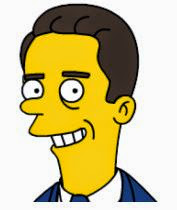
If you don’t have the time or desire to wade through my detailed analyses of the leading candidates, you may want to think about using ABC News’s “Match-O-Matic” online toy instead. It’s significantly more simplistic than my analysis, its questions are pretty transparent to people who have been following the issues in the campaign closely, and its rubric is heavy on stuff that I don’t think matters all that much. But it is faster, with only 14 questions, and cuter, with the java animation of candidate bobbleheads. My Match-O-Matic results: #1 Rudy Giuliani; #2, Bill Richardson, #3, John McCain. But then I kind of already knew that I would favor Giuliani and McCain, so it may be a decent rough approximation.
UPDATE: The Wife tried it, and got #1 Mitt Romney, #2 Ron Paul, and #3 Rudy Giuliani (who she said looked like a garden gnome). I asked her how such a thing could be, and she re-took the test and we talked about the tax policy proposals a little bit. This time, she got the same results, but with Paul and Giuliani reversed (and Hizzonner still looked like a gnome to her). So she read some of my profile of the Governor, and decided she didn't like him because he seemed "too religious." Then she asked me if he was the one with the story about strapping the dog to the roof of the car, and when I said yes, she made a noise similar to the kind that she made when we found some stinky brown sludge in the washing machine's rubber liner yesterday, and announced that under no circumstances would she vote for him. So maybe the Match-O-Matic isn't so accurate after all.
Showing posts with label Candidate Analysis. Show all posts
Showing posts with label Candidate Analysis. Show all posts
January 7, 2008


December 29, 2007
Summary of Candidates
I've looked in depth at four Republican and two Democratic candidates for President, all of whom are polling higher than 10% in national polls and any of whom is poised to potentially take the White House. Here is a short table summarizing my policy ratings for each candidate's platform, and listing some positives, some negatives, and something about each candidate that surprised me.
My policy rubric was pretty heavy on foreign policy and military issues, and I do ask the candidates to confront the basic conundrum of both balancing the budget and at least keeping taxes at their current level -- which may be an impossibility.
None of them offers a policy platform with which I am completely happy. None of them presents a personality and background that would lead me to think that this person would be a President worthy of admiration. All have done some interesting things with their lives and most bring talents and experiences to the table which are worthy of consideration. All of them are really smart.
No one has really exciting or promising ideas about either Social Security reform or North Korea. That's because there probably are no really good solutions to those problems -- just hard work and mitigating the damage in the short run, and hoping that smaller, incremental improvements and changes in other economic and geopolitical conditions will produce opportunities in the future before things get out of hand.
And with one exception, all of the provide cold comfort to me in my concern about the consolidation of power in a unitary executive.
For my Democrat and Democratic-leaning friends, I'm surprised at the toughness of the decision with which you are faced. Hillary Clinton has transformed herself into a technocrat and the "safe" choice, but she also seems nearly as likely as any of the Republicans to continue the trend towards consolidating all effective governmental power in the Presidency. Democrats, you've seen for the past seven years how much you would dislike that; while Clinton might be more palatable to you holding those reins of power than Bush, remember that one day she'll have to hand those reins to someone else.
If I were a Democrat, I would like Barack Obama better than Clinton. He presents the promise of innovation, energy, and charisma, but I have to wonder if he's really the promise of something new or just another empty suit. For the time being, I'm thinking no, because even if he makes a few missteps early in his Administration (as seems likely), it seems to me that he would learn from them and eventually we'd get a pretty good Presidency. But I still have doubts and concerns about what form those missteps would take. Obama is about the only one of those six whose policies, personality, and personal history give me confidence that he has the potential to be a good leader while still respecting the Constitution.
Now, one thing I can't say is "Well, we surely can't do any worse than what we've got." But that's not true at all. We can, at minimum, continue doing as well as we have, if we pick Mike Huckabee. With only minor differences, Huckabee promises to basically continue the policies of the incumbent Bush White House. The difference between the Huckster and the incumbent is that Huckabee's grasp of foreign policy is not merely arrogant and misguided, but also naive and unimportant to the candidate.
Mitt Romney, however smart he may be, is simply untrustworthy. He is an empty suit. I'm particularly disappointed to find Romney reversing what had been a promising set of principles on the separation of church and state in his desperation to appeal to Christian Right voters in the GOP primaries. It's hard to find a position he took in his political career in Massachusetts that he hasn't reversed in order to seek the Republican nomination. While he may not be corruptible in the sense that he has way too much personal wealth to need more by way of bribery, he may well be corruptible in the sense that his craven need for political support and absence of any kind of core beliefs or principles would lead him to bargain away anything in his policy agenda that one might otherwise consider attractive. Like the businessman that he fundamentally is, everything is negotiable with Romney, which means that for the right price, anything is for sale in a Romney White House.
I find myself faced with a conundrum -- if one of these guys gets the nomination, would I have to vote for the Democrat? Fortunately, there are other options; I can always vote Libertarian.
But there are other groups within the Republican party than the theocrats. For a while, I had been an energetic advocate of Rudy Giuliani based on his strong foreign and military policy platform and his considerable charisma. But after some careful thought and research, I found some things about him, and looked closer at some other things I already knew about him, and discovered cause for serious misgivings. While there are significant policy differences between him and John McCain, overall I like their platforms about the same and they ultimately are more similar than they are different.
So a policy analysis confirms that the less-theocratic side of the GOP still has the most appeal for me. What I would like to see is that less-theocratic and more economic and military-minded side of the party steering the boat. This may mean that some elements of the Republican coalition have to be reshuffled and some of the more extreme religious types discarded. A pro-choice candidate seems more likely to be able to reach out to voters (particularly women voters) who currently identify as independent and moderate Democrats and bring them into the new party. Lots of those voters are pro-choice enough that they would not consider voting for a Republican, ever -- but a pro-choice Republican would make them have to set that single issue aside and look at the rest of the package. There are political gains to be made there.
So I'm sticking with Rudy Giuliani as my most-favored candidate and hoping that the Supreme Court, at least, will be able to assert itself as the "goalie" against what will likely be attempts by the Giuliani Administration to aggrandize executive power. Congress sure won't do it. But on balance, Giuliani presents the best opportunity to both reform the GOP into a party able to address the challenges of the future, and to respond to the international challenges faced by the country today.
| Candidate | Policy | Favorable | Unfavorable | Surprising |
| Rudy Giuliani | 65 | Strong executive and leadership skills; best overall blend of policies | Autocratic governing style and disregard for individual rights; possible corruption | Once considered becoming a priest |
| John McCain | 62 | Good grasp of military and foreign policy issues; committed to balanced budget; genuine hero | Arrogant personality and overreaching vision of governmental power; past corruption | Messy personal life stalled privileged and promising military career |
| Mitt Romney | 41 | Shrewd and competent; likely will listen carefully to competent advisors | Malleable beliefs; veracity deficiency; moves problems around rather than solving them; possible corruption | Both parents ran for high political office |
| Mike Huckabee | 34 | Strong moral compass; surprisingly charismatic | Big-government conservative and possibly corrupt; would continue trend towards theocracy | Environmental preservation a significant policy concern |
| Hillary Clinton | 52 | Personal White House and national political experience; strong grasp of military and foreign policy issues | Imperious and calculating personality; advocate of big government solutions to most issues; corruption | Republican party activist through her mid-20's |
| Barack Obama | 47 | Youth and charisma; good understanding of Constitution; not an idealogue | Careless and inchoate policy proposals; short resume; possible corruption | Tort reformer |
My policy rubric was pretty heavy on foreign policy and military issues, and I do ask the candidates to confront the basic conundrum of both balancing the budget and at least keeping taxes at their current level -- which may be an impossibility.
None of them offers a policy platform with which I am completely happy. None of them presents a personality and background that would lead me to think that this person would be a President worthy of admiration. All have done some interesting things with their lives and most bring talents and experiences to the table which are worthy of consideration. All of them are really smart.
No one has really exciting or promising ideas about either Social Security reform or North Korea. That's because there probably are no really good solutions to those problems -- just hard work and mitigating the damage in the short run, and hoping that smaller, incremental improvements and changes in other economic and geopolitical conditions will produce opportunities in the future before things get out of hand.
And with one exception, all of the provide cold comfort to me in my concern about the consolidation of power in a unitary executive.
For my Democrat and Democratic-leaning friends, I'm surprised at the toughness of the decision with which you are faced. Hillary Clinton has transformed herself into a technocrat and the "safe" choice, but she also seems nearly as likely as any of the Republicans to continue the trend towards consolidating all effective governmental power in the Presidency. Democrats, you've seen for the past seven years how much you would dislike that; while Clinton might be more palatable to you holding those reins of power than Bush, remember that one day she'll have to hand those reins to someone else.
If I were a Democrat, I would like Barack Obama better than Clinton. He presents the promise of innovation, energy, and charisma, but I have to wonder if he's really the promise of something new or just another empty suit. For the time being, I'm thinking no, because even if he makes a few missteps early in his Administration (as seems likely), it seems to me that he would learn from them and eventually we'd get a pretty good Presidency. But I still have doubts and concerns about what form those missteps would take. Obama is about the only one of those six whose policies, personality, and personal history give me confidence that he has the potential to be a good leader while still respecting the Constitution.
Now, one thing I can't say is "Well, we surely can't do any worse than what we've got." But that's not true at all. We can, at minimum, continue doing as well as we have, if we pick Mike Huckabee. With only minor differences, Huckabee promises to basically continue the policies of the incumbent Bush White House. The difference between the Huckster and the incumbent is that Huckabee's grasp of foreign policy is not merely arrogant and misguided, but also naive and unimportant to the candidate.
Mitt Romney, however smart he may be, is simply untrustworthy. He is an empty suit. I'm particularly disappointed to find Romney reversing what had been a promising set of principles on the separation of church and state in his desperation to appeal to Christian Right voters in the GOP primaries. It's hard to find a position he took in his political career in Massachusetts that he hasn't reversed in order to seek the Republican nomination. While he may not be corruptible in the sense that he has way too much personal wealth to need more by way of bribery, he may well be corruptible in the sense that his craven need for political support and absence of any kind of core beliefs or principles would lead him to bargain away anything in his policy agenda that one might otherwise consider attractive. Like the businessman that he fundamentally is, everything is negotiable with Romney, which means that for the right price, anything is for sale in a Romney White House.
I find myself faced with a conundrum -- if one of these guys gets the nomination, would I have to vote for the Democrat? Fortunately, there are other options; I can always vote Libertarian.
But there are other groups within the Republican party than the theocrats. For a while, I had been an energetic advocate of Rudy Giuliani based on his strong foreign and military policy platform and his considerable charisma. But after some careful thought and research, I found some things about him, and looked closer at some other things I already knew about him, and discovered cause for serious misgivings. While there are significant policy differences between him and John McCain, overall I like their platforms about the same and they ultimately are more similar than they are different.
So a policy analysis confirms that the less-theocratic side of the GOP still has the most appeal for me. What I would like to see is that less-theocratic and more economic and military-minded side of the party steering the boat. This may mean that some elements of the Republican coalition have to be reshuffled and some of the more extreme religious types discarded. A pro-choice candidate seems more likely to be able to reach out to voters (particularly women voters) who currently identify as independent and moderate Democrats and bring them into the new party. Lots of those voters are pro-choice enough that they would not consider voting for a Republican, ever -- but a pro-choice Republican would make them have to set that single issue aside and look at the rest of the package. There are political gains to be made there.
So I'm sticking with Rudy Giuliani as my most-favored candidate and hoping that the Supreme Court, at least, will be able to assert itself as the "goalie" against what will likely be attempts by the Giuliani Administration to aggrandize executive power. Congress sure won't do it. But on balance, Giuliani presents the best opportunity to both reform the GOP into a party able to address the challenges of the future, and to respond to the international challenges faced by the country today.
December 28, 2007
Candidate Analysis of John McCain
 Biography
John Sidney McCain III will be 72 years old on the next Inauguration Day.
McCain was born in 1936 in the Panama Canal Zone, which at the time was a United States possession. Both his father and grandfather were four-star Admirals in the U.S. Navy, both of whom distinguished themselves in World War II. He attended the U.S. Naval Academy at Annapolis, where despite middling grades and some disciplinary problems, he was recognized as a leader by his fellow midshipmen (as well as a hellraiser; one described being at liberty with McCain as like being in a "train wreck"). He crashed a plane after graduation, and ran a second plane through power lines, and continued a hard-partying lifestyle as a junior officer.
He began to adopt a more serious approach to life and his career after deployment on the USS Enterprise in the Cuban Missile Crisis of 1962. In 1965, he married his first wife and adopted her two children (her first husband had been one of his classmates at Annapolis) and they had a daughter. Growing dissatisfied with his role as a trainer, he requested and was granted a combat assignment in 1966, being reassigned to the USS Forrestal on duty in the Vietnam war. There, he flew high-risk missions intended to destroy Soviet-built anti-aircraft installations, and grew frustrated with micromanagement of Operation Rolling Thunder.
He was twice almost killed in action. In the first incident, ordinance exploded before he could launch his A-4 Skyhawk. McCain was able to escape the cockpit of the plane by crawling forward on the fuselage, and had to jump onto a deck covered with burning napalm. He later stated that seeing the napalm up close gave him grave moral misgivings about using it as a weapon. Film of this incident is still used in the Navy for safety training.
The second and more famous incident was on his twenty-third bombing run, when his A-2 was shot down, and he crash-landed in a lake near Saigon. He spent six weeks in a Viet Cong hospital and then was taken a prisoner of war. The Viet Cong understood his high value as a prisoner since his capture made the front page of the New York Times; several months after he was shot down, his father was made commander-in-chief of the Pacific theater of naval operations, meaning that the Viet Cong had as its prisoner the son of the overall commander of military operations against it. The Viet Cong offered to release McCain early, but McCain refused release so that other POW's who had been imprisoned longer than him could be released first. McCain did not know it at the time, but this denied the Viet Cong a substantial propaganda victory; Vietnamese leaders later admitted that they intended to use McCain's early release to tell other American POW's that only privilege mattered to demoralize them.
Disappointed that this demoralizing public relations tactic had failed due to McCain's refusal to cooperate, the Viet Cong began to torture McCain daily with rope bindings, daily beatings, and withholding treatment for dysentery. After breaking several bones and several teeth, he signed a forced confession with obviously bad grammar indicating its forced nature. When someone in the VC who knew English well caught on to this, he refused to sign a second confession, earning more beatings. When asked to give the names of other men in his unit, recited the names of the Green Bay Packers' offensive line.
After being transferred to somewhat less horrific conditions in Hanoi, he was given the opportunity to meet with American anti-war activists visiting there, and again refused to do so. He was not released until after the Paris Peace Accords were signed, having spent five and a half years as a prisoner of war -- five more than he would have, had he agreed to the early release that was offered to him. For this, he earns this blog's Big Brass Ones Award. To this day, he cannot raise his arms above his head; a wave at or just above ear level is about all he can manage without excruciating pain.
After being transferred to somewhat less horrific conditions in Hanoi, he was given the opportunity to meet with American anti-war activists visiting there, and again refused to do so. He was not released until after the Paris Peace Accords were signed, having spent five and a half years as a prisoner of war -- five more than he would have, had he agreed to the early release that was offered to him. For this, he earns this blog's Big Brass Ones Award. To this day, he cannot raise his arms above his head; a wave at or just above ear level is about all he can manage without excruciating pain.
After his return to the U.S., he rehabilitated from his injuries, and then served as executive officer of a naval air squadron based in Jacksonville, Florida, and turned around its performance to the point that the squadron won a Meritorious Service Award. However, his marriage fell apart and he had several extramarital affairs; he divorced his first wife in 1980, after a four-year separation in which McCain fell in love with his second wife, the daughter of a wealthy Phoenix beer distributor. McCain came to believe that he would not make Admiral (a messy personal life can sometimes do that to an officer's career), and so he resigned from the Navy, having obtained the rank of Captain (the equivalent of a full-bird Colonel in the Army or Marines) in 1981. For his service, mainly in Vietnam, he had earned a Bronze Star, Silver Star, Distinguished Flying Cross, the Order of Merit, and a Purple Heart.
With his second wife, he went on to have a daughter and two sons, and they adopted a daughter from an orphanage operated by Mother Teresa in Bangladesh. McCain's oldest son (from his first marriage) is an Annapolis graduate and was a Navy pilot like his dad; his middle son (from his second marriage) is is in the U.S. Marine Corps and currently deployed in Iraq; his youngest son is in Annapolis right now. In all, he has seven children born over a thirty-five year stretch of time; by all accounts the various children are all on good terms with one another and their father, and McCain now has four grandchildren to add to the mix. McCain called himself an Episcopalian until only a few months ago, but has attended services at a Baptist megachurch in suburban Phoenix for many years. He has a penchant for carrying lucky charms like rabbit's feet and feathers with him and has had several treatments for skin cancer and melanoma and caused him to joke "I'm older than dirt and have more scars than Frankenstein."
Political Experience
In 1977, McCain became the Navy's liaison to the U.S. Senate, where he worked for three years. McCain left the Navy in 1981 and briefly worked for his father-in-law in Phoenix; he used the opportunity to make powerful and wealthy friends in Arizona including banker Charles Keating and the editor-in-chief of the Arizona Republic. In 1982, he ran for Arizona's First Congressional District and faced charges of being a carpetbagger. At a candidate forum, he responded to a citizen challenge that he wasn't a "real" Arizonan with this retort:
In 1986, he ran for the U.S. Senate seat to be vacated by the retiring Barry Goldwater, and found himself unopposed for the Republican nomination. Bruce Babbitt, the former Governor of Arizona, decided not to run against him, and since then the Arizona Democratic Party has never been able to find anyone of any stature or note to challenge McCain for the Senate seat for McCain's re-election bids in 1992, 1998, and 2004; it would appear that unless he is elected President, the Senate seat will be McCain's for as long as he wants it (only four men have ever held that seat before him).
Almost immediately upon entering the Senate, McCain began to stand out from the crowd. He became enmeshed in a political influence scandal involving his friend and campaign donor Charles Keating, whose banking business was going belly-up and who sought the influence of officeholders to whom he had made campaign donations to prevent the government from seizing his business. McCain was one of those five Senators and it seems that McCain did speak with banking regulators on Keating's behalf -- unsuccessfully, as it turned out. The Senate investigated the conduct of McCain and the other four Senators (all of whom were Democrats) and determined that while they broke no laws, they had exercised poor judgment in acting as they had.
McCain also stuck his neck out early and far to spearhead the efforts of his former Senate mentor, John Tower, to become the Secretary of Defense of President George H.W. Bush in 1989. The primary obstacle to Tower's nomination was not opposition from Senate Democrats but a lack of support from the social right; in particular the Moral Majority, under the direction of Paul Weyrich, believed that Tower's reputation for binge drinking and extramarital affairs rendered him unacceptable for that office. (Dick Cheney was eventually confirmed to that position.) McCain later wrote that Weyrich was a "pompous, self-serving son of a bitch" because of the intramural squabble over Tower, and thus began McCain's rift with the Christian Right.
This rift plagued McCain as sought the Republican Presidential nomination in 2000, and was the only significant challenger to George W. Bush's eventual nomination. Capitalizing upon the open and friendly relationship with the mainstream media he formed in the wake of the Keating scandal, McCain made campaign finance reform a centerpiece issue of his campaign and had long bull sessions with reporters on his campaign bus, which he nicknamed the "Straight Talk Express." McCain skipped the Iowa caucuses completely, and won the New Hampshire primary by a margin of 19%. It was widely thought that if McCain would win the next primary in South Carolina, his momentum would render him unstoppable and defeat Bush. However, that did not happen and to this day it is not clear whether the Bush or McCain campaigns "went negative" first in South Carolina. It is clear that Bush overtly and successfully appealed to evangelical voters in South Carolina, and that McCain was unable to recover from having that bloc of voters consolidate against him. Stinging from the defeat, McCain publicly blamed leaders of the Christian Right including Jerry Falwell, and he lost most of the primaries after that.
In the Senate, he has carefully crafted a reputation as a "maverick" Republican, willing to stand in defiance of his party when his beliefs call for it. In practice, these kinds of go-against-the-party stances are actually about as frequent as they are for most other legislators, in either party. McCain and John Kerry were instrumental in prodding the Clinton Administration to normalize diplomatic relations with Vietnam, and he was a critical sponsor of the Line Item Veto law of 1996 (which was found to be unconstitutional two years later, in a challenge led, in no small part, by New York City Mayor Rudy Giuliani).
Most prominent among his legislative efforts, however, has been his pursuit of campaign finance reform, which resulted in his collaboration with liberal Wisconsin Senator Russ Feingold in a very controversial donor-limitation and issue-advertisement limitation law. Its most obvious effect has been its "stand-by-your-ad" provision, which requires the personal endorsement of a candidate to any paid advertisement authorized by or issued under the control of the campaign. Less obvious to the public is the way in which individuals and corporations may make campaign donations, either directly to the individual candidates' campaigns, to political parties, or to issue groups; the kinds of advertisements that each can sponsor; and when the advertisements can run. After several unsuccessful attempts, the law was passed in 2002, and has mostly, but not completely, been upheld by the Supreme Court.
On The Issues
Abortion: Pro-life. Would permit abortions in case of rape, incest and serious health risk. Favors repeal of Roe v. Wade (in reversal of statement he made in 1999 suggesting overturn would be a bad thing despite affirming personal opposition to most abortions). Rating: 0 of 1 points.
Amending the Constitution: Previously advocated a balanced-budget amendment. Voted for amendment authorizing criminalization of flag burning. Opposed to constitutional same-sex marriage ban. Rating: 3 of 6 points.
Anti-Terrorism Policy: Voted in favor of lavish budget for anti-terrorism activities and additional spending for military operations in Iraq and Afghanistan. Believes spies are better than soldiers to find Osama bin Laden; adamant that doing so will not end threat of al Qaeda or the "hydra" of Islamic terrorism. Believes that inducing overthrow of rogue states will deny terrorists safe harbors and work to the long-term security of the West. Believes that there is a great deal of waste in defense spending and many programs that can be cut without reducing effectiveness of military, including the B-2 and C-130 aircraft programs and the Seawolf submarine. Rating: 4 of 7 points.
Balanced Budget: Frequently castigates his colleagues in Congress for pork barrel spending, although he does bring home some pork for Arizona himself. Has pushed hard for spending cap legislation and line item veto law (ultimately proven unconstitutional but it shows where his sentiments are). Opposed to agricultural subsidies even when campaigning in states like Iowa and Florida, where subsidies are popular. However, health care and military/anti-terrorism proposals are all expensive and tax cut platform appears to suggest possibility of irreconcilable tension between stated goals of more spending and balanced budget; cutting subsidies and waste do not by themselves appear enough to realize all three goals. Rating: 6 of 8 points.
Civil Liberties: Favors "don't ask, don't tell" policy. Against including sexual orientation in civil rights legislation. Favors USA PATRIOT Act and warrantless wiretap provisions of same. Sponsored legislation restricting ability of people to donate money to support political speech. Would favor Clinton proposal to require media products like movies and video games to bear detailed warnings about violent and sexual content. Favors gun ownership rights; voted against the Brady Bill. Rating: 1 of 9 points.
Education: Favors parental choice, home-schooling, and school vouchers. Favors merit pay for teachers. Rating: 1 of 5 points.
Environment: Opposed to drilling in ANWR. Voted against raising mandatory mileage standards for passenger vehicles, but also voted to preserve existing standards. In favor of anti-whaling legislation and voted for "brownfield remediation" funding. Rating: 3 of 4 points.
Free Trade: Favored NAFTA, CAFTA, all rounds of GATT. Opposed to fast-track authority for President. Favors normalization of trade with China and including Chile in NAFTA. Rating: 5 of 5 points.
Generalized Foreign Policy: Favors maintaining embargo with Cuba and keeping dialogue and trade with China flowing freely. Points to Libyan disarmament as a success story for the CIA and robust U.S. foreign policy. Advocates overthrow of "rogue" governments to protect U.S. security interests. Favored moderate trade sanctions against Russia for human rights violations in Chechnya; currently favors stricter trade sanctions on Burma to encourage democratization and end of human rights violations there. Critical of Bill Clinton for adopting less aggressive stance in multilateral world. Rating: 4 of 6 points.
Health Care Reform: Proposes $2,500 per-individual refundable tax credit for healthcare spending and, before creation of Medicare part "D," proposed tax credits to subsidize senior citizens' prescription medicine spending. Opposed to employer mandates or universal coverage. Rating: 2 of 3 points.
Immigration Policy: Sponsored the recent immigration reform bill which would have created a guest worker program and streamlined both naturalization and temporary work visas. Rating: 5 of 5 points.
Iraq: Favored invasion of Iraq. Very critical of war's early phases of conduct; believes that an open-ended military and civil affairs commitment combined with sustained counter-insurgency strategy as led by Gen. Patraeus is the only way forward. Rating: 6 of 6 points.
Korea: Backs sending humanitarian food aid to North Korea to alleviate the human disaster caused by the death throes of the repressive government there; does not seem to acknowledge that the government there is still quite strong but does acknowledge that it is quite dangerous. Supported multi-party talks. Rating: 4 of 5 points.
Middle East Peace Process: Calls Iran and Syria sponsors of terrorism and vows strikes against them if they get nuclear weapons to prevent the use of those weapons against Israel. Does not believe diplomatic discussions with Iran would be productive. Would move the U.S. Embassy to Jerusalem. Rating: 3 of 4 points.
Science and Technology: Believes in global climate change. Advocate of more nuclear power plants. Voted against human cloning but favored some embryonic stem cell research programs. Rating: 3 of 4 points.
Separation of Church and State: Mistakenly stated that the Constitution establishes the United States as a "Christian nation." Favors school vouchers and home-schooling, school prayer time, and posting of the Ten Commandments in public schools. Would permit teaching of creationism in schools. Rating: 0 of 5 points.
Social Security Reform: Advocate of privatized savings accounts for up to 20% of SSI withholding. Willing to consider adjustment of entitlement caps, Favored using majority of Clinton budget surpluses to buttress Social Security. Opposed to new taxes to fund system in the future. Rating: 4 of 5 points.
Taxes: Wants lower tax rate with simpler tax scheme and flirted with the idea of a flat tax during 2000 Presidential campaign, but presently opposed to FairTax. Instead proposes a bipartisan commission to reform the Internal Revenue Code and putting the report of the commission to a yes or no vote in Congress. Suggested expanding range of 15% tax bracket. Voted to repeal AMT. Refuses to sign pledge against raising taxes. Initially opposed Bush tax cuts in 2001 and 2003, but was in favor of extending them earlier this year. Rating: 3 of 5 points.
Tort Reform: Voted in favor of limiting punitive damages and class action limitations. Recently spoke in favor of "loser pays" regime for medical malpractice lawsuits, and calls medical malpractice reform the "second highest priority" of his health care reform policy. Rating: 0 of 3 points.
Torture of U.S. Prisoners: Unequivocally and absolutely opposed to torture of U.S. prisoners, including waterboarding, under any circumstances. No other candidate for President has actually been tortured personally. Rating: 4 of 4 points.
Overall Impression: I've agonized over McCain's candidacy for a while. McCain is a genuine American hero who has led a remarkable and quintessentially American life; it would be impossible for me to not be impressed with his story. He should be remembered as one of the significant public figures of the late twentieth and early twenty-first centuries, whether or not he ever attains the highest political office in the land. Despite a privileged and politically-connected background that he could have used to avoid dangerous assignments while in the Navy, he volunteered for combat duty. Even after he was captured, he refused to take the easy way out. He has also, in his political career, not taken the easy way out of problems; he faced up to his mistakes in the Keating affair and has repeatedly attempted to reconcile himself to the Christian right, with what still seems to be only lukewarm success.
In terms of policy, he is the most black-and-white candidate I have analyzed.* He is absolutely right about needing to keep a military commitment to Iraq, the way immigration policy should be reformed, free trade, and not torturing our prisoners. He is the only candidate who has demonstrated a reliable commitment to the idea of a balanced budget; whether such a goal is achievable or not, it seems he would work hard towards it. But he is also dead wrong on abortion, civil liberties and church-and-state issues. In short, within the scope of legitimate policymaking, he seems to have really good ideas; but he is in serious needs of education in Constitutional Law. Consequently, he scores either near the maximum or the minimum of nearly every policy category in my rubric.
Sadly, he is not free from the taint of corruption and he has, at best, a mixed reputation on Capitol Hill for being tempramental and difficult to work with despite his careful cultivation of an image of being a master of compromise and bipartisanship. He was voted the second-biggest "hothead" in the Senate (Kennedy took top honors). It is unclear at best how well he could leverage his considerable legislative experience to his advantage from the Oval Office, particularly given a personality that has consistently shown a disregard for norms of behavior, and seemingly uncontrollable flashes of arrogance and intemperance when challenged.
I want to like McCain because he is a hero, because he seems to have a strong moral sense, and he does seem to stand up for what he believes in (even though in many cases he is dead wrong). But he also seems to have a serious mean streak that he cannot always keep under control and sometimes does not seem to even try, and he has made some poor political judgments. It's difficult to say whether his arrogance, corruptibility, or past mistakes are any more pronounced than similar traits held by his adversaries for the Presidency (they all have some of those traits) but they are very much on exhibit in McCain's case.
This suggests that he would ultimately come to see Congress as an obstacle to his administration rather than as an equal partner in the enterprise of government -- which is precisely the same concern that I have about Rudy Giuliani, the candidate who I have scored closest to McCain in terms of ovarall policy approval, as well as Hillary Clinton. McCain's executive experience, though, consists of getting a naval aviation squadron squared away and a quarter century of directing legislative staff. Running the White House will be a management challenge unlike any he has taken on in his life and I question whether he has been well-prepared for this job.
Total score: 62 of 100.
* This ends my series of in-depth candidate analyses. Fred Thompson and John Edwards are both currently polling at or near 10%, the threshold I previously set for making this sort of analysis, and they are trending downward as the other candidates eclipse them. These anlayses also take quite a bit of time to research. If either of them perform well in Iowa and New Hampshire or otherwise surge in the polls, I will revisit that editorial decision.
With his second wife, he went on to have a daughter and two sons, and they adopted a daughter from an orphanage operated by Mother Teresa in Bangladesh. McCain's oldest son (from his first marriage) is an Annapolis graduate and was a Navy pilot like his dad; his middle son (from his second marriage) is is in the U.S. Marine Corps and currently deployed in Iraq; his youngest son is in Annapolis right now. In all, he has seven children born over a thirty-five year stretch of time; by all accounts the various children are all on good terms with one another and their father, and McCain now has four grandchildren to add to the mix. McCain called himself an Episcopalian until only a few months ago, but has attended services at a Baptist megachurch in suburban Phoenix for many years. He has a penchant for carrying lucky charms like rabbit's feet and feathers with him and has had several treatments for skin cancer and melanoma and caused him to joke "I'm older than dirt and have more scars than Frankenstein."
Political Experience
In 1977, McCain became the Navy's liaison to the U.S. Senate, where he worked for three years. McCain left the Navy in 1981 and briefly worked for his father-in-law in Phoenix; he used the opportunity to make powerful and wealthy friends in Arizona including banker Charles Keating and the editor-in-chief of the Arizona Republic. In 1982, he ran for Arizona's First Congressional District and faced charges of being a carpetbagger. At a candidate forum, he responded to a citizen challenge that he wasn't a "real" Arizonan with this retort:
Listen, pal. I spent 22 years in the Navy. My grandfather was in the Navy. We in the military service tend to move a lot. We have to live in all parts of the country, all parts of the world. I wish I could have had the luxury, like you, of growing up and living and spending my entire life in a nice place like the first district of Arizona, but I was doing other things. As a matter of fact, when I think about it now, the place I lived longest in my life was Hanoi.Between the fame gained for that quip, a healthy campaign loan from his wealthy wife, and the enthusiastic support of the Arizona Republic, McCain went on to get the nomination to the safely Republican seat by a healthy margin, which he held for two terms. He generally followed the Reagan Administration's agenda as a Congressman. However, McCain's famous retort to the voter also reveals a bitter, short-tempered side of his personality which has haunted him for his entire political career.
In 1986, he ran for the U.S. Senate seat to be vacated by the retiring Barry Goldwater, and found himself unopposed for the Republican nomination. Bruce Babbitt, the former Governor of Arizona, decided not to run against him, and since then the Arizona Democratic Party has never been able to find anyone of any stature or note to challenge McCain for the Senate seat for McCain's re-election bids in 1992, 1998, and 2004; it would appear that unless he is elected President, the Senate seat will be McCain's for as long as he wants it (only four men have ever held that seat before him).
Almost immediately upon entering the Senate, McCain began to stand out from the crowd. He became enmeshed in a political influence scandal involving his friend and campaign donor Charles Keating, whose banking business was going belly-up and who sought the influence of officeholders to whom he had made campaign donations to prevent the government from seizing his business. McCain was one of those five Senators and it seems that McCain did speak with banking regulators on Keating's behalf -- unsuccessfully, as it turned out. The Senate investigated the conduct of McCain and the other four Senators (all of whom were Democrats) and determined that while they broke no laws, they had exercised poor judgment in acting as they had.
McCain also stuck his neck out early and far to spearhead the efforts of his former Senate mentor, John Tower, to become the Secretary of Defense of President George H.W. Bush in 1989. The primary obstacle to Tower's nomination was not opposition from Senate Democrats but a lack of support from the social right; in particular the Moral Majority, under the direction of Paul Weyrich, believed that Tower's reputation for binge drinking and extramarital affairs rendered him unacceptable for that office. (Dick Cheney was eventually confirmed to that position.) McCain later wrote that Weyrich was a "pompous, self-serving son of a bitch" because of the intramural squabble over Tower, and thus began McCain's rift with the Christian Right.
This rift plagued McCain as sought the Republican Presidential nomination in 2000, and was the only significant challenger to George W. Bush's eventual nomination. Capitalizing upon the open and friendly relationship with the mainstream media he formed in the wake of the Keating scandal, McCain made campaign finance reform a centerpiece issue of his campaign and had long bull sessions with reporters on his campaign bus, which he nicknamed the "Straight Talk Express." McCain skipped the Iowa caucuses completely, and won the New Hampshire primary by a margin of 19%. It was widely thought that if McCain would win the next primary in South Carolina, his momentum would render him unstoppable and defeat Bush. However, that did not happen and to this day it is not clear whether the Bush or McCain campaigns "went negative" first in South Carolina. It is clear that Bush overtly and successfully appealed to evangelical voters in South Carolina, and that McCain was unable to recover from having that bloc of voters consolidate against him. Stinging from the defeat, McCain publicly blamed leaders of the Christian Right including Jerry Falwell, and he lost most of the primaries after that.
In the Senate, he has carefully crafted a reputation as a "maverick" Republican, willing to stand in defiance of his party when his beliefs call for it. In practice, these kinds of go-against-the-party stances are actually about as frequent as they are for most other legislators, in either party. McCain and John Kerry were instrumental in prodding the Clinton Administration to normalize diplomatic relations with Vietnam, and he was a critical sponsor of the Line Item Veto law of 1996 (which was found to be unconstitutional two years later, in a challenge led, in no small part, by New York City Mayor Rudy Giuliani).
Most prominent among his legislative efforts, however, has been his pursuit of campaign finance reform, which resulted in his collaboration with liberal Wisconsin Senator Russ Feingold in a very controversial donor-limitation and issue-advertisement limitation law. Its most obvious effect has been its "stand-by-your-ad" provision, which requires the personal endorsement of a candidate to any paid advertisement authorized by or issued under the control of the campaign. Less obvious to the public is the way in which individuals and corporations may make campaign donations, either directly to the individual candidates' campaigns, to political parties, or to issue groups; the kinds of advertisements that each can sponsor; and when the advertisements can run. After several unsuccessful attempts, the law was passed in 2002, and has mostly, but not completely, been upheld by the Supreme Court.
On The Issues
Abortion: Pro-life. Would permit abortions in case of rape, incest and serious health risk. Favors repeal of Roe v. Wade (in reversal of statement he made in 1999 suggesting overturn would be a bad thing despite affirming personal opposition to most abortions). Rating: 0 of 1 points.
Amending the Constitution: Previously advocated a balanced-budget amendment. Voted for amendment authorizing criminalization of flag burning. Opposed to constitutional same-sex marriage ban. Rating: 3 of 6 points.
Anti-Terrorism Policy: Voted in favor of lavish budget for anti-terrorism activities and additional spending for military operations in Iraq and Afghanistan. Believes spies are better than soldiers to find Osama bin Laden; adamant that doing so will not end threat of al Qaeda or the "hydra" of Islamic terrorism. Believes that inducing overthrow of rogue states will deny terrorists safe harbors and work to the long-term security of the West. Believes that there is a great deal of waste in defense spending and many programs that can be cut without reducing effectiveness of military, including the B-2 and C-130 aircraft programs and the Seawolf submarine. Rating: 4 of 7 points.
Balanced Budget: Frequently castigates his colleagues in Congress for pork barrel spending, although he does bring home some pork for Arizona himself. Has pushed hard for spending cap legislation and line item veto law (ultimately proven unconstitutional but it shows where his sentiments are). Opposed to agricultural subsidies even when campaigning in states like Iowa and Florida, where subsidies are popular. However, health care and military/anti-terrorism proposals are all expensive and tax cut platform appears to suggest possibility of irreconcilable tension between stated goals of more spending and balanced budget; cutting subsidies and waste do not by themselves appear enough to realize all three goals. Rating: 6 of 8 points.
Civil Liberties: Favors "don't ask, don't tell" policy. Against including sexual orientation in civil rights legislation. Favors USA PATRIOT Act and warrantless wiretap provisions of same. Sponsored legislation restricting ability of people to donate money to support political speech. Would favor Clinton proposal to require media products like movies and video games to bear detailed warnings about violent and sexual content. Favors gun ownership rights; voted against the Brady Bill. Rating: 1 of 9 points.
Education: Favors parental choice, home-schooling, and school vouchers. Favors merit pay for teachers. Rating: 1 of 5 points.
Environment: Opposed to drilling in ANWR. Voted against raising mandatory mileage standards for passenger vehicles, but also voted to preserve existing standards. In favor of anti-whaling legislation and voted for "brownfield remediation" funding. Rating: 3 of 4 points.
Free Trade: Favored NAFTA, CAFTA, all rounds of GATT. Opposed to fast-track authority for President. Favors normalization of trade with China and including Chile in NAFTA. Rating: 5 of 5 points.
Generalized Foreign Policy: Favors maintaining embargo with Cuba and keeping dialogue and trade with China flowing freely. Points to Libyan disarmament as a success story for the CIA and robust U.S. foreign policy. Advocates overthrow of "rogue" governments to protect U.S. security interests. Favored moderate trade sanctions against Russia for human rights violations in Chechnya; currently favors stricter trade sanctions on Burma to encourage democratization and end of human rights violations there. Critical of Bill Clinton for adopting less aggressive stance in multilateral world. Rating: 4 of 6 points.
Health Care Reform: Proposes $2,500 per-individual refundable tax credit for healthcare spending and, before creation of Medicare part "D," proposed tax credits to subsidize senior citizens' prescription medicine spending. Opposed to employer mandates or universal coverage. Rating: 2 of 3 points.
Immigration Policy: Sponsored the recent immigration reform bill which would have created a guest worker program and streamlined both naturalization and temporary work visas. Rating: 5 of 5 points.
Iraq: Favored invasion of Iraq. Very critical of war's early phases of conduct; believes that an open-ended military and civil affairs commitment combined with sustained counter-insurgency strategy as led by Gen. Patraeus is the only way forward. Rating: 6 of 6 points.
Korea: Backs sending humanitarian food aid to North Korea to alleviate the human disaster caused by the death throes of the repressive government there; does not seem to acknowledge that the government there is still quite strong but does acknowledge that it is quite dangerous. Supported multi-party talks. Rating: 4 of 5 points.
Middle East Peace Process: Calls Iran and Syria sponsors of terrorism and vows strikes against them if they get nuclear weapons to prevent the use of those weapons against Israel. Does not believe diplomatic discussions with Iran would be productive. Would move the U.S. Embassy to Jerusalem. Rating: 3 of 4 points.
Science and Technology: Believes in global climate change. Advocate of more nuclear power plants. Voted against human cloning but favored some embryonic stem cell research programs. Rating: 3 of 4 points.
Separation of Church and State: Mistakenly stated that the Constitution establishes the United States as a "Christian nation." Favors school vouchers and home-schooling, school prayer time, and posting of the Ten Commandments in public schools. Would permit teaching of creationism in schools. Rating: 0 of 5 points.
Social Security Reform: Advocate of privatized savings accounts for up to 20% of SSI withholding. Willing to consider adjustment of entitlement caps, Favored using majority of Clinton budget surpluses to buttress Social Security. Opposed to new taxes to fund system in the future. Rating: 4 of 5 points.
Taxes: Wants lower tax rate with simpler tax scheme and flirted with the idea of a flat tax during 2000 Presidential campaign, but presently opposed to FairTax. Instead proposes a bipartisan commission to reform the Internal Revenue Code and putting the report of the commission to a yes or no vote in Congress. Suggested expanding range of 15% tax bracket. Voted to repeal AMT. Refuses to sign pledge against raising taxes. Initially opposed Bush tax cuts in 2001 and 2003, but was in favor of extending them earlier this year. Rating: 3 of 5 points.
Tort Reform: Voted in favor of limiting punitive damages and class action limitations. Recently spoke in favor of "loser pays" regime for medical malpractice lawsuits, and calls medical malpractice reform the "second highest priority" of his health care reform policy. Rating: 0 of 3 points.
Torture of U.S. Prisoners: Unequivocally and absolutely opposed to torture of U.S. prisoners, including waterboarding, under any circumstances. No other candidate for President has actually been tortured personally. Rating: 4 of 4 points.
Overall Impression: I've agonized over McCain's candidacy for a while. McCain is a genuine American hero who has led a remarkable and quintessentially American life; it would be impossible for me to not be impressed with his story. He should be remembered as one of the significant public figures of the late twentieth and early twenty-first centuries, whether or not he ever attains the highest political office in the land. Despite a privileged and politically-connected background that he could have used to avoid dangerous assignments while in the Navy, he volunteered for combat duty. Even after he was captured, he refused to take the easy way out. He has also, in his political career, not taken the easy way out of problems; he faced up to his mistakes in the Keating affair and has repeatedly attempted to reconcile himself to the Christian right, with what still seems to be only lukewarm success.
In terms of policy, he is the most black-and-white candidate I have analyzed.* He is absolutely right about needing to keep a military commitment to Iraq, the way immigration policy should be reformed, free trade, and not torturing our prisoners. He is the only candidate who has demonstrated a reliable commitment to the idea of a balanced budget; whether such a goal is achievable or not, it seems he would work hard towards it. But he is also dead wrong on abortion, civil liberties and church-and-state issues. In short, within the scope of legitimate policymaking, he seems to have really good ideas; but he is in serious needs of education in Constitutional Law. Consequently, he scores either near the maximum or the minimum of nearly every policy category in my rubric.
Sadly, he is not free from the taint of corruption and he has, at best, a mixed reputation on Capitol Hill for being tempramental and difficult to work with despite his careful cultivation of an image of being a master of compromise and bipartisanship. He was voted the second-biggest "hothead" in the Senate (Kennedy took top honors). It is unclear at best how well he could leverage his considerable legislative experience to his advantage from the Oval Office, particularly given a personality that has consistently shown a disregard for norms of behavior, and seemingly uncontrollable flashes of arrogance and intemperance when challenged.
I want to like McCain because he is a hero, because he seems to have a strong moral sense, and he does seem to stand up for what he believes in (even though in many cases he is dead wrong). But he also seems to have a serious mean streak that he cannot always keep under control and sometimes does not seem to even try, and he has made some poor political judgments. It's difficult to say whether his arrogance, corruptibility, or past mistakes are any more pronounced than similar traits held by his adversaries for the Presidency (they all have some of those traits) but they are very much on exhibit in McCain's case.
This suggests that he would ultimately come to see Congress as an obstacle to his administration rather than as an equal partner in the enterprise of government -- which is precisely the same concern that I have about Rudy Giuliani, the candidate who I have scored closest to McCain in terms of ovarall policy approval, as well as Hillary Clinton. McCain's executive experience, though, consists of getting a naval aviation squadron squared away and a quarter century of directing legislative staff. Running the White House will be a management challenge unlike any he has taken on in his life and I question whether he has been well-prepared for this job.
Total score: 62 of 100.
* This ends my series of in-depth candidate analyses. Fred Thompson and John Edwards are both currently polling at or near 10%, the threshold I previously set for making this sort of analysis, and they are trending downward as the other candidates eclipse them. These anlayses also take quite a bit of time to research. If either of them perform well in Iowa and New Hampshire or otherwise surge in the polls, I will revisit that editorial decision.
December 22, 2007
Candidate Analysis of Barack Obama
 Biography
Barack Obama will be 47 years old on the next Inauguration Day.
Obama's father was a Kenyan exchange student at the University of Hawaii when he met Obama's mother, a student from Kansas. When Obama was two years old, his father separated from his mother; they later divorced as his father obtained a Ph.D. at Harvard and moved back to Kenya. He was raised by his mother, who later married an Indonesian man who worked as a diplomat for the U.S. State Department. Obama lived for five years in Jakarta, Indonesia until he was ten years old, and then moved back to Honolulu, where his family lived with his maternal grandparents, who had also moved to Honolulu. Obama's father was killed in an auto accident when Obama was twenty-one years old; Obama's mother died of ovarian cancer in 1995. He has one half-sister from his mother's second marriage. His memoir describes being barely aware of his multiracial heritage while growing up, but seeking to dodge those issues as an adolescent and young adult through drug and alcohol abuse.
He originally attended Occidental College in Los Angeles, and later transferred from Oxy to Columbia University, where he was awarded a Bachelor's Degree in political science with an emphasis in international relations. He worked for a year after getting his bachelor's degree as an editor of an international finance publication, and then worked for five years as a community organizer in Chicago's south side. He then went to Harvard Law School, where he was the first African-American editor-in-chief of the Harvard Law Review. While clerking at a large law firm in Chicago, he was mentored by a fellow Harvard Law graduate named Michelle Robinson; the two fell in love and were married.
Obama graduated from Harvard Law magna cum laude in 1991 and returned to Chicago. After graduating, he did civil rights and voting rights cases, and represented community activists while working for a fifteen-lawyer plaintiff's law firm specializing in employment discrimination, civil rights, and personal injury law cases. At the same time, he lectured in Constitutional Law at the University of Chicago Law School.
He is one of the few candidates who admits to smoking cigarettes. I suspect quite a few of them do, from the stress of the campaign trial, but you'll have to look long and hard for a photograph of them doing it. Well, he wouldn't be the first.
Political Experience
Obama won his first election, gaining a seat in the Illinois State Senate representing the south side neighborhood of Hyde Park in a special election in 1996; he won re-election to a full term in 1998. In 2000, he unsuccessfully challenged an incumbent U.S. Congressman for the seat representing that area, but again won re-election to the state legislature in 2002. During this time, he appears to have kept his employment at the law firm in Chicago active and continued to lecture in Constitutional Law at the University of Chicago.
He did not complete his term, however, earning the Democratic nomination for U.S. Senate in 2004 after coming from behind in a three-way primary race in which he was dogged by rumors of domestic abuse. His anticipated Republican opponent, financier John Ryan, was forced to withdraw from the race about three months before the election after salacious details from his divorce from television actress Jeri Ryan became public; Ryan was replaced by Alan Keyes, whom Obama defeated handily. A significant boost to his campaign came from his selection as the keynote speaker at the 2004 Democratic National Convention, which he handled with extraordinary skill and charisma. After winning election, he resigned his academic and other professional positions. He was mentored for his first year in the U.S. Senate by Senator Hillary Rodham Clinton.
On The Issues
Abortion: Pro-choice. Has earned some flak for voting "present" in the Illinois Legislature on certain voting rights cases, but this seems to have been by arrangement and does not credibly diminish his pro-choice credential. Rating: 1 of 1 points.
Amending the Constitution: Opposed to amendments permitting criminalization of flag-burning and to permit states to prohibit same-sex marriage. Favors including sexual orientation as protected class for federal anti-discrimination legislation, and broadening scope of Americans with Disabilities Act. Rating: 6 of 6 points.
Anti-Terrorism Policy: Demands greater accountability for foreign aid and anti-terrorism money going to Pakistan. Would require inspection of significantly greater cargo coming in from overseas. Voted to implement recommendations of 9/11 Committee. Would make keeping nuclear weapons out of the hands of Iran a high priority, but stops short of saying he would use military force to effect that policy. Rating: 3 of 7 points.
Balanced Budget: Imaginative government policies, particularly in the areas of education and health care, would be very expensive. Does suggests that taxes should be "as low as we can afford them to be" consistent with government spending, suggesting that he would ask for tax increases to pay for his ambitious programs -- but it does not seem that he has thought through just how much more spending he has suggested, and how to pay for it all. Does not seem to consider a balanced budget to be a high priority. Rating: 2 of 8 points.
Civil Liberties: Believes that human rights and national security are not mutually inconsistent but instead complement one another, and in cases where intelligence gathering potentially impacts individual rights, would seek a "balance." (For instance, he would significantly limit but not flatly prohibit scope of governmental use of data miners and other automated search mechanisms because of privacy concerns.) Voted against warrantless wiretap provisions of PATRIOT Act and in favor of habeas corpus rights for Guantanamo detainees. Personally opposed to same-sex marriage but advocates civil unions. Strong professional history of anti-discrimination activism. Would increase distribution and application of parental-control technology to combat distribution of objectionable content while permitting access for those opting to see it. Favors gun control, particularly for automatic and semi-automatic weapons and in urban areas; voted "no" on legislation providing immunity for gun manufacturers for certain kinds of tort claims. Willing to consider national smoking ban to promote national health. Favors repeal of "Don't Ask-Don't Tell" policy and service of open gays and lesbians in the military. Rating: 7 of 9 points.
Education: Favors paying "master teachers" extra. Consistent advocate of greater spending at elementary and high school levels; wants to expand charter schools. Opposed to school vouchers. Voted to increase amounts of Pell Grants for college and graduate education, and in 1998 campaigned on platform of providing free college education to any high school student with a grade point average of "B"or better. Rating: 2 of 5 points.
Environment: Wants 20% of U.S. fuel to come from renewable resources by 2020; wants increased use of nuclear power. Advocate increasing Federal mileage mandates to average of 40 mpg by 2020. Sponsored legislation advocating development of liquefied coal as an alternative fuel. Rating: 3 of 4 points.
Free Trade: Strongly opposed to CAFTA. Critical of farm subsidies for large corporations but not for "family farmers." Recent rhetoric ("People don't want a cheaper T-shirt if they're losing a job in the process") suggests a strong protectionist streak, and insists that Doha Round of GATT negotiations must produce "tangible benefits" for U.S. workers, but also claims loyalty to existing trade agreements. Would amend NAFTA to allow for labor agreements, and would advocate for greater human rights and opening of trade in China -- but shrinks from a trade war with the PRC. Rating: 1 of 5 points.
Generalized Foreign Policy: Intemperately suggested that he would order unilateral military action in Pakistan if necessary to advance important terrorism goals. Has served on Senate Foreign Relations Committee since 2004. Willing to have face-to-face meeting with rival national leaders like Presidents of Iran and Venezuela, without preconditions to meetings. Advocates international efforts to limit manufacture and distribution of military weapons. Would give President $50 billion a year to prop up failing states. Views China as a "competitor" but not an enemy. Would impose no-fly zone in Darfur. Views many problems in Sub-Saharan Africa as resulting from internal racial tensions and political corruption. Favors expanding the military's size. Rating: 2 of 6 points.
Health Care Reform: Would mandate employer health care coverage and has proposed a "national insurance pool" as alternative for those without employer coverage. Believe it is "immoral" to consider cost of health care when patient's life is at stake. Stops short of advocacy of "universal health care," but significantly expanded governmental coverage is obviously an indispensible part of his proposed reform package. Rating: 1 of 3 points.
Immigration Policy: Sponsored, with John McCain, legislation intended to streamline immigration and naturalization process. Advocates ocean-to-ocean fence along Mexican border. Rating: 4 of 5 points.
Iraq: Opposed to "open-ended" commitment in Iraq. Presently favors immediate troop drawdown but opposes complete withdrawal. Hopes to have all troops home by 2013, but unsure if that goal can be fulfilled. Does not believe the "surge" of troops has worked. Inconsistently wants more ground troops and fewer troop rotations; previously has said that complete withdrawal should have begun in May of 2007 and set to be completed by March of 2008. Rating: 0 of 6 points.
Korea: In 2004, bucked John Kerry's Presidential platform to favor maintaining 6-party talks with North Korea. Rating: 4 of 5 points.
Middle East Peace Process: Has vowed that the U.S. will never recognize Palestinian elected officials from Hamas until Hamas disavows advocacy of destruction of Israel. Finds fault with unflinching support of Israel. Rating: 2 of 4 points.
Science and Technology: Would increase grants for research into engineering, mathematics, and science education; suggests an additional $42 billion in university-level research grants with emphasis on "basic areas" of research. Believes deregulation was bad for airline industry. Favors upgrade of communication infrastructure, opposed to internet taxes and consolidation of service providers. Rating: 3 of 4 points.
Separation of Church and State: Has had moving personal religious experiences and thinks that asking individuals to set aside morals taught by their religion when contemplating issues of public concern is neither possible nor desirable. However, would ask that religious people translate their religions into statements of more universal application rather than framing their statements in religion-specific manners. Opposed bill permitted teacher-led prayer in schools in Illinois. Opposed to Rating: of 5 points.
Social Security Reform: Opposed to changing age or benefit amounts. Opposed to privatization, but would allow those earning over $97,500 to opt out. Would increase taxes on incomes over $97,500 per year (presumably, if they do not opt out of system). Rating: 0 of 5 points.
Taxes: Aside from social security tax increase, also advocates expanding Earned Income Tax Credit (which benefits low-income Americans). Did not vote on recent bill to prevent implementation of Alternative Minimum Tax for 2007 tax year (neither did Senators Clinton, McCain, Dodd, or Biden; the bill passed the Senate by a vote of 88-5). Believes that estate tax affects fewer than 2% of Americans, would make income tax "more progressive" and structure taxes to penalize companies that move jobs offshore. Opposed to internet taxation and communications taxes affecting internet access, including for broadband. Rating: 0 of 5 points.
Tort Reform: Voted in favor of Class Action Reform Act. When initially running for Senate, claimed there was a "crisis" in medical malpractice litigation caused by trial lawyers. Rating: 0 of 3 points.
Torture of U.S. Prisoners: "No torture, no exceptions, no loopholes." Rating: 4 of 4 points.
Overall Impression: Obama is easily the most charismatic candidate in the race, for either party (IMHO, only Rudy Giuliani even comes close to Obama's extraordinary magnetism). He projects a personality of youth, energy, and newness, which contrasts with his policy platform, which is pretty much the cookie-cutter mixture of policy positions designed to appeal to the Democratic party's coalition of interest groups. Obama also does not appear to have as many contradictions and policy reversals in his background; however, his resume is somewhat less extensive than that of nearly any of his rivals for the Oval Office, so he has had less time over his career to accumulate such positions. Obama tries to project an image on the campaign trail as being somewhat to the left of Clinton, but an analysis of his platform does not support this.
Although he has taken some lumps on his relative inexperience, particularly with foreign policy, it does not appear that an Obama White House would push for policies significantly different than that of one headed by Hillary Clinton. The "inexperienced" label also does not fit well upon close analysis; his experience on the Foreign Relations Committee does seem to have informed his analysis of both anti-terrorism and diplomatic policy, although I do not agree with all of the directions he thinks are good ideas, particularly with respect to a number of inconsistent positions on Iraq apparently crafted to curry short-term political favor, which seem to have nothing to do with the situation on the ground there.
Where Clinton offers technocratic expertise, Obama offers charisma and relative youth -- and his view of civil liberties is the healthiest, and most intellectually and morally sound, of any candidate in either party. If the next President must be a Democrat, I have a very mild preference for Clinton over Obama, but he offers some high points that have a strong allure.
Total score: 47 of 100.
December 16, 2007
Candidate Analysis of Mike Huckabee
 Biography
Mike Huckabee will be 53 years old on the next Inauguration Day.
Born in 1955 to a blue-collar family, Mike Huckabee married his wife when he was 18 years old, graduated magna cum laude in two and a half years from Ouachita Baptist University, and an advanced degree in theology at a Baptist seminary in Texas. At age 23, he started working as a staffer for a televangelist, who characterized Huckabee's world view as one shaped by moral absolutes.
A professed believer in Biblical inerrancy, Huckabee served as pastor of several churches in Arkansas before entering politics. As President of the Arkansas State Baptist Convention, he worked hard to encourage churches to integrate, including several very prominent and formerly exclusive churches. He also worked as the president of a religious-programming television station.
He plays bass in a rock band called Capitol Offense. As Governor of Arkansas, he famously lost 110 pounds and held himself out as an example for improvement of personal health. He and his wife have three grown children.
Political Experience
Huckabee's first political race was for the U.S. Senate seat held by Dixiecrat Dale Bumpers in 1992; he was badly defeated, earning only 40% of the vote. However, he gained statewide notoriety from the race, and in 1993 was elected Lieutenant Governor in a special election (the old Lieutenant Governor, Jim Guy Tucker, became Governor when Bill Clinton became President of the United States). Interestingly, Huckabee was advised in this election by Dick Morris, who first came to prominence as an aide to Bill Clinton.
Huckabee was elected to a full term as Lieutenant Governor the following year with a convincing 59% of the vote, and while Lieutenant Governor made Tucker's life very uncomfortable, including spearheading "No" vote campaigns on two initiatives backed by Tucker. Tucker was caught up in the Whitewater scandal that plagued the Clinton White House and resigned in 1996, making Huckabee Governor. Huckabee, who was at that time the Republican nominee for U.S. Senate, stepped out of that race and began serving as Governor. He was elected to his first full term in his own right in 1998 and won re-election in 2002, both times with single-digit margins of victory over his Democratic opponents. He announced his candidacy for the Presidency about three weeks after his second term as Governor had expired in January of 2007.
On The Issues
Abortion: Pro-life; would discontinue Federal support of all organizations that promote abortion in any way. Likens abortion to slavery. Rating: 0 of 1 points.
Amending the Constitution: Favors amendments to prohibit abortions and same sex marriages. Rating: 0 of 6 points.
Anti-Terrorism Policy: Believes expanding the military, especially the Army, will combat terrorism. Stresses emergency preparedness for response to terror attacks. Believes that America is currently engaged in a world war against terrorism, but lists anti-terrorism policy twelfth on a list of seventeen planks in his platform (immigration appears twice), suggesting that this is not a high priority for him. Rating: 2 of 7 points.
Balanced Budget: Would increase federal spending on a variety of health and public welfare programs, such as care for children with AIDS and obesity prevention. Arkansas' constitution requires the budget to be balanced each year. Rating: 0 of 8 points.
Civil Liberties: In addition to outspoken opposition to same-sex marriage or domestic partnerships, he has advocated quarantine of homosexuals who test positive for AIDS. Also has suggested amenability to a national ban on smoking and aggressive health promotion programs. Opposed to gun control. Encouraged aggressive policing of anti-pornography laws as governor of Arkansas. Has a consistent history of combatting racism in both private and public sectors. Rating: 1 of 9 points.
Education: Places emphasis on teaching the arts as well as other subjects at elementary and high school levels. As Governor, pushed hard to increase use of charter schools, raise teacher salaries and advocated for teacher testing. Would continue to fund abstinence-only sex education programs. Rating: 4 of 5 points.
Environment: Subscribes to "good steward" school of environmental regulation. As Governor, opposed creation of dams on Arkansas River. Supports "energy independence" as a critical factor in foreign policy and anti-terror policies. Opposed Kyoto Protocol because of imbalanced burden on U.S.; supports more nuclear power plants Rating: 4 of 4 points.
Free Trade: Advocates economic sanctions against Saudi Arabia for persecuting Christians and threatens sanctions against China. No stated position on NAFTA or CAFTA; supports trade pact with South Korea. Favors farm subsidies to "compete" with European and Asian nations that subsidize agriculture. Rating: 1 of 5 points.
Generalized Foreign Policy: Does not believe it is the job of the U.S. to export our brand of republican democracy. Wants to push Pakistan for greater accountability of foreign and military aid. Would try to strike a balance between maintaining U.S. sovereignty and earning the respect of other nations. Opposed to Law Of The Sea treaty. Rating: 2 of 6 points.
Health Care Reform: Opposed to universal or single-payer health care plans. Wants to push preventative care and create a "health" system rather than a "health care" system. Wants a diversity of different state programs and consumer-driven, not employer-driven, options for selection of health care plans. Successfully re-crafted state-level health care program for children in Arkansas, with emphasis on early-childhood health improvement. Rating: 3 of 3 points.
Immigration Policy: Advocates ocean-to-ocean fence, enhanced policing against employers, and beef up border patrols. Would also expand and streamline legal immigration and naturalization processes. Proposes that illegal immigrants will have 120 days after he takes office to register or go home. However, Huckabee does not appear to have a solid grasp of how the Federal Government works, at least with respect to this issue. (You may not have known that the INS no longer exists, having been subsumed by the PATRIOT Shuffle into part of the Department of Homeland Security back in 2003, but someone running for President probably should know that.) as Governor, was very welcoming to immigrants and advocated making a variety of state benefits, especially educational ones, available to illegal immigrants. Does not believe that illegal immigrants are taking a significant number of jobs away from citizens. Rating: 4 of 5 points.
Iraq: Opposes troop pullouts and believes that progress is currently being made towards quelling the insurgency and building a stable, prosperous Iraq under military leadership of General Patreaus. Stops short of saying we should establish "permanent" military bases, but opposes timetables for withdrawal of troops and seems to envision an open-ended deployment of troops in Iraq. Rating: 4 of 6 points.
Korea: No apparent stance on brewing Korean conflict. Rating: 0 of 5 points.
Middle East Peace Process: Will back up Israel with military, economic, and diplomatic support on nearly unconditional basis and would make state-of-the-art technology available to Israeli military. Opposed to creation of Palestinian state. Rating: 2 of 4 points.
Science and Technology: Claims to have a "commitment" to science. Disbelieves evolution, but says he sees no dissonance between evolution and Biblical teachings. In the event that there were a conflict between the two, he would believe the Bible over than the teachings of science. Rating: 0 of 4 points.
Separation of Church and State: He's a Baptist minister who says that his faith and religion "drive" all of his governmental decision-making. Does not believe it is possible or desirable to separate religion from politics. Advocates teaching "intelligent design" alongside evolutionary theory in public schools. Has called for impeachment of Federal judges who strike down prayer-in-school policies and advocated display of Ten Commandments in all public school classrooms. Rating: 0 of 5 points.
Social Security Reform: Does not support privatization but does support "personal accounts" with individual control over social security investments. Opposed cutting block grants for entitlement such as SSI; to oppose cutting benefits or timing of benefit eligibility. Rating: 1 of 5 points.
Taxes: Strongly endorses the idea of replacing income tax with a national sales tax (unlike Romney and Giuliani) called the FairTax. Under his tenure as Governor, the average Arkansas citizen's state tax burden increased by 47%. Rating: 2 of 5 points.
Tort Reform: As Governor, signed into law limiting non-economic and punitive damages in medical malpractice cases to $1,000,000. Rating: 0 of 3 points.
Torture of U.S. Prisoners: Recently announced that he was opposed to waterboarding, changing his position from the usual GOP wishy-washiness about torture. Rating: 4 of 4 points.
Overall Impression: Well, I certainly don't like him, but you'd probably have guessed that even before reading this. Andrew Sullivan got it exactly right: with relatively minor exceptions, Huckabee would "...advance [] the key policy blend begun by George W. Bush: nanny-statism, big government conservatism, fiscal profligacy, and theo-democracy. He is the logical consequence of Bushism, with a pleasing and disarming affect." He promises everything I dislike about the Bush Administration with very little of the (scant) good things Bush has done. Huckabee is the best choice for those Republicans who think that the party and the country are on the right track.
Total score: 34 of 100.
Next up: Senator Barack Obama.
By the way, if current trends continue, there will be no analysis of Fred Thompson, as his national support level is currently at exactly 10% -- and has been dropping steadily since September. John Edwards has been hovering around his current level (12.5%) for close to a year, so I will likely get to him after Senator Obama and Senator McCain. Ron Paul, Bill Richardson, and Joe Biden, while not of such low levels of support as to be mere background noise, have never met my "viability" threshold of 10% or more of national support within their own parties.
To get all of these summaries on a single page, scroll down to the topic headers on the right-hand index of the page, and click on "candidate analysis."
A professed believer in Biblical inerrancy, Huckabee served as pastor of several churches in Arkansas before entering politics. As President of the Arkansas State Baptist Convention, he worked hard to encourage churches to integrate, including several very prominent and formerly exclusive churches. He also worked as the president of a religious-programming television station.
He plays bass in a rock band called Capitol Offense. As Governor of Arkansas, he famously lost 110 pounds and held himself out as an example for improvement of personal health. He and his wife have three grown children.
Political Experience
Huckabee's first political race was for the U.S. Senate seat held by Dixiecrat Dale Bumpers in 1992; he was badly defeated, earning only 40% of the vote. However, he gained statewide notoriety from the race, and in 1993 was elected Lieutenant Governor in a special election (the old Lieutenant Governor, Jim Guy Tucker, became Governor when Bill Clinton became President of the United States). Interestingly, Huckabee was advised in this election by Dick Morris, who first came to prominence as an aide to Bill Clinton.
Huckabee was elected to a full term as Lieutenant Governor the following year with a convincing 59% of the vote, and while Lieutenant Governor made Tucker's life very uncomfortable, including spearheading "No" vote campaigns on two initiatives backed by Tucker. Tucker was caught up in the Whitewater scandal that plagued the Clinton White House and resigned in 1996, making Huckabee Governor. Huckabee, who was at that time the Republican nominee for U.S. Senate, stepped out of that race and began serving as Governor. He was elected to his first full term in his own right in 1998 and won re-election in 2002, both times with single-digit margins of victory over his Democratic opponents. He announced his candidacy for the Presidency about three weeks after his second term as Governor had expired in January of 2007.
On The Issues
Abortion: Pro-life; would discontinue Federal support of all organizations that promote abortion in any way. Likens abortion to slavery. Rating: 0 of 1 points.
Amending the Constitution: Favors amendments to prohibit abortions and same sex marriages. Rating: 0 of 6 points.
Anti-Terrorism Policy: Believes expanding the military, especially the Army, will combat terrorism. Stresses emergency preparedness for response to terror attacks. Believes that America is currently engaged in a world war against terrorism, but lists anti-terrorism policy twelfth on a list of seventeen planks in his platform (immigration appears twice), suggesting that this is not a high priority for him. Rating: 2 of 7 points.
Balanced Budget: Would increase federal spending on a variety of health and public welfare programs, such as care for children with AIDS and obesity prevention. Arkansas' constitution requires the budget to be balanced each year. Rating: 0 of 8 points.
Civil Liberties: In addition to outspoken opposition to same-sex marriage or domestic partnerships, he has advocated quarantine of homosexuals who test positive for AIDS. Also has suggested amenability to a national ban on smoking and aggressive health promotion programs. Opposed to gun control. Encouraged aggressive policing of anti-pornography laws as governor of Arkansas. Has a consistent history of combatting racism in both private and public sectors. Rating: 1 of 9 points.
Education: Places emphasis on teaching the arts as well as other subjects at elementary and high school levels. As Governor, pushed hard to increase use of charter schools, raise teacher salaries and advocated for teacher testing. Would continue to fund abstinence-only sex education programs. Rating: 4 of 5 points.
Environment: Subscribes to "good steward" school of environmental regulation. As Governor, opposed creation of dams on Arkansas River. Supports "energy independence" as a critical factor in foreign policy and anti-terror policies. Opposed Kyoto Protocol because of imbalanced burden on U.S.; supports more nuclear power plants Rating: 4 of 4 points.
Free Trade: Advocates economic sanctions against Saudi Arabia for persecuting Christians and threatens sanctions against China. No stated position on NAFTA or CAFTA; supports trade pact with South Korea. Favors farm subsidies to "compete" with European and Asian nations that subsidize agriculture. Rating: 1 of 5 points.
Generalized Foreign Policy: Does not believe it is the job of the U.S. to export our brand of republican democracy. Wants to push Pakistan for greater accountability of foreign and military aid. Would try to strike a balance between maintaining U.S. sovereignty and earning the respect of other nations. Opposed to Law Of The Sea treaty. Rating: 2 of 6 points.
Health Care Reform: Opposed to universal or single-payer health care plans. Wants to push preventative care and create a "health" system rather than a "health care" system. Wants a diversity of different state programs and consumer-driven, not employer-driven, options for selection of health care plans. Successfully re-crafted state-level health care program for children in Arkansas, with emphasis on early-childhood health improvement. Rating: 3 of 3 points.
Immigration Policy: Advocates ocean-to-ocean fence, enhanced policing against employers, and beef up border patrols. Would also expand and streamline legal immigration and naturalization processes. Proposes that illegal immigrants will have 120 days after he takes office to register or go home. However, Huckabee does not appear to have a solid grasp of how the Federal Government works, at least with respect to this issue. (You may not have known that the INS no longer exists, having been subsumed by the PATRIOT Shuffle into part of the Department of Homeland Security back in 2003, but someone running for President probably should know that.) as Governor, was very welcoming to immigrants and advocated making a variety of state benefits, especially educational ones, available to illegal immigrants. Does not believe that illegal immigrants are taking a significant number of jobs away from citizens. Rating: 4 of 5 points.
Iraq: Opposes troop pullouts and believes that progress is currently being made towards quelling the insurgency and building a stable, prosperous Iraq under military leadership of General Patreaus. Stops short of saying we should establish "permanent" military bases, but opposes timetables for withdrawal of troops and seems to envision an open-ended deployment of troops in Iraq. Rating: 4 of 6 points.
Korea: No apparent stance on brewing Korean conflict. Rating: 0 of 5 points.
Middle East Peace Process: Will back up Israel with military, economic, and diplomatic support on nearly unconditional basis and would make state-of-the-art technology available to Israeli military. Opposed to creation of Palestinian state. Rating: 2 of 4 points.
Science and Technology: Claims to have a "commitment" to science. Disbelieves evolution, but says he sees no dissonance between evolution and Biblical teachings. In the event that there were a conflict between the two, he would believe the Bible over than the teachings of science. Rating: 0 of 4 points.
Separation of Church and State: He's a Baptist minister who says that his faith and religion "drive" all of his governmental decision-making. Does not believe it is possible or desirable to separate religion from politics. Advocates teaching "intelligent design" alongside evolutionary theory in public schools. Has called for impeachment of Federal judges who strike down prayer-in-school policies and advocated display of Ten Commandments in all public school classrooms. Rating: 0 of 5 points.
Social Security Reform: Does not support privatization but does support "personal accounts" with individual control over social security investments. Opposed cutting block grants for entitlement such as SSI; to oppose cutting benefits or timing of benefit eligibility. Rating: 1 of 5 points.
Taxes: Strongly endorses the idea of replacing income tax with a national sales tax (unlike Romney and Giuliani) called the FairTax. Under his tenure as Governor, the average Arkansas citizen's state tax burden increased by 47%. Rating: 2 of 5 points.
Tort Reform: As Governor, signed into law limiting non-economic and punitive damages in medical malpractice cases to $1,000,000. Rating: 0 of 3 points.
Torture of U.S. Prisoners: Recently announced that he was opposed to waterboarding, changing his position from the usual GOP wishy-washiness about torture. Rating: 4 of 4 points.
Overall Impression: Well, I certainly don't like him, but you'd probably have guessed that even before reading this. Andrew Sullivan got it exactly right: with relatively minor exceptions, Huckabee would "...advance [] the key policy blend begun by George W. Bush: nanny-statism, big government conservatism, fiscal profligacy, and theo-democracy. He is the logical consequence of Bushism, with a pleasing and disarming affect." He promises everything I dislike about the Bush Administration with very little of the (scant) good things Bush has done. Huckabee is the best choice for those Republicans who think that the party and the country are on the right track.
Total score: 34 of 100.
Next up: Senator Barack Obama.
By the way, if current trends continue, there will be no analysis of Fred Thompson, as his national support level is currently at exactly 10% -- and has been dropping steadily since September. John Edwards has been hovering around his current level (12.5%) for close to a year, so I will likely get to him after Senator Obama and Senator McCain. Ron Paul, Bill Richardson, and Joe Biden, while not of such low levels of support as to be mere background noise, have never met my "viability" threshold of 10% or more of national support within their own parties.
To get all of these summaries on a single page, scroll down to the topic headers on the right-hand index of the page, and click on "candidate analysis."
December 9, 2007
Candidate Analysis of Hillary Rodham Clinton
 These things are getting long; I'm hyperlinking less so I can at least get them done.
Biography
Hillary Rodham Clinton will be 62 years old on the next Inauguration Day.
Raised in a comfortable but not affluent suburban Chicago circumstance, the then Hillary Diane Rodham campaigned for Richard Nixon in 1960 and Barry Goldwater in 1964, and in her freshman year at Wellesley College was the President of the Wellesley Young Republicans. She transformed her poltical outlook in 1965, however, joining the civil rights movement and supported Eugene McCarthy's bid for the Democratic Presidential nomination. She was guided back to Republican politics by some mentors before graduating and attended the 1968 Republican National Convention to support Nelson Rockefeller, but quit the GOP for good after perceiving racism in the more successful efforts of Richard Nixon to gain the party's nomination.
Before graduating from Wellesley, she did two controversial things: she wrote a thesis about a controversial civil rights organizer which has since been suppressed, and she delivered the first-ever student commencement address to her graduating class criticizing the keynote speaker Senator Edward Burke (another Rockefeller Republican and the first African-American elected to the Senate in the modern era), for which she received a seven-minute standing ovation from her peers. After receiving a a degree in political science with honors from Wellesley 1969, she went on to Yale Law School, and focused her studies on the area of children and the law (then an area of law which had been subject to little academic analysis). She interned for a summer with a leftist law firm in Oakland, returned to Connecticut and began dating her future husband, Bill Clinton, in 1971. She stayed an extra year at Yale to continue being with him, and also worked for George McGovern's anti-war presidential campaign. She received her J.D. from Yale in 1973, and the same year published a significant scholarly paper on the way in which the law treats children. She was admitted to the bar of Arkansas but did not pass the District of Columbia bar, which did not stop her from serving on the House Commitee on the Judiciary regarding Watergate and the impeachment of President Nixon (working in proximity to current Republican Presidential candidate Fred Thompson, who was doing similar kinds of work for Senate Republicans at the time).
Her bar results may have been a factor in her decision to foresake an immediate political career for herself at that time, instead moving with Clinton to Fayetteville, Arkansas. She and her husband both became faculty members at the University of Arkansas' law school, and in 1975, after living together for a year in Fayetteville, they were married. At this point in time, she kept her last name and did not adopt her husband's, to develop her own professional identity. When Clinton was elected Attorney General of Arkansas in 1976, the couple moved to Little Rock and she joined the Rose Law Firm, one of the more influential firms in the region, where she practiced mainly intellectual property law, focusing on patent infringements.
Political Experience
In 1978, Bill Clinton was elected Governor of Arkansas, and she became the First Lady of Arkansas. At this time, she began to variously use the name Hillary Clinton or Hillary Rodham Clinton; today, she favors the name Hillary Clinton. The next year, she was made a partner in the Rose Law Firm, the first woman to ever do so, and continued to practice law at the Rose Firm. Clinton appointed her to serve as Chair of the Rural Health Advisory Committee, successfully steering federal money to rural health care providers. Despite having no financial experience of any kind, she began trading cattle futures and made 10,000% profits doing so, and she and her husband began to deal with another couple in a real estate development venture that would eventually collapse and lead to the first of several investigations into the Clintons' financial dealings at this time.
During later terms of her husband as Governor, she chaired a variety of educational reform efforts, most of which earned praise and reviews of success despite the opposition of teacher's unions to teacher testing proposals, for which Ms. Clinton successfully gained political approval. At this time, she also served on the boards of directors of several Arkansas-based corporations, notably Wal-Mart; she and her husband successfully deflected conflict-of-interest charges by a Republican candidate for Governor by demonstrating that the Rose Firm's profits from doing business with the state were allocated before Ms. Clinton's share of the firm's profits were divided.
When her husband went on to be elected President of the United States, she took an office in the West Wing of the White House, and in 1993 headed the President's Task Force on National Health Care Reform. The proposal emerging from this task force was rejected by Congress before ever coming to votes amid substantial criticisms that it was "socialized medicine" and the White House ultimately withdrew the proposal. Ms. Clinton made no secret at the time of her admiration for "single-payer" systems such as those in place in a number of European nations. Although her policymaking role within her husband's administration became less prominent after this debacle, it did not disappear and she continued to draft a variety of policy proposals, many of which were adopted. She was widely considered the most openly empowered First Lady since Eleanor Roosevelt, whom she openly admired.
With her husband's term of office about to expire, she established residency in Chappaqua, New York in 1999. She ran for Senate in New York in 2000. Her likely initial opponent for the seat would have been then-Mayor Rudolph W. Giuliani, and political pundits across the nation had salivated for months about the upcoming "Battle of the Titans." They were disappointed, however, when Giuliani was struck with prostate cancer and withdrew from the race. Long Island Congressman Rick Lazio* ran in Giuliani's place, and Clinton defeated him by a 12% margin. As Senator, she voted for the USA PATRIOT Act (both initially and in its renewed form in 2006), voted to authorize the use of military force in Afghanistan and Iraq, and voted against the confirmation of John Roberts to the Supreme Court and against tax cuts in 2001 and 2003. She went on to a landslide re-election in 2006, with more than twice as many voters in New York voting for her as for all other candidates combined, and almost immediately after gaining re-election, formed an exploratory committee to put together a campaign for President of the United States.
On The Issues
Abortion: Pro-choice. Rating: 1 of 1 points.
Amending the Constitution: Opposed to Federal Marriage Amendment. Opposed to anti-flag-burning amendment. Rating: 6 of 6 points.
Anti-Terrorism Policy: Would recruit an additional 80,000 soldiers to the military. Demonstrated friendliness to military consistently throughout service as Senator; became acquainted with tactics and procedures of 10th Mountain Division in her own state and consistently voted for larger military appropriations despite reservations about the manner in which the appropriations would be used. Hawkish on use of military to pursue terrorists; murkier on military authority for state sponsors of terrorism in all but clearest of situations, but in favor of economic and diplomatic sanctions. Rating: 6 of 7 points.
Balanced Budget: In favor of one, links deficit to national security issues as China and Chinese concerns own much of the debt. Suggests repealing 2001 and 2003 tax cuts to pay for expanded health care proposal but also counts on $77 billion in "increased efficiencies" (nearly half again what she would raise in repeal of tax cuts) to pay for proposals. Prioritizes balanced budget over social security reform. Rating: 3 of 8 points.
Civil Liberties: Voted for USA PATRIOT Act, and to renew it, but voted no on renewing wiretap authority within that law. In favor of domestic partnerships but not same-sex marriage; would repeal "Don't Ask-Don't Tell" effective her first year as President. Favors gun control. Would recognize habeas corpus rights of detainees in Guantanamo Bay. Supports laws, but not Constitutional amendments, criminalizing the burning of the American flag. Favors federal ban on semi-automatic weapons. Believes that the President deserves the "benefit of the doubt" from Congress when the President invokes executive authority and privilege. Threatened publisher of Grand Theft Auto: San Andreas with regulatory legislation after criticizing the game's content; publisher agreed to her "request" but she introduced the legislation several months later anyway. Rating: 2 of 9 points.
Education: Voted in favor of No Child Left Behind Act and continues to support its basic premise of incentivizing school funding based on student performance on objective tests; in 2007 was critical of certain of its effects on student development. Opposes school vouchers for both budgetary reasons and because she fears religious schools would use public funds to teach unpopular policies. Lukewarm on charter schools. Favored by educators' unions. Rating: 3 of 5 points.
Environment: Opposed to drilling in ANWR; believes scientific consensus for global warming is solid and that some unspecified form of governmental action to mitigate its effects is necessary. Would have voted to enact Kyoto protocol. Seeks "balanced" environmental and energy policy that would promote energy independence. Would make maintenance and upgrading of power grid and other energy-distribution infrastructure a priority; critical of EPA for not mitigating mercury infiltration in rivers and Chesapeake Bay. Previously supported conservation tax credits. Rating: 3 of 4 points.
Free Trade: For NAFTA while First Lady; opposed to CAFTA and critical of NAFTA now. Opposed "fast-track" authority for Doha round of GATT negotiations. Would use tax incentives to punish companies that outsource jobs to foreign nations but nevertheless would continue to do business with companies that foreign outsource. Voted for free trade with Singapore and Chile; against it with other South American nations; voted for most-favored-nation status for China and Vietnam but has given rhetoric about "getting tough" with China as well. Rating: 2 of 5 points.
Generalized Foreign Policy: Sees China as neither an ally nor an adversary; fears the economic power of China holding notes on U.S. government debt. Would enlarge NATO to include more Eastern European nations. Claims human rights as a foreign policy priority. Rating: 4 of 6 points.
Health Care Reform: As First Lady, proposed a form of universal health care borrowing heavily but not exclusively from single-payer systems in Europe. More recent proposal would impose mandates on employers to provide basic health care as a benefit with tax penalties for failure to do so; would also not permit health care insurers to deny coverage based on pre-existing health conditions and permit any citizen to participate in the same health insurance system made available to Federal employees. Under recent proposal, all Americans would be required to have some kind of health care insurance, but would have the ability to select a minimal plan, the Federal employee equivalent, or a variety of other plans that would be offered by private insurers or made available through employers. Would require that all insurance plans be permanently portable. Would aim to implement universal health care coverage by end of her second term. Rating: 1 of 3 points.
Immigration Policy: Voted in favor of guest worker program, against English as official language of country. Vacillated and eventually decided against giving illegal aliens driver's licenses; nevertheless, has stated that local law enforcement's job is not to enforce immigration laws. Voted to build ocean-to-ocean fence on Mexican border. Rating: 3 of 5 points.
Iraq: Would start bringing troops home "within 60 days" of taking office, and retask remaining troops for support of Iraqi government in favor of "stabilization." (The difference between the two missions is not clear to me.) Would not effect complete withdrawal for the foreseeable future, but has also made more dramatic statements which would tend to suggest the contrary. Rating: 3 of 6 points.
Korea: Grew frustrated with slow progress of six-party talks; urged Bush Administration to suspend them and engage in direct, bilateral negotiation with PRNK. Unclear whether she would favor increased economic sanctions against North Korea. Rating: 1 of 5 points.
Middle East Peace Process: Supports independent Palestinian state. However, also calls herself "an emphatic, unwavering supporter of Israel's safety and security" and endorsed erection of wall between Israel and Palestinian areas. Rating: 2 of 4 points.
Science and Technology: Proposes significant reinvestment in infrastructure. Urged increased funding of nanotechnology research during 2000 Senate campaign; appears to have done little since then on the issue. Similarly, advocated training teachers on use of technology in classrooms but again seems to have not followed through with serious legislation. Drafted legislation to examine effects of internet portrayals of sex on teenagers. Urged more stringent industry self-regulation of video games containing adult content. And despite some contrary rumors, she did not sponsor a bill to tax e-mail. Rating: 2 of 4 points.
Separation of Church and State: Students should be able to pray individually but not on school time and schools should not set aside class time to accommodate that activity. Opposed to private school vouchers (see education, supra). Not much other information available about her stance on the issue. Rating: 4 of 5 points.
Social Security Reform: Would postpone reform until balanced budget is reached. Opposed to privatization. Opposed proposal to raise taxes on higher-income Americans. Primary proposal is to form another bipartisan committee as was done in 1983. Rating: 1 of 5 points.
Taxes: Would repeal 2001 and 2003 tax cuts to fund health care reform proposal. Has ambitious plans for expansion of health care, military, and other government services, all of which will obviously have to be paid for, particularly if she is as committed as she claims to returning to an era of balanced budgets. Rating: 0 of 5 points.
Tort Reform: Would not need any kind of health care if her health care platform is adopted. Jointly sponsored, with Senator Obama, legislation to mandate non-monetary terms of negotiation and settlement of medical malpractice discussions. Rating: 3 of 3 points.
Torture of U.S. Prisoners: Believes that national security is more important than human rights and believes the President should be able to authorize torture on case-by-case basis. In the same breath, however, says U.S. policy should never be to authorize torture. Rating: 1 of 4 points.
Overall Impression: Senator Clinton suffers from a significant dose of the Romney disease -- she seems to have a penchant for saying things to please the audience before whom she is speaking even if that appears to contradict something she had previously said to a different audience. As with Romney, this appears to go beyond the sorts of changes of mind that one might expect as a person becomes more educated about a particular issue. This shows clearly in her thinking on immigration -- she does not seem to have a coherent strategy on the subject other than her party's regular line, but appears influenced by polls when specific proposals are advanced. Disturbingly, Clinton has a poor grasp of the significance of Constitutional rights (other than abortion) and does not seem to consider them a significant issue. She has a stronger record on defense and is very much a hawk on military matters, however, and seems to have learned a great deal from her time in the White House and the Senate about foreign policy. It seems impossible that she could fulfill her ambitious plans to reform and expand government without a significant hike in taxes. She is intellectually well prepared her for doing the job her husband once did and I'm a little bit surprised at the overall rating I have for her; I was expecting lower.
Total score: 52 of 100.
Next: Up-and-coming Republican, Mike Huckabee.
* I visited New York City for the first time in the fall of 2000, about five weeks before the election. While sitting in Yankee Stadium waiting for the game to begin, I noticed a guy reading the Times and asked him whether New Yorkers would really elect Hillary to the Senate. "Listen," he said to me in a thick Brooklyn burr, "I'm a Republican, okay? That Rick Lazio is a punk!" He poked his index finger in my chest and arched his eyebrows at me for emphasis. (He and his buddy were actually a pretty cool guys. We went on to discuss the merits of Mike Piazza, who at that time played for the Mets, and they suggested what turned out to be a damn good steakhouse in Midtown for me to get dinner at later that night.) To me, that guy's remark is the distilled essence of New York City, and not just for politics.
December 3, 2007
Candidate Analysis of Mitt Romney
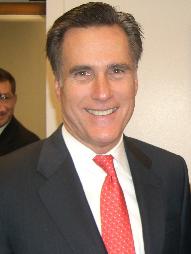 Biography
W. Mitt Romney will be 61 years old on the next Inauguration Day.
He is the son of a very political family; his father was the Governor of Michigan, was one of Richard Nixon's Secretaries for Housing and Urban Development, and ran for President in 1968 as a Republican. His mother unsuccessfully sought the Republican nominee for U.S. Senate from Massachusetts in 1970. He is a practicing member of the Church of Jesus Christ of the Latter-Day Saints, having served as a Bishop (leader of an individual church) and Stake President (leader of a local group of churches) and regularly attending temple. He has never served in the military; during the Vietnam era, he was in college and graduate school, as well as thirty months in France serving on a religious mission. While in France, he was injured in a serious automobile accident in which one person was killed (the fault was the other driver's). Upon returning to the U.S. in 1968, he married his high school sweetheart (a convert to Mormonism) and went to Brigham Young University, where he graduated summa cum laude in 1971, and went on to get a joint JD/MBA at Harvard, which he earned cum laude for law school and earned honors for being in the top 5% of his B-school class. He and his wife have five adult sons and eleven grandchildren; his sons support Gov. Romney's big for President by jointly writing a campaign blog, to which their parents sometimes contribute.
Unlike most of the candidates for President, Romney has never formally practiced law. Instead, he began his private career in a business consulting group in 1975. Three years later, he became vice-President of Bain & Company and later ran a spin-off of that company, Bain Capital, that specialized in leveraged buyouts of other entities. He grew very wealthy at Bain, and later returned to the parent company and steered it out of a financial crisis. His personal wealth has been estimated as high as a quarter of a billion dollars. He left Bain in 1998 to take over the distressed Salt Lake Olympics Committee, and takes credit for pulling the 2002 Winter Olympics out of a mire of debt and bribery into an enterprise that actually generated a profit of $100 million (note, though, that the "profit" figure ignores nearly $225 million for security costs donated or paid by other entities, mainly the Federal government, that SLOC did not pay back).
Political Experience
In 1994, Romney won the Republican nomination for Senate in Massachusetts (for the same seat his mother had run for and lost 24 years earlier), against Ted Kennedy. Kennedy won by a margin of 58-41. After the 2002 Olympics, became the Republican nominee for Governor of Massachusetts and despite claims by Democrats that he was a carpetbagger from Utah, Romney was handily elected. He resisted the high-profile decision of the Supreme Judicial Court of Massachusetts to issue marriage licenses to same-sex couples, but after that drama played out in favor of same-sex marriage, reluctantly complied with the ruling and instructed town clerks to issue the licenses -- but only to Massachusetts residents, saying that he did not want his state to become the "Las Vegas of gay marriage." Romney declined the opportunity to seek a second term as governor of Massachusetts and left office in early 2007 with a 43% approval rating.
On The Issues
Abortion: Rating: Quite famously switched from pro-choice to pro-life, some time between the middle of his term as Governor until before he ran for President. He claims to have switched opinions while researching cloning and stem cell researching; however, I had some difficulty finding evidence of pro-life statements he made before declaring his candidacy for President. Rating: 0 of 1 points.
Amending the Constitution: Has consistently opposed the idea of same-sex marriage and supports Constitutional amendment to that effect. Stops just short of endorsing human life amendment. Rating: 1 of 6 points.
Anti-Terrorism Policy: Proposes increasing size of military by 100,000 troops and pledges to spend at least 4% of the U.S. GDP on defense. In 2006, GDP was $13.13 trillion; in 2006, defense spending was $419.3 billion, meaning that currently, a little bit over 3.2% of GDP goes there now, so his target defense budget for 2009-10 would be about half a trillion dollars. Would liberally spend money on a "new Marshall Plan" to boost prestige and power of moderate Muslims around the world, and rededicate military forces in Muslim nations to nation-building and counter-insurgency measures under leadership of special forces. Rating: 4 of 7 points.
Balanced Budget: As Governor, Romney claims to have balanced the state's bloated budget without raising taxes through a combination of efficiency measures, spending restrictions, closing loopholes in the tax laws; however, a tax hike passed just before his administration kicked in after he took office, and he significantly raised "fees" like driver's license fees and tuition-like fees for state universities (he claims that the amount of raised fees was minute compared to the spending cuts), and the bulk of his spending cuts were in the form of grants to local governments, most of which responded by raising local taxes. Romney used his line-item veto power hundreds of times as Governor, but was overruled on virtually all of them, resulting in continuing actual operating deficits for Massachusetts' government. His anti-terrorism policies sound very expensive. Rating: 4 of 8 points.
Civil Liberties: Rating: Purchased a lifetime membership in the NRA just before running for President but still supports "assault weapons" ban; claims of rabbit hunting experience as a small boy as engendering sympathy for hunters turns out to be untrue; he's been hunting exactly twice in his life. Supports "Don't Ask, Don't Tell" policy regarding gays in the military. Reluctantly supported domestic partnerships as Governor of Massachusetts as an alternative to same-sex marriage imposed by state court decision, but now opposes them. Supports the PATRIOT Act. Would aggressively enforce obscenity laws and "get tough" on retailers who sell violent video games. Critical of news reporters who publish stories about national security issues. Rating: 0 of 9 points.
Education: Once supported abolishing Department of Education, but now a backer of No Child Left Behind Act. Endorses home schooling tax credit. Would encourage greater parental control of childrens' curricula. Rating: 2 of 5 points.
Environment: Rating: Supports oil drilling in Arctic National Wildlife Refuge; tax credits for oil companies that improve refinery capacity and efficiency. Praised Mayor of Salt Lake City for resisting environmental objections to mountainside display of electric light bulb Olympic Ring formation. Environment not mentioned on campaign website. 0 of 4 points.
Free Trade: Believes free trade is good economically for under-developed nations and the U.S.; supports NAFTA and CAFTA. Sees opportunities, not threats, in emerging Asian markets. Rating: 5 of 5 points.
Generalized Foreign Policy: Values allies in Muslim nations and democratic trading partners in the Americas. Distinguishes between "resolve" and "arrogance." Would "isolate" Iran diplomatically. Little discussion of policy towards European Union or Russia. Would appoint an "ambassador-at-large" whose portfolio would be described as "preventing nuclear terror." Rating: 3 of 6 points.
Health Care Reform: Initially supported states as experimental laboratories for different systems, but now proposes federalized improvements to system. Would indirectly "deregulate" health care insurers, by providing tax and grant incentives to states; increase Medicare block grants to states while decreasing directed funding and funding for "no pay" patients. Expand scope of HSA's and use high technology to make healthcare insurance funding and scope of coverage more transparent. Rating: 1 of 3 points.
Immigration Policy: Substantially critical of "sanctuary cities" but seems to have done little to restrict such local governments in Massachusetts. Supports ocean-to-ocean physical and technological fence on Mexican border; proposes enhanced employer verification system and withholding federal grants from "sanctuary" cities. Promises to veto amnesty legislation. Would increase student visas and streamline legal immigration for high-skill workers from abroad. Campaign website uses highly deceptive graph to incorrectly suggest recent spike in illegal immigration. Rating: 2 of 5 points.
Iraq: Correctly calls Iraq an "unmitigated mess" and is critical of pre-war planning. Supported troop surge, but envisions a transition period in which Iraqi military and police strengthen and U.S. troops provide logistical and intelligence support, and eventually withdraw to "standby" positions. Opposes withdrawal of troops. Rating: 6 of 6 points.
Korea: Skeptical of new agreement, suspicious that North Korea will "cheat." Policy otherwise sketchy. Rating: 3 of 5 points.
Middle East Peace Process: Approves of Israeli security fence. Subsumes Palestinian-Israeli peace process into struggle against "jihadism," with focus being on Iran and its proxies. Opposes, at the moment, the creation of a Palestinian state, but suggests that such a thing could be possible in the future. Rating: 2 of 4 points.
Science and Technology: As Governor, focused on infrastructure renewal, and directed substantial investment of funds in nanotechnology research. Campaign focus appears to be on elementary and high school education with little emphasis on collegiate and graduate work. Rating: 2 of 4 points.
Separation of Church and State: Previously disapproved of school prayer. Demonstrates ability to distinguish between teachings of his church and government policies. As America's first significant Mormon candidate for President, feels great pressure to continue to do so as well as promoting religious tolerance. As Governor, opposed teaching intelligent design in public schools. As Presidential candidate, castigated secularists for trying to exclude religion from the public square and promised those who bow their heads in praise of God that they would have a friend in President Romney; demonized atheists to curry favor with the religious right. Rating: 1 of 5 points.
Social Security Reform: Wants both parties to negotiate behind closed doors to reform system. Resulting reform should honor existing entitlement commitments, permit private accounts as alternatives, not raise taxes, and index increases in benefits to prices rather than wages. Rating: 1 of 5 points.
Taxes: Supply-sider. While Romney claims to have never raised taxes while Governor, state user "fees" for many services did increase dramatically, and his efforts to balance the state budget appear to have shifted spending liability and authority to more local governments, which then had little choice but to raise taxes. He pushed for and acheived a decrease in the state income tax, and decreased and eliminated other taxes to incentivize business growth. Rating: 4 of 5 points.
Tort Reform: Cap non-economic and punitive damage awards in medical malpractice cases. Rating: 0 of 3 points.
Torture of U.S. Prisoners: Supports "enhanced interrogation techniques" in circumstances where there is a ticking time bomb." Will not define "torture." Reserves to himself, as President, the ultimate judgment of the difference between the two, and does not consider himself accountable to anyone for exercising that discretion. Rating: 0 of 4 points.
Overall Impression: Romney's defining characteristic appears to be the plasticity of his belief system. On abortion, guns, gay rights, and who knows what other hot-button issues, he's reversed himself with remarkable ease. Put favorably, this means he's willing to learn and grow and respond to new information; but it's substantially more likely that he's simply saying whatever he thinks he needs to say in order to get elected, which calls his honesty into serious question. In terms of real core attributes, his positives include a very substantial business background and as with Giuliani, the promise of a genuinely competent executive running the government although the manner in which he turned around Massachusetts and the Olympics both seem to have involved shifting costs to others rather than eliminating them altogether. However, I am surprised to find myself so pleased by his attitudes towards separation of church and state, which seems to be one of the few beliefs that he has which are both persistent throughout his career and in congruity with my way of thinking on the issue. No matter what his rating on this or any other issue, though, it's difficult for me to see how anyone can trust this man. He's changed his mind on so many issues just before he launched his bid for President that no one, of any political stripe, can have any real idea of what Slick Mitt would actually do if he's in office.
Total score: 41 of 100.
Up next: Hillary Rodham Clinton.
Subscribe to:
Posts (Atom)

 Posts
Posts