June 18, 2009

A Bite At Some Low-Hanging Fruit, Namely, The Arrogance Of A California Democrat Holding Public Office

I'm hearing slow burn here in my elected representative's voice:

Apparently, she Senator Boxer didn't realize that "Ma'am" is a formal title which military people call women who outrank them in the hierarchy, the equivalent of using the honorific "Sir" to address a man. Or maybe, she Senator Boxer let that little factoid slip her mind. Seems to me that he was being respectful of Senator Boxer by using the phrase "Ma'am." I know that there is a way to use a phrase like "Sir" or "Ma'am" to convey condescension, but I'm not hearing that in the clip; it sounds like he was trying to answer her question in good faith.

It also seems to me that in the U.S. military, a star on your shoulder signifies something more than a reward for perfect attendance and good penmanship, so it's not as if the General himself is insensitive to title and honorifics. And he's earned a right to be given a degree of respect himself. He might have reason to believe that he was midly disrespected by, um, his interlocutor, She-Who-Must-Be-Titled.

I've little to add to this well-drafted blog post from the Christian Science Monitor describing the incident, including the apt reference to South Park. But I also would like to take the time to find a clip of the "shopping on Rodeo Drive" scene from Pretty Woman in which the snooty shopkeeper asks Richard Gere if everything is going well and he says,"We're going to need more sucking up, please. Not me. Her."

A Cooler, Wetter Earth

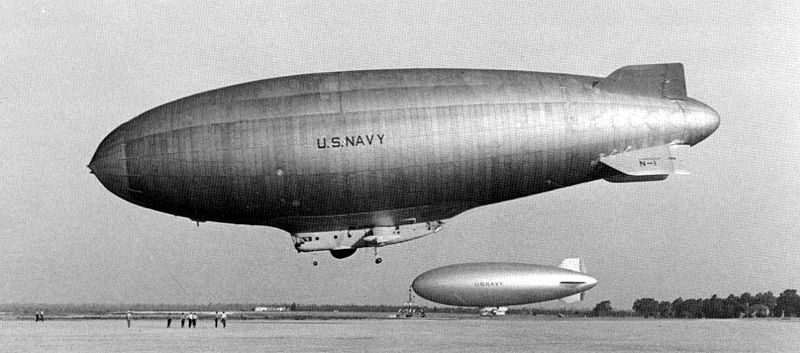
From two separate sources on the same day -- news that we possess, right now, the technological ability to reduce global temperatures by several degrees. The Wall Street Journal and The Atlantic both discuss two proposals -- the first and apparently the more interesting one being the distribution of sulfur dioxide into the stratosphere, mimicking the effects of a major volcanic explosion. The second one is the creation of a fleet of ships that would churn and spray ocean water into the atmosphere, creating increased evaporation and increased cloud cover.

Several caveats, and both articles forcefully include the most important one -- this would not be a fix for global warming, only a band-aid. The fix is the reduction and control of industrial processes, however that is accomplished. Fewer pollutants have to make their way into the atmosphere, no matter how many zeppelins we use to distribute sulfur to the stratosphere and no matter how many ships churn up seawater. Unfortunately, you have to read the whole articles in order to get to that point because both writers and both editors chose to put this information towards the end.

But the good news is, we don't have to cook ourselves to death just yet. And as time passes we may think of newer things to do or find cheaper ways to get the job done. The methods discussed would be expensive but (from a governmental or inter-governmental scale) not impossibly so.

From an expense and political angle, the seawater option seems more interesting than the zeppelins. We could devise ways to retrofit existing vessels to do the job while they are engaged in other kinds of activities -- if every cargo carrier in the world churned up clouds in their wake, while moving our goods around the planet, that would apparently be enough to reverse mean global temperatures to what they were in the 1950's. It's also probably more politically salable because it doesn't involve strange-looking hoses shooting fifty thousand feet into the sky and belching sulfur into the environment we're allegedly trying to protect. Retrofitting all these ships would take some time and money, and presumably would be subsidized by the government(s) and benefactors funding the project.

Making a fifty-thousand-foot long, gas-impermeable hose would be a challenge from an engineering perspective. The hose would have to be damned strong -- strong enough, probably, to anchor the zeppelin to which it would be attached, and still be flexible enough to handle the swirling winds of the lower and middle atmosphere. Whatever sheaths the skeleton of the hose would need to be, again, both strong and flexible while not allowing the gas inside to escape. But it doesn't seem like the sort of thing that engineers would be unable to get done. The real problem would be fixing the hose when something breaks on it, especially above helicopter-accessible altitude.

We'd also have to make our air traffic control practices significantly more complex in order to prevent aircraft and spacecraft from hitting the hoses and the zeppelins. Again, this is more demanding than what we're doing now, but fairly obviously within our reach if we were to really try.

Besides, hoses twisting their way into the sky just look creepy, like something from The Matrix.

Satellites would become somewhat less useful with increased cloud cover. Many satellites do not do things for which visibility is an issue -- television relays, for instance, operate at a frequency for which visible light matters. But observation and weather satellites do use optical data of the Earth, and if we cloud up our skies, they will be less useful. One of the unintended side-effects of these ideas would be increased use of reconnaissance aircraft, both for military and governmental purposes as well as for scientific and other "peaceful" sorts of activities. Reconnaissance aircraft are, however, quite expensive to fly, even as compared to other sorts of air traffic, and there is nothing other than petroleum-based fuel that can effectively power an aircraft.

Increased cloud cover would also result in increased rainfall. From where I'm sitting in a state savaged by a seven-year drought, more rain sounds pretty good. For places watching their glaciers and snowpack recede -- things that are necessary to keep enough fresh water in their ecosystems -- that also sounds pretty good. But if I were in places like Bangladesh, portions of the American and Canadian midwest, which are prone to very destructive flooding every couple of years, increased rainfall would sound like a significant threat.

On the other hand, increased rainfall and snowfall would mean increased access to fresh water globally. Water is life, and more rain means more crops -- and less reason for countries to intrude on one another to get the water. It's not hard to imagine that wars will take place, this century, for control of fresh water. Some people believe that China is acting the way it is towards Tibet (that is to say, incorporating it into metropolitan China, sometimes forcefully and in a way destructive of Tibetan culture) in order to make sure that it controls the fresh water sources in the northern Himalayas and the Tibetan plateau -- China has a billion people who need to drink and its primary agricultural product is rice, possibly the most water-intensive crop available. If there were not a perceived need to protect this source of water, the PRC might be more willing to permit Tibet the status of a semi-autonomous region like some other provinces in its northwestern deserts.

The phenomenon of global warming is real enough. The causes of it are as-yet indeterminate but likely to be based in industrial and/or vehicular pollution. Sulfate-spewing stratospheric zeppelins and cloud-seeding sea vessels are not the answer. And they would have indirect consequences, which I've only explored a little bit here. But they might buy us time to solve environmental problems while we work out how to balance our economic needs with environmental imperatives.

Pretty Much The Least He Could Do

Yesterday, President Obama signed an executive order extending just-barely-non-trivial benefits to same-sex couples employed by the Federal government. It's better than nothing, but it's hardly treating a same-sex couple equally with a married opposite-sex couple.

Which is why the population intended to be politically mollified by this gesture, gays and lesbians, are the ones griping most loudly about it. As well they should. They were promised an effort to repeal DOMA and inclusion as a protected class in the Civil Rights Act. What they're getting is allocation of housing for overseas job postings.

President Obama says this is only "one small step" but has yet to articulate anything resembling a plan towards a multi-step approach to giving these Americans the same treatment from their government which their heterosexual peers all too often take for granted.

June 17, 2009

A Newly-Minted Mediator's Reflections On Negotiation Training

I've just completed a mediator certification program and now I, like hundreds if not thousands of other lawyers around Los Angeles County, am a certified mediator. My name will be appearing soon on computer-generated lists of people who handle various kinds of cases and I will have to volunteer three hours a month to mediate some local cases.

In fact, the mediation school is excellent training for a litigator. There are some very good insights into how negotiations work, both from a technical and psychological perspective. I have never had a negotiation that proceeded along the lines described as a "traditional" sort of haggle, but I have had several that proceeded along the general pattern -- and I suspect I could have had better results, or at least had more control of the situation, if I'd understood not only the formal framework but more importantly, how the particular negotiation I was in had deviated from that framework. For that alone, the training was well worth my time.

Now, the real value here is in the fact that as a mediator, I can charge a premium rate, and the volunteer mediations are the manner in which those services are advertised. The next challenge will be to create a series of appropriate documents and procedures to get this new part of the practice set up properly.

Still unanswered, however, is the question of how to deal with the guy who says "It is not enough that I win. You must lose." I think there are a lot of people out there who are strangers to confrontation, people who have avoided confrontation all their lives. When it comes and smacks them in the face and they can no longer avoid it, they have no other way to deal with it other than to completely demonize their opponent, no way to understand the conflict other than as a deeply personal and potentially bloody and life-threatening fight. They turn into sadists. I still don't know, and no one could tell me, how to get a sadist to compromise.

And an otherwise-excellent program was marred by the suggestion that resolution of conflict is facilitated by getting the parties to talk directly to one another, to explain how they are hurting as a result of the dispute and the resulting conflict -- the idea that this will make fundamentally good people see one another as fundamentally good, build rapport and empathy, and make them more likely to want to compromise and work with one another. I scoff at this idea because far too often, I have seen people scoff at their adversary's pain. They want their adversary to be hurt, they like it. For many people -- not necessarily even the ones who turn sadistic -- measuring their adversary's discomfort is an indication to them of their own strength, their own progress towards realizing their own objectives.

Figuring out how to break through this is something that I rather strongly suspect will take experience rather than education. In the meantime, a good nuts-and-bolts training on what happens most of the time when people haggle is a very good background. (You'd think they would teach more of this sort of thing in law school, but no; all too often law students wind up in useless specialty classes like "The Law Of Prime Numbers" or "Intermediate Arboreal Law.")

I suspect a good number of the cases I'll have to handle, at least on a volunteer basis, will be soft tissue personal injury cases. Those are generally not hugely emotional and are driven not by the parties but rather by the attorneys and insurance adjusters. That's a process of getting them to first make reasonable offers favorable to themselves and then working through the dance of direct numbers negotiation, which is really an exercise in patience and in discerning between real and feigned frustration on the part of the negotiators.

Seriously, I think most lawyers should take a class like this and the reason they don't is hubris. Very few of us have actually done this. None of us are so good at what we do that we can't benefit from learning other people's perspectives. None of us are such good negotiators that an abstract understanding of how negotiation works would not be profitable. And if you think you're already so good at it that the class would be a waste of your time, then chances are very good that for a good part of your career, you've been leaving a lot more money on the table than you think.

See What Happens, Republicans!

Moderates respond well to messages of fiscal conservatism, when they are devoid of social authoritarianism. The appropriate response to this revelation is not to explain why moderates should become more conservative.

June 15, 2009

Iranian Democracy

Just a few quick thoughts on the elections in Iran.

First, has it occurred to anyone that maybe Ahmadinejad actually won? That the results are genuine? This doesn't even seem to have been considered as a possibility in the western media. That doesn't mean I doubt for a second that the mullahs wouldn't rig the election or that Ahmadinejad wouldn't, either -- but just because they would do it doesn't mean they had to, or that they actually did.

Second, and on a related note, the irritating thing about democracy is that sometimes voters make the wrong choices, for the wrong reasons. Deft politicians are able to sway voters to support them based on appeals to emotion rather than appeals to their self-interest, and that's true here in the U.S. as well as Iran and anywhere else. Democracy was a great way for the Palestinians to govern themselves until Hamas won the elections.

Third, we in the west wanted Mousavi to win, and to try to bring reform to Iran so badly that we have almost certainly projected our desires onto our willingness to see reality with a clear eye. We want very much for the young people in Iran to take action, seize power, and open their nation up to the west so that it can become a more responsible member of the community of nations. That doesn't mean it's going to happen.

Fourth, brutal dictatorship does not necessarily mean an impoverished and brutalized public. Iran has been doing pretty well for twenty-five years -- sure, we believe that an alternative path could be even better for it, but it would not be unreasonable for the man on the street in Tehran to look around his circumstances -- he likely has a job that pays enough money for him to keep a roof over his family's head, put good food on the table, keep gas in his car, and see periodic demonstrations of national pride and power -- and think, "You know, it could be a whole lot worse." High demand for petroleum in the industrialized west is the principle reason why Iran is prosperous despite its oppressive and theocratic government. As long as that is the case, it will seem safer to many Iranians to simply go along with things in order to get along as they have been.

Finally, suppose there was election fraud. Really, so what? Everyone knows that a council of clerics holds the real ultimate power in Iran, that the alliance between the religious institutions and the military is the force that keeps that country's status quo going. The more or less democratically-elected government is entrusted with a variety of tasks and given varying amounts of latitude to do a variety of things -- but it is always kept on a leash. In Ahmadinejad's case, the lease is long and slack, but do not think for a second that it's not there. The self-appointed, unelected power brokers exercise veto power over anything that the government does as a practical matter, so even if Mousavi had won or somehow invalidates the results of the maybe-it-was-maybe-it-wasn't-stolen election, there's only going to be so much he could do anyway.

So while Iran moves into its third day of post-election violence and government crackdowns -- eerily reminiscent of China's crackdown on its pro-democracy movement twenty years ago -- we in the west can really only stand back and watch Iran try to solve its own problems. The Iranians do not want our help, they have sufficient resources to resolve their situation on their own, and if we don't like how they do it or the result they settle on, well, they have their own country so their response to us will be, in so many words, "Tough noogies. What are you going to do about it, invade us?"

We can't do that, and they know it, so that leaves us with only the ability to cluck at them disapprovingly. Which, as it turns out, only plays into the hands of the people we would prefer didn't hold power there in the first place.

Sports Morning

1. Why doesn't the NHL time its playoff schedule so that they are separated from the NBA playoffs by several weeks? Haven't they figured out by now that putting the Stanley Cup finals out in head-to-head competition with basketball finals is a loser move for hockey?

2. At 11:300 today, the U.S.A. plays Italy in a pre-qualification round for the World Cup. U.S. versus Italy leaves me deeply conflicted. It's too bad they can't both win.

June 12, 2009

For Shame, Mr. President

In the first of a rash of federal lawsuits filed against the federal Defense Of Marriage Act (1 U.S.C. and 28 U.S.C. 1738c) has just been made the subject of a strongly-worded motion to dismiss filed by the United States Department of Justice. This is not the high-profile case filed by David Boies and Ted Olson (called Perry v. Schwarzenegger) but rather a case involving a gay couple who were married under the pre-Prop. 8 Marriage Cases law, which means that under California law, they still are married. Note also that the brief (linked below) is signed by political appointees of President Obama.

The U.S. Attorney has argued that indeed, these men are married under California law, but that doesn't matter a bit in Federal court because DOMA prohibits the Federal government from recognizing the state-law proclamation that they are married. This represents a reversal of position from President Obama, who in his campaign promised to push for a repeal of DOMA:
I support the complete repeal of the Defense of Marriage Act (DOMA)– a position I have held since before arriving in the U.S. Senate. While some say we should repealonly part of the law, I believe we should get rid of that statute altogether. Federal law should notdiscriminate in any way against gay and lesbian couples, which is precisely what DOMA does.

Well, that's not what his Administration argued in court today. Today, lawyers acting at his behest argued for the Court to uphold DOMA, and did so in fairly strong terms, terms which wpuld please Prop. 8 supporters:
  • DOMA is Congress exercising its powers under the Full Faith and Credit Clause, not a violation of it.
  • DOMA was not passed as a result of discriminatory animus towards gay people.
  • DOMA is non-discriminatory because it still allows gay people to marry people of the opposite sex.
  • DOMA is justified because it's okay to have laws against marrying children and prohibiting incest.
  • DOMA is consistent with the Equal Protection and Due Process clauses, Roemer v. Colorado and Lawrence v. Texas notwithstanding.
  • DOMA saves the Federal government money by restricting the scope of Federal benefits provided to married couples.
  • There is no constitutional right of gay people to marry one another; any contrary analogy to Loving v. Virginia is not well-taken.
Don't believe me? Read the brief here. About the only thing I can say in DOMA's defense, myself, is that it seems to be deferential to the states on a matter that is traditionally left to state law, and therefore presumptively appropriate from a federalism point of view. Which is not an insignificant concern, but in fact DOMA is about as nationalised as a law can get. What happens when a state (like, say, Iowa or New Hampshire) adopts same-sex marriage? Doesn't deference to state law and local political decisions made under a state's plenary police power compel the Federal Government, under the Tenth Amendment, to recognize that marriage as valid?

And why is he doing this? The claim is that the Department of Justice is required to defend the law regardless of what anyone in the Department or the White House thinks about it, and the President wants to see Congress repeal DOMA rather than eschew his duty as the chief executive mandated by Congress with enforcing the law as written. This, however, is complete bullshit. Administrations of both parties and a wide spectrum of political beliefs have taken positions that various laws were unconstitutional and urged the courts to strike them down as such.

I don't know how else to say this. Barack Obama is not a friend of gay people. He doesn't care about them and knows he doesn't have to do anything to gain their support. He takes their political support for granted, because he knows that the Republicans have made themselves so odious to gay people that they'll never throw their political support there. Which, of course, is a gift Republicans have given Obama; he's simply using that gift he's been given. About all he has to do is say nice things about gay people every once in a while, and blame Congress for not repealing DOMA the way he asked it to (despite arguing that it should be upheld).

If a Republican were to come along and say "I think that leaving the decision to the states means just that, and the Federal government ought to defer to the states on this issue, whether it's for gay marriage or against it," that would be a vast improvement from a same-sex marriage rights perspective over the Obama Administration's position. The problem is that the social conservatives have made it impossible for a Republican to make that pitch, make that bid for gay voters, and still survive politically as a Republican.

Shame on you, Mr. President. You courted the votes of gay people and same-sex marriage proposals. Now, these Americans who have done nothing wrong, broken no law, and for the most part given you their political support, look to you to protect their civil rights, asking you only to keep your promises to them. But in fact you talked out of both sides of your mouth on this issue during your campaign, you're talking out of both sides of your mouth on the issue now, and you are betraying the trust of these Americans by attacking instead of defending their rights. For shame.

The Best-Sounding Bad Idea To Come Along In A Long Time

Reading at Left Coast Rebel about a month ago, I was dismayed to learn last month that the Cash for Clunkers program was gaining political purchase. I can see the logic behind the initiative -- subsidize the ability of people who are driving around old gas guzzlers for newer, more fuel-efficient vehicles -- and I can see that there would be some environmental good done by realizing the objective of updating our fleet of personal vehicles.

But this is definitely a thing to do when times are prosperous, when there is excess money to be spent on this sort of thing. Right now, we're only seeing subtle macroeconomic hints that the recession may be receding, but that doesn't mean times are getting better and it certainly doesn't mean times are good. We're deficit-spending ourselves into fiscal anemia and paying people between $3,000 and $4,000 for what Congressional sponsors hope will be 625,000 vehicles is $2.5 billion that we simply don't have right now.

But even under the best of theoretical circumstances, it is also not clear that the policy would work, or that its benefits would not be swamped by unintended adverse consequences. As I wrote at LCR, if we were in a budget surplus condition, I could call this policy proposal defensible, at least in the abstract; but still a luxury we can't presently afford.

Now, the bill that the House of Representatives just passed has been so compromised that it seems unlikely that it would effect so little advancement towards its policy goal that it seems like a waste of time. In its current form, "cash for clunkers" will benefit almost no one. There are simply not a lot of people who own crappy old cars and who are looking to buy brand-new cars to replace them. So who would be cashing in on this program? As Prof. Steven Levitt writes in today's Gray Lady:

If any vehicles are going to qualify under this program, I suspect it will be because enterprising people who already plan to buy new cars will go out and buy old junkers on the used-car market and then trade them in under the program. But those transactions won’t represent incremental new car sales; it will just be a way for people who were already going to buy a car to rip off the government.
Prof. Levitt points out that, although about ten percent of the total fleet in the United States get low enough mileage to meet the initial threshold for subsidy eligibility status, the bulk of those vehicles are light-duty pickup trucks. Now, light-duty pickup truck owners tend to hang on to those vehicles longer than car owners do because light-duty pickup trucks have utility as cargo carriers in addition to their ability to move passengers around. They therefore become auxiliary rather than primary vehicles, part of the reason why there are more vehicles than drivers registered in nearly every state. The incentive to get rid of a high-utility auxiliary vehicle is much lower than the incentive to upgrade a personal-transportation-only primary vehicle.

Additionally, the person asking for a subsidy on the clunker trade-in will need to prove that the vehicle was registered and insured for the previous year. Well, here's a couple of facts for you coming from a guy who sometimes serves as a traffic judge -- between 20% to 25% of the vehicles on the road are not insured and about one in thirty don't have current registration. They aren't insured and they aren't registered because the people who own and drive them are poor and cannot afford to pay the money to insure and register their vehicles. The vehicles that are uninsured and unregistered tend to be old-model vehicles, the ones that this subsidy is aimed at, because those low-quality vehicles are the only ones that poor people can afford to buy in the first place to meet their transportation needs.

In other words, I would predict that the insurance and registration requirement would substantially narrow the number vehicles that will qualify for the subsidy in the first place. And of those vehicles, the true economic incentives to part with them may be lower than the cash price for such vehicles available on the open market and indeed may be lower than the subsidy offered by this program.

When it's the only car you've got, even if it's a clunker, and you probably can't scrape together enough money to buy a replacement, the utility value of that crappy old car is very high. Higher than the marginal value of $500 to $1,000 in cash that you could get on the open market for it, and probably higher than the $3,500 to $4,500 subsidy you could get for trading it in to be crushed into a small, heavy metal cube. And since you can't scrape together enough cash to replace your junker-with-a-market-value-of-$1,000, you're not in the market for a new car anyway, so the $3,500 to $4,500 subsidy is a non-issue.

In other words, the transactions Congress intends to incentivize are simply never going to happen. Let's consider what would really happen.

If you had maybe $6,000 in available cash, you could buy up a dozen junkers at $500 each, and trade them all in at once, getting a $3,500 subsidy for each trade-in. You'd use that money to get new car worth $42,000. You could then re-sell the new car to a third party without ever putting the key in the ignition, realizing a profit of $36,000.

Given an infinite number of $500 cars eligibile for the subsidy available to purchase, your $36,000 in profit from the first turn-around would buy you 72 more junkers, which for your next cycle of purchases and trade-ins, would be worth $252,000 in new car purchase subsidies. Even after paying sales tax, re-registration fees, and rental on property large enough (and zone appropriately) to store 72 crappy old cars at a time, you could theoretically wind up with something like $200,000 in profit.

What makes this worth doing is the government subsidizing the junkers to seven times their open-market value -- paying $3,500 for a car that would sell for $500 on the open market. In real life, you'd be shelling out cash for more than eighty crappy old cars to make this work. Also in real life, the universe of people who are actually selling $500 vehicles that get mileage below eighteen miles per gallon and who have been able to keep their cars registered and insured for an entire year is not infinite; indeed, it is relatively small.

These owners would respond to your market activities by demanding higher prices for the suddenly-desirable subsidy-eligible cars they had to sell -- I'll go so far as to predict that the supply side portion of this market is small enough that even a single entrepreneur behaving this way would, in short order, move the demand curve of that market and drive up the market cost of these vehicles.

This assumes, moreover, that you're the only person in the area clever enough to have figured this out and exploit it -- which wouldn't be the case; this is a pretty easy business model for pretty much anyone to puzzle out. That would also create upward pressure on the demand curve. So it wouldn't take long before sellers began demanding $1,000 or more for the same cars they had previously willing to sell for $500; eventually, the market price would rise to something very close to the subsidy and now all of these middle-men would be out of business.

What's amazing is not that this happens, but rather how fast it happens. Frankly, I doubt that you'd be able to make it through the first cycle of purchases and re-sales before the market price rose to a point that made the business model unworthwhile. You'd never get to the point that you could pocket $200,000 in after-tax profits because you'd have run out of subsidy-eligible cars to buy at any price.

What's more, all of these owners of subsidy-eligible cars would be out of customers. So they would hang on to, and drive, their old junkers until they were in a position to buy new cars for themselves and exploit their own subsidies. That's what the new equilibrium would look like -- people holding on to old, crappy, inefficient cars for longer, creating an even older, less-efficient fleet of cars than we have now. I don't think this is what Congress intends.

Ah, the pernicious and perverse effects of government intervention in the economy!

The only people who would find practical value to this program, as Prof. Levitt suggests, are entrepreneurial sorts who would look to exploit both the government and the economically-disadvantaged owners of the junkers who are intended to be the beneficiaries of the program. I'll go a step further than him and predict that these entrepreneurial sorts will wind up being the auto dealers themselves. They'll "sell" the junkers to their customers who are buying new cars anyway. Then, their customers will "trade them in" and use the voucher to underwrite new car purchases. The dealers will keep a portion of the subsidy for themselves as an "administrative fee," or build that fee into the ultimate purchase price of the new car.

I don't think this is what Congress intends to happen with this program, either. But I could be wrong about that.

Finally, bear in mind that each and every transaction under this program would be a piece of the $2.5 billion line-item of deficit spending, which will also incur transaction costs, paying for clerks and administrators to make the subsidy happen, and of course the cost of creating a new branch of the Department of Transportation and training the people who will work there to do the job. All of that will also be paid for out of deficit spending.

Could the idea be made better? Yes. Remove the insurance and registration requirement for subsidy eligibility. Expand the scope of the subsidy to allow for the purchase of a previousy-owned vehicle with improved mileage instead of only to brand-new cars. Render vehicles sold to the subsidy claimant in the previous six months ineligible for the subsidy to deter exploitation by middlemen and the economic drag that would produce. These things would steer the subsidy back towards the intent of the bill, which is to help people upgrade crappy old cars to more fuel-efficient ones.

But even then, it's still spending billions of dollars that our government just plain doesn't have in the first place. Cash for clunkers -- a creative idea, to be sure, but not one that I can endorse.

If I Could Have A Day With The Stanley Cup

Each player on the team that wins the Stanley Cup famously gets to spend a day with it. And you also get the company of a "keeper," who is basically a roving curator from the Hockey Hall of Fame, whose job it is to see to it that Lord Stanley's Cup remains safe during your time with it.

Some odd things happen to the oldest and most venerated trophy in sports -- it has been placed in a Finnish sauna; found its way to the bottom of a swimming pool; has been used as a bowl to serve (among other things) Froot Loops, dog food, and ice cream; used as a baptismal font; and as one might imagine, has seen frequent use as an actual cup, from which beer, champagne, and other frequently alcoholic beverages are consumed at backyard barbeques, taverns, parties, social events, and of course, strip joints. None of this strikes me as particularly irreverent -- the Cup is about sports and fun. Somewhat more charitable or civic-minded players have auctioned off some of their time with the Cup to charitable events or used it as a morale-booster for Canadian military troops deployed overseas.

The original cup, commissioned by Frederick Stanley, 1st Baron Stanley of Preston, 16th Earl of Derby and Lord Stanley of Victoria, and the sixth Governor General of Canada, is not what is on the NHL trophy, and sits permanently in a vault in the Hockey Hall of Fame in Toronto.

If I got to have the Cup, what would I do with it? It stands about three feet high and weighs more than 35 pounds, what with all the bands put on it for the many years it has borne the names of the players who have won it. It sounds like an ideal dispenser for cold bottled beverages at a party.

There is no more intense event in all of sports than game seven of the Stanley Cup playoffs. The puck drops tonight at five o'clock in Detroit, and the line is 1.5 for Pittsburgh.

June 11, 2009

I Believe It To Be The Best Blog Post Headline Yet Written

Better than a FARK headline, courtesy of Patrick at Popehat.

Bud Light Uses Porn To Market Itself

The commercial is hilarious in the way only beer commercials can be. Wrong on every level. Not safe for work. Inappropriate for children (and also teenagers, and also adults, and also pretty much anyone at all). So of course I'll embed it right here for your viewing pleasure since I know you won't be able to resist playing it at work right when the boss comes around your cubicle:


If this had been in a Will Ferrell, Farrelley Brothers, or Judd Apatow movie, it would be a standout sequence.

Now, I'm not sure that this is quite the image that the manufacturer wants to associate with its product, but like many products, beer is often sold simply by brand awareness, so mentioning the product anywhere in something that stands out in the memory is the real goal of the advertisement. So it gets a thumbs-up there, too. Time Magazine says that it's actually been available on the Net since February but only recently gone viral enough to reach the public radar.

In any event, it's a very funny bit of commercial storytelling. One you won't see on television but can see here.

Rhetoric and Violence

Obviously, the Holocaust Museum murders yesterday were awful. They were the act of a deranged individual acting on hateful beliefs and the only consolation for the deaths of innocent people is that their murderer was swiftly neutralized and will do no harm to anyone else ever again. It is difficult to muster any sympathy for the killer, who seems to have gone out of his way in his lifetime to have made himself a despicable individual before confirming that with the bitter manner of his exit.

The issue, though, is not horror and shock and condemnation of the murders. The question is whether this guy was some kind of a militant right-winger in addition to being a white supremacist; whether he was pushed over the edge, in whole or in part, by intemperate rhetoric; whether his actions vindicate the DHS report forecasting domestic terrorism by right-wingers upset at the direction of the political tide.

I must conclude that, in this case, no evidence is offered to support these more recent propositions. This guy was a kook, plain and simple; the fact that he was a kook of a flavor that shifted more right than left is largely irrelevant. It's worth noting that in addition to drinking from the Obama birth truther kool-aid, he also wrote extensively of his hatred of George W. Bush, John McCain, and neo-conservatives. The DHS warned of embittered veterans returning from Iraq and Afghanistan engaging in domestic terrorism -- this guy was in his eighties and had not served in many years. Lack of sympathy to Jews and Israel is a problem shared by the left more than the right; the weirdo right wingers in this country embrace Israel as a friend (in part because they want to see Israel go through its prophesied conversion to Christianity as part of the events of the End Days). Anti-Semitism and holocaust denial are nutty extremes of thought that can be found on either end of the political spectrum. It is Democrats and not Republicans who have been faster to hold Israel to task for its overstepping of boundaries along the road map to peace by creating West Bank settlements. And this guy's particular brand of kookiness comes from stuff that is very old indeed, and has little to do with the wingnuttery floating around these days.

Which is not to say that intemperate rhetoric (from either side of the spectrum) is welcome or a happy addition to the wares available in our marketplace of ideas. Nor is it to say that anti-Semitism is not a problem, or that all conservatives can be exonerated from anti-Semitism by virtue of their conservatism. And it does not refute the DHS's foreboding prediction. If anything, the recent murder of Dr. Tiller, the abortion-providing doctor in Kansas, vindicates the DHS prediction of right-wing domestic terrorism. That crime is more fairly called domestic terrorism since the shooter in that case is quite explicit about his desire for his action to change behavior on the part of others (to make them stop performing abortions) and law (to make abortions illegal).*

No, what happened in Washington yesterday was a simple crime, not an act of terrorism. Crime is very much on the decline in this country and has been for a long time. But we will never be free of it. No society on Earth is now or has ever been free from violent crime and we have no reason to predict a future in which it will ever be different, no matter what laws we pass or what miracles technology brings or how economic conditions change. We can look out for one another and try to be active about getting people who seem to be on the edge steered towards professional help so they do not engage in violence. We can try to identify such people and even gun rights advocates would not object to keeping firearms out of the hands of the mentally imbalanced. In other words, all we can do is our best.

I offer small consolation here to the loved ones of yesterday's murder victims, I realize. My sympathy for them is very real. What I'm hoping to point out is that this act of violence is probably not appropriate to consider as a sigificant political event; this was not domestic terrorism. It was a violent, senseless murder. An awful, terrible event. And so are murders committed during bank robberies and drug deals gone bad. The pain of the victims of those "ordinary" murders is no less real than the pain felt by the survivors of yesterday's victims.

And if it was intended to be political, then isn't the ultimate delivery of failure to a terrorist the act of disregarding him as politically irrelevant?


* That, in turn, does not mean that other pro-life advocates are similarly criminals; there is nothing illegal about their use of words to advocate political change even if their goals coincide with that of Tiller's assassin. Bullets are different than words and we ought to punish their use to effect domestic political change.

June 10, 2009

My Ongoing Gripe About Online Yellow Pages

I know perfectly well that there is an Eye Exam 2000 in the mall in Palmdale, and that's where I want to go to get my eyes checked out this weekend because I have had this sore on my eye for about four weeks now. So I figure I'll call them up, make an appointment, and go.

Now, Eye Exam 2000 couldn't possibly have a frickin' website to tell me what their frickin' phone number is so I can make a frickin' appointment to go see them and give them my frickin' money. Oh, no. A Google search points me to an Eye Exam 2000 franchise in frickin' Sun Valley, Idaho. They must be using the "Maneuver X" method of web presence advertising -- make your customer go on a frickin' internet-wide scavenger hunt armed only with clues left in rhyming riddles written in archaic languages in order to find the remotest shred of information that you even frickin' exist, and that way once your customer does find you, you'll have the most loyal frickin' customer in the whole frickin' world.

You may only get one customer this way as opposed to many customers, but hey, every sales approach has its downside.

So I go to yellowpages.com and look for optometrists in Palmdale, California. Bear in mind that while the Antelope Valley certainly isn't as big a metropole as Los Angeles, I nevertheless do live in a community of more than 400,000 people within a ten-mile radius, with its own minor-league baseball team, and more to the point, not one but two branches of the particular business I'm looking for. This is suburbia, exurbia at worst. It's not the Australian outback.

The results of my search for optometrists in Palmdale, presented in the order given are as follows:

A generic link to the website for Pearle Vision Express. No address.
A generic to the website for Sears Optical. No address. (I happen to know that the Sears in the mall in Palmdale has no branch of Sears Optical.)
Optometrist #1, 28089 Smyth Dr Valencia, CA 91355.
Optometrist #2, 1032 N Hollywood Way Burbank, CA 91505.
Optometrist #3, 622 W DUARTE RD Arcadia, CA 91007.
Optometrist #4, 924 N Citrus Ave Covina, CA 91722.
Optometrist #5, 14147 Pipeline Ave Chino, CA 91710.
Optometrist #6, 1301 7th St Wasco, CA 93280.
(end page 1 of 1).

No hits at all in Palmdale. The nearest hit is more than forty miles away.

This is effin' useless. CostCo has an optometrist whose number I found in under two seconds, and I'll bet they're cheaper than the place in the mall anyway, as are the contact lenses they will sell me.

Eye Exam 2000, the difficulty I encountered in getting your phone number on the web has now cost you my business, which is going elsewhere.

Life Guided By Fallacies

Techskeptic has a nice thought on what it is to be a "denialist." It is, in essence, an approach to an unpleasant subject guided by the Nirvana fallacy. He writes of those who would deny global warming, but his thought seems to apply to a periennial exchange with which I am more familiar: evolution.

The fossil record does not, upon examination, produce an exactly-as-expected picture of smooth transitions from one form of an organism to another form; there are gaps and few transitions. Therefore, because the evidence is not precisely as evolution would have predicted, evolution is false. Frequently from there, other logical errors come in to play -- since evolution has been "proven" false, creationism is therefore proven true.

One might be surprised, unpleasantly, to learn how often poor logic like this is used in the law. And in a great many other human endeavors. I'd venture to say that for a lot of people, significant portions of their lives are guided by fallacious thinking.

June 9, 2009

On The Founders' Religion

After a fair amount of research for my book project touching on this subject, it has become apparent that several of the prominent Founders whose religious identification are hotly debated today -- most prominently Thomas Jefferson and George Washington, and also Benjamin Franklin and even John Adams -- took pains to obscure their personal religious beliefs. Their personal religious behaviors were erratic at best and certainly ambiguous. "I am a sect unto myself, so far as I know," Jefferson wrote of his own religiosity.

Their writings and speeches are all over the map and certainly do not conform to contemporary standards of piety. But whatever they might have been, these men went to some effort to not be categorized into any "box." They had complex motives for doing this, including a desire for personal privacy despite their public lives; a desire to keep their political profiles viable in a religiously heterogeneous nation; a lack of settling on any personal brand of faith during their lifetimes; discomfort with at least some of the loyalties, doctrines and teachings of the available organized churches; and perhaps most of all, a consciousness of the roles they would fulfill in the future as role models for the generations of Americans who would look back on them as heroes and role models.

I think we should respect their wishes. No one should get to claim them.

Our first President would roll over in his grave if he heard people today arguing "You should be a Christian because George Washington was one." He would have wanted you to have made up your own mind, for your own reasons. He didn't fight the war for independence so you could be like him. He fought that war so that you could be free to decide for yourself.

These men did not want to be called "Christians." Neither did they want to be called "atheists." Or "Deists." Or "spiritual." Or anything. We should not call them those kinds of things today.

Therefore, I will not claim these great men as having been fellow non-theists; however, they cannot be claimed by Christians, either. They did not want to be claimed in that fashion by anyone.

They did not want to be branded as anything but "Americans." It is thanks to them that we can call ourselves that as well, and it is thanks to them that we can discuss the merits of religion or irreligion at all. If wish to do these men personal honor, then let us think of them in the manner that they wanted -- which is to say, eschewing religious identification completely. To try and stuff them into boxes to advance one or another perspective on contemporary religious discussions is to do their memories a significant disrespect.

June 8, 2009

Ghostbusters Three

It just won't be the same without Annie Potts reprising her nuanced, subtle role as Janine Melnitz.

(Won't somebody please make this stop?)

Pro-Western Win In Lebanon

It's hard to appreciate just how important this story will be. In a world where politics is polarized not around abortion and gay marriage but rather around secular/western versus religious/insular politics, it's heartening to see democracy working and the Party of God getting set back. It's not a victory for President Obama, it's a victory for the world as a whole, and the causes of peace and tolerance in particular. (Obama does not get a monopoly on those agenda items.)

On the other hand, Lebanon is vastly weaker in terms of military force than either Israel or Syria. In particular, Syria has been known to send in tanks when it doesn't like how Lebanon behaves. Whether the new regime in Syria follows this historical example remains to be seen. And the power of Hezbollah in the southern provinces of Lebanon will not be dislodged by the results of a single election.

Nevertheless, congratulations to the Lebanese and here's hoping for a peaceful, economically prosperous, and ultimately beneficial series of policy steps to re-integrate what could be one of the richest, most prosperous, and most democratic Arab nations.

Unitary Executive Theory Under Obama

You know, I still still haven’t figured out how we get from “There is only one President and all the rest of the executive branch are just extensions of the President and not really independent political actors” to “You can’t ever hold the President accountable for misdeeds and violations of the law in court”. There was only one President in U.S. v. Nixon.

Slip Day

I've been reasonably good about controlling portions and trying to do at least moderate physical exercise pretty much every day. Social events being what they are I've not done so well at reducing alcohol intake, but that hardly seems like something to complain about.

Maybe it had something to do with being startled awake by nightmares, which feels vaguely childish and humiliating. I don't remember what was so scary but apparently I cried out in my sleep loudly enough to wake up both dogs and both cats, and I had absolutely no desire to go back to sleep afterwards even though it was quarter after four in the morning.

Or, it might have had something to do with waiting around for two and a half hours to deal with an utterly meritless ex parte this morning by a pro per defendant -- who read his fourteen-page brief out loud as his oral argument, obviously not even understanding what he was saying.

And, it didn't help knowing that this dude is so rock stupid he's going to follow through on his threat to sue me despite having been sanctioned by the Court for the frivolity of his antics. Well, he'll find that is going to work out very badly for him if he does it. CCP § 425.16 -- I've never lost a motion yet, and I've never been awarded less than $20,000 in fees paid by my opponents for the privilege of having sued my client and lose right out of the starting gate.

Maybe it was waiting around for two hours while the understaffed file room in the courthouse retrieved documents from a new case for me on another matter. And missing lunch while I was doing it.

Maybe it was seeing a motion with an opposition filing deadline of tomorrow that was never calendared and realizing that only by the skin of my teeth had I avoided blowing another deadline in Kern County.

And, it's almost certainly related to knowing that there was enough work at the office that needed to be done today, that I wasn't going to be able to go home until after dark.

But whatever it was, by the time I got out to actually get some food (making myself late for a meeting with a prosepctive client in the process) I was in no mood for a disciplined meal consisting of raw vegetables and light soup. That would be a double cheeseburger, please, with onion rings.

I guess you could call it "slipping."

POSTSCRIPT, 9:30 PM: Four fingers of eighteen-year-old single-malt Scotch from Trader Joe's later (thirty bucks for that, are you reading this, Reynolds?) it is a little bit easier to relax.