February 19, 2009
Well Pleased With The Performance
Tonight was the first round of competition for the mock trial team. The kids were all right. There are three seniors on the team who are really good; they're convincing, confident, and canny. The younger students, who gave me a bit of a scare at our last training session, came through very nicely. We had a historically weak team against us tonight that, to their great credit, put on a pretty decent show, so that was nice to see, too -- but mainly, I'm proud of the kids on my team; they did great. Next week, it's our rematch against the defending champions.

 Labels:
Cheerful For Once,
Law
Labels:
Cheerful For Once,
Law
Bipartisanship Manifests
See? It's not just Republicans who are lying, corrupt scumbags. And I'm not even (directly) talking about Rod Blagojevich, whose scumminess, corruption, and veracity deficiency have been well documented already.
Indirectly, he's in the news again -- turns out that Senator Ronald Burris kind of didn't exactly tell the whole truth when he swore under penalty of perjury that he had no contact with then-Gov. Blagovjevich, who had the plum to pass out of a Senate appointment to fill the vacancy left by President Obama.
What Burris said then: I had no conversations of any kind with Blagojevich or any of his staffers or relatives or his dog groomer. No deal was made, money was never discussed at all, with anyone, ever. I was just sitting at home doing nothing political at all, just reading my copy of the Saturday Evening Post when out of the blue comes this phone call and next thing I know, boom! I'm in Washington and Harry Reid is all "Talk to the hand" but I'm like, Mr. Smith and stuff so I'm cool.
What he says now: Well, actually, I did have, I think, three conversations with his staffers and his brother and I promised to raise funds for him, but when I tried to raise funds for him I couldn't do it. So, hey, it's cool because I only promised to try and get other people to pay for my appointment and it's not really corrupting me if I use other people's money. It's not like I'd reach into my own pocket to buy off a corrupt Governor, come on, what, do you think I'm stupid? Oh, and please direct all further questions to my attorney.
And in other news, the FBI raided a lobbyist's office and found something like two bankers' boxes worth of evidence indicating illegal campaign contributions going to John Murtha, the chairman of the Defense Appropriations subcommittee, and his minions in the House. Comparing the list of campaign recipients to the recent stimulus bill, over a hundred line items are earmarked for projects benefitting clients of this lobbying firm, costing taxpayers billions of dollars. Now that's some juice!
If I may paraphrase from The Simpsons: Two hundred years ago, the land that is today called "Washington, D.C." was a swamp, a stinking, disease-infested morass along the Potomac River, populated primarily by the bloated bodies of corpulent beasts feeding upon the decayed remains of others, enmeshed in a misasma of corruption that no other way of life could have seemed scarcely imaginable to them. And it remains substantially the same today.
It's almost as if this sort of thing is just hard-wired in the nature of these people. Partisan registration is clearly not a matter of the remotest significance here. Meet the new bosses. Same as the old bosses.
Indirectly, he's in the news again -- turns out that Senator Ronald Burris kind of didn't exactly tell the whole truth when he swore under penalty of perjury that he had no contact with then-Gov. Blagovjevich, who had the plum to pass out of a Senate appointment to fill the vacancy left by President Obama.
What Burris said then: I had no conversations of any kind with Blagojevich or any of his staffers or relatives or his dog groomer. No deal was made, money was never discussed at all, with anyone, ever. I was just sitting at home doing nothing political at all, just reading my copy of the Saturday Evening Post when out of the blue comes this phone call and next thing I know, boom! I'm in Washington and Harry Reid is all "Talk to the hand" but I'm like, Mr. Smith and stuff so I'm cool.
What he says now: Well, actually, I did have, I think, three conversations with his staffers and his brother and I promised to raise funds for him, but when I tried to raise funds for him I couldn't do it. So, hey, it's cool because I only promised to try and get other people to pay for my appointment and it's not really corrupting me if I use other people's money. It's not like I'd reach into my own pocket to buy off a corrupt Governor, come on, what, do you think I'm stupid? Oh, and please direct all further questions to my attorney.
And in other news, the FBI raided a lobbyist's office and found something like two bankers' boxes worth of evidence indicating illegal campaign contributions going to John Murtha, the chairman of the Defense Appropriations subcommittee, and his minions in the House. Comparing the list of campaign recipients to the recent stimulus bill, over a hundred line items are earmarked for projects benefitting clients of this lobbying firm, costing taxpayers billions of dollars. Now that's some juice!
If I may paraphrase from The Simpsons: Two hundred years ago, the land that is today called "Washington, D.C." was a swamp, a stinking, disease-infested morass along the Potomac River, populated primarily by the bloated bodies of corpulent beasts feeding upon the decayed remains of others, enmeshed in a misasma of corruption that no other way of life could have seemed scarcely imaginable to them. And it remains substantially the same today.
It's almost as if this sort of thing is just hard-wired in the nature of these people. Partisan registration is clearly not a matter of the remotest significance here. Meet the new bosses. Same as the old bosses.
Labels:
Crime and Punishment,
Domestic Politics,
Money,
News,
Scandal
February 18, 2009
Five Thirty Eight Predicts The Oscars
If I were going to handicap the Oscars, there are three awards I would be pretty confident in -- Heath Ledger for Best Supporting Actor, Danny Boyle for Best Director, and Slumdog Millionaire for Best Picture. I wouldn't have a clue who to pick for Best Actor or Best Actress, or Best Supporting Actress. Even those guesses would be conditional, seeing as despite how much I love the movies. I've not seen very many of the movies that have the major nominations.
Of the various movies in question, here's my track record this year.
Abyssmal, I know. Two and a half of the fifteen movies deemed most worthy of notice this year by People Who Really Care About Such Things. But there you have it; I've actually not been out to the movies all that much this past year.
Fortunately, one of the guys who was behind FiveThirtyEight.com has turned his statistician's eye to the Oscars and he agrees with all three of my predictions. He's also handicapping Kate Winslet for Best Actress for her role in The Reader, Mickey Rourke for his role in The Wrestler, and Taraji P. Henson for her role in The Curious Case Of Benjamin Button.
I guess Mickey Rourke is a logical choice. But it's sort of a shame to see Richard Jenkins get such short shrift. The Visitor was a perfectly charming film, and Jenkins is a cool actor. I really liked him playing the Late Nate on Six Feet Under and he brings this empathetic quirkiness to everything he does. But I've not seen Mickey Rourke's performance in The Wrestler, and maybe he was just really, really good. The preview sure made it look like it was specially-written for Oscar appeal.
Of the various movies in question, here's my track record this year.
| Movie | Status |
|---|---|
| Changeling | Haven't seen it but want to |
| The Curious Case of Benjamin Button | Looked like a rental |
| The Dark Knight | Saw it, really liked it |
| Doubt | Not interested |
| Frost/Nixon | Haven't seen it but want to |
| Frozen River | Not interested |
| Milk | Moderately interested |
| Rachel Getting Married | Not on your life |
| The Reader | Not interested |
| Revolutionary Road | Yawn |
| Slumdog Millionaire | Saw it, loved it |
| Tropic Thunder | Looked like a rental; this really got a nomination? |
| Vicky Christina Barcelona | Looked like a rental |
| The Visitor | Saw part of it on a plane, liked it |
| The Wrestler | Looked like a rental |
Abyssmal, I know. Two and a half of the fifteen movies deemed most worthy of notice this year by People Who Really Care About Such Things. But there you have it; I've actually not been out to the movies all that much this past year.
Fortunately, one of the guys who was behind FiveThirtyEight.com has turned his statistician's eye to the Oscars and he agrees with all three of my predictions. He's also handicapping Kate Winslet for Best Actress for her role in The Reader, Mickey Rourke for his role in The Wrestler, and Taraji P. Henson for her role in The Curious Case Of Benjamin Button.
I guess Mickey Rourke is a logical choice. But it's sort of a shame to see Richard Jenkins get such short shrift. The Visitor was a perfectly charming film, and Jenkins is a cool actor. I really liked him playing the Late Nate on Six Feet Under and he brings this empathetic quirkiness to everything he does. But I've not seen Mickey Rourke's performance in The Wrestler, and maybe he was just really, really good. The preview sure made it look like it was specially-written for Oscar appeal.
Labels:
Movies
Nationalization = We Pay To Liquidate Bad Private Debt
When both Alan Greenspan and Lindsey Graham are suggesting a "temporary" nationalization of troubled banks, that's a pretty good sign that a) deep panic has set in, and b) the rest of us should take a step back and question whether that panic is justified. Nationalization means that the government simply takes over a bank (or some other kind of private business). It takes the equity in the bank away from the stockholders and begins to operate the bank itself.
The Fifth Amendment would require that this be done to advance a "public purpose" of some sort, and that the existing stockholders be paid the market price for their stock. When the government condemns real estate, it's difficult to value it and there's usually a significant battle of valuation experts involved. But in the case of corporate stock, it's extremely easy to determine the price, because there are highly advanced markets in place.
Shifting industries for a moment, General Motors has a market cap of $1.33 billion (the stock is trading at $2.16 a share today, and there are a little bit over 610 million shares outstanding). GM's assets are valued at $30 billion, which means that liquidation is about the only economically sane thing for the company to do. If the government wanted to step in and treat GM as a massive jobs program, now would be the time to make the purchase; playing the role of corporate raider would yield the government an immediate profit of over $25 billion. Of course, this may not be the role most people had in mind for the government's handling of the financial crisis. But it is what a rational private investor would do.
With that in mind, let's consider banks. Even a deeply troubled bank under consideration would cost the government a very high price as compared with General Motors -- Citigroup, for instance, usually leads the list of "troubled banks." Citigroup's market capitalization is $16.7 billion. That's not to say that the company is doing well, though. Its current profit margin is a stunning -97.75% and its overall enterprise value is -$36 billion. That's $36 billion in the hole -- if Citigroup were to be liquidated now, someone would have to absorb a $36 billion loss.
This means that Citigroup cannot be liquidated outside of a bankruptcy, and it is bleeding money out of its eyeballs. The $3.17 you'd pay for a share of Citigroup stock today therefore cannot possibly represent either an estimation of the assets and debts of the company, or a reasonable forecast of the company's earnings. What that price represents right now is pretty much only the hope that, somehow, things will get better for Citigroup in the future. (I'm reminded on more than one level of a fleeing Scarlett O'Hara turning back to watch the Union soldiers put Tara to the torch, and vowing that she'll never be hungry again.)
So $3.17 a share represents hope. To be sure, Citigroup has substantial assets that generate revenue. (Remember, those assets are, to a large measure, mortgages given to people who are still able to make their monthly payments.) But those revenue-producing assets have been completely swamped by a combination of decreases in value of other equity holdings and a large number of other real-estate secured loans that no longer generate positive cash flow and whose foreclosure value is substantially less than the outstanding debt. So if you think about it, the only force on the scene that is fueling the hope of Citigroup eventually bcoming profitable again is the government and its talk of bailing out, or now nationalizing, the bank.
With that in mind, let us consider these words of wisdom:
Hyper-nationalization did cost the Soviets dearly -- their entire nation collapsed, and Putin felt, and still feels, that loss keenly. While I shed no tears for the collapse of the USSR, Putin has both had enough time and enough experience to have shed his old ideology and pragmatically embrace Russia's capitalist future. (Call that "grudging admiration" on my part.) He lived through, and saw from the inside, how the government taking over every aspect of daily economic life proudced shortages and not surpluses -- shortages of consumer goods like clothing, food, and toilet paper; shortages of tax revenue for the government and money for people to spend; shortages of people to perform labor at all as the population fled the dire economic conditions; and ultiamtely, a shortage of the government's ability to hold the nation together resulting in complete collapse and restructuring of society as anyone had known it and years of bizarrely shifting quasi-anarchy in what had been a global hyperpower.
Do not think for a second that Vladimir Putin acts out of any motive other than a Kissinger-like sense of national self-interest. Putin is not warning the United States to avoid that trap out of a sense of benevolence or admiration of America. He is doing it because he knows very well that if what happened to the USSR happens to the USA also, it will be bad, very bad, for Russia. And the rest of the world, too.
It is a shame that our own leaders lack the ability to see and respond to today's challenges with the same clear vision. Nationalizing Citigroup is not going to solve any problems. It will simply shift the burden of absorbing the inevitable losses that must be absorbed from Citigroup's stockholders to the public as a whole. Citigroup, at least in its current incarnation, is doomed. (So is General Motors, as discussed above and in the link.)
I can scarcely believe that a bank in this much trouble -- one that, for every dollar of stock I own in it I have to pay out two more dollars in order to be rid of the problem -- is going to turn around. The business model requires that the property values securitizing the loans the bank has written exceed the total debt on the books, and the loans were written, functionally, at the very peak of a real estate market that has lost nearly half of its total value. So that means that if the government is going to nationalize Citigroup, it will need to either a) hold on to and operate the bank as a government-owned enterprise, with greater competence than the former management, until the debt-to-asset ratio returns to the black; b) use my tax dollars (which will be collected over the courts of the entire remainder of my anticipated working lifetime) to underwrite the liquidation of the debt so as to favorably shift the debt-to-asset ratio; or c) all but inevitably, some blend of "a" and "b."
And when will this glorious day that the government can spin off The Government Enterprise Soon To Be Formerly Known As Citigroup back to the private sector? The process can be hastened by the amount of "b," diversion of public funds to write down losses, but ultimately it can't be done until "a" is acheived. When will this happen? Probably roughly at the same time I am no longer upside-down on my home mortgage again. At current rates, that will take place in 2019. By then, people will have simply forgotten that Citigroup ever existed and have become used to the idea that the government will take over bad private loans, that the government is the nation's largest direct home lender, and that in that capacity, the government is in the business of lending people money to buy homes and then writing off huge chunks of the principal.
That's why when I hear government leaders talking about nationalization of bad banks, what that tells me is that the government is going to write checks to shareholders and then, inevitably, liquidate the bank because it cannot be saved. It will suck -- S-U-C-K -- in the short run to do it, but in the long run, the hope of having a truly a vibrant economy will require us to go through the bankruptcies of many of the private businesses that took hard blows last autumn. That's what bankruptcy is for, that's what capitalism is.
We took the sweet, and now we have to take the bitter. At the end of the day, there's no way to get around that.
The Fifth Amendment would require that this be done to advance a "public purpose" of some sort, and that the existing stockholders be paid the market price for their stock. When the government condemns real estate, it's difficult to value it and there's usually a significant battle of valuation experts involved. But in the case of corporate stock, it's extremely easy to determine the price, because there are highly advanced markets in place.
Shifting industries for a moment, General Motors has a market cap of $1.33 billion (the stock is trading at $2.16 a share today, and there are a little bit over 610 million shares outstanding). GM's assets are valued at $30 billion, which means that liquidation is about the only economically sane thing for the company to do. If the government wanted to step in and treat GM as a massive jobs program, now would be the time to make the purchase; playing the role of corporate raider would yield the government an immediate profit of over $25 billion. Of course, this may not be the role most people had in mind for the government's handling of the financial crisis. But it is what a rational private investor would do.
With that in mind, let's consider banks. Even a deeply troubled bank under consideration would cost the government a very high price as compared with General Motors -- Citigroup, for instance, usually leads the list of "troubled banks." Citigroup's market capitalization is $16.7 billion. That's not to say that the company is doing well, though. Its current profit margin is a stunning -97.75% and its overall enterprise value is -$36 billion. That's $36 billion in the hole -- if Citigroup were to be liquidated now, someone would have to absorb a $36 billion loss.
This means that Citigroup cannot be liquidated outside of a bankruptcy, and it is bleeding money out of its eyeballs. The $3.17 you'd pay for a share of Citigroup stock today therefore cannot possibly represent either an estimation of the assets and debts of the company, or a reasonable forecast of the company's earnings. What that price represents right now is pretty much only the hope that, somehow, things will get better for Citigroup in the future. (I'm reminded on more than one level of a fleeing Scarlett O'Hara turning back to watch the Union soldiers put Tara to the torch, and vowing that she'll never be hungry again.)
So $3.17 a share represents hope. To be sure, Citigroup has substantial assets that generate revenue. (Remember, those assets are, to a large measure, mortgages given to people who are still able to make their monthly payments.) But those revenue-producing assets have been completely swamped by a combination of decreases in value of other equity holdings and a large number of other real-estate secured loans that no longer generate positive cash flow and whose foreclosure value is substantially less than the outstanding debt. So if you think about it, the only force on the scene that is fueling the hope of Citigroup eventually bcoming profitable again is the government and its talk of bailing out, or now nationalizing, the bank.
With that in mind, let us consider these words of wisdom:
Although additional protectionism will prove inevitable during the crisis, all of us must display a sense of proportion.When Vladimir Putin goes out of his way to deliver this message at the Davos World Economic Forum, aimed directly at the United States, while Alan Greenspan is talking about nationalizing banks, you know we've gone through the hourglass and water is now flowing uphill. But damn it, his is one of the few voices out there that's making even the remotest bit of sense.
Excessive intervention in economic activity and blind faith in the state's omnipotence is another possible mistake. True, the state's increased role in times of crisis is a natural reaction to market setbacks. Instead of streamlining market mechanisms, some are tempted to expand state economic intervention to the greatest possible extent.
The concentration of surplus assets in the hands of the state is a negative aspect of anti-crisis measures in virtually every nation. In the 20th century, the Soviet Union made the state's role absolute. In the long run, this made the Soviet economy totally uncompetitive. This lesson cost us dearly. I am sure nobody wants to see it repeated.
Nor should we turn a blind eye to the fact that the spirit of free enterprise, including the principle of personal responsibility of businesspeople, investors and shareholders for their decisions, is being eroded in the last few months. There is no reason to believe that we can achieve better results by shifting responsibility onto the state.
And one more point: anti-crisis measures should not escalate into financial populism and a refusal to implement responsible macroeconomic policies. The unjustified swelling of the budgetary deficit and the accumulation of public debts are just as destructive as adventurous stock-jobbing.
Hyper-nationalization did cost the Soviets dearly -- their entire nation collapsed, and Putin felt, and still feels, that loss keenly. While I shed no tears for the collapse of the USSR, Putin has both had enough time and enough experience to have shed his old ideology and pragmatically embrace Russia's capitalist future. (Call that "grudging admiration" on my part.) He lived through, and saw from the inside, how the government taking over every aspect of daily economic life proudced shortages and not surpluses -- shortages of consumer goods like clothing, food, and toilet paper; shortages of tax revenue for the government and money for people to spend; shortages of people to perform labor at all as the population fled the dire economic conditions; and ultiamtely, a shortage of the government's ability to hold the nation together resulting in complete collapse and restructuring of society as anyone had known it and years of bizarrely shifting quasi-anarchy in what had been a global hyperpower.
Do not think for a second that Vladimir Putin acts out of any motive other than a Kissinger-like sense of national self-interest. Putin is not warning the United States to avoid that trap out of a sense of benevolence or admiration of America. He is doing it because he knows very well that if what happened to the USSR happens to the USA also, it will be bad, very bad, for Russia. And the rest of the world, too.
It is a shame that our own leaders lack the ability to see and respond to today's challenges with the same clear vision. Nationalizing Citigroup is not going to solve any problems. It will simply shift the burden of absorbing the inevitable losses that must be absorbed from Citigroup's stockholders to the public as a whole. Citigroup, at least in its current incarnation, is doomed. (So is General Motors, as discussed above and in the link.)
I can scarcely believe that a bank in this much trouble -- one that, for every dollar of stock I own in it I have to pay out two more dollars in order to be rid of the problem -- is going to turn around. The business model requires that the property values securitizing the loans the bank has written exceed the total debt on the books, and the loans were written, functionally, at the very peak of a real estate market that has lost nearly half of its total value. So that means that if the government is going to nationalize Citigroup, it will need to either a) hold on to and operate the bank as a government-owned enterprise, with greater competence than the former management, until the debt-to-asset ratio returns to the black; b) use my tax dollars (which will be collected over the courts of the entire remainder of my anticipated working lifetime) to underwrite the liquidation of the debt so as to favorably shift the debt-to-asset ratio; or c) all but inevitably, some blend of "a" and "b."
And when will this glorious day that the government can spin off The Government Enterprise Soon To Be Formerly Known As Citigroup back to the private sector? The process can be hastened by the amount of "b," diversion of public funds to write down losses, but ultimately it can't be done until "a" is acheived. When will this happen? Probably roughly at the same time I am no longer upside-down on my home mortgage again. At current rates, that will take place in 2019. By then, people will have simply forgotten that Citigroup ever existed and have become used to the idea that the government will take over bad private loans, that the government is the nation's largest direct home lender, and that in that capacity, the government is in the business of lending people money to buy homes and then writing off huge chunks of the principal.
That's why when I hear government leaders talking about nationalization of bad banks, what that tells me is that the government is going to write checks to shareholders and then, inevitably, liquidate the bank because it cannot be saved. It will suck -- S-U-C-K -- in the short run to do it, but in the long run, the hope of having a truly a vibrant economy will require us to go through the bankruptcies of many of the private businesses that took hard blows last autumn. That's what bankruptcy is for, that's what capitalism is.
We took the sweet, and now we have to take the bitter. At the end of the day, there's no way to get around that.
February 17, 2009
Pride And Predator

 Jane Austen meets John McTiernan. No, really.
The movie will start out as a Victorian/Edwardian-era costume drama of manners and class stratification, which will be interrupted by Predator -- yes, the scary dreadlocked alien Hunter Of Humans from the 1980's movie starring Arnold Schwarzenegger, Carl Weathers, and Jesse Ventura* -- arriving on the scene to hunt down the inbred aristocratic twits vying for good marriage matches while pining away for true love in a cloistered social hierarchy. Wow, when I put it that way, it leaves me pretty much rooting for Predator.
Of course, other movies that change theme dramatically at midpoint tend to leave the audience very confused and unsatisfied with either story. Still, in its own way, it's a perversely brilliant and subversive idea.
* Did you know that the same actor who played the Predator in the first movie also played the helicopter pilot, who comes in to rescue Arnold at the end of the movie? McTiernan did that as a favor to the actor, who was under so much makeup as the eponymous baddie that you'd never know he was actually a good-looking, muscular actor, and the guy wanted his face out there so he could get more acting jobs in the future. Sadly, the guy got AIDS from a blood transfuion (really) and died in 1991. Well, now you've got your movie trivia for the day.
Writing Elsewhere
My blogging life has been light because of an interesting project I'm working on elsewhere, a survey of the concept of church and state in America. It's non-fiction in three acts -- history in the first part, law in the second, and politics and current events in the third. A test run will be a presentation I'll be aiming at giving in April. The end goal, I hope, will be something book-length that I might actually bother to get edited by someone who knows a thing or two about editing something for sales purposes.
Labels:
Constitutional Law,
Domestic Politics,
History,
Writing
February 13, 2009
Life Imitates Art: Customized Babies Coming Soon
Well, that's not such an extraordinary thing when the art in question is cautionary science fiction. Here, I refer to the remarkably interesting movie Gattaca, with Ethan Hawke and Uma Thurman. (Reviewed by this blogger three and a half years ago.) Well, it seems that the beginnings of this service are coming to pass now, in Los Angeles. This fertility clinic is offering trait selection -- sex, hair and eye color, and maybe some other things -- on its website.
Here's the question -- all parents want good things for their children. Isn't this just a logical extension of that? If I were interested in having a child, I would want that child to not inherit my genetic propensity for myopia or crooked teeth and if it were affordable, I would certainly be interested in a procedure that would minimize the chances of that for my child. Or is this somehow dehumanizing?
Here's the question -- all parents want good things for their children. Isn't this just a logical extension of that? If I were interested in having a child, I would want that child to not inherit my genetic propensity for myopia or crooked teeth and if it were affordable, I would certainly be interested in a procedure that would minimize the chances of that for my child. Or is this somehow dehumanizing?
Labels:
Ethics and Morality,
Science
Time To Say It: Sanford In 2012!
He's the one showing both leadership and principle on this. I'm not so sure that some House Republicans are voting no on the stimulus just to be obstructionist (although I do think that Sully has overstated the case about "war" on Obama). A great many Republican partisans are happy to be an opposition party and not put a lot of thought into what they are opposing and why they are doing it, it is true. But it's not Obama who has earned this opposition. Rather, it's the idea of lighting a trillion dollars on fire that is worthy of objection.
But Sanford is taking a personal political risk by saying South Carolina should not be part of the problem and stimulus money shouldn't go there. And he's right to do it, because while there is a wonderful-sounding laundry list of stuff in the stimulus (including some nice-sounding tax cuts) it's not going to make things any better and will saddle us with huge debt.
Until further notice, I'm saying Mark Sanford is my guy in 2012.
But Sanford is taking a personal political risk by saying South Carolina should not be part of the problem and stimulus money shouldn't go there. And he's right to do it, because while there is a wonderful-sounding laundry list of stuff in the stimulus (including some nice-sounding tax cuts) it's not going to make things any better and will saddle us with huge debt.
Until further notice, I'm saying Mark Sanford is my guy in 2012.
Labels:
Barack Obama,
Domestic Politics,
Mark Sanford,
Money
Snowy Thoughts On Why This Blog Will Never Draw Big Numbers
Looking outside the office at about 2:30 today, I saw snow coming down. Hard. Knowing that the last time we got hit with a sudden snowstorm, the County of Los Angeles' attitude towards it was "Eh. It'll melt eventually," I decided to skedaddle home rather than be trapped. Which won't be of much help if I have to drive back crosstown and rescue The Wife.
On the way home, it occurred to me that traffic on this blog is not nearly so great as it could be. It's been around a while. There are several regular readers I've managed to attract. But how, how, how to increase traffic? What other blogs by other people get bigger hits?
The answer seems to not have a whole lot to do with whether the blogs are on blogspot, wordpress, or any other format, or even particularly whether the blogger has invested the money in a snazzy domain name. No, it seems to come from the immoderateness of the opinions expressed in the blog's content. Hard left, or hard right, seem to be the content of the blogs that attract the most eyeballs.
I'm too damn moderate. Nuanced. I actually do try to look at different sides of an issue -- I often don't stay on the fence; I certainly have my opinions. But I don't assume that people who disagree with me on stuff are malicious demons or traitors or lunatics or idiots. I assume that they have reached their conclusions in ways I would not. I actually try to explore sometimes why they disagree with me and if their points of view offer anything of value. In so doing, I also examine the bases for my own opinions -- and sometimes, finding them wanting, I modify them and incorporate things of value from other perspectives.
This may be intellectually honest, or at least have some pretense of rigor. But it isn't the sort of thing that moves copy. Outrage is what sells. I'm simply not outrageous enough.
But I can live with that.
On the way home, it occurred to me that traffic on this blog is not nearly so great as it could be. It's been around a while. There are several regular readers I've managed to attract. But how, how, how to increase traffic? What other blogs by other people get bigger hits?
The answer seems to not have a whole lot to do with whether the blogs are on blogspot, wordpress, or any other format, or even particularly whether the blogger has invested the money in a snazzy domain name. No, it seems to come from the immoderateness of the opinions expressed in the blog's content. Hard left, or hard right, seem to be the content of the blogs that attract the most eyeballs.
I'm too damn moderate. Nuanced. I actually do try to look at different sides of an issue -- I often don't stay on the fence; I certainly have my opinions. But I don't assume that people who disagree with me on stuff are malicious demons or traitors or lunatics or idiots. I assume that they have reached their conclusions in ways I would not. I actually try to explore sometimes why they disagree with me and if their points of view offer anything of value. In so doing, I also examine the bases for my own opinions -- and sometimes, finding them wanting, I modify them and incorporate things of value from other perspectives.
This may be intellectually honest, or at least have some pretense of rigor. But it isn't the sort of thing that moves copy. Outrage is what sells. I'm simply not outrageous enough.
But I can live with that.
Labels:
Blog,
Domestic Politics
February 12, 2009
What In The World Happened To Angelina Jolie?

Didn't she used to be attractive? What the hell happened?
Photo from article in UK Daily Mail about female eyebrow maintenance. Ladies, do not pluck out your eyebrows and then re-paint them on your face. I'm not sure where on the Kate Moss-to-Brooke Shields spectrum Angelina is supposed to fall, but that looks like she's auditioning for the role of Cruella De Ville.
Labels:
Link Love,
Unimportant but Mildly Amusing
As It Turns Out Judicial Corruption Is A Bad Thing
Two judges in Wilkes-Barre, Pennsylvania, are in serious hot water because it looks like they railroaded juveniles through their system so that they could be shipped off to work camps and be exploited for slave labor. In a lot of cases, it looks like the kids were innocent of any crime. At least the judges didn't sell themselves cheap; they allegedly got over two and a half million bucks.
This is the sort of thing that the law needs to come down on really hard. Thousands of these kids have had their lives ruined from it. It puts the entire judicial system in question. People are already cynical enough about the courts and what people in the legal system do. The system needs to police itself because there is no other system to do it with. It's just a disgrace.
This is the sort of thing that the law needs to come down on really hard. Thousands of these kids have had their lives ruined from it. It puts the entire judicial system in question. People are already cynical enough about the courts and what people in the legal system do. The system needs to police itself because there is no other system to do it with. It's just a disgrace.
Labels:
Crime and Punishment,
Law,
News
Junk Science And The Law
Coming across this article from a New York criminal defense attorney who is also a mighty law blogger, seeing a similar issue addressed in one of my new favorite blogs (happily, chronicling a solid ass-drubbing the anti-vaccination crowd got in the Court of Claims), and having an issue set up in the mock trial competition that I'm coaching a team through right now, I'm reminded that the issue of pseudoscience, junk science, and generally lazy thinking is not confined to matters of medicine and quasi-religion. It infects our courts, too, and in so doing, it degrades the quality of justice served up to us as citizens.
Begin with a proposition that any professional with experience in the courts accepts as a given -- an attorney who looks around for a reasonable amount of time will be able to find some kind of an "expert witness" who will, for a fee, offer testimony in support of pretty much any proposition. Medical doctors are the direct target of this cynical proposition -- it's not for nothing that lawyers sneer at a certain well-populated class of M.D.'s as "whores."* The sorts of medical releases and notes that I've seen in my career are astounding -- shockingly serious-sounding diagnoses, accompanied by releases from and restrictions to work sufficient to indicate that an able-bodied patient's life is completely ruined forever, all based on subjective complaints of what appears to be rather mild pain.**
Now, understand that this proposition extends well beyond the realm of medicine. Greenfield describes a sincere and wide-eyed "expert" testifying that it's just impossible to wipe fingerprints off of a chromed handgun. He's exaggerating for effect, but such obviously wrong testimony could rather easily skew the result of a criminal trial. Certainly there's a lot of questionable forensic science out there, and especially with half of America addicted to police procedural shows on TV, there is a very distorted sense of what forensic science can and cannot prove. Yes, the science can do amazing things, but it is also quite limited in other respects.
But the power, oh the power, of putting someone up on the witness stand, calling her an "expert," and having the court agree with that characterization. It builds up huge credibility in a jury's estimation, it leaves a jury agreeing with anything that the "expert" says. But what is an "expert" witness anyway?
Federal Rule of Evidence 702 defines an "expert" as someone who has "knowledge, skill, experience, training, or education" in "scientific, technical, or other specialized knowledge." The cognate provision of California law, Evidence Code § 720(a) defines an expert as someone who "has special knowledge, skill, experience, training, or education sufficient to qualify him as an expert on the subject to which his testimony relates." That's actualy a less helpful definition than the Federal rules, but it gets at the same thing -- anyone who knows more than the average schlub off the street about something. By that definition, I am an expert on the subjects of ancient history and laying hardwood floors -- flooring because I've had the experience of doing it, and history because I've made an armchair hobby of learning about it. I don't need a Ph.D. in history to know more about it than the average bear.
Well, clearly, no one is going to call me as an expert on laying hardwood floors even though I've done it a couple times as a DIY'er. The sorts of experts who make convincing witnesses are the ones with lots of letters after their names, years of experience in the relevant area of expertise, publications in relevant journals, and so on. The question then becomes -- how is a court, whether in the form of a judge or a jury, to know when a so-called "expert" is giving good science in her testimony, whether she's bloviating, or whether she's advancing a bunch of crap and calling it "science"?
The judge, who is not a scientist, has to apply a legal test to evidence because that's what judges are capable of doing. So in Daubert v. Merrell Dow Pharmaceuticals (1993) 509 U.S. 579, the Supreme Court gave us the legal test: the judge has to look at testimony from experts in the relevant scientific field and decide if the science being used by the expert is "generally accepted" by the relevant scientific community. This does not mean that there is a numerical majority of scientists who subscribe to it; the quality of the scientists who say "yea" or "nay" to a particular method is also considered. In theory, if you've got one guy who's the ultimate, be-all, end-all expert who says, "No way, this is junk," and ten thousand lesser lights who say "Yeah, this stuff is really good science!" then the judge has the discretion to say, "The one guy with the super-awesome credentials is right and I'm excluding the evidence."
The reason is, Daubert requires the Court to also independently determine if the process in question has been subject to the scientific method. In that vein, a court is guided to determine from expert testimony if the process has been subjected to both field and laboratory testing; if the error rate for the technique is both known and very low; if the process has been subjected to peer review (and if so, what the results of the peer review process were); and if objective control standards exist.
These are all good sorts of questions to ask when a questionable technique is advanced. The problem is, they are also the sorts of questions that legitimate scientists include in basing their decision to accept or reject a technique as valid. So it can be subsumed back into the old test anyway. I should mention, while speaking of the "old test," Daubert is a tougher standard than the one it replaced, which relies only on the acceptance of the technique in the scientific community (and which is still the standard in California state courts, see People v. Kelly (1976) 17 Cal.3d 24, affirmed post-Daubert, People v. Leahy (1994) 8 Cal.4th 587). Polygraphs, for instance, do not meet this standard.
What really happens, though, is that courts do a search through other case law to see whether another court has addressed this kind of scientific technique before, and then rubber-stamps that decision. This is stifling to innovation and new techniques, because a court that denies New Method X largely on the basis of its novelty and lack of peer review (which is a result of its novely) will then guide future courts to reject New Method X even if the New Method X is subsequently vindicated in field tests and peer review.
Then, there is another problem -- what happens when a bunch of "experts" submit affidavits signing off on a bunch of what is objectively junk science? In the MMR vaccine case Popehat linked to, the court took the time to delve deeply into the issue and found the "experts" (who had impressive-enough looking credentials) to have poor foundations for their opinions. But it takes an unusually perceptive and knowledgeable court to do that; not all judges have the right kinds of backgrounds to make those kinds of evaluations. I do not think I would. Even in the MMR case, the Court based its decision in part on the following:
Here's what I suggest. A court is not equipped, on its own, to evaluate science. It needs the assistance of experts. But the issue of whether a proposed method has "acceptance in the scientific community" is fundamentally flawed, and redundant of the validity of the science in question anyway. I say, let's dispense with the "general acceptance" part of this test altogether.
Instead, have experts testify directly about the scientific validity of the test in question. We have guidance from Daubert about what scientific validity is -- has the process been subject to double-blind, objectively falsifiable, controlled testing? Has it been subject to peer review and analyzed in relevant professional literature? Does the process produce reliable results, both in the lab and in practical application? If so, legitimate scientists will sign off on the method anyway. So let the experts explain why the technique is or is not valid, and let the court's inquiry be not about the opinions of a body of experts but rather the substance of what the experts are talking about.
* Obviously, not all doctors deserve this label.
** You don't believe this? I've got one word for you: Fibromyalgia.
Begin with a proposition that any professional with experience in the courts accepts as a given -- an attorney who looks around for a reasonable amount of time will be able to find some kind of an "expert witness" who will, for a fee, offer testimony in support of pretty much any proposition. Medical doctors are the direct target of this cynical proposition -- it's not for nothing that lawyers sneer at a certain well-populated class of M.D.'s as "whores."* The sorts of medical releases and notes that I've seen in my career are astounding -- shockingly serious-sounding diagnoses, accompanied by releases from and restrictions to work sufficient to indicate that an able-bodied patient's life is completely ruined forever, all based on subjective complaints of what appears to be rather mild pain.**
Now, understand that this proposition extends well beyond the realm of medicine. Greenfield describes a sincere and wide-eyed "expert" testifying that it's just impossible to wipe fingerprints off of a chromed handgun. He's exaggerating for effect, but such obviously wrong testimony could rather easily skew the result of a criminal trial. Certainly there's a lot of questionable forensic science out there, and especially with half of America addicted to police procedural shows on TV, there is a very distorted sense of what forensic science can and cannot prove. Yes, the science can do amazing things, but it is also quite limited in other respects.
But the power, oh the power, of putting someone up on the witness stand, calling her an "expert," and having the court agree with that characterization. It builds up huge credibility in a jury's estimation, it leaves a jury agreeing with anything that the "expert" says. But what is an "expert" witness anyway?
Federal Rule of Evidence 702 defines an "expert" as someone who has "knowledge, skill, experience, training, or education" in "scientific, technical, or other specialized knowledge." The cognate provision of California law, Evidence Code § 720(a) defines an expert as someone who "has special knowledge, skill, experience, training, or education sufficient to qualify him as an expert on the subject to which his testimony relates." That's actualy a less helpful definition than the Federal rules, but it gets at the same thing -- anyone who knows more than the average schlub off the street about something. By that definition, I am an expert on the subjects of ancient history and laying hardwood floors -- flooring because I've had the experience of doing it, and history because I've made an armchair hobby of learning about it. I don't need a Ph.D. in history to know more about it than the average bear.
Well, clearly, no one is going to call me as an expert on laying hardwood floors even though I've done it a couple times as a DIY'er. The sorts of experts who make convincing witnesses are the ones with lots of letters after their names, years of experience in the relevant area of expertise, publications in relevant journals, and so on. The question then becomes -- how is a court, whether in the form of a judge or a jury, to know when a so-called "expert" is giving good science in her testimony, whether she's bloviating, or whether she's advancing a bunch of crap and calling it "science"?
The judge, who is not a scientist, has to apply a legal test to evidence because that's what judges are capable of doing. So in Daubert v. Merrell Dow Pharmaceuticals (1993) 509 U.S. 579, the Supreme Court gave us the legal test: the judge has to look at testimony from experts in the relevant scientific field and decide if the science being used by the expert is "generally accepted" by the relevant scientific community. This does not mean that there is a numerical majority of scientists who subscribe to it; the quality of the scientists who say "yea" or "nay" to a particular method is also considered. In theory, if you've got one guy who's the ultimate, be-all, end-all expert who says, "No way, this is junk," and ten thousand lesser lights who say "Yeah, this stuff is really good science!" then the judge has the discretion to say, "The one guy with the super-awesome credentials is right and I'm excluding the evidence."
The reason is, Daubert requires the Court to also independently determine if the process in question has been subject to the scientific method. In that vein, a court is guided to determine from expert testimony if the process has been subjected to both field and laboratory testing; if the error rate for the technique is both known and very low; if the process has been subjected to peer review (and if so, what the results of the peer review process were); and if objective control standards exist.
These are all good sorts of questions to ask when a questionable technique is advanced. The problem is, they are also the sorts of questions that legitimate scientists include in basing their decision to accept or reject a technique as valid. So it can be subsumed back into the old test anyway. I should mention, while speaking of the "old test," Daubert is a tougher standard than the one it replaced, which relies only on the acceptance of the technique in the scientific community (and which is still the standard in California state courts, see People v. Kelly (1976) 17 Cal.3d 24, affirmed post-Daubert, People v. Leahy (1994) 8 Cal.4th 587). Polygraphs, for instance, do not meet this standard.
What really happens, though, is that courts do a search through other case law to see whether another court has addressed this kind of scientific technique before, and then rubber-stamps that decision. This is stifling to innovation and new techniques, because a court that denies New Method X largely on the basis of its novelty and lack of peer review (which is a result of its novely) will then guide future courts to reject New Method X even if the New Method X is subsequently vindicated in field tests and peer review.
Then, there is another problem -- what happens when a bunch of "experts" submit affidavits signing off on a bunch of what is objectively junk science? In the MMR vaccine case Popehat linked to, the court took the time to delve deeply into the issue and found the "experts" (who had impressive-enough looking credentials) to have poor foundations for their opinions. But it takes an unusually perceptive and knowledgeable court to do that; not all judges have the right kinds of backgrounds to make those kinds of evaluations. I do not think I would. Even in the MMR case, the Court based its decision in part on the following:
The expert witnesses presented by the respondent were far better qualified, far more experienced, and far more persuasive than the petitioners’ experts, concerning most of the key points.The issue, though, ought not to be which side of a dispute can accumulate the most affidavits from the most impressive experts. If experts can be found who will sign off on most anything, it can become something of an arms race to see which side is simply willing to write enough checks to the largest number of scientists willing to whore out their credentials.
Here's what I suggest. A court is not equipped, on its own, to evaluate science. It needs the assistance of experts. But the issue of whether a proposed method has "acceptance in the scientific community" is fundamentally flawed, and redundant of the validity of the science in question anyway. I say, let's dispense with the "general acceptance" part of this test altogether.
Instead, have experts testify directly about the scientific validity of the test in question. We have guidance from Daubert about what scientific validity is -- has the process been subject to double-blind, objectively falsifiable, controlled testing? Has it been subject to peer review and analyzed in relevant professional literature? Does the process produce reliable results, both in the lab and in practical application? If so, legitimate scientists will sign off on the method anyway. So let the experts explain why the technique is or is not valid, and let the court's inquiry be not about the opinions of a body of experts but rather the substance of what the experts are talking about.
* Obviously, not all doctors deserve this label.
** You don't believe this? I've got one word for you: Fibromyalgia.
Labels:
Antiscience,
Law,
Link Love
Not The Cabinet You Want
Citing what amounts to irreconcilable differences on the stimulus bill, Senator Judd Gregg has withdrawn his nomination to be President Obama's Commerce Secretary. This is more of a relief than a surprise, although the President is likely feeling stabbed in the back a little bit here.
I always had kind of a good opinion of Gregg as someone with some fiscal sense and an imperfect but not nearly as bad as some other GOP'ers on earmarking and pork, as well as someone who is socially and environmentally moderate. I didn't think he'd be a good fit for Obama's cabinet and I'm happy to see him staying in the Senate.
By the way, the President has made good on his promise to appoint a Republican to his Cabinet. Roy LaHood was once a Republican congressman from Illinois (and indeed, presided over the House on the day it impeached Bill Clinton), and is now serving as Secretary of Transportation.
I always had kind of a good opinion of Gregg as someone with some fiscal sense and an imperfect but not nearly as bad as some other GOP'ers on earmarking and pork, as well as someone who is socially and environmentally moderate. I didn't think he'd be a good fit for Obama's cabinet and I'm happy to see him staying in the Senate.
By the way, the President has made good on his promise to appoint a Republican to his Cabinet. Roy LaHood was once a Republican congressman from Illinois (and indeed, presided over the House on the day it impeached Bill Clinton), and is now serving as Secretary of Transportation.
Labels:
Barack Obama,
Domestic Politics,
Government,
News
What Ho!
Do my ears and eyes deceive me? Or did Jon Stewart do nearly seven minutes of riffing on President Obama on The Daily Show? Yes! Yes, he did! He mocked the Cabinet appointees, Obama's halting performance during his press conference, and the media's continuing fawning sycopathy for him in a segment called Clusterf#@k to the Poor House. And a swipe at the Huffington Post ("What? That guy's just gonna link to the New York Times' question!") made it complete.
And then there were the best questions:
And then there were the best questions:
- Are we laying the foundations for long-term economic growth?
- Have we stablized the housing market?
- Are we creating four million jobs?
- How do we operate more prudently?
- Are we sure we want to make that kind of an investment?
- Why should the Federal government be involved in school construction?
Darwin Day
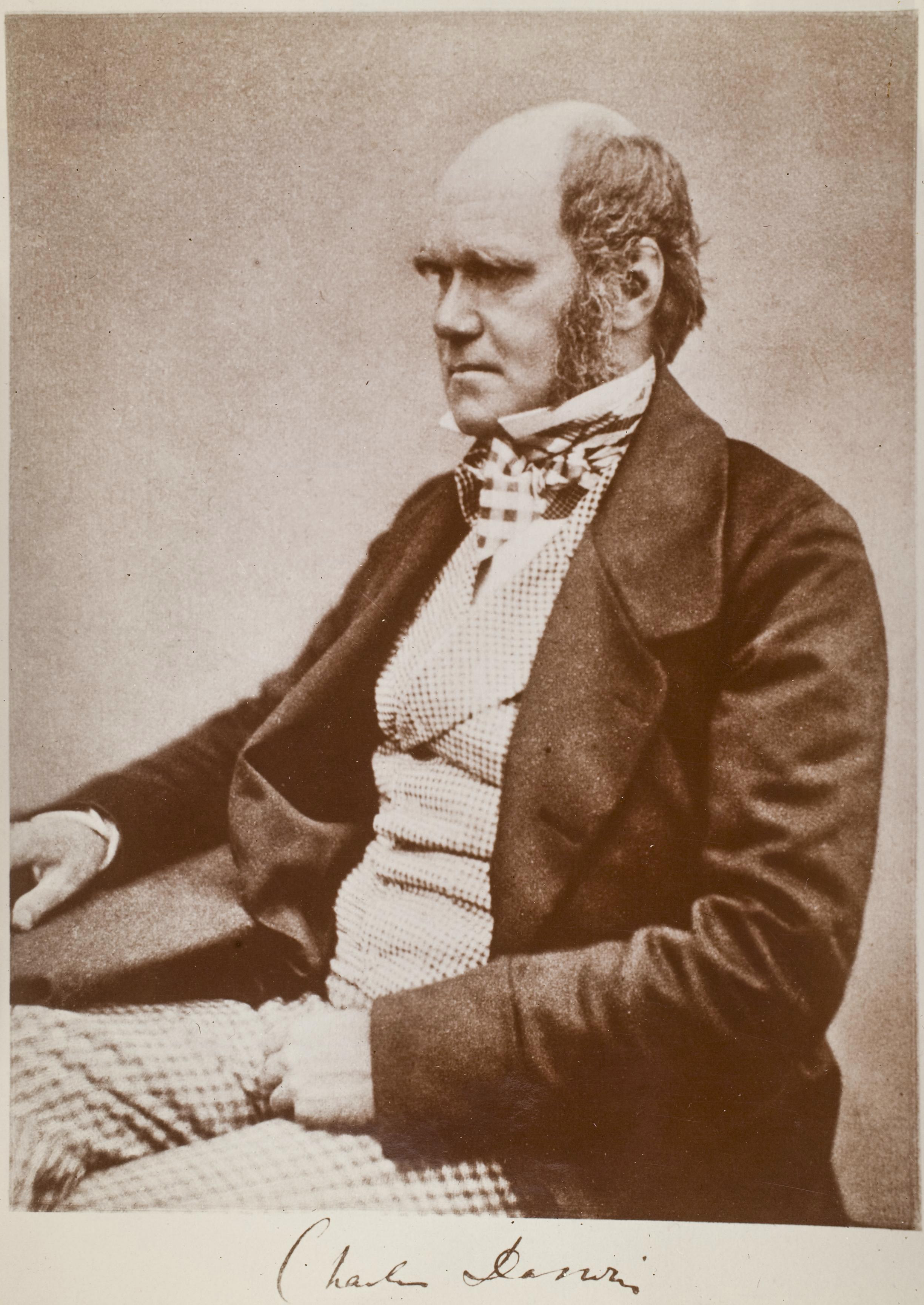 Today would have been Charles Darwin's 200th birthday. There are those who think that Darwin was the most important scientist ever. That is overstating the case, although in the field of biology it is probably impossible to diminish his importance. Take a moment to think about his ideas, understand what they really were, and the impact that he and his ideas have had on modern science.
It's worth nothing that Darwin was not the author of the theory of evolution. The idea of evolution of species pre-dated Darwin by decades; ever since fossils were subject to study in a systematic way, the idea that species will, over time, evolve into new species was part of established biological fault. Darwin's contribution was not evolution itself, but rather evolution by way of natural selection.
This is what made his idea so subversive and controversial. Nature, acting on its own, is the product of unthinking, blind, unplanned, and fundamentally random forces at work. There is no guiding hand. There is no plan. There is no destination. There is only adaptation to environmental change, extinction as the brutal and deadly consequence for failure to adapt, and the survival of those species that possess the ability to deal with new circumstances. The path towards the diversity of species was littered with the corpses of those who could not survive long enough to breed.
Darwin's idea stood in sharp contrast to two other schools of thought prevailing at the time. One, the school of Lamarckian evolution, held that individuals acquired characteristics through repetitive actions and passed those characteristics down to their offspring. Thus, a deer-like creature that often strained its neck to get at leaves on the top of the bushes would channel "life force" into its neck, and when it reproduced, its offspring would have that extra life force in its neck, too, resulting in the creation of a longer neck -- and thus, over many generations, the deer turns in to a giraffe. Lamarckian thought is much more seductive than it would seem at first glance and even Darwin fell prey to it when attempting to explain racial differences between humans. But it is simply wrong. If I am a ditch digger and use my arms to work all day long, my children are not going to have longer arms.
The other idea was teleological evolution, the idea tha God was guiding the forces of nature in some manner such that the animals of the world, including man, came to their present state, for purposes known to God. This was a common school of thought and remains to this day a "compromise" position for those who have looked into the fossil and biological record but still insist on a role for God in the process. An examination of the evidence reveals that indeed evolution is a fact, a provable phenomenon, as well as a theory; it is worth nothing that gravity is the same sort of thing, and no one doubts that the fact of gravity exists even if there are different ways of explaining how it works. But the problem with divinely-guided evolution is that it explains nothing at all about how evolution works. If God is making species evolove over time, then without God's intervention, they would not evolve over time. So it is really no different than the obviously false concept of spontaneous creation. It also leaves a very substantial issue with extinct species. There is no particular biological reason for God to have created species only to kill them off completely -- why, then do we find dionsaurs? A theologian might simplistically say that Jehovah has His reasons and it is not for us to question them. That, however, is not science -- science is fundamentally about questioning the reason why things happen. So this avenue of analysis eventually leads the scientist to a place that is not science at all; it offers no explanation for the diversity of species in the world.
Darwin's theory does do this. He did not pretend to know what factor within a species caused it to, over many generations, adapt and alter its outward appearance. But it was readily apparent to him that this happens. His theory was that if a species failed to do this, it would eventually be maladapted to changing local environmental conditions, vulnerable to predators, and unable to feed itself. Down that path lay extinction.
As a predicate to this theory, we must note, Darwin had to theorize that environmental conditions in particular areas did indeed change over time. This was the bulk of the insight he offered in his first major work, The Voyage Of The Beagle. This book not contain a word about evolution, although there are some elliptical hints to the concept that we can see now. But the book itself was a combination of a travelogue and a bestiary. It was the heavily-edited memoir of Darwin's travels as the naturalist on the HMS Beagle, whcih had as its mission the geographic exploration of South America.
While exploring the South American coast, Darwin was on several occasions dropped off on the mainland to explore on his own what was there. He took week-long hikes through the Amazon rainforest, the pampas of Patagonia, the deserts and highlands of the middle Andes, and the plains of Uruguay. There, he took note of geological as well as biological evidence. In particular, he noted upwelling in geologically active areas, signs of relatively recent creation of hills, mountains, and escarpments. He also found fossils of animals in the pamapas and in the deserts that appeared to be the sorts of creatures one would expect to find in a forest. So while Voyage of the Beagle can be enjoyed simply for its description of a fascinating journey through the eyes of a keen observer (and a talented write, I would add) it also contains a scientific insight -- the world is not stable, it changes over time, and as it does, different areas have different kinds of environments. This was something of a reach at the time; since geological change is not something that is readily-observable in human time in most instances, many people doubted it happened at all. In particular, those who ascribed a divine role in the creation of the environment and the relatively recent creation of the Earth would have no reason to think that environmental and geological conditions of a particular area had ever changed. (The evidence suggests otherwise, but when dogma and objective evidence conflict, there are those who will sacrifice objective reality in favor of the dogma.)
So, confronted with evidence of geological change causing local conditions to alter, in areas that appeared to have isolated populations of creatures, Darwin found species alive and thriving in areas that were unlike any he had seen elsewhere. It was in the Galapagos Islands that he finally reached his conclusion that adaptive species, which could change over time, would survive while non-adaptive species died out. "Survival of the fittest" was not a concept Darwin embraced, "survival of the most adaptable" is much closer to the mark. The Galapagos, in particular the finches and tortoises of the area, were powerful demonstraters of this concept, because environmental conditions on the various islands in the archipalego were so different from one another. The Galapagos provided a world in miniature, isolated by a thousand miles of ocean from the South American mainland, and with more than a dozen local micro-environments to see, hopping from one island to another quickly. Here the tortoises had pointy shells; here they were rounded. Here the finches had large, squat beaks and there, they were narrow and pointy. The prevalence of different kinds of food sources was the answer; some islands had one kind of food and others had different kinds of food, and the species, which all started out with a common kind of ancestor, changed over time so that they could get at their food and survive.
Having had this epiphany, Darwin realized its explosive nature and kept it to himself. He spent many years writing conventional biology textbooks, teaching, and otherwise establishing his reputation in the scientific community, without breathing a word of his theory to anyone. By the time Origin of Species was published, Darwin was a major figure within the scientific establishment. But he had sat on the idea and the book for tens of years, developing arguments and marshalling evidence to back them up, trying to anticipate every sort of serious objection that could be raised against the idea of evolution by natural selection.
As is well-known now, though, his hand was eventually forced. Another naturalist, Alfred Russell Wallace, had gathered a significant amount of evidence from his work in Borneo. He developed his own theory that natural selection in response to environmental change caused the evolution and resulting diversity of species, and he sent a draft of a paper to that effect to Darwin with a request for Darwin's input and editing. Realizing that he was about to be upstaged by this newcomer to the field, Darwin rushed to publish. He gave Wallace credit in his book for the work Wallace had done and for independently coming up with the idea, which was a reasonably classy thing to have done under the circumstances, but he still claimed to have derived the theory first.
The book was an immediate bombshell dropped on the scientific establishment of the world. The power and effectiveness of the concept quickly gained adherence, and the necessity of excluding a guiding divine hand from the process was almost as immediately recognized as a threat to religion and a refutation of even an allegorical interpretation of the Genesis myth. Darwin spent thehttp://www.blogger.com/ rest of his life seeing the forces of religion attacking him and his theories. Indeed, that intellectual battle still rages today.
This was a matter that did not pain Darwin overmuch. He had been raised as a nonconformist Unitarian by freethinking parents; he openly questioned why one religion should be deemed superior to another. He resisted characterizing himself as an atheist, preferring to say he was an agnostic. He participated in the charitable and community activities of his church but skipped the religious services (which his family attended; during the sermons he would take long walks and then meet up with his family later in the day for meals).
His observations of episodes of astonishing pain the the natural world left him comfortable with the concept that there had been no guidance in that process by a benevolent God; he wrote on this subject "I cannot persuade myself that a beneficent and omnipotent God would have designedly created parasitic wasps with the express intention of their feeding within the living bodies of Caterpillars." The digger wasp implanting its larvae in the living body of a caterpillar so that the young wasps have fresh, living meat to eat while being born seems cruel, but it is more accurate to call it unthinkingly pitiless. There was simply no role for God in such a vision of nature.
Darwin was not well aware of the internal mechanism of how species adapt and change over time. We know now, of course, that the foundations of that branch of science were being laid by a contemporary of Darwin's, Gregor Mendel, in experiments with pea plants and fruit flies, explored the mechanisms of inherited traits and gene theory. Mendel's work went unnoticed for much of his lifetime (and Darwin's) but the two theories were synthesized in the 1930's and 1940's by a variety of scientists working two generations after Darwin's death. It is difficult to imagine Darwin being displeased with this discovery, as well as the subsequent vindication of it by the accumulated weight of two more generations' worth of observations, experimentations, and the use of progressively more and more powerful instruments.
There are those who insist that Darwin recanted of evolution completely on his deathbed, or that Augustine-like, he converted to some kind of Christianity on his deathbead. This is utter and complete bullshit and Darwin would have considered it slander, although he would probably have been too polite to actually say so or do anything about it, given that a minor noblewoman was the author of this fiction.
But if modern genetic science has accomplished miracles -- and there is little doubt that it has; you and I probably both owe our lives to its accomplishments -- it is because the miracle workers have stood on the shoulders of a giant, and that giant was Charles Darwin. The power and scope of Darwin's theory are so great that the concept of evolution by way of natural selection is as fundamental to the concept of biology as the Copernican theory of heliocentricity is the field of astronomy. It is, perhaps, "only a theory," but a proven theory, the only theory that has ever been offered that makes observable facts fall into place and harmoniously make sense of the world. Professor Theodosius Dobzhansky, an acclaimed Ukranian-American genecicist (and a devout Eastern Orthodox Christian), famously wrote in 1973 that "Nothing in biology makes sense except in the light of evolution." It is ultimately to Charles Darwin that we owe this remarkable and powerful idea, which has been responsible for so much life and healing ever since.
Happy Darwin Day, everyone.
February 11, 2009
A Concerned Colonial Citizen Speaks
No, I'm not the only one taking weekly "fishing" trips up Geekback Mountain. Robert Farley has authored the finest and most incisive piece of commentary on current Colonial politics out there. It may be hard to hear, but -- Tom Zarek had a pretty good point.
Labels:
Battlestar Galactica,
Link Love
It's Not Really Defamation If You Get Called "Hot"
A case of some interest is making the rounds of the legal blogosphere. Apparently, someone started a blog and it got popular, and then he wrote a book and made some money. The blog, and the book, are called Hot Chicks With Douchebags. The content is exactly as advertised -- it's pretty much a series of pictures of attractive women with rather unseemly-looking men, coupled with juvenile but sporadically amusing commentary by the author.
Well, three of the "hot chicks"* involved sued the author and the publisher, looking to cash in. A New Jersey trial court said "no dice," and threw the suit out on First Amendment grounds.
In fact, the suit shows signs of great laziness on the part of the plaintiff's attorneys. They included a cause of action for violation of Business & Professions Code § 17200, which would have been a reasonable sort of thing for them to have done -- if they had filed the suit in a California court, and if they had done it in 1998, before B&P Code 17200 got amended to exclude this sort of thing. What it looks like happened here is they got an old lawsuit from California that someone had filed a long time ago and rather than actually reading the damn thing before filing it, they just did a global search and replace on the names, ran to court, and promptly got thrown right back out.
Now, if they had actually filed in California, who knows? Maybe the California tort of misappropriation of identity, or a claim under California Civil Code § 3344, would have been to their advantage. But they filed in New Jersey and this is the result you get there. Seems to me that the California court has as much jurisdiction over the publisher as the New Jersey court did. And then there's the reasoning of the New Jersey court -- which is that the First Amendment protects works of parody even against state laws like defamation and invasion of privacy.
We can contemplate the sociological implications of a book like this later (how, exactly, is a guy supposed to dress when he goes out to a club without risking being characterized as a douchebag?) but the point of the matter is that ultimately, the First Amendment casts a pretty broad net. Ultimately, it can't be otherwise.
* Oh, you want to see the "chicks" in question to decide for yourself if they're "hot"? Or if the guys they're with are really "douchebags"? The Smoking Gun is there. Don't say I never provided any helpful links.
Well, three of the "hot chicks"* involved sued the author and the publisher, looking to cash in. A New Jersey trial court said "no dice," and threw the suit out on First Amendment grounds.
In fact, the suit shows signs of great laziness on the part of the plaintiff's attorneys. They included a cause of action for violation of Business & Professions Code § 17200, which would have been a reasonable sort of thing for them to have done -- if they had filed the suit in a California court, and if they had done it in 1998, before B&P Code 17200 got amended to exclude this sort of thing. What it looks like happened here is they got an old lawsuit from California that someone had filed a long time ago and rather than actually reading the damn thing before filing it, they just did a global search and replace on the names, ran to court, and promptly got thrown right back out.
Now, if they had actually filed in California, who knows? Maybe the California tort of misappropriation of identity, or a claim under California Civil Code § 3344, would have been to their advantage. But they filed in New Jersey and this is the result you get there. Seems to me that the California court has as much jurisdiction over the publisher as the New Jersey court did. And then there's the reasoning of the New Jersey court -- which is that the First Amendment protects works of parody even against state laws like defamation and invasion of privacy.
We can contemplate the sociological implications of a book like this later (how, exactly, is a guy supposed to dress when he goes out to a club without risking being characterized as a douchebag?) but the point of the matter is that ultimately, the First Amendment casts a pretty broad net. Ultimately, it can't be otherwise.
* Oh, you want to see the "chicks" in question to decide for yourself if they're "hot"? Or if the guys they're with are really "douchebags"? The Smoking Gun is there. Don't say I never provided any helpful links.
Parliamentary Confusion In Tel Aviv
Yesterday was election day in Israel. Israel is a multi-party democracy and no politician can reasonably hope to lead the government there with a majority of his or her own party members alone. So the trick is to find enough common ground between different parties to form an effective governing coalition. As analyzed in the Jerusalem Post, it appears that the Likud party, led by former Prime Minister Binyamin Netanyahu, is in a better position to put together a coalition government than Tzipi Lvini of the Kadima party, despite the fact that it appears Kadima earned one more seat than Likud.
A Likud-led government in Israel can be expected to take a more aggressive line than one led by Kadima on issues like relations with the Palestinians and the Arab nations surrounding Israel, expanding Israeli settlements into majority-Palestinian areas, and flexing the IDF's muscle as a predicate to diplomacy. Given that a Kadima government got drawn in to a war in Gaza and didn't pull any punches when it did, that's saying something.
I'm sure that President Obama and Secretary of State Clinton would much rather see Israel led by Kadima. But I wouldn't anticipate that. The recent wars and Kadima leaders' inability to bring them to decisive Israeli victories is a significant problem; about all that Lvini had going for her was war weariness. So we will have to deal with the allies we have rather than the allies we might have wanted to have had going forward.
Personally, I think a "peace throuigh strength" platform is one that fundamentally works -- while I'm not so dismissive of Palestinian politicians as to rely on the bromide that "all they understand is force," it's a simple fact that pretty words and conciliatory gestures on the part of any diplomatic actor anywhere are devoid of meaning unless there is also the possibility that those diplomatic acts could be substituted by military ones. We care about Russia's diplomacy not because of the moral gravitas of Russia's position in the world but rather because Russia has a hell of a big army and a hell of a big navy. Israel similarly gains diplomatic leverage not because people accept the right of the Jews to have their own state but rather because whether you accept that right or not, the IDF will kick your ass if you don't at least tacitly acknowledge their existence.
So, the pendulum swings back the other direction in Israel, and the world must react accordingly.
A Likud-led government in Israel can be expected to take a more aggressive line than one led by Kadima on issues like relations with the Palestinians and the Arab nations surrounding Israel, expanding Israeli settlements into majority-Palestinian areas, and flexing the IDF's muscle as a predicate to diplomacy. Given that a Kadima government got drawn in to a war in Gaza and didn't pull any punches when it did, that's saying something.
I'm sure that President Obama and Secretary of State Clinton would much rather see Israel led by Kadima. But I wouldn't anticipate that. The recent wars and Kadima leaders' inability to bring them to decisive Israeli victories is a significant problem; about all that Lvini had going for her was war weariness. So we will have to deal with the allies we have rather than the allies we might have wanted to have had going forward.
Personally, I think a "peace throuigh strength" platform is one that fundamentally works -- while I'm not so dismissive of Palestinian politicians as to rely on the bromide that "all they understand is force," it's a simple fact that pretty words and conciliatory gestures on the part of any diplomatic actor anywhere are devoid of meaning unless there is also the possibility that those diplomatic acts could be substituted by military ones. We care about Russia's diplomacy not because of the moral gravitas of Russia's position in the world but rather because Russia has a hell of a big army and a hell of a big navy. Israel similarly gains diplomatic leverage not because people accept the right of the Jews to have their own state but rather because whether you accept that right or not, the IDF will kick your ass if you don't at least tacitly acknowledge their existence.
So, the pendulum swings back the other direction in Israel, and the world must react accordingly.
Labels:
International Politics,
Israel
MW For The Win
Comment of the month posted at Donkelphant:
Instead of wasteful fiscally irresponsible and corrupt Republican controlled government spending money we don’t have on Republican pork, constituencies, contributors, and unproven pet ideologies led by a president who couldn’t talk…
We now have a wasteful fiscally irresponsible and corrupt Democratic controlled government spending money we don’t have on Democratic pork, constituencies, contributors, and unproven pet ideologies led by a president who talks a good game.
Labels:
Domestic Politics,
Link Love
February 10, 2009
Return Of The Indulgence, Or, A Truth Revealed
It turns out, if you're Catholic, you can buy your way out of a state of mortal sin with real dollars.
I had been taught that Martin Luther launched the Protestant Reformation based on his outrage at the sale of indulgences and the moral decay that the practice brought. Of course, a deeper study of history reveals that while Luther was certainly a figure of towering importance, the breakup of the church in western Europe had its origins in events and philosophers that preceded Luther, it reveals that Luther's criticism of the church was more subtle than simply criticizing indulgences, and the political fragmentation of the church was neither Luther's intention nor particularly his doing. All the same, indulgences never seemed right to me.
Call it one of the many things that, as a young Catholic, never impressed me as making any particular amount of sense. Let's say a teenaged Catholic boy does something the Church says is really bad, like masturbate. Well, having milked his monkey, he's gone and placed himself in a state of mortal sin, and needs absolution -- he is at serious risk, as if there were any other kind, for spending the rest of eternity in the Celestial Ceramics Kiln if he gets hit by a bus without getting God's forgiveness first.
Now, this forgiveness is obtained when he enters a small, unlit closet and have a conversation with a priest through a semi-transparent screen in the closet next to him, which would go something like this:
Then, the penitent exits the confessional, kneels at a pew in the church, says the prescribed number of prayers, gets up and makes the sign of the cross, and exits the church, forgiven.* The sacrament of reconciliation is completed when the penitent completed the "sentence" of a certain set of prayers. This completes the ritual and at this point, the penitent is "reconciled" with God and all of his confessed sins are forgiven. Presumably, the penitent is supposed to use the prayer time to meditate upon the wrongfulness of his actions, to resolve to not do them again in the future, and to consider how to live a more moral life.
But it turns out that no, the priest had another option all along. He can also name a figure and upon receipt of a donation in that amount, issue a plenary indulgence. This option is apparently one that Pope Benedict XVI thinks hasn't been used enough recently, and he's now encouraging the clergy to start looking for that. I'd always thought that this second option was one that got outlawed, but a close reading of the Gray Lady's article indicates that it only was "disfavored" under J.P.2. But Benny-Sixteen apparently likes the idea just fine.
Now, let's consider for a moment the entire ridiculousness of the situation. The priest theoretically has no idea what's being confessed or by whom. The sin itself is usually something that is not particularly harmful to society as a whole -- as in this example, who has the teenage boy hurt by whacking it? If he had stolen something, the priest could tell him to give it back to the rightful owner and make amends for someone who had really been hurt. But if all the kid's been doing is making some fist kabobs, this is just something the church wants him to think is a sin all on its own despite not hurting anyone. So the only penance is the mind-numbing repetition of the prayers.
And it's just plain weird telling a priest, who you may like but rather strongly suspect is gay, that you're routinely jerkin' the gherkin. If you're already confronting issues of what's really moral and not, and don't understand how God, who presumably already knows the words to the "Our Father" prayer, could possibly want to hear you say it again fifteen times in a row, the whole thing can seem exceedingly pointless.
In that sense, the use of indulgences makes a whole lot of sense. Because, as Luther pointed out, if you can just pay some money to get your forgiveness that way, you're not really learning anything or growing morally. If you've already bought in to the idea that occasionally cleaning your own pipes is a morally terrible thing to, well, then you're going to feel guilty about it when you inevitably do it. So the church can have you mumble a bunch of prayers until the words don't mean anything to you anymore -- or, it can profit.
Certainly, the church doesn't want you doing really bad things like killing folks, stealing stuff, or raping people. But the moral gravity of those acts is patently obvious to anyone who's bothered to think about them at all. You shouldn't need God to tell you not to shoot your neighbor in the face. I seriously hope that you all aren't out there not killing, raping, and stealing just because God tells you not to. Assume, for a moment, that I'm right and there is no God. Given that this is true, why don't you kill your neighbor whose loud music has always bugged you? The answer is because it's obviously morally wrong to do it -- even if there is no eternal consequence.
But beating the banana? Skipping church on Sunday? Using profanity? These are things of minimal objective importance. No one is hurt if you do them. And these are the sorts of things that people are giong to do all the time. So if the church can aribtrarily make these things "bad," then when you do them, you're in a state of sin and need to get out of it. Buy you way out of the sin, and the cash starts flowing in. All the church needs to do is train its clerics in how to wave their hands around in the air in a funny way and mumble some crap in Latin that few, if any, of the customers of the "service" will ever bother to translate. Boom! You've got yourself a product with an infinite demand, a monopoly on dispensing it, and it's just a matter of finding the right price point.
I'm thinking ten dollars per tally-whack is about right. It can't be too high; most teenagers don't have a lot of earning capacity. But like a good wine, the price has to have some meaning to the unsophisticated customer, or else the customer will assume that the product is lacking in quality.
It you thought that a game of couch hockey put your soul in peril, but that God would forgive you for ten bucks, how often would you indulge? The answer is, you might dial it back a bit from our hypothetical penitent above, but you probably wouldn't feel the need to actually stop, which means the sweet, sweet penitence-for-onanism money would start flowing in to the church cuffers, big-time. If you can just get a large enough number of people buying in to the idea, it's a better money-maker than selling a cup of coffee for four bucks, either with or without breakfast.
So I guess I'm not too surprised that the church is going back to the practice. Nor am I surprised that Protestants will sneer at it. (Begging the question of why they tithe if not to buy their way into the Kingdom of Heaven, albeit using a different payment plan than the one described herein.) My sneer comes from a different source, though -- I question both the existence of an omnipotent, omnipresent, omniscient diety whose very existence is across and transcending the entire universe, who can create and snuff out entire stars and galaxies with a mere thought, who cares very, very deeply about whether or not I varnish my python before going to bed tonight, as well as the validity of the thought that such a harmless, victimless act could possibly be deemed a matter of any moral gravity at all regardless of the existence of such a diety. I have to accept both propositions in order for me to then reach the Protestant-Catholic divide here as to whether giving money to a church will produce forgiveness from God for my "sin."
But as a business proposition, it's hard to beat. Well, maybe I could have avoided using the words "hard" and "beat." Point is, it's a zero-overhead product with infinite demand, flexible pricing, and customers all but guaranteed to offer repeat business to your monopoly. If you can think of a better way to make money, I'd love to hear it.
* Whereafter our fifteen-year-old penitent frequently might catch a glimpse of his crush wearing a skirt in the wind, revealing her figure, or otherwise find the display of girlflesh tempting, which causes him to go directly home and whack it some more. Thus, the cycle starts anew.
I had been taught that Martin Luther launched the Protestant Reformation based on his outrage at the sale of indulgences and the moral decay that the practice brought. Of course, a deeper study of history reveals that while Luther was certainly a figure of towering importance, the breakup of the church in western Europe had its origins in events and philosophers that preceded Luther, it reveals that Luther's criticism of the church was more subtle than simply criticizing indulgences, and the political fragmentation of the church was neither Luther's intention nor particularly his doing. All the same, indulgences never seemed right to me.
Call it one of the many things that, as a young Catholic, never impressed me as making any particular amount of sense. Let's say a teenaged Catholic boy does something the Church says is really bad, like masturbate. Well, having milked his monkey, he's gone and placed himself in a state of mortal sin, and needs absolution -- he is at serious risk, as if there were any other kind, for spending the rest of eternity in the Celestial Ceramics Kiln if he gets hit by a bus without getting God's forgiveness first.
Now, this forgiveness is obtained when he enters a small, unlit closet and have a conversation with a priest through a semi-transparent screen in the closet next to him, which would go something like this:
Penitent: Forgive me, Father, for I have sinned. It's been two weeks since my last confession.At this point, I always thought the priest had only one thing he could do to wrap things up -- instruct the penitent to say a certain number of prayers (typically a ratio of five Hail Marys to one Our Father) and promise to not do it again. He might also throw in a bit of advice like, "Maybe take up a hobby other than polishing your porpoise. Golf is fun." But the point is that he metes out a punishment, and instructs the penitent to "Go, and sin no more."
Confessor: God forgives all sins, my son. Give me your confession.
Penitent: Father, since my last confession I've had impure thoughts about the girl who sits two seats to my left in geometry class.
Confessor: [Thinks: "Well, that makes two of us." Says:] This is only natural, my son.
Penitent: No, Father, it's worse than that. I've -- I've abused myself while having these impure thoughts.
Confessor: How many times have you done this?
Penitent: Twenty-six, father.
Confessor: Didn't you say it's only been two weeks since your last confession?
Penitent: I only do it once on Sundays, Father! I know that's the Lord's day.
Confessor: Well, that's something. Still, chafing can get to be a problem.
Then, the penitent exits the confessional, kneels at a pew in the church, says the prescribed number of prayers, gets up and makes the sign of the cross, and exits the church, forgiven.* The sacrament of reconciliation is completed when the penitent completed the "sentence" of a certain set of prayers. This completes the ritual and at this point, the penitent is "reconciled" with God and all of his confessed sins are forgiven. Presumably, the penitent is supposed to use the prayer time to meditate upon the wrongfulness of his actions, to resolve to not do them again in the future, and to consider how to live a more moral life.
But it turns out that no, the priest had another option all along. He can also name a figure and upon receipt of a donation in that amount, issue a plenary indulgence. This option is apparently one that Pope Benedict XVI thinks hasn't been used enough recently, and he's now encouraging the clergy to start looking for that. I'd always thought that this second option was one that got outlawed, but a close reading of the Gray Lady's article indicates that it only was "disfavored" under J.P.2. But Benny-Sixteen apparently likes the idea just fine.
Now, let's consider for a moment the entire ridiculousness of the situation. The priest theoretically has no idea what's being confessed or by whom. The sin itself is usually something that is not particularly harmful to society as a whole -- as in this example, who has the teenage boy hurt by whacking it? If he had stolen something, the priest could tell him to give it back to the rightful owner and make amends for someone who had really been hurt. But if all the kid's been doing is making some fist kabobs, this is just something the church wants him to think is a sin all on its own despite not hurting anyone. So the only penance is the mind-numbing repetition of the prayers.
And it's just plain weird telling a priest, who you may like but rather strongly suspect is gay, that you're routinely jerkin' the gherkin. If you're already confronting issues of what's really moral and not, and don't understand how God, who presumably already knows the words to the "Our Father" prayer, could possibly want to hear you say it again fifteen times in a row, the whole thing can seem exceedingly pointless.
In that sense, the use of indulgences makes a whole lot of sense. Because, as Luther pointed out, if you can just pay some money to get your forgiveness that way, you're not really learning anything or growing morally. If you've already bought in to the idea that occasionally cleaning your own pipes is a morally terrible thing to, well, then you're going to feel guilty about it when you inevitably do it. So the church can have you mumble a bunch of prayers until the words don't mean anything to you anymore -- or, it can profit.
Certainly, the church doesn't want you doing really bad things like killing folks, stealing stuff, or raping people. But the moral gravity of those acts is patently obvious to anyone who's bothered to think about them at all. You shouldn't need God to tell you not to shoot your neighbor in the face. I seriously hope that you all aren't out there not killing, raping, and stealing just because God tells you not to. Assume, for a moment, that I'm right and there is no God. Given that this is true, why don't you kill your neighbor whose loud music has always bugged you? The answer is because it's obviously morally wrong to do it -- even if there is no eternal consequence.
But beating the banana? Skipping church on Sunday? Using profanity? These are things of minimal objective importance. No one is hurt if you do them. And these are the sorts of things that people are giong to do all the time. So if the church can aribtrarily make these things "bad," then when you do them, you're in a state of sin and need to get out of it. Buy you way out of the sin, and the cash starts flowing in. All the church needs to do is train its clerics in how to wave their hands around in the air in a funny way and mumble some crap in Latin that few, if any, of the customers of the "service" will ever bother to translate. Boom! You've got yourself a product with an infinite demand, a monopoly on dispensing it, and it's just a matter of finding the right price point.
I'm thinking ten dollars per tally-whack is about right. It can't be too high; most teenagers don't have a lot of earning capacity. But like a good wine, the price has to have some meaning to the unsophisticated customer, or else the customer will assume that the product is lacking in quality.
It you thought that a game of couch hockey put your soul in peril, but that God would forgive you for ten bucks, how often would you indulge? The answer is, you might dial it back a bit from our hypothetical penitent above, but you probably wouldn't feel the need to actually stop, which means the sweet, sweet penitence-for-onanism money would start flowing in to the church cuffers, big-time. If you can just get a large enough number of people buying in to the idea, it's a better money-maker than selling a cup of coffee for four bucks, either with or without breakfast.
So I guess I'm not too surprised that the church is going back to the practice. Nor am I surprised that Protestants will sneer at it. (Begging the question of why they tithe if not to buy their way into the Kingdom of Heaven, albeit using a different payment plan than the one described herein.) My sneer comes from a different source, though -- I question both the existence of an omnipotent, omnipresent, omniscient diety whose very existence is across and transcending the entire universe, who can create and snuff out entire stars and galaxies with a mere thought, who cares very, very deeply about whether or not I varnish my python before going to bed tonight, as well as the validity of the thought that such a harmless, victimless act could possibly be deemed a matter of any moral gravity at all regardless of the existence of such a diety. I have to accept both propositions in order for me to then reach the Protestant-Catholic divide here as to whether giving money to a church will produce forgiveness from God for my "sin."
But as a business proposition, it's hard to beat. Well, maybe I could have avoided using the words "hard" and "beat." Point is, it's a zero-overhead product with infinite demand, flexible pricing, and customers all but guaranteed to offer repeat business to your monopoly. If you can think of a better way to make money, I'd love to hear it.
* Whereafter our fifteen-year-old penitent frequently might catch a glimpse of his crush wearing a skirt in the wind, revealing her figure, or otherwise find the display of girlflesh tempting, which causes him to go directly home and whack it some more. Thus, the cycle starts anew.
Labels:
Ethics and Morality,
News,
Religion,
Sex
Subscribe to:
Posts (Atom)

 Posts
Posts