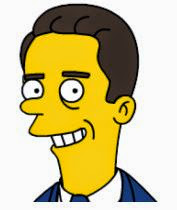
"Let's go walk to McDonald's and get sundaes." Thus did The Wife proposition me early this afternoon. You can address the cognitive dissonance of a walk to McDonald's to get ice cream as a form of exercise at your leisure. We're hardly the first to get to that place.
Yesterday we'd walked to the Almond Blossom Festival, which was a nice little neighborhood event for springtime. A few midway rides and carnival games, some fundraising food booths, arts and crafts vendors, and some live music -- a good time and a very cool thing for a small neighborhood to have. I'd found the weather surprisingly pleasant, if a bit windy, and left my sweatshirt at home. (The Wife, perpetually cold, wore at least three layers of clothing and never took any off.) So the prospect of a longer walk in the nice weekend weather -- it was much less windy today than yesterday -- won me over.
We brought the dogs along, too. They wanted to go for a walk, but they didn't know what they were in for. I mapped it out on Google Earth. As it turns out, our route to the McDonald's was just under 2.5 miles and our route home was just over 2.5 miles; our total trip is close enough to five miles that the tens-of-feet margin of error inherent in using a tool like that won't really matter.
So was this a net gain or loss of calories? This resource says that a slow walk -- and we were pretty slow, with the doggies and all -- one burns .027 calories per pound, per minute of walking. Since we know we walked 5 miles, we can know the amount of time that took. At 3 miles an hour, it would take one hour and forty minutes to walk five miles. So that would be 2.7 calories per pound of body weight. This resource says that a McDonald's hot fudge sundae has 330 calories. Since both of these resources are on the internet, I know they're true and accurate. Therefore, if you weigh 123 pounds or less, a five-mile walk to get a hot fudge sundae at McDonald's is a net calorie gain; if you weigh more, it's a net calorie loss. I decline to publish exactly how overweight I am, but suffice to say that yes, I burned more calories than I consumed with this version of lunch.
My feet are certainly feeling it -- five miles is longer than I'm used to walking. And the doggies are sacked out. They didn't fight very much when I trimmed their claws after the walk -- they just didn't have the energy.
But hey, it was a glorious day. I even sat outside after we got back to read my book on our back porch while there was still daylight (which is now a little while longer, thanks to Daylight Savings Time). And I think I'll sleep very well tonight myself. This counts as a good idea from The Wife, even if I am a bit sore.
March 9, 2008
March 8, 2008
Hunt Where The Ducks Are, But Figure Out Where They're Going To Be First
Today's WaPo offers an analysis that suggests Obama's strategy of seeking delegate votes from traditionally Republican-voting areas will weaken him in the general election. The analysis is interesting in that it points out that Obama has managed to make gains because Clinton has ignored certain areas. For instance, Idaho Democrats have given 3 delegates to Clinton, but 15 to Obama (according to the WaPo). The suggestion is that Obama's lead in delegates comes pretty much exclusively from such places.
The question is, what chance does Obama have of getting Idaho to vote Democratic in the general election? None, of course. So the WaPo implies that Clinton's is the better overall strategy because she is focusing her efforts in delegate-rich states which are also either Democratic strongholds or battleground states.
I disagree. Not with the idea that you hunt where the ducks are, but rather with the WaPo's unimaginative assessment of where the ducks really are. A delegate from Idaho casts a vote with the exact same weight as that of a delegate from California or Pennsylvania. And since in the more rural Republican states, Democrats tend to cluster in the capital city and the college towns, reaching out to them is relatively easy and cheap. There may be fewer delegates to be had in Idaho than Ohio, but the number is greater than zero.
Clinton simply expected those delegates to fall in line behind her -- even after Obama mounted a stronger-than-expected challenge to her ascension. Idaho Democrats were probably unhappy with being ignored by the national candidates year after year. Then, Obama actually asked for their votes. People like to be asked. Is it such a great surprise that they responded? I think the strategy of reaching out to get those delegates is pretty damn clever, especially if Clinton is foolish enough to have not invested in any machinery whatsoever there even after it becomes clear that this is the margin of her defeat. The Alexrod/Plouffe strategy has the immediate benefit to Obama of an advantage in the delegate count.
It also will help build up the party in those states, which produce superdelegates as well as elected delegates, who are not stupid and will realize that the buildup of the party is responsible for their own re-election or status as local powerbrokers. And it's a compelling argument to a superdelegate that whoever earned the most delegates in the primaries should get their support anyway. Since the convention is going to be brokered, Axelrod/Plouffe gives Obama ammunition going in to Denver.
What's more, Obama's work in places, even like Idaho, will resound to the long-term benefit of Democrats. Democrats in Idaho have to feel a little bit like Republicans here in California -- so hopelessly outnumbered as to be impotent in state politics and unable to influence anything the state does. But both as a primary strategy and as a way of building up the party, this is nothing but good. Idaho will vote for McCain in 2008, and likely for the Republican nominee in 2012, too. But a sufficiently charismatic Democrat could be elected to state office in Idaho, maybe even Governor. Axelrod/Plouffe is a better long-term strategy for the Democrats than simply abandoning places that don't seem likely to vote Democrat in eight months.
Good politics is about not just taking what's traditionally yours but reaching out into new areas and growing your base of support. That's how Republicans got on top in the South back in the sixties. That's how Democrats got on top in New Mexico and how they're getting on top in Nevada right now. That's what Obama is doing. That's not what Clinton is doing.
Obama is coming from an ideological position somewhat to the left of Clinton, but has produced a more moderate policy platfom than one might otherwise have thought he would have. He's trying to bridge two ideological wings of his party, and realizing some success at it. He's reaching out and building up the party for the future. Clinton, on the other hand, is beating the same drum that Democrats have been beating on for eight decades -- a great way to beat Herbert Hoover, maybe, but that's not the task she actually confronts.
Obama has figured out a way to reach out beyond his own natural ideological base. Clinton has not. That's why Obama is better for the Democratic party than Clinton.
Which brings me back to a drum I've been beating on for a while now. What are the Republicans going to do to counter this? A party of gun nuts, moatdiggers, and Baptists will win in Blount County, Tennessee, but that coalition isn't strong enough to beat the Democrats in Florida. Clinging to the strategies of the past is going to get you only so far; we're not running against Walter Mondale here and we shouldn't act like we are.
The question is, what chance does Obama have of getting Idaho to vote Democratic in the general election? None, of course. So the WaPo implies that Clinton's is the better overall strategy because she is focusing her efforts in delegate-rich states which are also either Democratic strongholds or battleground states.
I disagree. Not with the idea that you hunt where the ducks are, but rather with the WaPo's unimaginative assessment of where the ducks really are. A delegate from Idaho casts a vote with the exact same weight as that of a delegate from California or Pennsylvania. And since in the more rural Republican states, Democrats tend to cluster in the capital city and the college towns, reaching out to them is relatively easy and cheap. There may be fewer delegates to be had in Idaho than Ohio, but the number is greater than zero.
Clinton simply expected those delegates to fall in line behind her -- even after Obama mounted a stronger-than-expected challenge to her ascension. Idaho Democrats were probably unhappy with being ignored by the national candidates year after year. Then, Obama actually asked for their votes. People like to be asked. Is it such a great surprise that they responded? I think the strategy of reaching out to get those delegates is pretty damn clever, especially if Clinton is foolish enough to have not invested in any machinery whatsoever there even after it becomes clear that this is the margin of her defeat. The Alexrod/Plouffe strategy has the immediate benefit to Obama of an advantage in the delegate count.
It also will help build up the party in those states, which produce superdelegates as well as elected delegates, who are not stupid and will realize that the buildup of the party is responsible for their own re-election or status as local powerbrokers. And it's a compelling argument to a superdelegate that whoever earned the most delegates in the primaries should get their support anyway. Since the convention is going to be brokered, Axelrod/Plouffe gives Obama ammunition going in to Denver.
What's more, Obama's work in places, even like Idaho, will resound to the long-term benefit of Democrats. Democrats in Idaho have to feel a little bit like Republicans here in California -- so hopelessly outnumbered as to be impotent in state politics and unable to influence anything the state does. But both as a primary strategy and as a way of building up the party, this is nothing but good. Idaho will vote for McCain in 2008, and likely for the Republican nominee in 2012, too. But a sufficiently charismatic Democrat could be elected to state office in Idaho, maybe even Governor. Axelrod/Plouffe is a better long-term strategy for the Democrats than simply abandoning places that don't seem likely to vote Democrat in eight months.
Good politics is about not just taking what's traditionally yours but reaching out into new areas and growing your base of support. That's how Republicans got on top in the South back in the sixties. That's how Democrats got on top in New Mexico and how they're getting on top in Nevada right now. That's what Obama is doing. That's not what Clinton is doing.
Obama is coming from an ideological position somewhat to the left of Clinton, but has produced a more moderate policy platfom than one might otherwise have thought he would have. He's trying to bridge two ideological wings of his party, and realizing some success at it. He's reaching out and building up the party for the future. Clinton, on the other hand, is beating the same drum that Democrats have been beating on for eight decades -- a great way to beat Herbert Hoover, maybe, but that's not the task she actually confronts.
Obama has figured out a way to reach out beyond his own natural ideological base. Clinton has not. That's why Obama is better for the Democratic party than Clinton.
Which brings me back to a drum I've been beating on for a while now. What are the Republicans going to do to counter this? A party of gun nuts, moatdiggers, and Baptists will win in Blount County, Tennessee, but that coalition isn't strong enough to beat the Democrats in Florida. Clinging to the strategies of the past is going to get you only so far; we're not running against Walter Mondale here and we shouldn't act like we are.
Renaissance Bleg
I'm listening to a very interesting set of lectures on CD about the Italian Renaissance. The lecturer is taking a topical approach -- one lecture is about the perfidy of Cesare Borgia (and the inevitable apology for his much-maligned sister Lucrezia), the next is about the government and economic structure of the Republic of Venice, then there's a discussion of Imperial and French dynastic ambitions to Milan and Naples, and so on. The topical approach, however, sacrifices chronological continuity for focus on the various subjects. This is overall a good approach, because the politics, military activities, exchange and development of ideas, and economic developments of the era were so very complex.
But with that said, I would be interested in seeing a comprehensive, maybe year-by-year approach to the subject. Does anyone know of a book or other resource that tackles the Renaissance on a faithfully chronological era -- so I'm not learning about the exploits of Lorenzo de' Medici and then having to leap back in time a generation to learn about Francesco Sforza? It's important, I think, to realize that Francesco was a contemporary of Lorenzo's accomplished grandfather Cosimo, and therefore that Lorenzo and Francesco were not contemporaries, but it can be a bit confusing because both have similar kinds of heroic stories to tell.
But with that said, I would be interested in seeing a comprehensive, maybe year-by-year approach to the subject. Does anyone know of a book or other resource that tackles the Renaissance on a faithfully chronological era -- so I'm not learning about the exploits of Lorenzo de' Medici and then having to leap back in time a generation to learn about Francesco Sforza? It's important, I think, to realize that Francesco was a contemporary of Lorenzo's accomplished grandfather Cosimo, and therefore that Lorenzo and Francesco were not contemporaries, but it can be a bit confusing because both have similar kinds of heroic stories to tell.
March 7, 2008
Good News For Once
Diplomacy sometimes works. It did in South America. Which is good -- we need both the oil to flow and our client-state in Columbia to remain viable. War would not have been in the best interests of any of the belligerent nations, which they must have all figured out fairly quickly. That and they wouldn't want to open themselves up to the idea of joint U.S.-Brazilian peacekeeping patrols.

 Labels:
Columbia,
Ecuador,
International Politics,
News,
Venezuela
Labels:
Columbia,
Ecuador,
International Politics,
News,
Venezuela
Victory Is Sweet
My kids on the mock trial team did it -- after a very tough match against my alma mater, the local Catholic high school. They faced an aggressive prosecution case from that school, with some kids who looked confident and poised. But two of my students, the attorneys, were objecting like jacks-in-the-boxes all night long, and the prosecution's case got hopelessly lost; much of the time they were forced to admit that my kids' objections to their questions were well-taken. We had strong witnesses, great questions, and best of all, they stood up to a very hostile judge (a judge I've had difficulty trying cases before in the past, too). So next week it's the championship!
McCain Veepstakes, Round One
I asked NAPP readers who, from a list of nine possible choices, would be the best choice for John McCain to make as his running mate. Eight of the nine were Republicans (obviously any such list will consist of all Republicans or at least people acceptable to Republicans).
Seems to me that the #1 priority in picking a running mate is finding someone who won't hurt the ticket's chances of being elected. First, do no harm. The first thing that voters think about with respect to the running mate is, "What if something bad happens and this guy has to take over?" If you've got Dan Quayle, then you aren't going to inspire a lot of confidence that this is the guy who'll be ready to pick up the reins. So you can't have a Dan Quayle.
After that, then there's a bunch of other ways you can go. Traditionally, the running mate is supposed to be able to carry a swing state -- for instance, John Edwards was supposed to carry North Carolina for John Kerry in 2004 (he failed). Alternatively, the running mate is supposed to buttress the ticket's appeal to a particular segment of the electorate -- as Al Gore did for Bill Clinton in 1992, raising the appeal of the Democrats to southern male voters (this seemed to work). Finally, the running mate can make up for an area in which a candidate is seen to suffer from a policy weakness -- the way that George H.W. Bush brought foreign policy gravitas to the Reagan ticket in 1980.
The choices I put to the Readers were as follows:
Now, I wanted to include a woman on the list. There were three possibilities that I considered but ultimately excluded:
First, I thought about Elizabeth Dole, Senator from North Carolina. This seemed to violate rule #1 -- she's the same age as McCain; he needs a running mate as old as him. McCain's already vulnerable on his age, so that would be a weakness he needs to shore up, not one upon which he should double down.
Second, I considered Kay Bailey Hutchison, Senator from Texas. She didn't seem to add anything that Perry wouldn't have, and Perry was already not bringing much to the party. She's also thought of as something of a policy lightweight, so she would too obviously have been a choice for no reason other than her gender, which would defuse whatever advantage having a woman on the ticket would have otherwise brought.
Finally, I thought about Sarah Palin, Governor of Alaska. At age 44, she would certainly have youth and energy on her side. The Republicans do not need any help to get Alaska's electoral college votes, and while she's apparently a reasonably competent Governor, she hasn't got any particular policy chops to bring to the table that I know of. And logistically, travelling to and from Juneau to at least take "caretaker" level care of Alaska while campaigning would be a good deal more difficult than to a place like, say, Baton Rouge or Harrisburg. (She's also seven months pregnant, which I didn't know when I excluded her, and I haven't given any thought as to whether that would limit her ability to be an effective campaigner. Maybe it wouldn't be an issue, but like I say, I haven't thought about it much because I excluded her from consideration even before I knew that about her.) I could yet be proven wrong in having decided to exclude her, though -- particularly if the Democrats wind up nominating Clinton instead of Obama. Of the three women I thought about, she seems like she would be the best choice.
I couldn't think of any other Republican women of enough prominence that they might be considered. So with regret, I did not include any women on my list.
With that in mind, of those choices made available, my read of the "best choice" was, in order, 1) Romney, 2) Crist, 3) Pawlenty, 4) Watts, 5) Lieberman, 6) Sanford, 7) Gibbons, 8) Perry, and 9) Huckabee. Note that I use the phrase "best choice" to mean the pick that would be most helpful to the Republicans, mainly in the 2008 general election and with an eye to the residual benefit to increasing the party's share of votes for the next several election cycles.
But it seems that NAPP voters, overall, think that McCain needs to reach out as far to the right as he can with his VP choice -- that it's more important to keep the existing coalition intact than to try and re-align the electorate to create new kind of Republican coalition. Again, I disagree -- I think that the coalition of the past has become untenable and like a comet that gets too close to the sun, it has calved into several discrete bodies moving in formation but separate from one another -- and it's now inevitable that they will go their separate ways. To use another analogy, when a couple gets a divorce after twenty-five years of marriage, there's going to be no talking them into staying together.
Now that John McCain is, at least for the next six months, the architect of the Republican Party's fortunes for the next four years, I personally think he will be better-served, and the party better-served, if he starts laying a foundation for the next generation of Republicans rather than trying to keep the last generation together. Recognizing that at least a plurality of NAPP voters feel otherwise, I'd be interested in your thoughts on why Huckabee would be a better choice.
Seems to me that the #1 priority in picking a running mate is finding someone who won't hurt the ticket's chances of being elected. First, do no harm. The first thing that voters think about with respect to the running mate is, "What if something bad happens and this guy has to take over?" If you've got Dan Quayle, then you aren't going to inspire a lot of confidence that this is the guy who'll be ready to pick up the reins. So you can't have a Dan Quayle.
After that, then there's a bunch of other ways you can go. Traditionally, the running mate is supposed to be able to carry a swing state -- for instance, John Edwards was supposed to carry North Carolina for John Kerry in 2004 (he failed). Alternatively, the running mate is supposed to buttress the ticket's appeal to a particular segment of the electorate -- as Al Gore did for Bill Clinton in 1992, raising the appeal of the Democrats to southern male voters (this seemed to work). Finally, the running mate can make up for an area in which a candidate is seen to suffer from a policy weakness -- the way that George H.W. Bush brought foreign policy gravitas to the Reagan ticket in 1980.
The choices I put to the Readers were as follows:
- Charlie Crist, the Governor of Florida. Crist, I figured, is somewhat younger than McCain, and could help deliver a critical state to McCain's column because he is reasonably popular. Gov. Crist got four votes. This seems like a solid play -- as far as I can tell, Crist is minimally acceptable to social conservatives, and the electoral strategy of locking up Florida is of obvious importance. I don't know quiet enough yet about Crist to know whether I'd be pleased with having him step in should something happen to President McCain.
- Tim Pawlenty, the Governor of Minnesota. Pawlenty's attractions include his youth and relative moderation as a Republican governor of a liberal-leaning state. He's photogenic and the Republicans have targetted Minnesota as a swing state that they could take (which is why the convention is there). Nevertheless, Pawlenty got only one vote. His support in Minnesota is seen to be soft, which may explain the lack of enthusiasm for him.
- Rick Perry, the Governor of Texas. Perry was George W. Bush's successor to tho Governor's office and had been W's Lieutenant Governor upon the President's assumption of office. He would be more palatable to conservatives than some other choices. Perry got one vote from NAPP readers. Perhaps that's because there is functionally nothing that any candidate could do to sway Texas out of the Republican column, so Perry doesn't really add anything to the ticket.
- Mark Sanford, the Governor of South Carolina. I figured Sanford's charms were pretty much the same as Pawlenty's, and he seems to enjoy more solid support than Pawlenty. But as with Perry, South Carolina is thought to be so Republican that there just isn't any reason to pluck it out of the air for a boost, and Sanford doesn't have a national following.
- Jim Gibbons, the Governor of Nevada. Nevada, like Florida, is anticipated to be a "battleground state" as the Democrats are looking to poach this state from the Republicans in this election cycle. Gibbons might be able to help with that. But he's not as photogenic as some of the other choices and Nevada is not worth many electoral college votes. Like Sanford, no one picked him as the best choice.
- J.C. Watts, a retired Congressman from Oklahoma. Watts used to be a college football star and did well in the Canadian League, but never broke in to the NFL. Instead, he pursued politics. A strong conservative and a black man representing an overwhelmingly white district, Watts reached the #4 spot in the House of Representatives' leadership structure before moving on to his private businesses, where he has cleaned up big-time. At least one NAPP voter thought that having a black man on the ticket would be a boost to McCain, and would certainly be a nice counterpoint to the Democrats nominating Barack Obama.
- The winner was Mike Huckabee, with five votes. Again, this confuses me. Huckabee seems like a very poor choice to me -- he's a big-government populist and his only real appeal would be to hard-core religious conservatives. He's got some charisma, to be sure, but I don't see that he brings anything to the ticket that Romney wouldn't, and he for sure lacks foreign-policy credentials and does not seem ready to me to step onto the world stage during what would surely be a time of crisis if McCain should fall or otherwise become suddenly unable to serve. Also I don't think Arkansas is in the Republicans' control -- if Clinton is the Democrats' nominee, they will take Arkansas, and if not, then the Republicans will take it. Picking Huckabee as the running mate won't change that math either way. But, the poll results are what they are, so Huckabee is the choice of NAPP readers (although not the choice of NAPP's author).
- Mitt Romney, former Governor of Massachusetts, got no votes at all. This was very surprising to me. Of the nine choices, I would have voted for Romney myself. In the primaries, Romney proved to be the most appealing candidate to mainstream conservative leaders, and his status as running mate would go far towards re-uniting the party. He bested McCain in a few states, too, and most importantly, he would be able to shore up a significant policy weakness -- the economy -- that McCain on his own must endure. I'm quite surprised that only I thought Romney was the best choice. Now, as I argue below, I think that McCain needs to steer the party towards restructuring its coalition of interest groups and the appeal it makes to the electorate as a whole, and Romney is not the most ambitious choice with regards to doing that because Romney pandered so much to the right wing during his candidacy. But it would be a tentative half-step, given Romney's more moderate policy past, and the shore-up on the economy (and Romney's money) would be big immediate boosts. Most importantly, Romney strikes me as the least likely to say or do something that would embarass McCain or the party. The paramount criterion for picking a running mate is someone who won't screw things up. Romney fits that bill very effectively.
- Finally, I note that no one thought McCain should nominate Joe Lieberman. McCain and Lieberman are close friends; Lieberman is no longer affiliated with the Democratic party and seen as a moderate-to-conservative; and he proved in many cases more popular and appealing than John Kerry when he was Kerry's running mate in 2004. Picking Lieberman would also demonstrate to moderate voters, and even some moderate Democrats, that McCain was beholden to no one and ready to be his own man from day one -- at the cost, which I think explains his lack of support, of further alienating hard-core Republican voters.
Now, I wanted to include a woman on the list. There were three possibilities that I considered but ultimately excluded:
First, I thought about Elizabeth Dole, Senator from North Carolina. This seemed to violate rule #1 -- she's the same age as McCain; he needs a running mate as old as him. McCain's already vulnerable on his age, so that would be a weakness he needs to shore up, not one upon which he should double down.
Second, I considered Kay Bailey Hutchison, Senator from Texas. She didn't seem to add anything that Perry wouldn't have, and Perry was already not bringing much to the party. She's also thought of as something of a policy lightweight, so she would too obviously have been a choice for no reason other than her gender, which would defuse whatever advantage having a woman on the ticket would have otherwise brought.
Finally, I thought about Sarah Palin, Governor of Alaska. At age 44, she would certainly have youth and energy on her side. The Republicans do not need any help to get Alaska's electoral college votes, and while she's apparently a reasonably competent Governor, she hasn't got any particular policy chops to bring to the table that I know of. And logistically, travelling to and from Juneau to at least take "caretaker" level care of Alaska while campaigning would be a good deal more difficult than to a place like, say, Baton Rouge or Harrisburg. (She's also seven months pregnant, which I didn't know when I excluded her, and I haven't given any thought as to whether that would limit her ability to be an effective campaigner. Maybe it wouldn't be an issue, but like I say, I haven't thought about it much because I excluded her from consideration even before I knew that about her.) I could yet be proven wrong in having decided to exclude her, though -- particularly if the Democrats wind up nominating Clinton instead of Obama. Of the three women I thought about, she seems like she would be the best choice.
I couldn't think of any other Republican women of enough prominence that they might be considered. So with regret, I did not include any women on my list.
With that in mind, of those choices made available, my read of the "best choice" was, in order, 1) Romney, 2) Crist, 3) Pawlenty, 4) Watts, 5) Lieberman, 6) Sanford, 7) Gibbons, 8) Perry, and 9) Huckabee. Note that I use the phrase "best choice" to mean the pick that would be most helpful to the Republicans, mainly in the 2008 general election and with an eye to the residual benefit to increasing the party's share of votes for the next several election cycles.
But it seems that NAPP voters, overall, think that McCain needs to reach out as far to the right as he can with his VP choice -- that it's more important to keep the existing coalition intact than to try and re-align the electorate to create new kind of Republican coalition. Again, I disagree -- I think that the coalition of the past has become untenable and like a comet that gets too close to the sun, it has calved into several discrete bodies moving in formation but separate from one another -- and it's now inevitable that they will go their separate ways. To use another analogy, when a couple gets a divorce after twenty-five years of marriage, there's going to be no talking them into staying together.
Now that John McCain is, at least for the next six months, the architect of the Republican Party's fortunes for the next four years, I personally think he will be better-served, and the party better-served, if he starts laying a foundation for the next generation of Republicans rather than trying to keep the last generation together. Recognizing that at least a plurality of NAPP voters feel otherwise, I'd be interested in your thoughts on why Huckabee would be a better choice.
March 6, 2008
Clinton's Margin Of Victory
If you believe what you see in the press, you’d think Hillary Clinton handed Barack Obama his ass in Ohio , Rhode Island , and Texas Ohio , Clinton Clinton Texas , it was 65 for Clinton Vermont , Obama won, and for his victory, he got 9 delegates to Clinton Clinton
What really happened was that any possibility of the Democratic convention not being brokered has effectively evaporated. CNN has a graphical toy for wargaming out the remaining delegates at stake. Useful. One of the things it shows is that if Obama gets 11 more delegates,Clinton
There are only two significant primaries contests left, North Carolina and Pennsylvania. So one analyst is convinced that Clinton needs 23-point margins of victory from here on out to stay viable -- not because she's that far behind, but because there is so little left up for grabs that the margins will need to be that huge for a difference to be made. Well, that isn't going to happen.
It’s a tough road for Obama to get there without superdelegates also. By CNN's math, even if he gets something like 75% of the vote in the remaining twelve primaries and caucuses, he would still be about fifty delegates short of clinching the victory. And that isn't going to happen either.
Obama’s numbers have been pretty good, but not that good. Neither haveClinton
Even ifClinton succeeds in getting Michigan and Florida
The biggest part of the problem, of course, is that the Democrats have adopted a rule that virtually guarantees that two more or less equally-popular candidates are going to play out to a stalemate. Particularly if the eventual margin of victory for the nominee is within the number of delegates that would have gone toFlorida and Michigan
What really happened was that any possibility of the Democratic convention not being brokered has effectively evaporated. CNN has a graphical toy for wargaming out the remaining delegates at stake. Useful. One of the things it shows is that if Obama gets 11 more delegates,
There are only two significant primaries contests left, North Carolina and Pennsylvania. So one analyst is convinced that Clinton needs 23-point margins of victory from here on out to stay viable -- not because she's that far behind, but because there is so little left up for grabs that the margins will need to be that huge for a difference to be made. Well, that isn't going to happen.
It’s a tough road for Obama to get there without superdelegates also. By CNN's math, even if he gets something like 75% of the vote in the remaining twelve primaries and caucuses, he would still be about fifty delegates short of clinching the victory. And that isn't going to happen either.
Obama’s numbers have been pretty good, but not that good. Neither have
Even if
The biggest part of the problem, of course, is that the Democrats have adopted a rule that virtually guarantees that two more or less equally-popular candidates are going to play out to a stalemate. Particularly if the eventual margin of victory for the nominee is within the number of delegates that would have gone to
I Don't Think So, Doc
So I go to the urologist's office this morning. I make it a point to get there early because I know that as a new patient, I'll have some extra paperwork to fill out with my medical history and insurance information and stuff. The Wife took the day off work to go with me and support me, which I thought was a really nice thing for her to do.
I fill out the forms. Standard stuff -- who's your insurer, what's the plan number, the group number, are you the primary insured, do you have a family medical history that includes cancer, high blood pressure, stuff like that. A lot of questions about how often I wake up to urinate in the night when I'm sleeping, but then again, this is a urologist so that's his particular area of interest.
The last form that I'm asked to sign is an arbitration agreement. I'm being asked to waive my right to a jury in the event that I have to sue my urologist for medical malpractice. I do not sign the form and I return the other paperwork to the assistant.
She flips through my paperwork and frowns. "I see you didn't sign all the forms."
"That's right. The last form is a mandatory arbitration agreement, and I don't agree to that."
"Well, if you don't sign the form, the doctor won't treat you."
"I see." I hesitate for just a second. I wonder, what exactly wrong with this urologist that he can't get professional practice insurance without having that waiver in place for all his patients? Having asked the question, I then realized that the answer was irrelevant. "Well, I guess we're done here, then." And I left.
The Wife was a little taken aback by this, but after we talked about it for a minute, she realized what was going on. She pointed out that a lot of people probably sign that form, not really understanding what it said or what effect it would have on them. I told her to never sign such a form herself, and to mention to whatever doctors she gets treatment from that her husband is a lawyer. There's a reason lawyers get good treatment from doctors -- we know what our rights are.
It's not so much that I distrust the doctor as the fact that we're talking about surgery on my junk here. I don't think anything is likely to go wrong. I'm sure the doctor is adequately trained and educated to do a routine procedure like this. But if mine is the one in ten thousand where something bad does happen, I want to have my rights. And as a lawyer, I know perfectly well that arbitrators do not award verdicts of anything approaching the size of juries. So I know that an agreement to arbitrate is, effectively, an agreement to limit my recovery if (may Providence forbid it from coming to pass) something should go wrong and I lose sexual function or urinary ability or the vasectomy fails to actually sterilize me and I impregnate my wife despite the procedure.
There are other urologists out there. I don't have to take my business to this guy, and I'm confident that I'll find someone competent who will perform a vasectomy on me without requiring such a waiver. (Maybe that confidence is misplaced; perhaps lots of doctors now require this.) It's a delay and an inconvenience, but giving up my Constitutional right to a jury trial if I need it is a higher price than I'm willing to pay for what is, ultimately, an optional medical procedure.
I fill out the forms. Standard stuff -- who's your insurer, what's the plan number, the group number, are you the primary insured, do you have a family medical history that includes cancer, high blood pressure, stuff like that. A lot of questions about how often I wake up to urinate in the night when I'm sleeping, but then again, this is a urologist so that's his particular area of interest.
The last form that I'm asked to sign is an arbitration agreement. I'm being asked to waive my right to a jury in the event that I have to sue my urologist for medical malpractice. I do not sign the form and I return the other paperwork to the assistant.
She flips through my paperwork and frowns. "I see you didn't sign all the forms."
"That's right. The last form is a mandatory arbitration agreement, and I don't agree to that."
"Well, if you don't sign the form, the doctor won't treat you."
"I see." I hesitate for just a second. I wonder, what exactly wrong with this urologist that he can't get professional practice insurance without having that waiver in place for all his patients? Having asked the question, I then realized that the answer was irrelevant. "Well, I guess we're done here, then." And I left.
The Wife was a little taken aback by this, but after we talked about it for a minute, she realized what was going on. She pointed out that a lot of people probably sign that form, not really understanding what it said or what effect it would have on them. I told her to never sign such a form herself, and to mention to whatever doctors she gets treatment from that her husband is a lawyer. There's a reason lawyers get good treatment from doctors -- we know what our rights are.
It's not so much that I distrust the doctor as the fact that we're talking about surgery on my junk here. I don't think anything is likely to go wrong. I'm sure the doctor is adequately trained and educated to do a routine procedure like this. But if mine is the one in ten thousand where something bad does happen, I want to have my rights. And as a lawyer, I know perfectly well that arbitrators do not award verdicts of anything approaching the size of juries. So I know that an agreement to arbitrate is, effectively, an agreement to limit my recovery if (may Providence forbid it from coming to pass) something should go wrong and I lose sexual function or urinary ability or the vasectomy fails to actually sterilize me and I impregnate my wife despite the procedure.
There are other urologists out there. I don't have to take my business to this guy, and I'm confident that I'll find someone competent who will perform a vasectomy on me without requiring such a waiver. (Maybe that confidence is misplaced; perhaps lots of doctors now require this.) It's a delay and an inconvenience, but giving up my Constitutional right to a jury trial if I need it is a higher price than I'm willing to pay for what is, ultimately, an optional medical procedure.
Labels:
Law,
Sickness and Health
Classic NAPP Rediscovered
Remember this one? Thanks to the magic of YouTube, now it can be embedded in the blog for all time:
See, you're supposed to extinguish the flame before you shoot it. If you need to prove your manhood, there is a way to do that with the flaming shot without exposing yourself to serious danger:
Bear in mind, intelligence is a personal trait with a strong genetic component. Think about what could happen if "dragon man" hooked up with Miss Teen South Carolina:
Hillary's Canadian Problem
Remember that whole thing with Obama and his aide talking to the Canadians, then not talking to them, then he did again, and then he admitted Obama was pandering for votes and then he didn't say anything of the sort and then he kind of did again except he didn't really?
Well, it's happening again. This time with Hillary Clinton. Now, no less a source than Prime Minister Harper's chief of staff says he got a "take it with a grain of salt" call from one of Clinton's advisors. And the Clinton campaign says, "No way. Didn't happen."
Important? Sure. Pennsylvania, the next big primary on April 22, has economics not dissimilar to Ohio.
Well, it's happening again. This time with Hillary Clinton. Now, no less a source than Prime Minister Harper's chief of staff says he got a "take it with a grain of salt" call from one of Clinton's advisors. And the Clinton campaign says, "No way. Didn't happen."
Important? Sure. Pennsylvania, the next big primary on April 22, has economics not dissimilar to Ohio.
March 5, 2008
Agnostic Bar Mitzvah
A pretty funny speech from a 13-year-old. Good luck, kid.
Labels:
Religion,
Unimportant but Mildly Amusing
March 4, 2008
Missed Saving Throw

Like a lot of people my age, I was a nerdy teenager who played Dungeons & Dragons. I'm sure it did things like stunt my athletic skills and keep me away from meeting girls. In retrospect, that doesn't seem to matter that much. So it's a little sad to see the inventor of the game, Gary Gygax, died today.
I think I'm a lawyer today in part because I was a D&D geek when I was a kid. The basic skills involved in the game are a comprehensive understanding and manipulation of a fairly dense and very complex set of rules, and the ability to use oral communication to convey and understand information about the world in which the game is set. You've got to get inside other people's heads to play the game right; and if you're going to be the leader of the game (the rather suggestively-named "Dungeon Master") you've got to acquire the ability to communicate the probably very complex ideas in your head to the players efficiently and effectively. These are skills that I use in court all the time. As a young man looking around for career options, I recognized that these were skills that I possessed and had developed by playing D&D, and that they were skills that the legal profession demanded.
I also forged some friendships playing D&D which endure to this day, although I suspect that I would have forged such friendships with other activities, as well. Having this as a common activity, however, ensured that my friends and I placed at least some value on mental achievement and the periodic exercise of the imagination, which I find to be continual sources of great pleasure and enrichment in life even though we're no longer throwing around twenty-sided dice. Sure, we were all a bunch of dorks. But teenagers are going to be dorks one way or the other. We've all pretty much made good despite having been dorky teenagers, just like the dorky teenagers before us and after us did (or are doing).
Moment of Terror
"If I go into HR, what kind of an HR person do you think I'd be?" The Wife asks me.
The factually correct answer is, "A stickler for the rules. You really like rules and it really bugs you when other people don't follow them or manipulate them for something beyond their intent." But is that the maritally correct answer, the one I should give?
I spend too long thinking that and not enough time answering. So I get, "It's okay. You can tell me!"
So now I'm cornered and I have only one play available -- humor. "You'd be mean. At least, that's what people would think of you, and you'd suspect more of them were trying to cheat the company than not."
She laughs. Whew! "You're probably right." And the Neo-dodges-a-bullet award goes to... TL!!
The factually correct answer is, "A stickler for the rules. You really like rules and it really bugs you when other people don't follow them or manipulate them for something beyond their intent." But is that the maritally correct answer, the one I should give?
I spend too long thinking that and not enough time answering. So I get, "It's okay. You can tell me!"
So now I'm cornered and I have only one play available -- humor. "You'd be mean. At least, that's what people would think of you, and you'd suspect more of them were trying to cheat the company than not."
She laughs. Whew! "You're probably right." And the Neo-dodges-a-bullet award goes to... TL!!
Labels:
The Wife
Marriage Cases
You can read all of the briefs here. If you've the stomach for it, you can watch the three-hour oral argument here.
I don't have time for that tonight. The Fish Wrapper reports that three Justices seemed skeptical of the petitioners' arguments and three Justices seemed skeptical of the respondents' arguments and Chief Justice George seemed skeptical of all of them.
Apparently almost no one briefed the issue of Proposition 22 (Family Code §§ 300, 308.5) and wehther the Court could change or overrule this referendum statute -- or what impact its role, as an expression of direct democracy, would have on the Court's examination of the other questions before it.
We can expect a ruling on June 2, 2008.
I don't have time for that tonight. The Fish Wrapper reports that three Justices seemed skeptical of the petitioners' arguments and three Justices seemed skeptical of the respondents' arguments and Chief Justice George seemed skeptical of all of them.
Apparently almost no one briefed the issue of Proposition 22 (Family Code §§ 300, 308.5) and wehther the Court could change or overrule this referendum statute -- or what impact its role, as an expression of direct democracy, would have on the Court's examination of the other questions before it.
We can expect a ruling on June 2, 2008.
Labels:
Constitutional Law,
Law,
News,
Same-Sex Marriage
It's 3 A.M. -- What Is She Doing In A Business Suit?
IMHO, the best of the many, many parodies floating around the Internets.
Change Of Tone
How'd you like to go see this movie?
Labels:
Link Love,
Movies,
Unimportant but Mildly Amusing
Facebook Astronaut
A certain class of internet user -- I'm not saying kids particularly, because there's some kids who can present themselves as being really smart -- seems to take great relish in using hip-hop vulgarities, text-message style abbreviations and a general lack of grammar in their presentation of themselves on the net. They create the impression of being not just uneducated but anti-educational, anti-intellectual, and it makes you weep to think what they will be like when they grow up and enter the workforce:
"Srsly, ths B mai TPS reprt. The TPSs be all jammin' an shit. Like U fools evn no what TPS stands for. Word!"
Well, here's a fantasy about such a person growing up and becoming an astronaut.
"Srsly, ths B mai TPS reprt. The TPSs be all jammin' an shit. Like U fools evn no what TPS stands for. Word!"
Well, here's a fantasy about such a person growing up and becoming an astronaut.
Labels:
Link Love,
Unimportant but Mildly Amusing
Farewell
 This time it seems like it's real.
Brett Favre will retire.
At least as of the time I'm writing the post, only AP/Yahoo!, the Sporting News and Fox Sports are running the story, and neither the Packers' official site nor the Milwaukee Journal-Sentinel have confirmed it. Favre's retirement antics have been captivating spring-and-summer sports audiences for several years now, but we've all known for a while now that eventually, he will actually do it.
But this time it seems real. Favre put in a great last season and would be retiring on a high note. Seventeen years is a long career and he holds just about every meaningful record he could hold. He's leaving his team in good shape to go on. It'll be five years until he's enrolled in Canton and number four will be retired and his name will go up on the wall at Lambeau Field. He's got all the money he needs. He's got all the fame and admiration -- he's everyone's hero, even of his archrivals. Simply put, there's nothing else for him to achieve other than taking another shot at another Super Bowl, and he does already have one of those, too.
So it makes sense that he would think that it's about time to make room for the next generation. He's been playing against players who looked up to him as their hero when they were in high school. "Grizzled veteran" is a label you can only wear for so long because NFL football is a physically punishing sport, even for well-protected quarterbacks. Welcome to the Aaron Rodgers era, and based on what we've seen of him so far, it won't be so bad (much like I thought when they drafted him).
Thanks for all the great games, Brett. No one deserves it more than you. You were the best ever.
Update: It's confirmed.
Labels:
Sports
The Super Weakness
 Every super hero has a super weakness to complement their super powers. I'm talking Kryptonite here. Green Lantern wouldn't be nearly as interesting if he and his energy creations weren't vulnerable to yellow-phased photons and he wasn't in love with super-villainess Star Sapphire. Wolverine needs to studiously avoid magnets. Spiderman and Spectracide are not a good mix. And Batman -- the dude is just plain messed up in the head, and up until the 80's he was closeted with a thing for the much younger men, too. Get Aquaman out of the water for an hour or so and he becomes weak and tired and could die. So you see, while they may seem possessed of great powers, they are also vulnerable, each in their own way.
But you're asking, "Yes, super heroes are indeed very cool. But what does this have to do with the election?" Well, Barack Obama has seemed an invulnerable super hero for a long time. He has Super Charisma, no doubt about that! What's more, everyone likes him, including right-wing conservatives. That means he has Super Bipartisan Appeal. He gives Super Emotional Motivational Speeches and has Super Chameleon abilities for his policy platforms. (Yes, I know he has a website but seems to me that the chances that he wrote more than twenty words of it himself are slim indeed.) Against archrival Hillary Clinton, he's used his Super Fundraising powers -- powers which he may yet be tricked into forsaking. And thanks to a confluence of lucky events, he appears to have the ability of Super Press Message Alignment too, or at least he's achieved that result.
So I've been wondering what his super weakness is. I thought it would turn out to be skeletons in his closet from his early political days, when he was running with a bad crowd. But Rick Moran seems to have put his finger on it by noting that Obama isn't all that good with hardball questions in press conferences. Consequently, he's limited the amount of unstructured time he has available to the press corps -- particularly to investigative journalists covering things like political corruption (dovetailing with my idea but not really the same thing). Mostly he's got campaign reporters around him and he generally sticks to the "embedded" members of the press corps assigned to his campaign. How ironic! But the ironic nature of a Super Vulnerability is one of the elements of a truly interesting Super Hero, after all.
Labels:
2008 Election,
Barack Obama,
Domestic Politics
March 3, 2008
Maybe It Starts Where You Aren't Looking, or, Cocaine and Armaments and Uranium Oh My!
Admit it. You weren't paying any attention at all to South America. Well, maybe you'd better start, because a three-way shooting war looks like it's about to get started there.
Here's the deal. Columbia's President, Juan Uribe, is considered a "right wing" leader, and has warmed ties with the United States. American troops and agents have been active in Columbia for years, with the collaboration of the Columbian government, quietly going after narcoterrorists (defined as military or paramilitary groups that fund themselves through "taxing" or sponsoring the trade in cocaine, Columbia's most lucrative export after coffee).
This, by the way, is what we want to be done with narcoterrorists. Until this country wises up and decriminalizes drugs, cocaine will always be expensive to get and available only through criminal sources. So that leaves us with the only politically palatable alternative of interdiction as a way of fighting the drug trade -- which has the sad effect of ensuring that only the most clever and strong criminals are the ones involved in the manufacture, transport, and sale of the stuff, meaning that that Pablo Escobars of the world have been edged out by military groups. Groups that had their origins in the Cold War, and which survived their loss of Soviet sponsorship by edging out the Mafia-style thugs who formerly controlled the cocaine trade.
In the case of Columbia, the left-wing terrorists who fund themselves with American and European drug money have been waging a civil war to overthrow the government of Columbia for close to forty years now. Sure, you know that right-wing governments in Latin America can be pretty nasty. So can left-wing governments. Not to excuse the bloody excesses of governments the U.S. cozied up to like in El Salvador, Panama, and Chile, but there have been at least as bad things happening in places run by left-wing dictators, like Nicaragua and Cuba. Only through discarding both right-wing militarism (if not outright fascism) and also left-wing communistic ideologies, and then adopting pro-business liberal democracy have these countries been able to enjoy financial success -- witness, for example, Brazil, Costa Rica, and post-fascist Argentina.
But I digress. Columbia is bordered by five neighbors -- Panama, Brazil, Peru, Venezuela, and Ecuador. Ecuador and Venezuela are governed by leftist leaders who are pushing towards reforming their governments to be more autocratic. Ecuador's last three democratically elected Presidents were all driven from office by popular protests. Before that, there was functionally a military government during a five-year border war with Peru. Venezuela, formerly a close ally of the United States, has fallen under the sway of Hugo Chavez, who has staked his political fortune on being a gadfly to the United States. Unlike their neighbor in common Columbia, Ecuador and Venezuela both have significant petroleum reserves, which form the basis of their economies.
And because their governments are leftist, they would prefer to see Columbia governed by leftists, also. Alas, the Columbian voters continue to return right-wing coalitions to power there, in no small part because they are sick and tired already of leftist terrorists blowing up their cafes, bus stations and city halls. They like that their government is doing what it can to root out and eliminate these criminals. Very recently, six Columbians were taken hostage by the bad guys -- including a retired member of Columbia's Senate. In 2002. And they're still holding these people captive today.
So the Columbians (likely with our assistance) located a master cell of the terrorist group. Just across the border in Ecuador. And without a by-your-leave, a Columbian strike force (probably assisted by the U.S.) raided the place, killed a bunch of bad guys, and took a bunch more prisoner. This included taking out two of their top guys and seizing a bunch of their computers. And what did they find?
Well, it's been an open secret for a long time that Chavez allows the Columbian rebels to operate within his country. Venezuela has a strong enough military that Columbia treads carefully around its border. And Chavez feels an ideological affinity for his fellow leftists. So it's not a great leap to think that coca harvested and possibly refined in Columbia is sent through Venezuela for distribution to points abroad in order to fund the military operations against the government of Columbia. But no one expected to learn that Chavez was actually funding the rebels. However, that's what e-mails found on the rebels' computers said, mentioning, inter alia, a recent three hundred million dollar gift from Venezuela to them. Or suggestions that Chavez had taken money back from them in the form of a substantial campaign contribution during the recent elections in Venezuela.
Why Columbia does not consider these things acts of war against it, with Venezuela cast as the aggressor, is anyone's guess. My guess is that we are partially responsible for Columbia not going to war with Venezuela already as we have let the Columbians know that if they do that, we will withdraw our military support for their government. The reason for that, as I describe below, is that despite our distaste for Venezuela's current government, we cannot afford to see the Venezuelan oil stop flowing.
The response of both Ecuador and Venezuela to the Columbian raid has been outrage, including the termination of direct diplomatic relations between these nations. They have withdrawn their ambassadors, Chavez has said that if it had been Venezuela he's have declared war on the spot, and everyone is flying to Washington so the Brazilians -- debatably the only sane ones in the mix -- can preside over an OAS mediation of the situation tomorrow. As it stands, three nations -- including an OPEC member and a strategic ally of the U.S. that we've propped up for a generation -- are on the brink of a shooting war into which the U.S. can do little but offer intelligence and munitions support.
Oh, and did I mention that the Columbian rebels tried to buy a hundred pounds of uranium? Hah hah! I almost let that little detail slip. Silly me -- after all, this could have easily become not just a shooting war but a nuclear war. Now that would be something to put in the scrapbook for the ol' grandkids!
We've had our eye focused so closely on the Persian Gulf for the past five years that we haven't been paying a lot of attention elsewhere. This is what happens. First, it seemed that we wouldn't be able to contain North Korea; fortunately, that turns out to (barely) be within our abilities thanks to the confluence of China's need for peace and prosperity in the Korean Peninsula dovetailing with our own and Russia's desire to not see Vladivostok turned into a smoking ruin by Lil' Kim.
But we don't have friends like that in Latin America. We've spent the better part of two centuries telling the rest of the world to keep their damn hands out of the Americas, and pretty much only the Soviets (and before them the French) have been able to get away with ignoring us (and the UK, at least ever since we kissed and made up with them in the 1850's). We're going to have to figure this one out on our own; Brazil and Argentina and Chile are rich and have substantial militaries but not substantial enough to project their power into the Crown of the Andes. About the only substantial ally we have south of our own border is Mexico. And if we wouldn't take Mexico's help when our own people were dying in New Orleans, it seems like a hard sell to get them on board with cleaning up this mess.
We can't just wash our hands of it all and leave these various nations to their own devices. A glut of cocaine is what would result from that. We need an alliance with Columbia if we're going to keep our current drug policy in place. Disrupting the economies of two oil exporting states is also not an option, even if their leaders are overtly hostile to us. We need as much oil as possible going into the world market, whether that means cozying up to Hugo Chavez or not. Allowing this war to happen is not an option. Deterring it is not within our power. We'd better hope that we, and the Brazilians, have some damn good diplomats.
Here's the deal. Columbia's President, Juan Uribe, is considered a "right wing" leader, and has warmed ties with the United States. American troops and agents have been active in Columbia for years, with the collaboration of the Columbian government, quietly going after narcoterrorists (defined as military or paramilitary groups that fund themselves through "taxing" or sponsoring the trade in cocaine, Columbia's most lucrative export after coffee).
This, by the way, is what we want to be done with narcoterrorists. Until this country wises up and decriminalizes drugs, cocaine will always be expensive to get and available only through criminal sources. So that leaves us with the only politically palatable alternative of interdiction as a way of fighting the drug trade -- which has the sad effect of ensuring that only the most clever and strong criminals are the ones involved in the manufacture, transport, and sale of the stuff, meaning that that Pablo Escobars of the world have been edged out by military groups. Groups that had their origins in the Cold War, and which survived their loss of Soviet sponsorship by edging out the Mafia-style thugs who formerly controlled the cocaine trade.
In the case of Columbia, the left-wing terrorists who fund themselves with American and European drug money have been waging a civil war to overthrow the government of Columbia for close to forty years now. Sure, you know that right-wing governments in Latin America can be pretty nasty. So can left-wing governments. Not to excuse the bloody excesses of governments the U.S. cozied up to like in El Salvador, Panama, and Chile, but there have been at least as bad things happening in places run by left-wing dictators, like Nicaragua and Cuba. Only through discarding both right-wing militarism (if not outright fascism) and also left-wing communistic ideologies, and then adopting pro-business liberal democracy have these countries been able to enjoy financial success -- witness, for example, Brazil, Costa Rica, and post-fascist Argentina.
But I digress. Columbia is bordered by five neighbors -- Panama, Brazil, Peru, Venezuela, and Ecuador. Ecuador and Venezuela are governed by leftist leaders who are pushing towards reforming their governments to be more autocratic. Ecuador's last three democratically elected Presidents were all driven from office by popular protests. Before that, there was functionally a military government during a five-year border war with Peru. Venezuela, formerly a close ally of the United States, has fallen under the sway of Hugo Chavez, who has staked his political fortune on being a gadfly to the United States. Unlike their neighbor in common Columbia, Ecuador and Venezuela both have significant petroleum reserves, which form the basis of their economies.
And because their governments are leftist, they would prefer to see Columbia governed by leftists, also. Alas, the Columbian voters continue to return right-wing coalitions to power there, in no small part because they are sick and tired already of leftist terrorists blowing up their cafes, bus stations and city halls. They like that their government is doing what it can to root out and eliminate these criminals. Very recently, six Columbians were taken hostage by the bad guys -- including a retired member of Columbia's Senate. In 2002. And they're still holding these people captive today.
So the Columbians (likely with our assistance) located a master cell of the terrorist group. Just across the border in Ecuador. And without a by-your-leave, a Columbian strike force (probably assisted by the U.S.) raided the place, killed a bunch of bad guys, and took a bunch more prisoner. This included taking out two of their top guys and seizing a bunch of their computers. And what did they find?
Well, it's been an open secret for a long time that Chavez allows the Columbian rebels to operate within his country. Venezuela has a strong enough military that Columbia treads carefully around its border. And Chavez feels an ideological affinity for his fellow leftists. So it's not a great leap to think that coca harvested and possibly refined in Columbia is sent through Venezuela for distribution to points abroad in order to fund the military operations against the government of Columbia. But no one expected to learn that Chavez was actually funding the rebels. However, that's what e-mails found on the rebels' computers said, mentioning, inter alia, a recent three hundred million dollar gift from Venezuela to them. Or suggestions that Chavez had taken money back from them in the form of a substantial campaign contribution during the recent elections in Venezuela.
Why Columbia does not consider these things acts of war against it, with Venezuela cast as the aggressor, is anyone's guess. My guess is that we are partially responsible for Columbia not going to war with Venezuela already as we have let the Columbians know that if they do that, we will withdraw our military support for their government. The reason for that, as I describe below, is that despite our distaste for Venezuela's current government, we cannot afford to see the Venezuelan oil stop flowing.
The response of both Ecuador and Venezuela to the Columbian raid has been outrage, including the termination of direct diplomatic relations between these nations. They have withdrawn their ambassadors, Chavez has said that if it had been Venezuela he's have declared war on the spot, and everyone is flying to Washington so the Brazilians -- debatably the only sane ones in the mix -- can preside over an OAS mediation of the situation tomorrow. As it stands, three nations -- including an OPEC member and a strategic ally of the U.S. that we've propped up for a generation -- are on the brink of a shooting war into which the U.S. can do little but offer intelligence and munitions support.
Oh, and did I mention that the Columbian rebels tried to buy a hundred pounds of uranium? Hah hah! I almost let that little detail slip. Silly me -- after all, this could have easily become not just a shooting war but a nuclear war. Now that would be something to put in the scrapbook for the ol' grandkids!
We've had our eye focused so closely on the Persian Gulf for the past five years that we haven't been paying a lot of attention elsewhere. This is what happens. First, it seemed that we wouldn't be able to contain North Korea; fortunately, that turns out to (barely) be within our abilities thanks to the confluence of China's need for peace and prosperity in the Korean Peninsula dovetailing with our own and Russia's desire to not see Vladivostok turned into a smoking ruin by Lil' Kim.
But we don't have friends like that in Latin America. We've spent the better part of two centuries telling the rest of the world to keep their damn hands out of the Americas, and pretty much only the Soviets (and before them the French) have been able to get away with ignoring us (and the UK, at least ever since we kissed and made up with them in the 1850's). We're going to have to figure this one out on our own; Brazil and Argentina and Chile are rich and have substantial militaries but not substantial enough to project their power into the Crown of the Andes. About the only substantial ally we have south of our own border is Mexico. And if we wouldn't take Mexico's help when our own people were dying in New Orleans, it seems like a hard sell to get them on board with cleaning up this mess.
We can't just wash our hands of it all and leave these various nations to their own devices. A glut of cocaine is what would result from that. We need an alliance with Columbia if we're going to keep our current drug policy in place. Disrupting the economies of two oil exporting states is also not an option, even if their leaders are overtly hostile to us. We need as much oil as possible going into the world market, whether that means cozying up to Hugo Chavez or not. Allowing this war to happen is not an option. Deterring it is not within our power. We'd better hope that we, and the Brazilians, have some damn good diplomats.
Subscribe to:
Posts (Atom)

 Posts
Posts