January 5, 2007
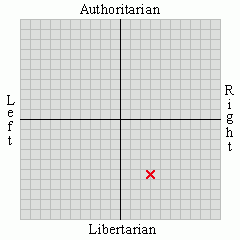
Fundamentalist, Evangelical Atheists
I don't know if this sort of thing is a good idea or not. I'm thinking not.

 Labels:
Atheism
CSM Says It's A Four-Way
Romney, Guiliani, McCain, and... Gingrich? I didn't think Gingrich was running.
The Monitor also thinks that Tom Vilsack has a chance to beat out Hillary Clinton. I don't think so.
I'm not sure that this is a good read of the field right now. To me, it looks like three horses on each side.
The Monitor also thinks that Tom Vilsack has a chance to beat out Hillary Clinton. I don't think so.
I'm not sure that this is a good read of the field right now. To me, it looks like three horses on each side.
January 4, 2007
What Do Voters Dislike?
While musing about Barack Obama's admissions of past drug use, ambivablog suggests that "American voters don't mind human imperfection. They mind hypocrisy and disrespect for their intelligence." See, Obama admits trying cocaine when he was younger. Bush the Younger refused to answer questions about his past drug use, and Bill Clinton claimed he didn't inhale (like we want a President who wasn't smart enough to figure out how to smoke pot). Both were decidedly unsatisfying and uninspiring responses to those issues.
I have to agree that candor is refreshing compared to coy evasions. Nor am I any more or less inclined to vote for Obama than I would have been had he not made the admission. So I think that to a significant degree, amba is right -- but there are limits. Drug use inthedistant past, we'll probably accept that. But how about "killed a guy"? I think that might be a bigger problem.
What about "doesn't [pretend to] worship God"? Is that a deal-killer?
Labels:
Domestic Politics,
Link Love
Richard Dawkins Is Wrong
Sure, it might have been interesting to study Saddam's psychology. But that was not the point at all. Saddam needed to die. He needed to die because he had done some atrocious things and death was the only just punishment that could be imposed upon him. He needed to die to put to rest, forever, the possibility that he might somehow regain power in Iraq.
The manner of Saddam's execution was brutal by U.S. standards, and the Iraqi executioners were, shall we say, less than professional. Still, hanging is a relatively quick death, and it came after a trial with the indicia of due process, which is a great deal more than most of Saddam's victims got. Saddam even got to get a last political swipe in -- his last words were to mock Muqtada al-Sadr for being little better than a small-time thug, which compared to Saddam, is exactly what al-Sadr is.
The prospect of keeping a man alive only to be studied, like some kind of lab specimen, seems itself to be dehumanizing and cruel. It's entirely possible that Saddam, who was quite an intelligent, crafty fellow, would have made a game out of warping the data.
January 3, 2007
Look At The Sky
I don't notice a lot of people looking at the sky. That's a shame. I think the sky is often quite beautiful. When I get up in the morning, these days it's usually around sunrise (except on days when I'm recovering from a bout of insomnia). On some days I can see a rosy Belt of Venus on top of the Tehachipi mountains. This morning, when I fed the critters, the sky was an astonishing deep blue (as it turned out, the sunrise was obscured by a sandstorm around Llano.
 At night, the sky is well worth watching, especially in winter when Orion rules the starry sky. My favorite sight through the telescope is the Great Nebula, which you can almost see with the naked eye on a clear night with no moon out. It's the middle of the three stars in Orion's sword, the one that looks fuzzier than the others. When the moon is out, it's fascinating to examine.
 Sunsets are something that more people appreciate -- in part because they happen at ground level. A really good sunset is like a symphony in the sky. It needs a certain amount of haze or other material in the atmosphere, which is normally not a good thing except for at sunset. Then, the entire sky turns into a slowly-graduated slice of the spectrum. A good sunset also needs some clouds, preferably some high-altitude cirrus clouds, wispy and delicate. They catch and reflect the light, looking like so many strands of copper and rose-colored ribbon thrown all over the onrushing dome of the night.
Shadows cast by stationary objects can move so fast around sunrise or sunset that you can, with even a small amount of patience, actually watch them move.
I've also always enjoyed clouds, particularly big cumulus clouds that move and roll and boil and fall all over themselves with the wind. Those we don't get so much here in the desert, but they do come from time to time. Back in Florida, they generate lightning on a regular basis, and a big Florida thunderstorm, with lightning arcing from cloud to cloud as well as down to the ground, is just spellbinding.
 Here in the High Desert, there are almost always aircraft moving about at reasonably low altitudes. I've seen several F-117's, bizarre-looking angular aircraft painted flat black. They are quiet on approach but very loud after they pass over, making a satisfying screech of jet blast through the desert air. Every once in a while, a B-2 takes off or flies about, and they are indeed impressive to see, both for their mass and the stark contrasts of the near-invisible face profile and the bat-like, triangular silhouette when the plane banks. About two months ago, a V-22 Osprey was flying about, another strange-looking aircraft indeed.
Last night I got a special treat. While out cooking, I looked up to enjoy the stars and see if any planes were moving around. I saw a star moving very fast -- obviously not a high-altitude plane; it was moving much too fast to be that. It grew very bright for about two seconds, and then grew dim again, moving across its arc at an astonishingly fast pace. It could only have been the International Space Station; the brightening and dimming I noticed being the sun reflecting off the solar panels.
I'd like to find time to get up to the Sierras and take the telescope with me. This time of year, that's a very cold proposition, but maybe during the summer. But even when going about day-to-day business, I always try to find time to look at the sky. It brings peace and is frequently a source of awe. It's a shame so many people are so wrapped up in their day-to-day activities that they forget to see the beauty of nature readily available by simply looking up.
Labels:
California,
Cheerful For Once
January 2, 2007
Leak!
 Earlier today, the New York Daily News was given a 140-page internal strategy assessment of the Guiliani candidacy. The Daily News will not identify who leaked this notebook beyond saying it is a person connected to one of Guiliani's potential rivals. Whether that's a Republican or a Democrat is unclear; however, Guiliani's very early polling numbers seem to be establishing him as the guy to beat, so I'm thinking it's intramural jockeying for position rather than a pre-emptive strike a la Gray Davis' 2002 primary attack on Richard Riordan coming from a Democrat. Whether this is traceable to someone, and whether that someone turns out to be John McCain or Mitt Romney, may never be known.
Both the Daily News and the New York Times suggest that this is a significant setback to the campaign. I'm not so sure about that. It's embarrassing, to be sure, but it seems that there's little in the document that would surprise anyone who had thoughtfully considered the issues surrounding a Guiliani campaign. There are ambitious fundraising goals, which is pretty much mandatory if you're going to take a serious shot at the White House; there are considerations about potential vulnerabilities and anticipations of what form attacks on those vulnerable areas might take; and there is the issue of how the document got out to the public at all, which is egg on Guiliani's face because he has marketed himself as having some expertise on security issues.
There are some ideas about how to raise money and some mention of labels for big fund-raisers which sound somewhat crass. But again, none of this is any different than anything any other politician has done, is doing, or will have to do in order to credibly run for President.
Finally, there is vacillation about Guiliani running or maintaining his current position, splitting his professional time between his security and leadership consulting firm, his law practice, and his association with an investment brokerage. Personally, I like that. It underlines that Rudy would indeed be making something of a personal sacrifice (perhaps one that he would see as a net gain, but still giving up something) if he were to become President. Someone answering the call to public service should do so reluctantly -- this burnishes rather than detracts from the image of a "citizen-politician" rather than a member of the political class, which Rudy as well as his adversaries for the Presidency would all like to bear.
So the issue is more the existence of the leak than anything else. But a pre-Presidential campaign is not quite the same thing as maintaining national security. Certainly, this document should not have been leaked in an ideal world. According to Guiliani's spokeswoman (reported in the Times), there may not have been a lot that could have been done to prevent it.
It might seem that a problem with this document is that it existed to be leaked in the first place, but a successful Presidential campaign is a venture of daunting scope and planning documents simply have to exist. Campaigns run "opposition research" on their own candidates all the time, and the musings about some of Guiliani's potential vulnerabilities is nothing different than that. I don't know whether the form of this document was such that it was unusually dense or insightful as compared with the kinds of research and strategizing that other politicians do, but at worst, this was a case of an eager and inexperienced assistant to the campaign effort (and not the candidate himself) putting down more in writing than was strictly prudent.
A lot of the information in the leaked notebook is out of date, too -- for instance, it refers to several potential fundraisers who have declared their support for McCain rather than Guiliani.
No, the only real issue is a little bit of chipping away at the illusion that Guiliani deferred a decision to run until very recently. After all, Guiliani said all the right coy things about deferring a decision to run for President until after the 2006 elections but some of the notations on the document indicate that people very close to Guiliani were using it before the election. Which is no great surprise to anyone, I should think -- virtually all of the favored contenders (Romney, McCain, Clinton, and Obama) have not yet declared their intentions to run yet.
Even with this revelation that he and the people closest to him have really thought about the candidacy, Guiliani is still in the "exploratory" phase, which is to say he's testing the waters to see if he can raise enough money. Of the "big" names for 2008, only John Edwards has declared his candidacy. But the aforementioned contenders -- Romney, McCain, Clinton, and Obama -- would all be fools of tremendous magnitude to not have gathered the same information and begun to engage in the same kind of strategizing that the Guiliani document represents. They've just been fortunate enough to not have had a dirty trick like this played on them at such an early date.
So I'm not so inclined to be particularly upset about the leak. Of course, you don't want to let the other guy into your kitchen, ever. So this is not a good thing for Guiliani fans. But it's coming very early in the process. If this is the biggest problem the Guiliani campaign faces between now and November 4, 2008, it'll be President Rudy taking the oath in 2009 for sure.
Labels:
2008 Election,
Domestic Politics
January 1, 2007
Fun Day
Today, The Wife and I got a lot of activity in. We did a little bit of sightseeing, driving up Elizabeth Lake Road out to Three points, and then back for some lunch. Most of our shopping options were curtailed because of the holiday, but we did make it to the gym. We also put up some coat hooks around the house; just a small home improvement project we've been meaning to do. The Wife wanted to go to an antique shop she had seen before way out in the desert, where she got a copper teakettle and a basket. And we had a very good work out at the gym, too; one I hope that we repeat in the future. A sensible dinner and some relaxation later, and it's been a fun, full day. A good start to the new year.
December 31, 2006
Tantissimi Auguri!

I'm ringing in the new year with a couple fingers of single-malt Scotch. The Wife is having an orange liqueur on shaved ice. Don't you party too hard like this guy, Loyal Reader (or if you do, call a taxi).
Have a happy, prosperous, and successful new year!
Labels:
'Tis The Season
Ending The Year With A Shopping Spree
The Wife and I used some of our day to go get some things to improve our quality of life. We got some coat hooks to hand up near our doors and to replace the fallen towel hook in the bathroom. And we bought some books. I got a history of India, a subject about which I know nothing, after being inspired by some nice Indian food for lunch. I also got a textbook of Italian verbs, to work on the part of my Italian that is somewhat weak, looking forward to our next trip to il pais vecchio at an as-yet-undetermined time in the future.
I'm resolved to make good on my promise to take The Wife to San Francisco next year. We're also looking forward to spending some more time in the gym, and more time smooching and less time arguing about keeping the kitchen clean. That last one will be a challenge as I would like to cook more than I have been cooking recently. New Years' resolutions? Not really, just a desire to do better in the future. The new year also promises to bring lots of new teaching gigs for me and hopefully a trial or two. It looks like there will be a new quarterback in Green Bay as Brett Favre looks appears to move to retire, a new set of political activity as the government returns to divided status, and so there will be a whole host of new things to write about.
Oh, and The Wife and I want to buy a house. I guess that's kind of a big agenda item.
So maybe a shopping spree at Barnes & Noble wasn't the best thing to do, but hey, you've gotta have some fun, too. Nothing wrong with getting a few books, maybe having a cafe latte, and maybe even picking up a new CD, every once in a while.
December 30, 2006
Precursors
 Once or twice a year, I suffer a set of precursors to migraine headaches. I think I've got some of those going on right now.
My head has been in pain for a while, localized to the orbits of my right eye socket. I had an attack of blind spots earlier this evening and was inappropriately irritable. And I've been lethargic for about six hours after waking up with every intention of getting some exercise today. I suspect last night's sleeplessness was related to this, also. So far, though, no nausea or intolerance for light or sound.
Hopefully, this is as far as it gets; I do not want the full-on migraine. The pain and disorientation can be debilitating. I haven't ever had any medication that makes it go away. And I'd rather do that exercise I wanted to do tomorrow rather than the day after.
Labels:
Sickness and Health
Nine-Way Exacta
With the Giants' win over Washington tonight, Green Bay's chance at the playoffs depends on all of the following happening tomorrow:
1. Detroit beating Dallas;
2. New Orleans beating Carolina;
3. Cleveland beating Houston;
4. Seattle beating Tampa Bay;
5. San Francisco beating Denver;
6. Minnesota beating St. Louis;
7. Arizona beating San Diego;
8. Miami beating Indianapolis; and, of course,
9. Green Bay beating Chicago.
Don't hold your breath; even a six-way parlay pays something like 50:1 odds. And come on, folks, any team that needs this much help to get in the playoffs has no business of being there in the first place.
And Brett, it's been a great run. Thanks.
Labels:
Sports
Trifecta
I am grateful that once again, death seems to have not touched people in my immediate circle of life; while much of my work involves deaths, these deaths are not personal to me. I attended one funeral this year of a man I knew only slightly; a good man, but not a close friend. The Wife and I went to show our support for our friends who were close to him; I'll not comment further on that subject having wrote about it in June. Still, the sting of losing someone close to you is unlike anything else people experience. Some readers may not have been so fortunate as to have avoided that sting this year; my condolences if that is the case for you. I hope that you will remember the good times you shared with the loved one you have lost.
Now, the deaths of famous people are at least remarked upon by everyone. 2006 is ending the year with a trifecta of famous death, and one which includes each of the three kinds of deaths that make the news -- we've lost a good man, a bad man, and an entertainer.
We lost the entertainer first. James Brown personified soul music. The "Godfather of Soul" lived a checkered life but was generally enjoyed by a wide audience and earned his sobriquet, "The Hardest Working Man In Show Business." He was in his seventies but still going strong, performing nearly every night, touring with his band and dancers on a bus, when he passed away on Christmas morning. While not insanely rich, he also didn't really need the money, either; he performed because he loved it. Any of us could do worse than that.
Then, we lost the good man. President Gerald Ford was, like all of our leaders, lampooned and occasionally vilified during his Presidency. His pardon of his predecessor, who was so obviously guilty of heinous crimes, almost certainly cost him his chances at being elected in his own right. But the perspective of history has led people around the country to realize that his decision was the right one, because it allowed the country to heal after a terrible, divisive phase of the political cycle. President Ford's decency and selflessness are the facets of his leadership that have been highlighted in all of his obituaries, and perhaps that is because it seems like it's been a very long time since we've seen decency and selflessness exhibited in any significant way by our leaders. Sleep well, Mr. President; you've earned it.
And sometime around the time I went to sleep last night, Saddam Hussein was hanged for crimes against humanity. No one, maybe not even his widows and any surviving children he may have, will shed tears over his death. I think it's poor form to celebrate someone's death, butthis would be as strong a candidate as possible to deviate from that dictum. While some may be taken aback at the swiftness of the execution following the conclusion of his apparently brief appeal, that is the legal system the Iraqis havefound themselves under after heavy ghostwriting by their American occupiers created for themselves and so the result ought not to be so shocking. I am not at all convinced that there will be substantial violence in response to Saddam's execution; this eventuality has been a foregone conclusion for some time now and it seems that most people have accepted that Saddam became irrelevant to questions about Iraq's future once he got plucked out of his spider hole.
Other famous deaths took place this year, like Slobodan Milosovic (a very bad man), Aaron Spelling (an entertainer), Ann Richards (a good woman, I think; at the least, she lent color to our political debate), Ed Bradley (a good man, it seems; certainly a journalist worthy of respect), Jack Palance (an entertainer), and Milton Friedman (a good man indeed). But I think of all three of the categories of famous deaths that make the news, this end-of-the-year set of three passings within a week are the most remarkable of them all.
Now, the deaths of famous people are at least remarked upon by everyone. 2006 is ending the year with a trifecta of famous death, and one which includes each of the three kinds of deaths that make the news -- we've lost a good man, a bad man, and an entertainer.
We lost the entertainer first. James Brown personified soul music. The "Godfather of Soul" lived a checkered life but was generally enjoyed by a wide audience and earned his sobriquet, "The Hardest Working Man In Show Business." He was in his seventies but still going strong, performing nearly every night, touring with his band and dancers on a bus, when he passed away on Christmas morning. While not insanely rich, he also didn't really need the money, either; he performed because he loved it. Any of us could do worse than that.
Then, we lost the good man. President Gerald Ford was, like all of our leaders, lampooned and occasionally vilified during his Presidency. His pardon of his predecessor, who was so obviously guilty of heinous crimes, almost certainly cost him his chances at being elected in his own right. But the perspective of history has led people around the country to realize that his decision was the right one, because it allowed the country to heal after a terrible, divisive phase of the political cycle. President Ford's decency and selflessness are the facets of his leadership that have been highlighted in all of his obituaries, and perhaps that is because it seems like it's been a very long time since we've seen decency and selflessness exhibited in any significant way by our leaders. Sleep well, Mr. President; you've earned it.
And sometime around the time I went to sleep last night, Saddam Hussein was hanged for crimes against humanity. No one, maybe not even his widows and any surviving children he may have, will shed tears over his death. I think it's poor form to celebrate someone's death, butthis would be as strong a candidate as possible to deviate from that dictum. While some may be taken aback at the swiftness of the execution following the conclusion of his apparently brief appeal, that is the legal system the Iraqis have
Other famous deaths took place this year, like Slobodan Milosovic (a very bad man), Aaron Spelling (an entertainer), Ann Richards (a good woman, I think; at the least, she lent color to our political debate), Ed Bradley (a good man, it seems; certainly a journalist worthy of respect), Jack Palance (an entertainer), and Milton Friedman (a good man indeed). But I think of all three of the categories of famous deaths that make the news, this end-of-the-year set of three passings within a week are the most remarkable of them all.
December 27, 2006
Wind Advisory
 It gets windy in the desert, and tonight it's especially so. The National Weather Service issued a strong wind advisory for the Antelope Valley tonight. In the western portions of our little triangular slice of desert, places like Antelope Acres, gusts of up to 75 miles an hour are predicted. 75 miles an hour, by the way, is what meterologists call "hurricane-force" winds.
Out here near the Rented Mansion In The Desert, the winds are steady at about 20, with gusts of up to 34 miles an hour so far tonight, although it appears that the winds will peak in about three hours or so. I've moved the barbeque and the greenwaste bin to areas where they won't be blown over, but aside from that, there isn't much we can do about it but keep all the windows shut. The dogs sure don't want to be outside and I don't blame them.
The wind farm in Mojave is probably shut down -- if the turbines run too hard, that burns out the generators. That's kind of ironic, if you ask me. More wind should mean more electricity, but I guess there's a point that the mechanical parts just can't handle the stress anymore.
Labels:
California,
Rented Mansion In The Desert
Book Review: Imperium
 Robert Harris' Imperium was released in the U.S. about a month ago. It's an enjoyable read, particularly for history buffs and political junkies. I certainly enjoyed it.
It's hard to say if there are any spoilers in the review; anyone can pick up a history book and know what happened in Cicero's life and the book does not portray anything known to have not happened, although as I describe below, I take issue with some of the... flavors, if you will, that the author uses to portray certain historical events. I strongly doubt that anything I've written below will take away from your enjoyment of the book if you choose to read it.
The novel tells the story of two chapters from the rich life of Marcus Tullius Cicero, the famous Roman lawyer, orator, and politician. Harris used Cicero's moderately-famous secretary, Tiro (the inventor of shorthand), as his first-person narrator, and it is a good choice -- Tiro gets to see the great men of history up-close and personal but is frequently treated like wallpaper by them because he was, after all, a slave. The conceit of the book is that it is a translation of a portion of Tiro's long-lost biography of Cicero, which probably did exist but has been lost to the vicissitudes of history.
It is not clear to me whether some of the ham-handed phrases in the book -- "I sense that you are anxious for me to continue with the narrative" -- are Harris' idea of first-person writing or Harris really trying to capture what he thought a narrative flow of a book written by a well-educated but provincial ex-slave might really have been. These are jarring, though, and disrupt the flow of the story. Some have criticized Harris' use of modern terminology in the book, like referring to fine wine as "Chianti" or describing a member of the landed gentry as a "grand country seigneur". I'm willing to forgive these as modern cognates of the somewhat more esoteric Latin phrases (Falernian and equitus, respectively) and chalk it up to something like "free translation" into modern English from the Latin that Tiro, the ostensible narrator, would have used.
Also of questionable choice are the portions of Cicero's life that Harris' Tiro chooses to narrate: the trial of Gaius Verres, and Cicero's campaign for the consulship, the Republican Roman equivalent of running for President. Both make for quite interesting reading and provide decent theories about the flesh-and-blood interactions of Cicero with his contemporaries as well as Cicero's motivations. But these are not, in my opinion, the only significant chapters of Cicero's life to paint. They are, however, those portions of Cicero's life that best demonstrate the noble and admirable qualities of Cicero's character, which gives Harris the ability to paint Cicero as a populist, a talented outsider clawing his way to the top on merit alone, and even something of an idealist operating within a very cynical world -- and thus, to underline many of the qualities of the man which modern readers will find admirable.
Utterly ignored, however, are other episodes of Cicero's life which are at least questionable. Most annoying to me, as an amateur student of Roman history, is Cicero's vacillation on the issue of one-man rule. It seems to me that Cicero was a populist only when it suited his immediate purpose, and he spent the bulk of his career going back and forth between the camps of popular figures and the unpopular but powerful aristocracy. Here's the real overall arc of Cicero's career:
Cicero kept his head down during Sulla's dictatorship, which probably left a bad taste in the then young man's mouth (as it did for most Romans). Only when the dictator had vacated the stage did Cicero step forward to begin his public career. He initially only took defense cases, seeking to cultivate friends and loyalties within the ruling class. He found good political purchase with both the popular masses and a sufficient number of nobles by using the former cronies of Sulla as foils for his defense arguments.
But, as a junior Senator, he toed the line with the powers that were. Then, after badly overestimating the political importance of doing a good job as the governor of Sicily, Cicero tried his hand at appealing to the masses with his prosecution of Verres and his cultivation of a friendship with Pompey the Great. But when he ran for consul, he ran as an ally of the conservative old guard, who only supported him because the candidates that year from within their own ranks were very weak. (This is exactly opposite to the portrayal of his campaign in Imperium.)
Cicero's consulship was controversial and he wound up almost literally at dagger points with the populist hero of the day, Lucius Sergius Catalina, who he accused (rightfully, it seems, although the evidence was quite sketchy at the time) of fomenting revolution. Catalina was executed on Cicero's orders without a trial on the authority of a law of dubious validity. This further alienated Cicero from the common people and drove him into the ranks of a distrustful cadre of nobles.
There he stayed for several years, until Pompey persuaded him to again switch sides back to Pompey's faction, which at that time was the triumvirate of Pompey, Crassus and Caesar. This failed to bring him popularity, however, but it did have the effect of alienating his hard-line allies. At the time, his alliance to that triumvirate saved his life; he had so alienated the populist masses of Rome that he was exiled, and only barely escaped a death sentence by skipping town in time. It was also to the triumvirate, particularly to Pompey, that Cicero owed his ultimate return from exile.
As many Loyal Readers will know, the triumvirate failed when Caesar's daughter Julia, who had been married to Pompey, and then Crassus himself, both died in quick succession. The result was a massive civil war, from which Caesar emerged the victor. Pompey eschewed Cicero's support during the civil war, telling the lawyer to stay in Rome and make what peace he could with Caesar. This Cicero singularly failed to do, despite some strain on Caesar's part to incorporate Cicero and his prestige into the Julian political machine. With Caesar, Cicero reached an uneasy sort of political nonaggression pact, which pleased neither Caesar (who was then quite popular) nor his enemies.
With Caesar's proxies, however, Cicero found himself unable to restrain his polemic tongue and towards the end of his life seemed to finally decide to take a stand against the trend towards autocracy -- far too late in the game to have possibly altered its outcome. After Caesar's assassination, Antonius became Cicero's primary target of public polemic, and when Antonius allied with Caesar's adopted son Octavius (later Augustus), the price was Cicero's death, which Octavius ordered without scruple.
So, Cicero was able to switch sides within the ever-shifting network of alliances that made up the governing oligarchy of Rome with remarkable facility. He seemed to sometimes like the idea of consolidating power in the hands of a few men (like when he allied himself with the triumvirs, or when he took the power of the state into his own hands to execute Catalina) but at other times seems to have taken great joy in attacking those men who held great power for their abuse of it (his Philippics against Antonius, his prosecution of Verres, his attacks on the lieutenants of Sulla). On the question of one-man rule, Cicero seems to have never decided on whether to take a principled stand against it, or to pick a side and work towards victory. When he finally felt he had no choice but to pick a horse to back, he chose Pompey despite the fact that Pompey was at that point obviously going to lose the war.
This runs directly counter to the blend of idealism and populism with political savvy that Harris is so anxious to portray in his hero. Cicero makes for an interesting hero, and has received scant treatment at the hands of novelists and even historians as a central character. The problem is that his career was so complex, and so ambiguous, as to defy the ability to present him in an insightful light. Was he a man for the people or a man for the nobility? Depends on when you look at him. Was he a staunch defender of the Roman constitution or a cunning sophist who played for short-term political advantage? A little of both, it seems. Was he a loyal friend? It seems not, but then again, he kept returning to the camp of Pompey, even when it was clearly to his disadvantage to do so and indeed, even when doing so rendered his own life forfeit.
In Imperium, the nuts and bolts of Cicero's operation are revealed in remarkably believable detail. Harris does a fantastic job of showing how a Roman lawyer went about his tasks, particularly including Cicero's reliance upon the people around him for support. He also provides very good insights into the Roman legal process, which included a lot of devices that modern lawyers would recognize today -- things like subpoenas, large-scale document productions, and impeachment upon cross-examination. It was very interesting for me as a lawyer to read what doing that same job in ancient times would have been like.
The mechanics of an ambitious politician are also shown in detail, warts and all. Cicero is not above a few less-than-honorable political associations, and demonstrates an ability to roll logs and trade horses with political figures with whom he might otherwise have preferred not to. He has ideals, it seems, but he is willing to barter some of them away. This is, of course, what the business of politics is all about. There are also vote-wranglers and detailed depictions of the complex and esoteric way that Romans actually voted and governed themselves. To people interested in the process of politics and government, the book is worth the read for this alone.
A man of his times but not ahead of them, Cicero stood in the path of the oncoming revolution and occasionally tried to stop it, but occasionally helped it along, too. Ultimately, Cicero was not a man of principle, not a man of the people, not a man of the Senate. He was, quite simply, a lawyer-turned-politician. He was very smart, if not always very wise. Here is where Harris' portrayal of this great, prolific Sphinx of a character fails to ring true, because Harries tries to make Cicero into something he was not: a hero. Cicero was, instead, simply a man. A flawed, inconsistent man, one who made mistakes and did things that he was not (or should have been) proud of. Cicero is in some ways more interesting than many of his contemporaries like the truly idealistic Cato the Younger, the dissolute Clodius Pulcher, or the power-hungry gambler Julius Caesar.
So while I do not acquit Cicero for his shortcomings, ultimately, I think I must apologize for them. It is not always easy to see the future, and Cicero certainly did not have that super power. Instead, he did the best he could with the information he had available to him. More importantly, it is not always easy to stay true to one's own ideals in the face of strong political, legal, financial, physical, or personal pressure, and Cicero was not immune to these things and occasionally succumbed to them. Who among us can say that we would have done better than Cicero under the circumstances? Not me. I know from my own experience that political pressure can be both very powerful and very subtle -- it can be very difficult indeed to even see that one's ideals are being compromised until it is too late to change course; it sometimes seems to make little sense to walk away from having something in life, and risk losing everything you have worked hard to earn, over a principle. We all face trials like that in life from time to time, and I find it easy to imagine Cicero getting lost once or twice in his remarkable career.
And similarly, while Imperium is not flawless novel, I cannot say that I could have done any better than Robert Harris. Writing a lengthy piece of fiction is a very difficult task even for the best and most experienced writer. Taking on a deeply ambiguous character like Cicero only makes the task that much more challenging. Harris has produced a journeyman effort here. So if you have any interest in historical fiction, politics, or law, it's worth your time to read the book.
December 26, 2006
Mythology
I commend to you, Loyal Readers, a marvellous column printed in the Christmas Eve edition of the Los Angeles Fish Wrapper.
Scenarios
From the recently-updated NFL playoff scenarios page, there are now five possible ways Green Bay can get into the playoffs. Much depends on Saturday's game between the New York Football Giants and the Washington Redskins. And, of course, Green Bay needs to beat the fearsome-appearing Chicago Bears.
The NFL's tiebreaking procedures can get quite elaborate. If Green Bay and the Giants finish with the same record, these are the tiebreaking priorities:
I'm a football junkie, and I'm not real sure how to calculate "strength of victory." Yahoo! calculates the Giants' current strength of victory at (45-58) and the Packers' at (33-71). So, if I'm understanding this right, should both teams win, New York would have (50-69) and Green Bay would have (46-74). But that's only adding up the combined wins and losses of all of a particular team's opponents, and something doesn't look right here (the totals for the two teams are not the same; perhaps the Giants' score does not take into account tonight's games).
As I think I've calculated above, it looks mathematically impossible for Green Bay to achieve a better strength of victory tiebreaker over the Giants. So disregarding the possibility of any tie games, which happen about once every 500 games (the last tie was November 11, 2002; Atlanta and Pittsburgh tied, 34-34), this means that New York has to lose to Washington Saturday. If New York wins, its all over. Then on Sunday, the trifecta of St. Louis, Philadelphia, and New Orleans must somehow fail. Should all of that happen, then Green Bay will control its own destiny against Chicago.
Confused? Sure you are. Even I am. To map it all out requires working a set of quintuple trinary variables: in other words, predicting the outcomes (win, lose, or tie) of five games. It's complex -- not only are New York and Green Bay in the hunt, there are ways that Carolina, Atlanta, and St. Louis could all make it in to the playoffs if both New York and Green Bay lose next week. This is way more complex than my tired, insomnia-stricken brain can handle right now.
The NFL's tiebreaking procedures can get quite elaborate. If Green Bay and the Giants finish with the same record, these are the tiebreaking priorities:
1. Head-to-head, if applicable.
2. Best won-lost-tied percentage in games played within the conference.
3. Best won-lost-tied percentage in common games, minimum of four.
4. Strength of victory.
5. Strength of schedule.
6. Best combined ranking among conference teams in points scored and points allowed.
7. Best combined ranking among all teams in points scored and points allowed.
8. Best net points in conference games.
9. Best net points in all games.
10. Best net touchdowns in all games.
11. Coin toss.
I'm a football junkie, and I'm not real sure how to calculate "strength of victory." Yahoo! calculates the Giants' current strength of victory at (45-58) and the Packers' at (33-71). So, if I'm understanding this right, should both teams win, New York would have (50-69) and Green Bay would have (46-74). But that's only adding up the combined wins and losses of all of a particular team's opponents, and something doesn't look right here (the totals for the two teams are not the same; perhaps the Giants' score does not take into account tonight's games).
As I think I've calculated above, it looks mathematically impossible for Green Bay to achieve a better strength of victory tiebreaker over the Giants. So disregarding the possibility of any tie games, which happen about once every 500 games (the last tie was November 11, 2002; Atlanta and Pittsburgh tied, 34-34), this means that New York has to lose to Washington Saturday. If New York wins, its all over. Then on Sunday, the trifecta of St. Louis, Philadelphia, and New Orleans must somehow fail. Should all of that happen, then Green Bay will control its own destiny against Chicago.
Confused? Sure you are. Even I am. To map it all out requires working a set of quintuple trinary variables: in other words, predicting the outcomes (win, lose, or tie) of five games. It's complex -- not only are New York and Green Bay in the hunt, there are ways that Carolina, Atlanta, and St. Louis could all make it in to the playoffs if both New York and Green Bay lose next week. This is way more complex than my tired, insomnia-stricken brain can handle right now.
Labels:
Sports
December 25, 2006
Merry Christmas
To all our friends and family who celebrate, have a merry Christmas, filled with joy, love, and peace.
Labels:
'Tis The Season,
Friends and Family
More Sleep Issues
At 5:00 this morning, I woke up and could not fall asleep again. I don't know if it was a big dinner last night at our friends' house, I don't know if it was having had something unusual (absinthe) to drink, I don't know what it was. But I've been up for four hours already and although I'm very tired, sleep still seems to elude me. I abandonded my bed so that my rolling around would not keep The Wife up, but I'm still so tired tears stream out of my eyes when I yawn, which is frequently.
The Wife and I are planning on joining a gym and working out regularly after the holidays are over. Maybe if I drop a few pounds and use my body more rigorously, sleep will come easier. Couldn't hurt.
The Wife and I are planning on joining a gym and working out regularly after the holidays are over. Maybe if I drop a few pounds and use my body more rigorously, sleep will come easier. Couldn't hurt.
Labels:
Friends and Family,
The Wife
Playoffs a Possibility
After yesterday's games, it appears that Green Bay has a real chance at making the playoffs. The Packers need to beat the Bears next week -- and the Bears ought to be resting their good players after the first series of snaps, since they've already clinched homefield advantage -- and the resurgent Redskins need to beat the troubled New York Football Giants, who today are battling rumors that their coach will be fired at the year's end. I'm not saying that it will happen; I'm saying it's a realisitic possibility.
I'm not saying the playoffs would be easy, either. I'm just saying, when you're a fan, you don't abandon the team, because they just might pull through.
I'm not saying the playoffs would be easy, either. I'm just saying, when you're a fan, you don't abandon the team, because they just might pull through.
Labels:
Sports
December 23, 2006
Cloned Beef
 Turns out, cloned beef tastes just like the beef it was cloned from. Same thing for the milk that is drawn from the cloned cows. Kind of obvious that it would be that way, when you think about it.
You may have already eaten food taken from the offspring of clones. So what exactly are people afraid of? Eat the food. Drink the milk. Use the technology -- not unthinkingly, but do use it.
Labels:
Antiscience,
Food
Subscribe to:
Posts (Atom)

 Posts