I've just finished reading Jeffrey Toobin's book The Nine. In it, he paints a series of pictures -- moments in time in the institutional history of the Supreme Court, shifting focus between the political dimensions of the Court's work and the personalities and experiences of the individual Justices at the center of them. The picture one is left with at the end of the day is that of a very odd institution, one which seems to attract mentally gifted but highly eccentric people into its key positions.
Toobin is not quite explicit about his thesis, but it is right there under the surface like a goldfish eating food floating at the top the aquarium: the Court's decisions are the results not of study and deliberation on the law but instead are the sum total of the personality flaws of the individual justices, flaws which include political biases. Toobin also makes almost no bones about portraying the liberals on the Court as the good guys, the sentinels fighting a rear-guard action to protect the mighty triumphs of civil liberties and individual rights of the Warren Court, and reduces the entire efforts of conservatives as an effort to co-opt the Republican Party with the explicit and overriding goal of packing the Supreme Court with enough votes to overturn Roe v. Wade.
The result, as he describes it, is a court made up of judges who are all unprincipled activists; the question is not whether they will overturn precedent they find personally distaseful and seek a legal justification for doing so after the fact, but rather whether a majority of them wish to do so. It is legal realism of perhaps the most cynical sort.
Toobin's book ends with a portrait of conservatives ascendant after a twenty-year struggle, and liberals sputtering in protest. Any careful reader of the book itself is aware that in fact,the picture is considerably more complex than that, and more to the point, will be aware that the political tides appear to have shifted from the re-election of President Bush in 2004. One of Toobin's explicit claims is that despite the Court's undemocratic nature, it does track the political mood of the country with remarkable alacrity.
It is with this book fresh in my mind that I note the beginning of hearings leading up to the vote to confirm the appointment of Sonia Sotomayor to the Supreme Court.
First of all, we should bear in mind that Judge Sotomayor has left something of a record in the form of her judicial opinions. Her judicial philosophies are knowable and do not think for a moment that the White House has not read every opinion she has ever written. Or that the Senators evaluating her today have not, either. The questions she will be asked about them do not matter -- each and every Senator on that committee has made up their minds already, based on what she's written.
Secondly, the Supreme Court handles two kinds of cases: cases involving challenges to abortion rights, and every other case the Court handles. The confirmation process has become transformed into a political kabuki about only one of those two kinds of cases. Toobin points out, from the Alito confirmation hearings, the highly odd spectacle of every Senator on the Judiciary Committee giving a short speech about his or her opinion on abortion, and the nominee -- the only one whose opinion counts for anything -- sitting there saying nothing substantive in response out of ostensible concern for "pre-judging" a case that might come before him. We will almost certainly see a similar spectacle with Judge Sotomayor's confirmation, only the direction of the political wind will be opposite that of Alito's confirmation.
And finally, while the politics of the confirmaiton process are chiseled in stone and the result pre-determined, there is importance to the process. It is something of a test of the ability of Democrats to discipline themselves and run the Senate as they see fit. We may actually learn something interesting about Judge Sotomayor that we do not already know. We may get a sense of her personality -- the collection of quirks, eccentricities, displays of brilliance, and neuroses that seem to be the trademark of the singular set of personalities in question. She, like her eight Brother and Sister Justices, is much more than a figure in a black robe. And if Toobin is right, those personality traits, for good or for ill, are what will matter most in her decisions -- particularly in the second category of "everything else," including matters of criminal procedure, enlargement of executive power, reconciliation of conflicting state and circuit cases, and free speech and religion rights.
I'll say that Judge Sotomayor appears to be of exceptional intellectual ability and has the sort of background one would hope for. I'll say that I understand the political pressures the various Senators are under -- and if I could, I'd remind them that they asked for this job. But aside from that, I'm not going to take sides in this confirmation battle. That would be like taking sides against the wind.
Showing posts with label Books. Show all posts
Showing posts with label Books. Show all posts
July 13, 2009
January 8, 2009
Book Review: The Diamond Age, or, A Young Lady's Illustrated Primer
Nor am I the only one to have ambiguous feelings about the book, despite the fact that it won Stephenson the Hugo Award for best science fiction novel of 1996 for this book. And don't get me wrong. I enjoyed the book and it gave me a lot of interesting ideas to consider. This is ultimately a positive review. Here's the thing -- at 500 pages, I very much enjoyed the part that started around page 100 and lasted until about page 450. Before that, I was in too much of a fog to enjoy it, and after that, I was left with the impression that Stephenson didn't really know how to end it.
For people who are expecting a simple science-fiction adventure, the book is probably too deep and focused on other sorts of disciplines. At the end of the day, I think the book is best when it addresses what rapidly-advancing technology might do to society as a whole.
The book follows the early life of a girl in the late twenty-first century, a world transformed almost beyond recognition to late twentieth-century thinking. More about that below. We follow her as she grows up and we also follow the lives of people who affect her -- her educators, for lack of a better word. Along the way, we are treated to an examination of this future world and how it works, and to the kinds of conflicts and concerns that arise in it.
As written, the book owes much to William Gibson's Neuromancer. Neuromancer launched a movement in science fiction that came to be called "cyberpunk," and I think that in a very real way, this book ends that movement. The difficult thing about Neuromancer was that it didn't explain the new things in the world it described; you just had to read the story from the point of view of a person in that world who took its innovations and developments for granted, and the terms and phrases -- especially the slang -- for those new technologies and activities are not explained other than by context. The result is that it takes about a hundred pages before you get a really good idea of what's going on. Stephenson seems to almost consciously emulate that technique in The Diamond Age; the result is that the first quarter of the book left my head spinning and my mind in something of a daze as I tried to process all these ideas by gestalt.
Now, in terms of exploring concepts and teasing out the socio-economic effects of all this astounding new technology, The Diamond Age is sporadically brilliant and uniformly thoughtful. The basic premise of the book is the exploration of the world roughly a century into the future, when nanotechnology makes possible things that would seem miraculous to us and elevates a minimal standard of living for all so that hunger, homelessness, and grinding poverty are things of the past. The interesting parts of the book are an exploration of what the proliferation of that technology would do -- not just technically but how it could affect warfare, politics, sociology, medicine, economics, and the very existence and viability of nation-states. Where he explores these ideas, Stephenson is really a remarkable thinker and a better-than-average writer.
I've been thinking about that kind of a world for a while -- for instance, would there still be war? Stephenson offers the same depressing answer I would -- people would find other reasons to make war on one another, to be cruel to one another, to kill and hurt each other. If they could not find one, they would manufacture one. He identifies not only on religion (as I would have) but also nationalism, ideology, and most depressingly, race as motivating factors for conflict. While this is a dreary assessment of human nature, I suspect it is an accurate one as well. Many of the ways that abundance gets blended with the unavoidable stratification of society in Stephenson's vision of this future are eminently plausible and others, while fanciful, are at least within the boundaries of a willing suspension of disbelief.
Less plausible is Stephenson's vision of future politics. He wants to depict a world in which the difference between being in England and being in China is as trivial as the difference between being in Arizona or Maryland. He would like to suggest that people would affiliate into "tribes" rather than into nations, and that these "tribes" could be based on things like ideology, religion, or race. But at the end of the day, he cannot do that; nationality remains important and states do fight wars to protect or expand their geographic limits because they are still important.
Nor does Stephenson adequately describe (at least, to my satisfaction) the new sort of society he darkly hints at emerging as a result of the proliferation of nanotechnology in the realm of human biology. What he describes is certainly organic in nature but the concept is either too alien for me to understand, or was presented in too deadpan a manner for me to be able to step back and comprehend what was being illustrated.
On a related note, the very end of the book is bizarre in the extreme. I understand that Stephenson was trying to say that the ultimate values in such a world would be the love between individuals, and adherence to the personal codes of conduct and knowledge one has worked out for oneself. But I also think that the story betrays a certain hesitancy, a rejection of the ultimate conclusions of the premises that the book so richly explores. The ultimate destinations, and the ultimate choices that the characters make once they get there, are surprising but unsatisfying.
This is all rather elliptical, I know. That's because I don't want to have too many spoilers in my review, should you read the book. Not as good as the Baroque Cycle, but definitely thought-provoking and entertaining, The Diamond Age is probably the last word in the cyberpunk subgenre of science fiction.
This plot is ultimately kind of like the multi-season story arc of The Sopranos. That series was profoundly dissatisfying to this viewer because I wanted to know what was going on with Tony Soprano and his family. But all too quickly, the writers spent all their time following secondary characters like Bobby Baccala and Vito Spatafore. By the time the series got around to focusing back on the Sopranos again, the grand story arc felt like it got lost and had to be grafted back on to all the other stuff, until the end of the series dissolved in anticlimax.
The Diamond Age is ultimately like that. It's got a lot of great stuff built in to make the ride a lot of fun -- but there are too many "B" plots and the payoff at the end of the "A" plot is kind of like the end of a mid-1980's ITV-2 production of an obscure Edwardian tragedy -- it just kind of ends. The bulk of the book is very enjoyable. Like The Sopranos, it's well worth your time. But also like The Sopranos, The Diamond Age will leave you asking, "Where did the last chapter go?" But you'll enjoy the ride on the way there.

 Labels:
Books,
Interesting Reading,
Technology,
Writing
Labels:
Books,
Interesting Reading,
Technology,
Writing
December 31, 2008
Casting The Baroque Cycle
If I were going to produce a movie -- more like an HBO mini-series, I should think -- based on Neal Stephenson's The Baroque Cycle, here's some ideas for who I'd like to cast (if money were not much of an object, of course):
Fellow Baroque Cycle fans are welcome to criticize my choices and suggest alternatives. Take your best shot.
Keep in mind that several of the characters would need lots of makeup to show them aging; the story takes place over the course of about seventy years. So for some of the actors, an age range (assisted by makeup and lighting) of something like forty years will need to be within reach.
Assuming that most of the dialogue will be in English, I'd prefer a mix of about half British actors and half Americans. Given that British English was accented to sound more like modern American than it does today back in the early 1700's, a blend of the two kinds of accents would be required of just about everyone -- but I'd want to give a feeling of old-world-meets-new, and mixing Americans and British would hopefully do that.
And the list of casting choices doesn't end at my list. But at some point the production would run out of money and this is a pretty expensive list -- even if the royalty figures aren't going to be on the set very long, the story would demand some time of Malkovich, Depp, Hoffman, and Oldman. Especially Malkovich, as Newton is a major figure in the novel. Other figures, though, would be "guest stars," so if I were going for an "all-star" cast to attract attention to the project, I'd look for people like Dame Judi Dench to make a guest appearance as Queen Anne Stuart, for instance. She'd probably only need to be on the set for one day or so, and it would give her a trifecta of British monarchs, which would be kind of cool -- she's already played Queen Elizabeth and Queen Victoria.
Of course, filming something with the epic sweep of The Baroque Cycle would be superlatively difficult and expensive. To do the story justice, each of the three volumes would take at least six hours -- so now we're out of the realm of movies and into the realm of things like series on HBO. If we're doing that, then there is probably enough material for a full traditional run of five seasons of thirteen one-hour episodes.
Some of the stuff would be pretty hard on the viewers, like the early Royal Society experiments. But HBO and Showtime will tackle stuff like that. It'll never happen; as I understand it, Neal Stephenson is not interested in licensing the film rights at all. But it's still fun to think about.
| Daniel Waterhouse | Peter Krause |
| Eliza de la Zeur | Miranda Otto |
| Jack Shaftoe | Jamie Bamber |
| Isaac Newton | John Malkovich |
| Gottfried Leibniz | Philip Seymour Hoffman |
| Louis "Leroy" XIV | Roger Moore |
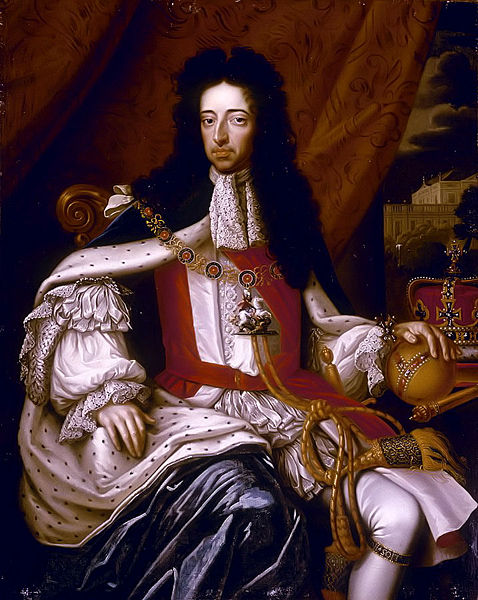
| William of Orange | Willem Dafoe |
| Enoch Root | Johnny Depp |
| Princess Caroline of Ansbach | Michelle Monaghan |
| Sophie Charlotte | Kathy Bates |
| Dappa | Djimon Hounsou |
| Roger Comstock | Kyle MacLachlan |
| Le Duc d'Arcachon | Stellan Skarsgård |
| Etienne d'Arcachon | Jeremy Sisto |
| Édouard de Gex | Christian Bale |
| Catherine Barton | Kate Beckinsale |
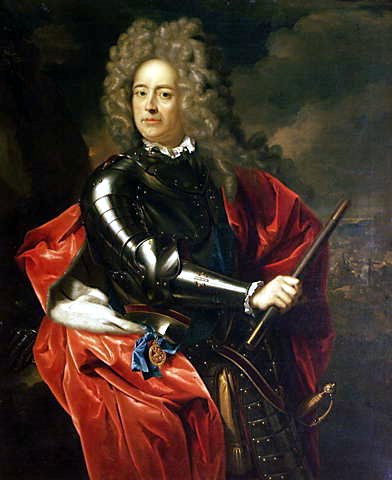
| John Churchill, Duke of Marlborough | Scott Glenn |
| Robert Hooke | David Eigenberg |
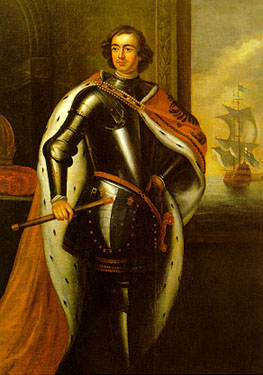
| Peter Romanov, Tsar of all the Russias | Hugo Weaving |
| Peter "Saturn" Hoxton | Gary Oldman |
Fellow Baroque Cycle fans are welcome to criticize my choices and suggest alternatives. Take your best shot.
Keep in mind that several of the characters would need lots of makeup to show them aging; the story takes place over the course of about seventy years. So for some of the actors, an age range (assisted by makeup and lighting) of something like forty years will need to be within reach.
Assuming that most of the dialogue will be in English, I'd prefer a mix of about half British actors and half Americans. Given that British English was accented to sound more like modern American than it does today back in the early 1700's, a blend of the two kinds of accents would be required of just about everyone -- but I'd want to give a feeling of old-world-meets-new, and mixing Americans and British would hopefully do that.
And the list of casting choices doesn't end at my list. But at some point the production would run out of money and this is a pretty expensive list -- even if the royalty figures aren't going to be on the set very long, the story would demand some time of Malkovich, Depp, Hoffman, and Oldman. Especially Malkovich, as Newton is a major figure in the novel. Other figures, though, would be "guest stars," so if I were going for an "all-star" cast to attract attention to the project, I'd look for people like Dame Judi Dench to make a guest appearance as Queen Anne Stuart, for instance. She'd probably only need to be on the set for one day or so, and it would give her a trifecta of British monarchs, which would be kind of cool -- she's already played Queen Elizabeth and Queen Victoria.
Of course, filming something with the epic sweep of The Baroque Cycle would be superlatively difficult and expensive. To do the story justice, each of the three volumes would take at least six hours -- so now we're out of the realm of movies and into the realm of things like series on HBO. If we're doing that, then there is probably enough material for a full traditional run of five seasons of thirteen one-hour episodes.
Some of the stuff would be pretty hard on the viewers, like the early Royal Society experiments. But HBO and Showtime will tackle stuff like that. It'll never happen; as I understand it, Neal Stephenson is not interested in licensing the film rights at all. But it's still fun to think about.
Labels:
Books,
Interesting Reading,
Movies
December 8, 2008
Book Review: The Baroque Cycle
I gave an "interim book review" a while back for the first of the three volumes of this extraordinary work of fiction. The author, Neal Stephenson, has managed to create something as extraordinary as J.R.R. Tolkein's Lord of the Rings, as swashbuckling as George Lucas' Indiana Jones stories, and as intellectually satisfying a glimpse back in time as a Barbara Tuchman history.
I cannot readily classify The Baroque Cycle into any genre. It is perhaps most readily identified as historical fiction, given that it is set in the seventeenth and early eighteenth centuries, and many of its characters are prominent figures in world history -- Louis XIV, Sir Isaac Newton, Gotfried Liebniz, William of Orange, Samuel Pepys, Sir John Churchill, George I, his extraordinary daughter-in-law Charlotte, Thomas Newcomen, Tsar Peter the Great, and a precocious young Benjamin Franklin. The fictional characters who are the story's heroes interact with these great names of history, and all are brought to life with flaws and personalities and motives as tactile and believable as reading today's newspapers. The scope of the history is truly epic, as we see the United Kingdom go through five monarchs and a generation of war with France; we get a global travelogue as the characters hop, skip, and jump all over the world; we see the effects of age and the passage of time as the heroes of the story go on about their work.
It is an allegorical tale of the birth of the modern world. The story begins with an alchemist issuing a summons and ends with a scientist inspecting a steam engine -- symbols of how, over the course of one man's lifetime, the world changed. What began as a world ruled by tradition, religion, superstition, and hidden knowledge becomes, at the end, a new world of open societies, the creation of civil liberties, technology and science, and most of all, of a new way of understanding wealth and money.
For it is also a history book, a didactic examination of the modern system of credit, paper currency, commercial paper, banking, and insurance. Even for many people in today's world, these are mystical concepts, which seem from the outside like magic. But Stephenson takes his reader through the evolution of the modern market -- likely compressing some concepts into his story that properly belong spread out over a longer period of time -- in a manner that renders them understandable and clear. By the end, if you did not understand why things are they way they are in the world of finance, you can reconstruct the process of the new System of the World that was evolved for you in the story.
It is a potboiler action story. Portions of the books are so exciting that you'll stay up late into the night to read through them. You can no more pause a reading of the book during some portions than you could pause a car chase in an action movie. You'll thrill to the chases, narrow escapes, fights, and misadventures of the heroes.
But most of all, at least from the point of view of its characters, it is science fiction -- science fiction in the real sense of the word, an exploration of new ideas and what they can mean, what they can create in the real world. The new technologies, the emergence of nation-states not identified with individual kings or queens, the new attitudes about religion, the new order of wealth -- these are all new things to the characters of the book. They do not yet know what any of these things can do and must feel their way through the implications of a new kind of world that is being born around them.
The Baroque Cycle is available in three volumes: Quicksilver, The Confusion, and The System of the World. Each contains two or three "books," which may be thought of as "parts" or "acts" in the epic sweep of the story. Three fictional characters are created -- Eliza, who transforms herself from Turkish harem girl into the toast of European high society; Jack Shaftoe, an illiterate Vagabond who knows how to think big; and Daniel Waterhouse, a Puritan who loses his faith and becomes a scientist. If those names sound familiar to fans of Stephenson's more famous work, Cryptonomicon, they should, as Waterhouse and Shaftoe are ancestors of characters in those books; Eliza is also an ancestor of players in that book.
The true climax of The Baroque Cycle comes about halfway through the last of the eight "books" in a London drawing room, with an intellectual duel between Newton, Leibniz, Charlotte of Hanover, and Waterhouse. This is what I mean by it being science fiction -- it is ultimatley about ideas, about concepts, about knowledge. For that reason, it feels deeply intellectually satisfying, on a level which a potboiler detective novel simply cannot. Where a potboiler presents you with a puzzle, usually on the order of complexity of a television show, The Baroque Cycle presents you with the labyrinth of human history. And in the end, rather than simply putting the pieces together, you get to see the characters master their games and the author lets you in on their strategies; and you are left not feeling robbed or cheated by finally seeing the magician's tricks, but left with a sense of tremendous possibility.
About the only drawback that I can see to The Baroque Cycle is its length. Some readers will be intimidated that each of the three volumes is about nine hundred pages long. I'm a fast reader, but it's taken me since August to complete them all between their length and the other demands on my time. But I do not think I've read fiction this good in years -- every moment spent reading these books was well-spent. If what I've gushed about here sounds good to you at all, then run, do not walk, to your nearest bookstore, or get them online, either at Barnes & Noble or Amazon, and get these extraordinary books. They are unlike anything else you have ever read and you will want more, more, more of them when you are done.
I cannot readily classify The Baroque Cycle into any genre. It is perhaps most readily identified as historical fiction, given that it is set in the seventeenth and early eighteenth centuries, and many of its characters are prominent figures in world history -- Louis XIV, Sir Isaac Newton, Gotfried Liebniz, William of Orange, Samuel Pepys, Sir John Churchill, George I, his extraordinary daughter-in-law Charlotte, Thomas Newcomen, Tsar Peter the Great, and a precocious young Benjamin Franklin. The fictional characters who are the story's heroes interact with these great names of history, and all are brought to life with flaws and personalities and motives as tactile and believable as reading today's newspapers. The scope of the history is truly epic, as we see the United Kingdom go through five monarchs and a generation of war with France; we get a global travelogue as the characters hop, skip, and jump all over the world; we see the effects of age and the passage of time as the heroes of the story go on about their work.
It is an allegorical tale of the birth of the modern world. The story begins with an alchemist issuing a summons and ends with a scientist inspecting a steam engine -- symbols of how, over the course of one man's lifetime, the world changed. What began as a world ruled by tradition, religion, superstition, and hidden knowledge becomes, at the end, a new world of open societies, the creation of civil liberties, technology and science, and most of all, of a new way of understanding wealth and money.
For it is also a history book, a didactic examination of the modern system of credit, paper currency, commercial paper, banking, and insurance. Even for many people in today's world, these are mystical concepts, which seem from the outside like magic. But Stephenson takes his reader through the evolution of the modern market -- likely compressing some concepts into his story that properly belong spread out over a longer period of time -- in a manner that renders them understandable and clear. By the end, if you did not understand why things are they way they are in the world of finance, you can reconstruct the process of the new System of the World that was evolved for you in the story.
It is a potboiler action story. Portions of the books are so exciting that you'll stay up late into the night to read through them. You can no more pause a reading of the book during some portions than you could pause a car chase in an action movie. You'll thrill to the chases, narrow escapes, fights, and misadventures of the heroes.
But most of all, at least from the point of view of its characters, it is science fiction -- science fiction in the real sense of the word, an exploration of new ideas and what they can mean, what they can create in the real world. The new technologies, the emergence of nation-states not identified with individual kings or queens, the new attitudes about religion, the new order of wealth -- these are all new things to the characters of the book. They do not yet know what any of these things can do and must feel their way through the implications of a new kind of world that is being born around them.
The Baroque Cycle is available in three volumes: Quicksilver, The Confusion, and The System of the World. Each contains two or three "books," which may be thought of as "parts" or "acts" in the epic sweep of the story. Three fictional characters are created -- Eliza, who transforms herself from Turkish harem girl into the toast of European high society; Jack Shaftoe, an illiterate Vagabond who knows how to think big; and Daniel Waterhouse, a Puritan who loses his faith and becomes a scientist. If those names sound familiar to fans of Stephenson's more famous work, Cryptonomicon, they should, as Waterhouse and Shaftoe are ancestors of characters in those books; Eliza is also an ancestor of players in that book.
The true climax of The Baroque Cycle comes about halfway through the last of the eight "books" in a London drawing room, with an intellectual duel between Newton, Leibniz, Charlotte of Hanover, and Waterhouse. This is what I mean by it being science fiction -- it is ultimatley about ideas, about concepts, about knowledge. For that reason, it feels deeply intellectually satisfying, on a level which a potboiler detective novel simply cannot. Where a potboiler presents you with a puzzle, usually on the order of complexity of a television show, The Baroque Cycle presents you with the labyrinth of human history. And in the end, rather than simply putting the pieces together, you get to see the characters master their games and the author lets you in on their strategies; and you are left not feeling robbed or cheated by finally seeing the magician's tricks, but left with a sense of tremendous possibility.
About the only drawback that I can see to The Baroque Cycle is its length. Some readers will be intimidated that each of the three volumes is about nine hundred pages long. I'm a fast reader, but it's taken me since August to complete them all between their length and the other demands on my time. But I do not think I've read fiction this good in years -- every moment spent reading these books was well-spent. If what I've gushed about here sounds good to you at all, then run, do not walk, to your nearest bookstore, or get them online, either at Barnes & Noble or Amazon, and get these extraordinary books. They are unlike anything else you have ever read and you will want more, more, more of them when you are done.
Labels:
Books,
Interesting Reading
September 9, 2008
Interim Book Review: Quicksilver
Neal Stephenson’s Baroque Cycle consists of, I believe, eight books total. Each book is of about novella length – maybe not quite long enough to be a stand-alone novel but much longer than a short story. They are sold in three volumes: Quicksilver, The Confusion, and The System of the World. I’ve just finished book one of volume one, which is also called Quicksilver. A more delightful reading experience I haven’t had in quite some time. I’m enjoying the second book of the first volume, The King of the Vagabonds, immensely as well. But this review is about the eponymous first book of the volume.
The story concerns the early-life and one late-life adventures of a fictional early English scientist named Daniel Waterhouse. Waterhouse is the son of a firebrand Puritan preacher, raised to believe the apocalypse will take place in 1666. But when he goes away to college, he begins to have doubts about his religion. This doubt, the roots of which were there all along, blossoms through his relationship with his college roommate, the young Isaac Newton. He gains the patronage of a respected Anglican clergyman-turned-scientist who sees Daniel for what he is, a promising and bright young mind, and who by example shows him that a person’s deeds and his mind are more important than the manner of professing his faith. Through this patron’s sponsorship, Waterhouse becomes what we would call an “intern” to the Royal Society before graduating from college and becoming a full member and learning how to make his own way in society.
The book really shines when it describes the meetings of these first real scientists from the point of view of this young student. They are just starting to feel their way through their various disciplines. Biology, anatomy, botany, geology, physics, chemistry – all of these things have not yet been defined. But these men hunger for real knowledge, gained through actual observation and experimentation. The accepted wisdom of the past is no longer enough for them; they can see for themselves that the advancing technology of the world around them has exceeded the ancient teachings that their own educations and backgrounds have prepared them for. Devices exist in the world which are known empirically to work, but how and why are not really appreciated. So they set out to observe the world for what it really is, not what a collection of ancient tomes tells them it is, and to test their knowledge and observation with experimentation and objective observations. They are, in that sense, heroes.
Of course, they are very, very ambivalent heroes. The book does not shy away from the fact that a number of their “experiments” were, to modern sensibilities, quite morbid and cruel. It’s one thing to carefully observe when and under what circumstances maggots will form in rotting meat. It’s something else to vivisect a live animal to see how long different parts of it will live. But apparently that sort of thing really happened, and it took several years of these sorts of “experiments” before the various members of the Society realized that they were cruel and unethical. Even then, they did not stop them, they simply absented themselves from those sorts of proceedings, until eventually no one was doing them anymore.
It’s important to think back on that grisly piece of history to judge the thing by its own standards as well as our own. It’s easy now for us to look back on that and say that it was unspeakably cruel and wrong. But on the other hand, we say that from the vantage point of a world built, in part, on the knowledge gained through such means.
Nor were the Royal Society’s experimenters alone in such techniques. The grandfather of scientific medicine, Galen of Alexandria, learned about human anatomy not just from dissecting cadavers but from vivisecting condemned convicts, who were quite likely conscious during the procedures. At least the Royal Society didn’t do that.
But other sorts of things that were done look somewhat more innocent and daffy, and are just plain fun to read about. Does a pendulum swing faster, slower, or at the same rate when it is closer to the center of the earth? It never seems to occur to the scientists that they could take a pendulum up to the top of a tower and observe it there; instead, they threaten to drop poor Daniel down a well with a pendulum instead – and Daniel hopes they stay awake long enough to pull him out when the experiment is done! Newton is every bit as unorthodox in his approach to learning and experimentation as his counterparts in the Society (which he eventually joins). The petty squabbles and vanities of the Englishmen are as entertaining as the dramatic wartime backdrop of the historical era which they inhabit and learning of the many roles that these prominent gentlemen play within it.
Along the way, we learn of great many other interesting things happening in the world. Europeans, for instance, do not think of themselves as living in Europe. They call it “Christendom” instead – despite bitterly contesting whether Catholics or Protestants even are Christian in the first place. We learn a thing or two about Baroque fashions, the political and military events of the late seventeenth century, the plague, what happens when you grind your gunpowder too finely, money, and – a pervasive problem for so many of the characters you have to wonder if it was really this prevalent – what was done about venereal disease.
Stephenson has a savory, detailed, and masterful voice. It’s possible to let your imagination run very cinematic while reading the book – the imagery is gorgeous and the characters fleshed out nicely. Waterhouse is a particularly interesting figure – his diminishing religiosity is a gradual process, and we get to see it happening from many points in his life before he finally begins to live a secular, scientific approach to the world, symbolized in the end with a lesson to the reader about one of the many uses to which animal intestines were put in the 1680’s. It is very unclear if he ever becomes an atheist so much as a fallen Puritan and an inobservant Christian. There is no firey condemnation of his apocalyptic upbringing; it is simply a world view that plays itself out as inconsistent with the reality he observes, so he simply sets it aside to develop something that makes more sense to him. But at the same time, he is still surrounded by people who integrate their religions into their daily lives and to see the emergence of both social and legal toleration of many different faiths.
It is rich, dense, well-researched, and a pleasure to read. The whole story captures nicely the sort of intellectual state the world was in at the time. The medieval world was being set aside, and the Renaissance was being played out to its logical conclusion. But the Enlightenment had not yet really taken hold, so the religious conflicts of the past continued to linger on, complicating politics and costing a great deal of blood. Superstition and doctrine co-existed with science and new thoughts. What we would call real learning, real science, real education in the modern sense was really only just beginning. And the world was beginning to take on its modern geopolitical shape – the New World colonies of Europe were in their adolescence, Europe itself was organizing itself into nation-states and accelerating its technological edge, and individuals began to see themselves as being citizens of countries and not subjects of kings or even primarily identifying themselves by their religions.
What is truly noteworthy about Stephenson’s creation is the comfort with which his characters inhabit the world he describes. It is a world very much in the process of metamorphosing – and to its inhabitants, it seemed the most normal thing imaginable that it should do so. It is a world that shows both its cruelty, stinkiness, and tragedy as well as its beauty, power, and most of all, its potential.
Comparing this book to the last one I read is like comparing a good meal to a mediocre one. Time and Chance was a rather over-large salad with too much tasteless lettuce and not enough dressing. But Quicksilver! This is a marinated Porterhouse steak of a novel: it is rich, dense, well-researched, complex, and so uncommonly pleasurable that you want to savor every mouth-watering bite while struggling to restrain your impulse to get as much as possible as fast as you can because it’s so good you can barely control yourself.
Book two of Quicksilver is called King of the Vagabonds. I’ll let you know how I like it when I’m done with it. But I’ve read enough of the Baroque Cycle to give it an unequivocal thumbs-up. This is possibly the best book I’ve read in at least a year.
The story concerns the early-life and one late-life adventures of a fictional early English scientist named Daniel Waterhouse. Waterhouse is the son of a firebrand Puritan preacher, raised to believe the apocalypse will take place in 1666. But when he goes away to college, he begins to have doubts about his religion. This doubt, the roots of which were there all along, blossoms through his relationship with his college roommate, the young Isaac Newton. He gains the patronage of a respected Anglican clergyman-turned-scientist who sees Daniel for what he is, a promising and bright young mind, and who by example shows him that a person’s deeds and his mind are more important than the manner of professing his faith. Through this patron’s sponsorship, Waterhouse becomes what we would call an “intern” to the Royal Society before graduating from college and becoming a full member and learning how to make his own way in society.
The book really shines when it describes the meetings of these first real scientists from the point of view of this young student. They are just starting to feel their way through their various disciplines. Biology, anatomy, botany, geology, physics, chemistry – all of these things have not yet been defined. But these men hunger for real knowledge, gained through actual observation and experimentation. The accepted wisdom of the past is no longer enough for them; they can see for themselves that the advancing technology of the world around them has exceeded the ancient teachings that their own educations and backgrounds have prepared them for. Devices exist in the world which are known empirically to work, but how and why are not really appreciated. So they set out to observe the world for what it really is, not what a collection of ancient tomes tells them it is, and to test their knowledge and observation with experimentation and objective observations. They are, in that sense, heroes.
Of course, they are very, very ambivalent heroes. The book does not shy away from the fact that a number of their “experiments” were, to modern sensibilities, quite morbid and cruel. It’s one thing to carefully observe when and under what circumstances maggots will form in rotting meat. It’s something else to vivisect a live animal to see how long different parts of it will live. But apparently that sort of thing really happened, and it took several years of these sorts of “experiments” before the various members of the Society realized that they were cruel and unethical. Even then, they did not stop them, they simply absented themselves from those sorts of proceedings, until eventually no one was doing them anymore.
It’s important to think back on that grisly piece of history to judge the thing by its own standards as well as our own. It’s easy now for us to look back on that and say that it was unspeakably cruel and wrong. But on the other hand, we say that from the vantage point of a world built, in part, on the knowledge gained through such means.
Nor were the Royal Society’s experimenters alone in such techniques. The grandfather of scientific medicine, Galen of Alexandria, learned about human anatomy not just from dissecting cadavers but from vivisecting condemned convicts, who were quite likely conscious during the procedures. At least the Royal Society didn’t do that.
But other sorts of things that were done look somewhat more innocent and daffy, and are just plain fun to read about. Does a pendulum swing faster, slower, or at the same rate when it is closer to the center of the earth? It never seems to occur to the scientists that they could take a pendulum up to the top of a tower and observe it there; instead, they threaten to drop poor Daniel down a well with a pendulum instead – and Daniel hopes they stay awake long enough to pull him out when the experiment is done! Newton is every bit as unorthodox in his approach to learning and experimentation as his counterparts in the Society (which he eventually joins). The petty squabbles and vanities of the Englishmen are as entertaining as the dramatic wartime backdrop of the historical era which they inhabit and learning of the many roles that these prominent gentlemen play within it.
Along the way, we learn of great many other interesting things happening in the world. Europeans, for instance, do not think of themselves as living in Europe. They call it “Christendom” instead – despite bitterly contesting whether Catholics or Protestants even are Christian in the first place. We learn a thing or two about Baroque fashions, the political and military events of the late seventeenth century, the plague, what happens when you grind your gunpowder too finely, money, and – a pervasive problem for so many of the characters you have to wonder if it was really this prevalent – what was done about venereal disease.
Stephenson has a savory, detailed, and masterful voice. It’s possible to let your imagination run very cinematic while reading the book – the imagery is gorgeous and the characters fleshed out nicely. Waterhouse is a particularly interesting figure – his diminishing religiosity is a gradual process, and we get to see it happening from many points in his life before he finally begins to live a secular, scientific approach to the world, symbolized in the end with a lesson to the reader about one of the many uses to which animal intestines were put in the 1680’s. It is very unclear if he ever becomes an atheist so much as a fallen Puritan and an inobservant Christian. There is no firey condemnation of his apocalyptic upbringing; it is simply a world view that plays itself out as inconsistent with the reality he observes, so he simply sets it aside to develop something that makes more sense to him. But at the same time, he is still surrounded by people who integrate their religions into their daily lives and to see the emergence of both social and legal toleration of many different faiths.
It is rich, dense, well-researched, and a pleasure to read. The whole story captures nicely the sort of intellectual state the world was in at the time. The medieval world was being set aside, and the Renaissance was being played out to its logical conclusion. But the Enlightenment had not yet really taken hold, so the religious conflicts of the past continued to linger on, complicating politics and costing a great deal of blood. Superstition and doctrine co-existed with science and new thoughts. What we would call real learning, real science, real education in the modern sense was really only just beginning. And the world was beginning to take on its modern geopolitical shape – the New World colonies of Europe were in their adolescence, Europe itself was organizing itself into nation-states and accelerating its technological edge, and individuals began to see themselves as being citizens of countries and not subjects of kings or even primarily identifying themselves by their religions.
What is truly noteworthy about Stephenson’s creation is the comfort with which his characters inhabit the world he describes. It is a world very much in the process of metamorphosing – and to its inhabitants, it seemed the most normal thing imaginable that it should do so. It is a world that shows both its cruelty, stinkiness, and tragedy as well as its beauty, power, and most of all, its potential.
Comparing this book to the last one I read is like comparing a good meal to a mediocre one. Time and Chance was a rather over-large salad with too much tasteless lettuce and not enough dressing. But Quicksilver! This is a marinated Porterhouse steak of a novel: it is rich, dense, well-researched, complex, and so uncommonly pleasurable that you want to savor every mouth-watering bite while struggling to restrain your impulse to get as much as possible as fast as you can because it’s so good you can barely control yourself.
Book two of Quicksilver is called King of the Vagabonds. I’ll let you know how I like it when I’m done with it. But I’ve read enough of the Baroque Cycle to give it an unequivocal thumbs-up. This is possibly the best book I’ve read in at least a year.
Labels:
Books,
History,
Interesting Reading
August 26, 2008
Advertisement For New Atheist Book
Atheism never looked so good:
I think the atheist is better-looking than the theist, but then again, I would.
I think the atheist is better-looking than the theist, but then again, I would.
August 25, 2008
Book Review: Time and Chance
I hate being critical of this book. The Wife got it for me at a dollar-book sale. It was exquisitely researched. Its author, Sharon Kay Penman, has managed to attract a very loyal fan base and I admire her skill in leaving the life of a tax attorney to write historical novels. I'd like to do such a thing myself (at times) and I think this is the sort of book I'd enjoy researching and writing. The book was true to history -- both in terms of geopolitics, military activities, and social customs. It made the history come alive, especially thinking back over the book after reading it all.
But it was dull. I plodded my way through the 440-page book for something like six weeks. If a book is quickly-paced and exciting, I can devour a hundred pages a day. With this one, I felt exhausted going at a tenth of that pace. It left the grand drama of the assassination of Thomas Becket feeling like a foregone conclusion. There was little understanding of the sweep of events and personalities that led to the downfall of the Archbishop who used to be the king's man.
The book tries to tell parallel tales of the kingdoms of England and Wales, in the age of Henry II. Henry is married to the beautiful and glamorous Eleanor of Aquitaine, and thus Europe's most powerful secular ruler, governing as he does England and more of what is today considered France than the King of France himself. He is perpetually at odds with King Louis IV of France, who is also Eleanor's ex-husband.
His formidable military and political skills, however, are ultimately not sufficient to the task of governing so great a realm -- he must continually put down rebellions and secure the loyalty of his barons and knights in one realm or another and it seems no sooner does he sail for England than the French lords begin to revolt, and vice versa. He must find a way to heal England from the rifts caused by the war between the former King Stephen and his mother, the Empress Maud, whose claim to the throne against Stephen's was finally worked out by having both of them agree to Henry succeeding Stephen as King of England.
At the beginning of the novel, we see that Henry can keep a lid on things, as long as he has the able assistance of three important people: his wife Eleanor, his chancellor Thomas Becket, and his uncle Hywel (a character whose historical reality is only hinted at from the record, but who is elevated to be a bastard brother of Henry's father) who is half-Welsh, half-English, and who owes loyalty to both the King of Wales and Henry. Henry is comfortable with his partnerships in power; in all three relationships he is the senior member of each partnership and essentially by managing these critical political relationships and keeping his soldiers happy, he can rule with competence and efficacy. But his personality is such that he ultimately does things that drive away each of these people.
We do not see a lot of battlefield action. The author shies away from men with swords and bows and armor the way other authors shy away from sex. Only one scene, late in the book, reveals much of any military activity -- and that scene is violently sexual in nature; the allusion to rape comes as Henry breaks into a castle in France; it occurs during a time of sharp marital discord between Henry and Eleanor, and thus seems to not be of interest to show Henry's military power but rather to show that he has become a brute to his wife.
The author attempts to parallel the shift of power away from the harmonious quadruple alliance in England with the drawn-out and uncertain issue of dynastic succession in Wales. The result is not a study of parallels but rather one of contrasts -- as Henry pushes his allies away from himself, one by one; in Wales a clear successor to the aging king emerges from a court of candidates. Ultimately, Henry must swallow his pride and attempt reconciliation with his former allies who have become his enemies; and the incoming king of Wales confront the issue of whether he can survive the treachery of his father's court before taking power.
All good stuff, in terms of historical drama and tension. The author did a fine job of capturing these kinds of tensions and themes, and if she had attempted only to tell these stories, she could have done a few different things with Hywel and told the parallel stories nicely.
But the novel wants to focus on the tension between Henry and Becket. The author wants to make the escalating tension between the two men her great theme; and in this I am afraid I must report that she fails. We are left with no idea whatsoever what would have possessed Becket to turn on his king once he was made Archbishop of Canterbury. He is portrayed before assuming clerical office as a loyal and able servant of the king, a lover of earthly pleasures and a sharp player in the world of medieval politics. He is absolutely the king's man. It makes perfect sense that, given legal and political tensions between crown and church, Henry would elevate such a man to the highest clerical office in England, the better to bring the Church under his control. Unexplained is why everyone but Henry thinks this is a terrible idea -- by all accounts, it was a brilliant idea, both in real-life history and in the book.
But the critics of the elevation, including Becket himself, are proven right. Becket almost instantly turns on the King upon becoming Archbishop, jealously and stubbornly insisting upon the church's prerogatives over various spheres of justice, autonomy, and finance. In making his able minister the Archbishop, Henry has created a monster, and put a sword in the hands of the church he had sought to tame. Again -- it really happened and that's really cool and interesting. What the author completely fails to do is to explain why Becket's attitude would change. Like Henry and the rest of his court, we readers cannot understand and therefore must guess at what is motivating Archbishop Becket to do as he does, even as he suffers through numerous legal and political maneuvers in which he is ultimately outclassed and forced into exile.
Had the entire story been told from Hywel's point of view, it might have been more interesting. We would not, however, have been given the interesting and lusty scenes of Henry and Eleanor together. Instead, the story shifts focus from character to character periodically, one moment following Hywel, the next Becket, then Eleanor, then Henry. We see Henry running his court and deftly executing political maneuvers; we feel his lusts as he feels his manhood reach full potency. We see Eleanor fret about her age and whether she can keep the interest of her young husband; we see Henry impetuously misreading people while still working his keen intelligence and fine mind. Hywel is a man torn between nations and loyalties. He never seems to find a vision of a harmonious England and Wales; while he does a good job explaining the motivations of one king to the other, we never get a sense that he has formed his own vision of how to keep peace in Britain; he thrashes about diplomatically and twice fails to prevent war. Becket, though, is a bland and insipid figure; the initial vision of the man who more than anyone else personifies the wealth and extravagance of England becomes a bland, dour, and doctrinaire cleric who is both an insufferable prig and a a bore.
Without understanding Becket's motivation, the great conflict of the story does not make a lot of sense. Historically, we know it happened. But a historical novel is supposed to give us an emotional read on the events of history, an insight into the minds and hearts of the people who did the sorts of things we can read about in the history books. The author does this exquisitely well when she confronts the issue of the break between Henry and Eleanor -- she shows this in a very tragic light; a husband who has strayed and a wife ready to forgive him, and both willing to set their pride aside to make amends, tragically not communicating their intentions to one another and destroying a valuable political as well as personal relationship as a result.
It may be that the murder of Becket is the best-chronicled event in all of European medieval history; there are numerous eyewitness accounts and it electrified Europe when it happened, generating all sorts of diplomatic correspondence. But while we get a sense of why Henry and Eleanor split, and it is easy to see why Hywel and Henry split, the biggest and most critical split of all, between Henry and Becket, remains a great mystery and cannot be understood at all. The result is an incomplete and unsatisfying climax, one which does not ring true despite its apparent historical authenticity.
The secondary characters are ultimately more interesting than the primary ones, with the possible exception of Eleanor. Hywel's blind wife Rhiannon is a most interesting figure. Owain the old king of Wales catches the eye and makes the reader wonder about what he has planned. Eleanor's confidante, her loyal retainer, the young Richard Lionheart, and Hywel's former lover are also striking characters whose brief entrances and exits on the stage of the story do not satisfy -- the reader wants more of them.
But what this reader really wanted was to understand the tension between Henry and Becket. The stakes of the struggle were only partly described. The battleground was only partly described. The reason proffered for the fight happening in the first place -- Becket became a true believer in the religion -- is totally unilluminating. The climactic murder itself does not feel so much climactic as it does the logical conclusion of the previous events.
The prose in the book was not lively, but it got the job done and in retrospect its measured pace was appropriate to describe a ten-year sweep of political events. I'd have liked more battles. I'd have liked a more colorful Thomas Becket and more narrative describing him. I'd have liked more of Rhiannon and the young Richard Lionheart. I might even have liked more of Henry wenching around and making his wife jealous for the emotional tension. But although I know that Sharon Kay Penman has assembled an intensely loyal fan following for her historical novels, I do not think I will return to this well again.
But it was dull. I plodded my way through the 440-page book for something like six weeks. If a book is quickly-paced and exciting, I can devour a hundred pages a day. With this one, I felt exhausted going at a tenth of that pace. It left the grand drama of the assassination of Thomas Becket feeling like a foregone conclusion. There was little understanding of the sweep of events and personalities that led to the downfall of the Archbishop who used to be the king's man.
The book tries to tell parallel tales of the kingdoms of England and Wales, in the age of Henry II. Henry is married to the beautiful and glamorous Eleanor of Aquitaine, and thus Europe's most powerful secular ruler, governing as he does England and more of what is today considered France than the King of France himself. He is perpetually at odds with King Louis IV of France, who is also Eleanor's ex-husband.
His formidable military and political skills, however, are ultimately not sufficient to the task of governing so great a realm -- he must continually put down rebellions and secure the loyalty of his barons and knights in one realm or another and it seems no sooner does he sail for England than the French lords begin to revolt, and vice versa. He must find a way to heal England from the rifts caused by the war between the former King Stephen and his mother, the Empress Maud, whose claim to the throne against Stephen's was finally worked out by having both of them agree to Henry succeeding Stephen as King of England.
At the beginning of the novel, we see that Henry can keep a lid on things, as long as he has the able assistance of three important people: his wife Eleanor, his chancellor Thomas Becket, and his uncle Hywel (a character whose historical reality is only hinted at from the record, but who is elevated to be a bastard brother of Henry's father) who is half-Welsh, half-English, and who owes loyalty to both the King of Wales and Henry. Henry is comfortable with his partnerships in power; in all three relationships he is the senior member of each partnership and essentially by managing these critical political relationships and keeping his soldiers happy, he can rule with competence and efficacy. But his personality is such that he ultimately does things that drive away each of these people.
We do not see a lot of battlefield action. The author shies away from men with swords and bows and armor the way other authors shy away from sex. Only one scene, late in the book, reveals much of any military activity -- and that scene is violently sexual in nature; the allusion to rape comes as Henry breaks into a castle in France; it occurs during a time of sharp marital discord between Henry and Eleanor, and thus seems to not be of interest to show Henry's military power but rather to show that he has become a brute to his wife.
The author attempts to parallel the shift of power away from the harmonious quadruple alliance in England with the drawn-out and uncertain issue of dynastic succession in Wales. The result is not a study of parallels but rather one of contrasts -- as Henry pushes his allies away from himself, one by one; in Wales a clear successor to the aging king emerges from a court of candidates. Ultimately, Henry must swallow his pride and attempt reconciliation with his former allies who have become his enemies; and the incoming king of Wales confront the issue of whether he can survive the treachery of his father's court before taking power.
All good stuff, in terms of historical drama and tension. The author did a fine job of capturing these kinds of tensions and themes, and if she had attempted only to tell these stories, she could have done a few different things with Hywel and told the parallel stories nicely.
But the novel wants to focus on the tension between Henry and Becket. The author wants to make the escalating tension between the two men her great theme; and in this I am afraid I must report that she fails. We are left with no idea whatsoever what would have possessed Becket to turn on his king once he was made Archbishop of Canterbury. He is portrayed before assuming clerical office as a loyal and able servant of the king, a lover of earthly pleasures and a sharp player in the world of medieval politics. He is absolutely the king's man. It makes perfect sense that, given legal and political tensions between crown and church, Henry would elevate such a man to the highest clerical office in England, the better to bring the Church under his control. Unexplained is why everyone but Henry thinks this is a terrible idea -- by all accounts, it was a brilliant idea, both in real-life history and in the book.
But the critics of the elevation, including Becket himself, are proven right. Becket almost instantly turns on the King upon becoming Archbishop, jealously and stubbornly insisting upon the church's prerogatives over various spheres of justice, autonomy, and finance. In making his able minister the Archbishop, Henry has created a monster, and put a sword in the hands of the church he had sought to tame. Again -- it really happened and that's really cool and interesting. What the author completely fails to do is to explain why Becket's attitude would change. Like Henry and the rest of his court, we readers cannot understand and therefore must guess at what is motivating Archbishop Becket to do as he does, even as he suffers through numerous legal and political maneuvers in which he is ultimately outclassed and forced into exile.
Had the entire story been told from Hywel's point of view, it might have been more interesting. We would not, however, have been given the interesting and lusty scenes of Henry and Eleanor together. Instead, the story shifts focus from character to character periodically, one moment following Hywel, the next Becket, then Eleanor, then Henry. We see Henry running his court and deftly executing political maneuvers; we feel his lusts as he feels his manhood reach full potency. We see Eleanor fret about her age and whether she can keep the interest of her young husband; we see Henry impetuously misreading people while still working his keen intelligence and fine mind. Hywel is a man torn between nations and loyalties. He never seems to find a vision of a harmonious England and Wales; while he does a good job explaining the motivations of one king to the other, we never get a sense that he has formed his own vision of how to keep peace in Britain; he thrashes about diplomatically and twice fails to prevent war. Becket, though, is a bland and insipid figure; the initial vision of the man who more than anyone else personifies the wealth and extravagance of England becomes a bland, dour, and doctrinaire cleric who is both an insufferable prig and a a bore.
Without understanding Becket's motivation, the great conflict of the story does not make a lot of sense. Historically, we know it happened. But a historical novel is supposed to give us an emotional read on the events of history, an insight into the minds and hearts of the people who did the sorts of things we can read about in the history books. The author does this exquisitely well when she confronts the issue of the break between Henry and Eleanor -- she shows this in a very tragic light; a husband who has strayed and a wife ready to forgive him, and both willing to set their pride aside to make amends, tragically not communicating their intentions to one another and destroying a valuable political as well as personal relationship as a result.
It may be that the murder of Becket is the best-chronicled event in all of European medieval history; there are numerous eyewitness accounts and it electrified Europe when it happened, generating all sorts of diplomatic correspondence. But while we get a sense of why Henry and Eleanor split, and it is easy to see why Hywel and Henry split, the biggest and most critical split of all, between Henry and Becket, remains a great mystery and cannot be understood at all. The result is an incomplete and unsatisfying climax, one which does not ring true despite its apparent historical authenticity.
The secondary characters are ultimately more interesting than the primary ones, with the possible exception of Eleanor. Hywel's blind wife Rhiannon is a most interesting figure. Owain the old king of Wales catches the eye and makes the reader wonder about what he has planned. Eleanor's confidante, her loyal retainer, the young Richard Lionheart, and Hywel's former lover are also striking characters whose brief entrances and exits on the stage of the story do not satisfy -- the reader wants more of them.
But what this reader really wanted was to understand the tension between Henry and Becket. The stakes of the struggle were only partly described. The battleground was only partly described. The reason proffered for the fight happening in the first place -- Becket became a true believer in the religion -- is totally unilluminating. The climactic murder itself does not feel so much climactic as it does the logical conclusion of the previous events.
The prose in the book was not lively, but it got the job done and in retrospect its measured pace was appropriate to describe a ten-year sweep of political events. I'd have liked more battles. I'd have liked a more colorful Thomas Becket and more narrative describing him. I'd have liked more of Rhiannon and the young Richard Lionheart. I might even have liked more of Henry wenching around and making his wife jealous for the emotional tension. But although I know that Sharon Kay Penman has assembled an intensely loyal fan following for her historical novels, I do not think I will return to this well again.
August 2, 2008
Book Review: Killing Floor
 I enjoyed the last book I read so much that this one seemed like something of a letdown. To be fair, Lee Child has sold a ton of Jack Reacher mystery-thrillers and it is actually a perfectly acceptable potboiler. If not exactly the most difficult mystery to unravel, it was an enjoyable enough ride.
The conceit of this book, and all the other books in the series, is the hero's existence. Jack Reacher is a former military policeman from a homicide investigation unit. He's a very tall, strong man and both smart and able to read hand-to-hand combat situations with clinical detail. He has left the Army behind him and wanders the U.S. carrying only minimal identification, considerable amounts of money (I presume in the form of an ATM card rather than cash) and the clothes on his back; he simply discards his clothes when he's done with them and buys new ones. It's not clear where his financial resources come from; presumably that has something to do with some extraordinary aspect of his military service.
In this book, which I understand is the first in the series, Reacher travels to a small town in Georgia where he stumbles almost instantly into a series of brutal murders. Himself a suspect initially, he uses both his wits and his mad hand-to-hand combat skillz to first escape suspicion, then learn shocking facts about the murders and the plot behind them, and finally to give the bad guys what they've got coming.
The lead character himself is interesting and well-constructed; there is some depth to him. Another character, Detective Finley, is also given some depth. Unfortunately, no other character really is; there are a lot of cardboard cut-outs. The plot has some holes and elements that are not all that believable.
But on the other hand, the point of this novel is not to be Great Literature. It's entertainment. Killing Floor would be an excellent airplane book -- it's a reasonably fast read, so you can make a lot of progress on it in the two hours you're waiting around to board the plane and the three to four hours you'll be airborne. You won't feel too bad if you have to put it down at some point and by about halfway through, you'd prefer not to. Not because you won't have figured everything out or seen the end elements coming: you'll get the mandatory double-cross, the mandatory wondering about the girl's loyalty, the mandatory twist in the bad guys' plot, and the mandatory climactic fight once the hero Figures It All Out. (There's even some deconstruction of that last element, which I actually liked quite a bit.) No, there's nothing original here. But it's well-done.
The author is British, but he has chosen an American hero and sets the novel in somewhere distinctly American. He shows a good feel for American history and culture, but occasionally his British roots show. Most interestingly, the hero refers to drinking "pints" of beer or water -- I don't know many Americans who refer to "pints" all that much. We drink "glasses" of draft beer, not "pints." The novel's pre-9/11 roots show, particularly in scenes set in the Atlanta airport, in which non-passengers are allowed in the terminal. But on the other hand, Child has either done good research into American culture or has a deep affinity for it; in this novel, considerable interest in roots blues music and the feel of life in a small, desegregated southern town are nicely demonstrated.
If you're a fast reader, you might get all the way through Killing Floor before touchdown on the other coast, and will have had an enjoyable read along the way. I'll keep Jack Reacher in mind the next time I've got to fly somewhere.
Labels:
Books
February 26, 2008
Building A Cathedral
I wouldn't have thought that a thousand-page long novel about a generation-long struggle to build a cathedral would have been interesting. But I was really fascinated by The Pillars Of The Earth and its depiction of twelfth-century life in England (and elsewhere) and I recommends the book highly.
Labels:
Books
October 21, 2007
September 21, 2007
Another Take On The Greatest Story Ever Told
Margaret George wrote a novel based on the legends of the Trojan War, from the first-person perspective of Helen, last year. I just finished it. It was an interesting and ambitious take on a subject that was probably quite challenging to research and bring to life.
The young Helen was very difficult for me to relate to. The adolescent Helen, the subject of the competition between all the Greeks vying for the hand of the most beautiful woman in the world, would have been an interesting study in psychology, but not an inspiration for empathy. A lot of the early parts of the book were Helen talking about her feelings, which was uninteresting and left Helen seeming unsympathetic and cold.
I felt the most empathy for Menelaus, Helen's cuckolded first husband, who seemed to have done nothing wrong at all, other than failing to inspire passion in his wife. Even at the last day of the war, when he popped out of the horse and found his wife in the city, he didn't do anything really bad to her but yell at her for what she had done. Menelaus' only real fault was that he did not want to stand up to his belligerent brother Agamemnon and therefore spent most of his life in Agamemnon's shadow, both politically and personally. (Yes, he fooled around with a slave girl before he knew what was up with Paris, but then again, Helen fooled around with Paris before she learned about the slave girl, so there seems to be some equivalency there.)
Helen's sudden romance with Paris, at least while they were in Sparta, really did not ring true. Paris was sixteen and Helen a twenty-four year old mother of a five-year-old girl. Certainly, people do foolish and sometimes terrible things because of love, so I suppose I could get over her running away from her daughter. But, once Helen fled Sparta and got on the boat to Troy, both she and Paris came into their own as characters, and the reasons for Helen's affection for the handsome boy became much easier to see. The romance started to seem more real and the story started to be more interesting.
Particularly in light of what happened later, Helen deciding to run away with Paris has to rank as one of the most colossally bad ideas -- ever.
Also off-putting, at least to me, was the treatment of the Olympian Gods. The author chose to portray them as real, and interactive with the characters, although only sporadically so. She did a good job of suggesting that the gods were engaged in struggles and activities of their own, and interacted with the affairs of men only when it suited their purposes to do so. But at the same time, the intervention of the gods into the story made it less credible and less human in its exploration of why people did the things they did. In part, though, the story may be an accurate reflection of the attitudes of the day -- I should remember that the ancients did not always think the same way that we moderns do about things like the sanctity of life, the flow of fate, free will, or the value of individual happiness.
Things really got going after the Greeks landed and the war started. At this point, the story shifted away from Helen and her feelings and turned more towards the development of political and military events, taken from the legends. I learned more about the legends of the Trojan War, too -- the most famous events are those in the Iliad, but I hadn't been aware, for instance, that Achilles had a son who fought in the war, or of the five prophecies that foretold the end of Troy. Nor was I aware that Helen had a third husband -- Paris' older brother, whom she did not love but whom she married so that he would take over leadership of the defense after Paris' death.
The final days of the war, when the siege had taken its greatest toll on the city and the Greeks withdrew before playing the ruse of the Trojan Horse -- as well as the bloody sacking of the city -- were very well-done. But what has never rung true, in any telling of the story I have ever heard and in this novel, too, was the story of the Trojans taking the horse into the city. It seems such an obvious ruse; it seems too clear a trick to infiltrate enemy soldiers into the city; there were too many people (not just Cassandra but undoubtedly Helen herself) who warned of the obvious deception.
The story was most touching when it portrayed Helen reconciling with her family back in Sparta after the sack of Troy. A part of the legend that gets glossed over is what happened to the rest of the Greeks, not just Odysseus, after the storm broke the return fleet up. Menelaus' ship, with Helen and some of the other Spartans, drifted to Egypt, where they were held captive for seven years until their ransom could be arranged by Helen's father. Menelaus seemed to be gentle and kind to Helen at this time, and she reciprocated his tentative affections. It must have helped that Menelaus had been badly wounded during the war and was no longer able to exercise his "prerogative" as Helen's husband, so that was no longer an issue between them. But all the same it was a nice touch at the end of the book to see them become friends again and to see them display some true affection for one another.
Historians have no real idea whether the Trojan War, or anything like it, really happened. They are pretty sure that there was a prosperous and powerful city of Troy, and that it was sacked and rebuilt many times. It seems more likely, though, that the city would have been sacked by the Hittites rather than the Greeks. And the legends surrounding whatever historical events really did happen have obviously grown so distorted over the years that by Homer's day half the characters of the story were demigods.
Margaret George's novel is not her best (that seems to be Henry VIII, which was gripping and delicious from cover to cover) and it drags in some spots. When it's good, it's quite good, and for that reason it's worth your time. Like any novelist would, she had to make some choices about how to tell the story and may have compromised the integrity of the story in places from what you may have learned of it elsewhere. It's hard to say that she deviated from "history," because it's impossible to say what "history" really was.
But it's a good story all the same. There are so many elements of the story that are timeless: love and passion, betrayal and fear, individual achievement, nationalism, sacrifice, keeping and breaking promises, deception, youth and age, piety, bravery, rage, jealousy, pride, mischief, nobility, wisdom and folly. It is no wonder that, whether they are real or not, the story has become immortal and so have the names of Helen, Paris, Agamemnon, Hector, Achilles, Odysseus, and Cassandra.
The Trojan War is truly the greatest story ever told.
The young Helen was very difficult for me to relate to. The adolescent Helen, the subject of the competition between all the Greeks vying for the hand of the most beautiful woman in the world, would have been an interesting study in psychology, but not an inspiration for empathy. A lot of the early parts of the book were Helen talking about her feelings, which was uninteresting and left Helen seeming unsympathetic and cold.
I felt the most empathy for Menelaus, Helen's cuckolded first husband, who seemed to have done nothing wrong at all, other than failing to inspire passion in his wife. Even at the last day of the war, when he popped out of the horse and found his wife in the city, he didn't do anything really bad to her but yell at her for what she had done. Menelaus' only real fault was that he did not want to stand up to his belligerent brother Agamemnon and therefore spent most of his life in Agamemnon's shadow, both politically and personally. (Yes, he fooled around with a slave girl before he knew what was up with Paris, but then again, Helen fooled around with Paris before she learned about the slave girl, so there seems to be some equivalency there.)
Helen's sudden romance with Paris, at least while they were in Sparta, really did not ring true. Paris was sixteen and Helen a twenty-four year old mother of a five-year-old girl. Certainly, people do foolish and sometimes terrible things because of love, so I suppose I could get over her running away from her daughter. But, once Helen fled Sparta and got on the boat to Troy, both she and Paris came into their own as characters, and the reasons for Helen's affection for the handsome boy became much easier to see. The romance started to seem more real and the story started to be more interesting.
Particularly in light of what happened later, Helen deciding to run away with Paris has to rank as one of the most colossally bad ideas -- ever.
Also off-putting, at least to me, was the treatment of the Olympian Gods. The author chose to portray them as real, and interactive with the characters, although only sporadically so. She did a good job of suggesting that the gods were engaged in struggles and activities of their own, and interacted with the affairs of men only when it suited their purposes to do so. But at the same time, the intervention of the gods into the story made it less credible and less human in its exploration of why people did the things they did. In part, though, the story may be an accurate reflection of the attitudes of the day -- I should remember that the ancients did not always think the same way that we moderns do about things like the sanctity of life, the flow of fate, free will, or the value of individual happiness.
Things really got going after the Greeks landed and the war started. At this point, the story shifted away from Helen and her feelings and turned more towards the development of political and military events, taken from the legends. I learned more about the legends of the Trojan War, too -- the most famous events are those in the Iliad, but I hadn't been aware, for instance, that Achilles had a son who fought in the war, or of the five prophecies that foretold the end of Troy. Nor was I aware that Helen had a third husband -- Paris' older brother, whom she did not love but whom she married so that he would take over leadership of the defense after Paris' death.
The final days of the war, when the siege had taken its greatest toll on the city and the Greeks withdrew before playing the ruse of the Trojan Horse -- as well as the bloody sacking of the city -- were very well-done. But what has never rung true, in any telling of the story I have ever heard and in this novel, too, was the story of the Trojans taking the horse into the city. It seems such an obvious ruse; it seems too clear a trick to infiltrate enemy soldiers into the city; there were too many people (not just Cassandra but undoubtedly Helen herself) who warned of the obvious deception.
The story was most touching when it portrayed Helen reconciling with her family back in Sparta after the sack of Troy. A part of the legend that gets glossed over is what happened to the rest of the Greeks, not just Odysseus, after the storm broke the return fleet up. Menelaus' ship, with Helen and some of the other Spartans, drifted to Egypt, where they were held captive for seven years until their ransom could be arranged by Helen's father. Menelaus seemed to be gentle and kind to Helen at this time, and she reciprocated his tentative affections. It must have helped that Menelaus had been badly wounded during the war and was no longer able to exercise his "prerogative" as Helen's husband, so that was no longer an issue between them. But all the same it was a nice touch at the end of the book to see them become friends again and to see them display some true affection for one another.
Historians have no real idea whether the Trojan War, or anything like it, really happened. They are pretty sure that there was a prosperous and powerful city of Troy, and that it was sacked and rebuilt many times. It seems more likely, though, that the city would have been sacked by the Hittites rather than the Greeks. And the legends surrounding whatever historical events really did happen have obviously grown so distorted over the years that by Homer's day half the characters of the story were demigods.
Margaret George's novel is not her best (that seems to be Henry VIII, which was gripping and delicious from cover to cover) and it drags in some spots. When it's good, it's quite good, and for that reason it's worth your time. Like any novelist would, she had to make some choices about how to tell the story and may have compromised the integrity of the story in places from what you may have learned of it elsewhere. It's hard to say that she deviated from "history," because it's impossible to say what "history" really was.
But it's a good story all the same. There are so many elements of the story that are timeless: love and passion, betrayal and fear, individual achievement, nationalism, sacrifice, keeping and breaking promises, deception, youth and age, piety, bravery, rage, jealousy, pride, mischief, nobility, wisdom and folly. It is no wonder that, whether they are real or not, the story has become immortal and so have the names of Helen, Paris, Agamemnon, Hector, Achilles, Odysseus, and Cassandra.
The Trojan War is truly the greatest story ever told.
Labels:
Books,
Interesting Reading,
Really Bad Ideas,
Writing
August 21, 2007
Come On, People!
One in four Americans haven't read a book in the last year. The median book consumption in America is four per year -- one every three months.
Read more!
Read more!
Labels:
Books
August 6, 2007
Harry Potter the Humanist
A great assessment of the humanist virtues of the Harry Potter books, courtesy of the Misanthropic Bastard, and by way of the Uncredible Hallq.
August 2, 2007
Book Review: Harry Potter and the Deathly Hallows
Harry Potter and the Deathly Hallows is a fitting and enjoyable, if underwhelming, conclusion to the exciting series of books. Deathly Hallows was an enjoyable read, and a lot of fun. But I have three problems with it now that I’m done; overall, I’d give it a “B” grade – above average but not excellent. Some spoilers follow these thoughts.
First, it drags. Particularly in its first act, the book’s characters just don’t seem to do very much after the first few chapters. It’s not so much that they spend a lot of time sitting around talking about their feelings – they just plain sit around. Also, the body count is not as high as I had initially thought; for all of there being a war going on between the wizards, there isn’t that much death depicted. The book is not about making sacrifices to achieve defeat over evil; at best, it’s about patience in the face of overwhelming odds and at worst, it’s about patience in the mind of the reader to hope that Rowling will eventually get back to writing about some action.
Second, the climax of the book has a bizarre and off-balance interlude. I would much rather that the author had found a way to realize her narrative goals for that chapter in a different way than she did and I’m sure I could have thought of at least five ways that could have been done. Imagine if, in the big final scene of Return of the Jedi, when Luke and Darth Vader and the Emperor are all dueling and fighting, there was a three-minute flashback to a quiet moment from Luke’s training with Obi-Wan. Similarly, the epilogue has no narrative purpose at all and could have been omitted entirely.
Third, it lacks the depth of the previous stories. The story is a series of “find-the-dingus” mini-adventures rather than a single narrative, which will be no surprise to those who recall how the sixth book ended. There isn’t a lot of exploration of Big Ideas along the way. Previous Harry Potter books have addressed issues of morality, bravery, friendship, equality, and grief. (And a healthy distrust of the potentially oppressive and abusive power of government.) This book flirts with the ideas of acceptance and forgiveness, but only in a very roundabout sort of way.
Don’t get me wrong, there are some moments of genuine excitement, several scenes of fantastic fun and adventure, when the book demands attention and is a gripping page-turner. The bad guys are really bad, Harry and his friends show what they are really made of and make you proud, and the story does build to a climactic finale that fans have been hoping for at the Battle of Hogwarts.
The movie that results from the book will be fun and exciting. I think that the producers would be well-advised to film Harry Potter Six and Harry Potter Seven at the same time, before the actors playing the heroes grow too old to look like teenagers; Daniel Radcliffe, who plays Harry, is already 18 years old and it seems to take the producers about two years to crank one of these movies out. I’m just saying.
But the senses of wide-eyed joy, wry humor, and confrontation of bigger narrative issues are, if not completely absent, nevertheless present in deficient quantities. The book feels very much like it was written because of the overpowering writer’s impulse sometimes called “fulfillment of contractual obligation” but which surely had even greater pressure behind it because of the unprecedented global popularity of the books.
I’m sure lots of writers have books like this. The muse sings when she chooses to, and she doesn’t care when the publisher’s deadlines are approaching. The obviously-talented J.K. Rowling was surely under immense pressure to write this book, and she turned in journeyman work despite it. It’s good, but it’s not the magnum opus you were hoping to read.
Labels:
Books
May 29, 2007
Harry Potter And The Book Burners
 A woman sued her children's school in Gwinnett County, Georgia because the school's library carried Harry Potter books. She chose to represent herself and challenged the books on the theory that they advocated witchcraft, which is a religion, and therefore violated the Constitutional separation of church and state.
After making this argument, she turned around and said "I have a dream that God will be welcomed back in our schools again ... I think we need him." So I guess what she wants is not so much separation of church and state so much as separation of the state from religions that she doesn't like.
Despite this rather confused thinking, she "told reporters it may be time to rethink her arguments with the help of an attorney. 'I maybe need a whole new case from the ground up.'" Well, at least she puzzled that much out. But she hasn't given up the fight and literally wants to make a Federal case out of the whole thing.
Witchcraft and magic, by the way, are not religions. They may be attributes of a religion, but are not religions themselves any more than Baptism is a religion. Wicca is a religion, but it's not the same thing as what the Harry Potter books depict by a long shot. And this woman would probably be very uncomfortable considering that many religions (Christianity included) incorporate magic into their world views in the form of the belief that an appeal to a supernatural entity for a favor (a "prayer") can induce that entity ("God") to alter physical reality (for instance, healing the gravely sick).
An aside about magic in Harry Potter: yes, there is plenty of magic around, which is sort of the point of the stories. And yes, themes of good and evil permeate, the "source" of all the magic that the various characters wield is never disclosed or even discussed in any meaningful way. Magic is depicted in the books as having no inherent moral quality; rather, it is simply another tool that someone might use for a good or evil purpose depending on the intent of the user. It is almost "secular," because the magic does not seem to be a power delegated from any god, devil, demon, or other similar kind of source, and none of the characters seem to believe in any kind of an afterlife or any kind of a diety.
But more than that, it's fiction. It's not portrayed as real; it's as harmless as any kind of very popular entertainment can be. Any kid who tries to grab a broom and fly like Harry Potter will learn the difference between reality and fantasy very quickly -- and note that Harry never jumps off a building to start flying on his broom; he always takes off from the ground, so a kid who jumps off a rooftop with a broom didn't get that idea from reading the books and would probably have jumped off anyway (maybe wearing a red cape).
So leave Harry alone. Word on the street is, he's ... Oh, wait, maybe some Loyal Readers don't want to know the spoilers I've heard.
Labels:
Antiscience,
Books,
Constitutional Law,
Kool-Aid Drinkers,
Movies,
Religion
May 9, 2007
The Godfather: Libertarian Treatise
Ilya Somin makes an interesting case for Mario Puzo’s novel (and, by extension, the movies which faithfully adapted it) as a libertarian treatise. Certainly, Professor Somin recognizes that the real focus of the story is personal – the corruption of Michael Corleone – and that the story’s exploration of similarities between the Mafia, big business, and the government reaches a point of demonstrating their general moral equivalence, which sounds more liberal than libertarian to me. But the backdrop is based on a (perhaps unconsciously) libertarian world view about protective associations in the style of Robert Nozick, the dangers of political corruption and inefficacy within the state, and the dangers of violence and social degradation that result from criminalizing substances, both narcotic and alcoholic.
Labels:
Books,
Domestic Politics,
Link Love
December 31, 2006
Ending The Year With A Shopping Spree
The Wife and I used some of our day to go get some things to improve our quality of life. We got some coat hooks to hand up near our doors and to replace the fallen towel hook in the bathroom. And we bought some books. I got a history of India, a subject about which I know nothing, after being inspired by some nice Indian food for lunch. I also got a textbook of Italian verbs, to work on the part of my Italian that is somewhat weak, looking forward to our next trip to il pais vecchio at an as-yet-undetermined time in the future.
I'm resolved to make good on my promise to take The Wife to San Francisco next year. We're also looking forward to spending some more time in the gym, and more time smooching and less time arguing about keeping the kitchen clean. That last one will be a challenge as I would like to cook more than I have been cooking recently. New Years' resolutions? Not really, just a desire to do better in the future. The new year also promises to bring lots of new teaching gigs for me and hopefully a trial or two. It looks like there will be a new quarterback in Green Bay as Brett Favre looks appears to move to retire, a new set of political activity as the government returns to divided status, and so there will be a whole host of new things to write about.
Oh, and The Wife and I want to buy a house. I guess that's kind of a big agenda item.
So maybe a shopping spree at Barnes & Noble wasn't the best thing to do, but hey, you've gotta have some fun, too. Nothing wrong with getting a few books, maybe having a cafe latte, and maybe even picking up a new CD, every once in a while.
I'm resolved to make good on my promise to take The Wife to San Francisco next year. We're also looking forward to spending some more time in the gym, and more time smooching and less time arguing about keeping the kitchen clean. That last one will be a challenge as I would like to cook more than I have been cooking recently. New Years' resolutions? Not really, just a desire to do better in the future. The new year also promises to bring lots of new teaching gigs for me and hopefully a trial or two. It looks like there will be a new quarterback in Green Bay as Brett Favre looks appears to move to retire, a new set of political activity as the government returns to divided status, and so there will be a whole host of new things to write about.
Oh, and The Wife and I want to buy a house. I guess that's kind of a big agenda item.
So maybe a shopping spree at Barnes & Noble wasn't the best thing to do, but hey, you've gotta have some fun, too. Nothing wrong with getting a few books, maybe having a cafe latte, and maybe even picking up a new CD, every once in a while.
December 27, 2006
Book Review: Imperium
 Robert Harris' Imperium was released in the U.S. about a month ago. It's an enjoyable read, particularly for history buffs and political junkies. I certainly enjoyed it.
It's hard to say if there are any spoilers in the review; anyone can pick up a history book and know what happened in Cicero's life and the book does not portray anything known to have not happened, although as I describe below, I take issue with some of the... flavors, if you will, that the author uses to portray certain historical events. I strongly doubt that anything I've written below will take away from your enjoyment of the book if you choose to read it.
The novel tells the story of two chapters from the rich life of Marcus Tullius Cicero, the famous Roman lawyer, orator, and politician. Harris used Cicero's moderately-famous secretary, Tiro (the inventor of shorthand), as his first-person narrator, and it is a good choice -- Tiro gets to see the great men of history up-close and personal but is frequently treated like wallpaper by them because he was, after all, a slave. The conceit of the book is that it is a translation of a portion of Tiro's long-lost biography of Cicero, which probably did exist but has been lost to the vicissitudes of history.
It is not clear to me whether some of the ham-handed phrases in the book -- "I sense that you are anxious for me to continue with the narrative" -- are Harris' idea of first-person writing or Harris really trying to capture what he thought a narrative flow of a book written by a well-educated but provincial ex-slave might really have been. These are jarring, though, and disrupt the flow of the story. Some have criticized Harris' use of modern terminology in the book, like referring to fine wine as "Chianti" or describing a member of the landed gentry as a "grand country seigneur". I'm willing to forgive these as modern cognates of the somewhat more esoteric Latin phrases (Falernian and equitus, respectively) and chalk it up to something like "free translation" into modern English from the Latin that Tiro, the ostensible narrator, would have used.
Also of questionable choice are the portions of Cicero's life that Harris' Tiro chooses to narrate: the trial of Gaius Verres, and Cicero's campaign for the consulship, the Republican Roman equivalent of running for President. Both make for quite interesting reading and provide decent theories about the flesh-and-blood interactions of Cicero with his contemporaries as well as Cicero's motivations. But these are not, in my opinion, the only significant chapters of Cicero's life to paint. They are, however, those portions of Cicero's life that best demonstrate the noble and admirable qualities of Cicero's character, which gives Harris the ability to paint Cicero as a populist, a talented outsider clawing his way to the top on merit alone, and even something of an idealist operating within a very cynical world -- and thus, to underline many of the qualities of the man which modern readers will find admirable.
Utterly ignored, however, are other episodes of Cicero's life which are at least questionable. Most annoying to me, as an amateur student of Roman history, is Cicero's vacillation on the issue of one-man rule. It seems to me that Cicero was a populist only when it suited his immediate purpose, and he spent the bulk of his career going back and forth between the camps of popular figures and the unpopular but powerful aristocracy. Here's the real overall arc of Cicero's career:
Cicero kept his head down during Sulla's dictatorship, which probably left a bad taste in the then young man's mouth (as it did for most Romans). Only when the dictator had vacated the stage did Cicero step forward to begin his public career. He initially only took defense cases, seeking to cultivate friends and loyalties within the ruling class. He found good political purchase with both the popular masses and a sufficient number of nobles by using the former cronies of Sulla as foils for his defense arguments.
But, as a junior Senator, he toed the line with the powers that were. Then, after badly overestimating the political importance of doing a good job as the governor of Sicily, Cicero tried his hand at appealing to the masses with his prosecution of Verres and his cultivation of a friendship with Pompey the Great. But when he ran for consul, he ran as an ally of the conservative old guard, who only supported him because the candidates that year from within their own ranks were very weak. (This is exactly opposite to the portrayal of his campaign in Imperium.)
Cicero's consulship was controversial and he wound up almost literally at dagger points with the populist hero of the day, Lucius Sergius Catalina, who he accused (rightfully, it seems, although the evidence was quite sketchy at the time) of fomenting revolution. Catalina was executed on Cicero's orders without a trial on the authority of a law of dubious validity. This further alienated Cicero from the common people and drove him into the ranks of a distrustful cadre of nobles.
There he stayed for several years, until Pompey persuaded him to again switch sides back to Pompey's faction, which at that time was the triumvirate of Pompey, Crassus and Caesar. This failed to bring him popularity, however, but it did have the effect of alienating his hard-line allies. At the time, his alliance to that triumvirate saved his life; he had so alienated the populist masses of Rome that he was exiled, and only barely escaped a death sentence by skipping town in time. It was also to the triumvirate, particularly to Pompey, that Cicero owed his ultimate return from exile.
As many Loyal Readers will know, the triumvirate failed when Caesar's daughter Julia, who had been married to Pompey, and then Crassus himself, both died in quick succession. The result was a massive civil war, from which Caesar emerged the victor. Pompey eschewed Cicero's support during the civil war, telling the lawyer to stay in Rome and make what peace he could with Caesar. This Cicero singularly failed to do, despite some strain on Caesar's part to incorporate Cicero and his prestige into the Julian political machine. With Caesar, Cicero reached an uneasy sort of political nonaggression pact, which pleased neither Caesar (who was then quite popular) nor his enemies.
With Caesar's proxies, however, Cicero found himself unable to restrain his polemic tongue and towards the end of his life seemed to finally decide to take a stand against the trend towards autocracy -- far too late in the game to have possibly altered its outcome. After Caesar's assassination, Antonius became Cicero's primary target of public polemic, and when Antonius allied with Caesar's adopted son Octavius (later Augustus), the price was Cicero's death, which Octavius ordered without scruple.
So, Cicero was able to switch sides within the ever-shifting network of alliances that made up the governing oligarchy of Rome with remarkable facility. He seemed to sometimes like the idea of consolidating power in the hands of a few men (like when he allied himself with the triumvirs, or when he took the power of the state into his own hands to execute Catalina) but at other times seems to have taken great joy in attacking those men who held great power for their abuse of it (his Philippics against Antonius, his prosecution of Verres, his attacks on the lieutenants of Sulla). On the question of one-man rule, Cicero seems to have never decided on whether to take a principled stand against it, or to pick a side and work towards victory. When he finally felt he had no choice but to pick a horse to back, he chose Pompey despite the fact that Pompey was at that point obviously going to lose the war.
This runs directly counter to the blend of idealism and populism with political savvy that Harris is so anxious to portray in his hero. Cicero makes for an interesting hero, and has received scant treatment at the hands of novelists and even historians as a central character. The problem is that his career was so complex, and so ambiguous, as to defy the ability to present him in an insightful light. Was he a man for the people or a man for the nobility? Depends on when you look at him. Was he a staunch defender of the Roman constitution or a cunning sophist who played for short-term political advantage? A little of both, it seems. Was he a loyal friend? It seems not, but then again, he kept returning to the camp of Pompey, even when it was clearly to his disadvantage to do so and indeed, even when doing so rendered his own life forfeit.
In Imperium, the nuts and bolts of Cicero's operation are revealed in remarkably believable detail. Harris does a fantastic job of showing how a Roman lawyer went about his tasks, particularly including Cicero's reliance upon the people around him for support. He also provides very good insights into the Roman legal process, which included a lot of devices that modern lawyers would recognize today -- things like subpoenas, large-scale document productions, and impeachment upon cross-examination. It was very interesting for me as a lawyer to read what doing that same job in ancient times would have been like.
The mechanics of an ambitious politician are also shown in detail, warts and all. Cicero is not above a few less-than-honorable political associations, and demonstrates an ability to roll logs and trade horses with political figures with whom he might otherwise have preferred not to. He has ideals, it seems, but he is willing to barter some of them away. This is, of course, what the business of politics is all about. There are also vote-wranglers and detailed depictions of the complex and esoteric way that Romans actually voted and governed themselves. To people interested in the process of politics and government, the book is worth the read for this alone.
A man of his times but not ahead of them, Cicero stood in the path of the oncoming revolution and occasionally tried to stop it, but occasionally helped it along, too. Ultimately, Cicero was not a man of principle, not a man of the people, not a man of the Senate. He was, quite simply, a lawyer-turned-politician. He was very smart, if not always very wise. Here is where Harris' portrayal of this great, prolific Sphinx of a character fails to ring true, because Harries tries to make Cicero into something he was not: a hero. Cicero was, instead, simply a man. A flawed, inconsistent man, one who made mistakes and did things that he was not (or should have been) proud of. Cicero is in some ways more interesting than many of his contemporaries like the truly idealistic Cato the Younger, the dissolute Clodius Pulcher, or the power-hungry gambler Julius Caesar.
So while I do not acquit Cicero for his shortcomings, ultimately, I think I must apologize for them. It is not always easy to see the future, and Cicero certainly did not have that super power. Instead, he did the best he could with the information he had available to him. More importantly, it is not always easy to stay true to one's own ideals in the face of strong political, legal, financial, physical, or personal pressure, and Cicero was not immune to these things and occasionally succumbed to them. Who among us can say that we would have done better than Cicero under the circumstances? Not me. I know from my own experience that political pressure can be both very powerful and very subtle -- it can be very difficult indeed to even see that one's ideals are being compromised until it is too late to change course; it sometimes seems to make little sense to walk away from having something in life, and risk losing everything you have worked hard to earn, over a principle. We all face trials like that in life from time to time, and I find it easy to imagine Cicero getting lost once or twice in his remarkable career.
And similarly, while Imperium is not flawless novel, I cannot say that I could have done any better than Robert Harris. Writing a lengthy piece of fiction is a very difficult task even for the best and most experienced writer. Taking on a deeply ambiguous character like Cicero only makes the task that much more challenging. Harris has produced a journeyman effort here. So if you have any interest in historical fiction, politics, or law, it's worth your time to read the book.
Subscribe to:
Posts (Atom)

 Posts
Posts