December 12, 2006

Santa Shops At Kohl's

We got a box by UPS, from Kohl's. Inside was the device pictured to the right, a Presto Pizzazz Pizza-Maker-Ator or something like that.

There was no label on the box to tell us who it was from. We think we have a good idea but we can't be certain yet. It's an odd little device but it actually works quite well. We bought a pizza tonight and it tasted nice; we were able to bake it to warm, melty perfection.

So thank you, Santa-Who-Shops-At-Kohl's-Online, for our luscious pizza.

Contagious

Everyone seems to have it. The Wife got it, not nearly as bad as me. Salsola and Spungen have been suffering from it, apparently not so badly that they've restricted their diet to Saltines and bananas. So has the other partner; I don't yet know how bad. Another attorney in the office, as well as her daughter and husband, and one of the paralegals in the office -- they all got it, too.

So I guess it's not food poisoning after all. That doesn't remove my trepidation about eating at Tokyo Steak again. After all, I don't know why my attack seems to have been so much more severe than other peoples'; although I'm only supposing based on what other people have said about their experiences.

December 10, 2006

Torture For A Foodie

Recovering from food poisoning (or maybe it really is the flu; The Wife seems to have caught a dose of it) involves substanial restrictions on the diet. For three days, it's been nothing but saltine crackers, unsweetened applesauce, and bananas to eat. To drink, The Wife found a potion to make of water, salt, baking soda, and sugar. Today I'm finally starting to gradually expand my diet to include bread. Meat and vegetables, however, look a ways off, and dairy even farther.

For someone who doesn't really care much about food, living on saltine crackers would have its advantages. You can take them with you, eat a few at a time when you need some energy, and stop when you feel full. Frees up some time.

But man, does it taste bland. While out and about today, I could smell food being cooked at different restaurants and in the stores. Pizza, chicken, burgers -- oh, it all sounds so good. And I'm not yet ready for any of it.

Retail Transaction

"Hi, I need a new phone."

"Oh, did something go wrong with your old one?"

"Yes, it was damaged in a tragic washing machine accident."

"Okay, let me check your contract, see if you can get one of those new Chocolate phones. Stand by... No, it looks like you need to wait until either the end of the London Olympics or until the Buffalo Bills win a Super Bowl. Or you could buy one from us for full retail price."

"Is there anything I can do to get my phone service re-activated before the glaciers return and that doesn't involve forfeiting the down payment on my house?"

"Well, here's what you do. Go to Target, buy yourself a cheap pay-as-you-go phone. Don't activate the service there; we'll transfer your service to it. Don't buy a phone here at the corporate store, we've got the worst deals in town."

"I'll be back."

"Um, that's what the Terminator said, dude."

"Okay, I promise not to drive my car into your front window if you hook me up later."

"Deal."

"Oh, is there a cheap hands-free set?"

"Yeah, check it out:"


"No thanks."

December 7, 2006

Consequences of Failing to Exercise a Veto

Last night, our Wednesday night club met at a restaurant called Tokyo Steak. I went there for lunch with the lawyers and we had sushi. It was tough, warm, and flavorless, and left this reviewer cold.

But for some reason, one of the partners seemed to really like it and wanted to go back. I should have vetoed the idea after the bad sushi experience. But I didn't want to make waves and the partner seemed pretty enthusiastic about the place. So I went and figured that rather than have the bad sushi again, I would get a cooked dish. I ordered steak yakisoba. It was warm, noodly, sweet and tangy, and actually quite tasty.

It also gave me food poisoning.

Round about four in the morning, I awoke in bed to the certain knowledge that deep within me, something had gone very, very wrong. I lay in bed for several minutes trying to figure it out; it just seemed like a vague discomfort in my belly. Then, the pain hit. Suddenly, I was doubled over like an overcooked shrimp, literally writhing in pain. The feeling of fifty-seven dagger penetrating my chest and gut made me think of a fateful day in March, lo these many years ago.

Now, Loyal Reader, fear not. Yes, every system was working in "full reverse," but beyond that I will spare you a description of the events of the next twelve hours. Suffice to say that there was absolutely no way I was going to go to work. I could barely stand. I pulled on some sweats because I periodically had bouts of the chills, and was able to get about twenty minutes of thrashing, non-restful sleep at a time before the next round of daggers. This kept up until about noon.

You'll have to use your imagination to understand why, but at one point this afternoon, after The Wife had left for work, I discovered an urgent and highly undignified need to wash my sweats immediately. Unfortunately, I forgot that I was carrying my cell phone at the time. You know my sweatshirt has these wide, unweidly side pockets from which things are continually falling. This had to be the one day in the past four damn years that I wore that sweatshirt that my cell phone did not fall out of the pocket.

So, I washed my cell phone. I no longer get to tease The Wife for doing that last year (not that I did tease her a lot about that). Well, I needed a new phone anyway.

At about two this afternoon, I was finally able to retain some food and that helped my mood immensely, although not all systems are yet fully under control. Hopefully, I will feel good enough tomorrow that I can go back to work. I'm sure an unexpected day off has done nothing I will like for my inbox.

In the meantime, I've learned several things:

1. Daytime TV is really boring. Thank goodness for the DVR and back episodes of the Daily Show.
2. The dogs sleep all day long.
3. It's surprisingly easy to forget where your cell phone is and run it through a washing machine, ruining it and cutting off your only line of communication with the outside world.
4. Asprin is not good for an upset stomach.
5. If you have a serious objection to a place to eat that your group is considering, you need to assert yourself.

As yummy as the yakisoba was, I am never, ever eating at Tokyo Steak again. One experience like this is quite enough, thank you.

December 6, 2006

TL, Why You Gotta Be A Hater? (A Dialogue)

TL, I read your last post about the Iraq Study Group. You sure seem cynical about it.

Yup.

Why are you such a hater? Don't you think these people really tried to help find a solution to a really difficult problem?

Hate the game, not the hater. Anyway, sure, they tried to think of a way out. But that wasn't really their mission.

Oh? What do you think their mission was?

Providing political cover for the administration, and to a lesser extent for Congress, because the war is so obviously going badly.

But the report is critical of the Administration's policies.

Not really. This isn't anything that the Administration hasn't been saying on its own all along. Didn't somebody once say "As the Iraqis stand up, we will stand down"? Does that sound familiar to you?

Sure, sure. But that's just common sense.

So did we need the Iraq Study Group to tell us that in the first place? The question has always been "So when are the Iraqis going to 'stand up' already?" The only thing the ISG has done is set a goal of 2008.

Now, come on. The Administration resisted the formation of the ISG in the first place, and it has resisted the idea of any kind of a timetable. Bush ran on an anti-timetable platform in 2004 and got himself re-elected.

With an overwhelming margin of 2.4% of the popular vote. A victory, yes, but not exactly a mandate for the status quo. And Kerry didn't really ever offer any different ideas about Iraq anyway.

Granted. But we're getting sidetracked here. The point is, something has happened to move the debate on the war forward and bring us to resolution. Shouldn't you be "Cheerful For Once" about this instead of so cynical?

Look past all the nice labels and prestigious names and the political hooopla. What's really going to change because a bunch of ex-politicians talked to a bunch of current politicians? Three thousand Americans have died in Iraq -- after "Mission Accomplished." Iraq is in absolute chaos, and the new Secretary of Defense is stepping in line with the White House's desire to fight on semantic grounds instead of figuring out a strategy for victory. When asked whether Iraq is in a state of civil war or not, he said:

Okay, how can we achieve victory in Iraq, then?

First, we sever Kurdistan from the rest of the country and establish it as an independent nation, and ally ourselves to Kurdistan. The Turks will howl but they'll deal with it; the Kurds have their act together. Second, Iraq doesn't get a democracy until it's earned it, and it hasn't yet. Until the Iraqis demonstrate that they are going to be dependable allies, both in terms of the decisions they make on their own and their ability to execute those decisions, we keep our boots firmly on the Iraqi's throats. That's what we did in Germany and Japan in the 1940's. And third, we make no bones about the fact that we're going to establish large, permanent military bases in the oil-producing regions of the country, so the Iranians don't get any bright ideas.

The veneer is different, but you'd still be putting American troops in harm's way and relegating Iraq to a state of being subject to permanent semi-terrorism.

Well, there's only so much that even an overwhelming and pervasive military presence can do about that, isn't there? Somehow Israel has managed to have a generally peaceful, civil, democratic, and prosperous nation despite the continual presence of terrorism within its ever-expanding borders since 1949. Why can't the Iraqis do the same thing?

Israel has had a lot of help and support from us.

So will Iraq. For better or for worse, Bush put us irrevocably on a path towards a Marshall Plan for Iraq. So we need to see that plan through. And yes, American soldiers will continue to die if we do that. But that's the path we're on. What the ISG is doing, what the new Congress is agitating for, and what the Administration is starting to show signs of being willing to do, is to only go part way down that path, point to the end, and say to the Iraqis, "Okay, you can do the rest!" They can't. It took a generation for Germany and Japan to become internally realigned and there's every reason to believe that Iraq will take longer, thanks to intractible sectarian differences between Sunnis and Shi'ites. It's a little something that that our leaders once called "nation-building."

Oh, fine. Go ahead and take another cheap shot at Bush, TL, that was way back in 2000. 9/11 changed everything, you know. But really, aren't there any other options for us?

Yes, as a matter of fact, there is one other option. We can bail out. Get everyone on the helicopters and abandon the embassy. Not a very palatable option, but yes, it an option.

So what you're saying is that we should do the job right or we shouldn't do it at all?

Pretty much. Look at what mandating half measures, making empty promises, political micromanagement of military operations, and domestic duck-and-cover politics have earned us so far. Lots of dead soldiers and so far, their deaths have accomplished nothing meaningful or good. We can't stop the bleeding either with honor or with meaningful effect. What I suggest is the best of the uniformly bad alternatives available at this point.

What, then, is success in Iraq? How do you define "victory"?

Success is when Iraq is 1) reliably within the political and economic orbit of the West; 2) internally stable enough to support economic growth and pay us (and the British, Aussies, Italians, Poles, Canadians, and Spanish) back for all the money we've spent on them; and 3) strong enough to defend itself from Iranian or Syrian encroachment. Failure is any of A) political domination by Iran or Syria; B) emergence of a control group hostile to the West, particularly to the United States; or C) a bloody stalemate draining lives and money to no geopolitical effect (otherwise known as the status quo).

Can we achieve victory as you've defined it?

Yes. If we want it bad enough. Otherwise, tell the last Marine on the helicopters to take the embassy's flag with him.

Good Job, People

The Iraq Study Group, whose report was released to the White House today, is part of a rather underpublicized governmental think tank with the Orwellian name "United States Institute of Peace". So now you know that our government is trying to "help prevent and resolve violent international conflicts, promote post-conflict stability and democratic transformations, and increase peacebuilding capacity, tools, and intellectual capital worldwide."

Good job.

The Iraq Study Group has interviewed 171 people, the bulk of them United States politicians, and spent a grand total of four days in Iraq, and come to the conclusion that our current strategy in Iraq is not working. The chief advice they give to the country after months of intensive interviews in and around Washington, D.C., is that American troops gradually switch their role from combat operations and rooting out the bad guys in Iraq and instead start training the Iraqis to do this on their own. They also suggest that we find a solution to the conflict between Israel and Palestine, and generally try and be nicer to Muslims.

Good job.

You can read the whole report here.

December 5, 2006

Savior of a Billion Lives

That's right, this man has saved over a billion lives and chances are good that you've never heard of him. His name is Norman Borlaug and Congress should pass H.R. 4924 and honor him. Dr. Borlaug saved so many lives by inventing a strain of disease-resistant wheat that can be grown in two crops a year. Most of the bread you eat comes from wheat genetically engineered by Dr. Borlaug.

The outcry against genetically engineered food is stupid. Human have been eating genetically engineered food for as long as we have had agriculture. Wheat and corn, in their indigenous forms, produce minimal amounts of usable food. Domesticated cattle and pigs are significantly different than their wild counterparts. Vegetables like peas, celery, and lettuce, and fruits like berries and apples are all very different on the farm than they are in nature. About the only kind of food that we eat that is "as nature intended" are fish. And in a generation, the natural resource of wild fish may be gone, too.

So soon enough, we'll all be eating nothing but genetically modified food. We've been doing it for years, and thanks to the engineers who created the food, like Dr. Borlaug, we're healthy and prosperous for it.

December 4, 2006

Bridging A Big Ideological Gap

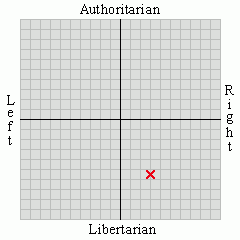
Brink Lindsey has written a piece that has lots of thinkers in the political-science arena abuzz: can liberals and libertarians form a viable coalition in the late 2000's, the same way that conservatives once allied with libertarians way back in the Reagan Era?

At Volokh, Ilya Somin boils the way to make this happen down to its essence: "...liberals opposing the many big government programs that redistribute to the rich and middle class from the poor, libertarians accepting redistribution that benefits the genuinely destitute, and both sides placing greater emphasis on those personal liberties issues on which they already agree." In other words, they must find a way to compromise on reforming many economic restribution mechanisms currently in place, such as income tax deductions for mortgages, social security, and safety-net programs. Such efforts would meet with some conservative support, too, as it would no doubt end up including creating more disincentives to abuse welfare programs like TANF and unemployment insurance.

I have a hard time seeing the hard core of the liberal intelligentsia and the old-guard Democratic political leadership, particularly those whose electoral bases come from poverty-stricken inner cities, buying in to such a coalition. Similarly, there are a lot of appallingly fanatical Ayn Rand acolytes populating the libertarian community (if there actually is such a thing). But compromises and coalitions are never formed by ideological purists. "Blue dog" Democrats, particularly the freshman class of 2006 and the DLC crowd, may find an ability to reach out to the libertarian-minded and make Clintonesque appeals to reform welfare and make government less dangerous to civil liberties by making there by less government in the first place.

Alternatively, the Republicans could follow the suggestion of Dick Armey and others of his ilk, and find a way to draw back the libertarian voters that made up the great coalitions that elected Reagan and Bush the Elder. George W. Bush and his minions have chosen to eschew the path of limited, smaller government and fiscal responsibility, but that does not mean that the Republicans' underlying free-market ideology has lost its appeal to libertarians.

What's particularly interesting is that this is the group that seems to be up for grabs, and both sides of the political fence seem to think that libertarian voters, not "values voters" who populate the megachurches, are the critical swing group. When "churchy" voters were seen as the key to the ruling party maintaining power, they pretty much called the shots in terms of policy. One wonders -- and this one hopes -- whether a similar dynamic can happen if there has been a realignment leaving the libertarian-minded in the critical balance.

Will we become kingmakers rather than spoilers? The answer is "yes," if someone is smart enough to reach out to us in a way that is not fundamentally abhorrent to their base. It seems to me that Republicans are better-positioned to do that than Democrats, still, but it will take some rebuilding of trust after this Administration has gone away. Either John McCain or Rudy Giuliani could do that, and maybe Newt Gingrich or Tommy Thompson -- but Sam Brownback, Mitt Romney, or Condi Rice (because of her close association with Bush) cannot. For the Democrats, I can imagine Evan Bayh or maybe Bill Richardson pulling this off, but not Barack Obama, Hilary Rodham Clinton, John Edwards, Wesley Clark, or Tom Vilsack making a convincing appeal to libertarian voters.

Point is, it's a group that's up for grabs, and one that is amorphously large in nature, large enough to make a big difference. The right person, with the right kind of appeal, could grab that ring and take it straight to the top. Which, of course, is what politics is all about.

Critter Concerns

Friday and Saturday we had ants in the kitchen. And no, Spungen, they were not odiferous, at least not to me -- but then again my sinuses have been causing me so much trouble for the past two weeks it's possible they stank to high heaven and I never noticed. But more about that another day. I heard all kinds of theories -- they're looking for food; some settlement from the house dislodged their nest; it's cold outside so they're trying to stay warm; they need a source of water; they're being driven into the house by other creatures. I've no way of knowing which are good theories and which are pure speculation.

After a second bad morning in a row cleaning them up, I didn't care. The Wife and I decided to not take any chances on any of these theories and take more direct action. We bought ant motels and Spectracide and used them liberally everywhere near where the ants had been sighted. The cats didn't understand why we confined them for so long in the spare bedroom, and the dogs really wanted in from the back yard, but we waited until the insecticide dried completely so the critters would be in no danger.

Since then, I haven't seen any ants. The Wife says she saw some in the trash cabinet tonight but that she poisoned them. Ah, chemical warfare -- bad for people, to be sure, but somehow morally acceptable when used on insects.

More on the critters -- the big dog, Sassy, has been scratching her ear a lot recently, so The Wife took her to the vet. The vet discovered a fungal infection in her ear and we've had to clean it out often since then. She does not like that one bit; at least she's stopped whining because she knows that after she makes it through the rinse and cleaning, there's a dog cookie in it for her. It's really gross cleaning out the dog's ear, but that's part of the job of having critters.

So is worrying about things like the Parvovirus outbreak in the area. Sassy just had her shots updated but I'm not so sure about Karma. So we'll have to take her in soon, too. And the vet advises that she's seen an increase in flea activity -- which is really bad news, because Frontline is expensive and none of the critters like it, especially the primadonna grossa of all cats everywhere, our very own Ginger.

That, and we really ought to register the critters, too. I've sort of been thinking about putting that off until we move into a permanent house of our own. We're likely going to do what we can to buy a place when our lease is up in June; it makes sense to register the pets at their permanent home rather than here, but of course we really ought to register them anyway in case they get loose somehow. The Wife has been window-shopping quite a bit already and we've toured a number of houses to see what we like. Right now it feels as though we can save enough money to get into the world where we can at least pay our closing costs.

Moon Base

I'm not sure what to think of NASA's plan to establish a permanent, manned based on the moon.

On the one hand, I think it would be very good for science and space exploration, and all of the knowledge and advancement that these would bring. Scientific exploration and discovery are the best possible investments we can make in our future, second only to an improved educational system, and far outpacing even economic infrastructure. The long-term good that this sort of thing could yield is potentially staggering.

But on the other hand, it would be amazingly expensive to maintain, and very risky for the crew. How, for instance, will we get enough water to support human life there? Water is heavy and bulky and while it can be recycled to a large degree (think about it too much and you'll get grossed out) there will need to be a continual supply of water. I know there is a theory that in permanently shadowed areas near the poles there may be water ice to be found, but do you really want to drink moon-water? Food and air would be less bulky to carry, but still expensive. And what if something goes wrong -- will the crew have some kind of escape mechanism at hand to bring them back home? I sure hope so.

I steadfastly maintain that we need to balance our budget. That means not doing some things we would rather do. This may be one of them, particularly if we have to continue financing a stalemated war with no desirable political outcome on an indefinite basis. At a minimum, I say we can't afford a moon base and the war. Once our military activity ratchets down to a level that we can afford to maintain, then we can start to think about this.

But I also steadfastly maintain that we need to grow and develop intellectually if we are to remain competitive and keep a leadership position in the world. I don't think we necessarily need to be the monopolar superpower dominating everything, but I do think we need to be leaders. That means being technologically more capable than our competitors and partners around the globe. Realizing that objective means continually trying to outdo ourselves and figuring out how to do it. A moon base is as good a means as I can think of for our society to have such a great project for our scientists and engineers and other intellectual leaders.

Clearly, supporting a moon base would require that we have a means of quickly and inexpensively getting to orbit and getting to the moon. The speed and cargo capacity of Apollo 11 will not cut it for an undertaking of this magnitude. But it's still an exciting idea. It's a possibility that could be very good for the country and humanity at large.

December 3, 2006

Blogger Changes Unexpectedly

My formatting bar has vanished. My insert link and insert picture tools have vanished. I can now once again edit the time of the post and allow or disallow comments on particular posts, but this is a small consolation. What makes the posts work well are pictures and emphasis. What makes blogs particularly useful are the links that let the reader learn more about a subject.

It's no use complaining about something that's free, but after coming to rely on things being a particular way, it is somewhat irritating to be denied these tools now.

UPDATE 12/4/2006: Things appear to be back to normal now. I don't know what happened over the weekend.

The Rumsfield Memo

The day before the election, Donald Rumsfeld sent George W. Bush a memo about our continuing activity in Iraq that said a few remarkable things:

"In my view it is time for a major adjustment ... Clearly, what U.S. forces are currently doing in Iraq is not working well enough or fast enough."

"We have already reduced from 110 to 55 bases ... Plan to get down to 10 to 15 bases by April 2007, and to 5 bases by July 2007."

"Recast the U.S. military mission and the U.S. goals (how we talk about them) — go minimalist."

As reported by the New York Times, Titled “Iraq — Illustrative New Courses of Action,” the memo reflects mounting concern over a war that, as Mr. Rumsfeld put it, has evolved from “major combat operations to counterterrorism, to counterinsurgency, to dealing with death squads and sectarian violence.”

Now, none of this is news to anyone who's been paying the remotest bit of attention. Nor are any of these proposals (or any of the proposals coming out of the Iraq Study Group) new. What is news is the admission from within the administration, particularly from the upper levels of the Pentagon, that our strategies in Iraq are failing to achieve anything resembling an acceptable objective. Just as early as two weeks ago, Tony Snow refused to admit that Iraq had descended into a state of civil war, and the President continues to refuse to admit that we are no longer accomplishing our goals.

Particularly annoying for the rest of us -- who want to see a safe, secure United States and who bought in to the idea of preventing Saddam Hussein from getting WMD's and who were seduced by the vision of a democratic, friendly Iraq -- has been the Administration's refusal to admit that any kind of significant problem exists, especially as reality appears to grow more and more dissonant from the "approved" message from the White House.

Now, it's very ironic that just as former Secretary Rumsfeld seems to have figured it out after four stoneheaded years of insisting that everything is going to work out just fine, he is gone. Hopefully his replacement will not be such a Pangloss about a very difficult situation. We can have victory if we have the will to return our boots to the necks of the Iraqis who have been trying to rip their country to shreds, or we can have defeat if we decide to bail out and cut our losses, but we can't keep on doing what we have been.

December 2, 2006

Supreme Court Watch

Friday, the Supreme Court ordered a grant of certiorari to the case of Morse v. Frederick. In this case, a high school student in Juneau, Alaska arrived late to school on the day in 2002 when the Olympic torch was being run through his city. Students were let out of class, although some students (those in the band and cheerleaders) were required to perform while the torch was run by. Frederick and his buddies went across the street from the school onto some private property (unclear if the owners consented to what happened) and as the torch was run by and the cameras were on them, they unfurled a large banner that read "Bong Hits 4 Jesus." Frederick was the only student identified as participating in this and has refused to name the other students involved. He was suspended for ten days; after his appeal of the suspension was denied, he sued for a violation of his right to free speech.

I'm wondering how this will play into another case I've been watching, also involving students, but this one offering a Fourteenth Amendment issue. (UPDATE on 12/4/06: Certiorari was denied, much as I had predicted it would have been -- and whether they like the idea or not, that's a good thing for my former clients, who could not have possibly won that case before the nine Justices currently on the Court.)

I'd have provided a direct link and a picture of the students holding up the banner (and another, more irrevent picture acquired elsewhere), but Blogger is behaving very strangely and both formatting and picture posting options are apparently not available right now.

December 1, 2006

Invasion!

I go downstairs to the kitchen this morning to let the dogs in and get some breakfast. To my great displeasure, I see a line of small black ants walking across a kitchen counter. Before killing them all and wiping them away, I traced them back to their source and tried to figure out what they were after.

As best I could figure, they were feeding off of two half-popped kernels of popcorn in the sink, and they were coming out of an electrical outlet on a nearby wall. But there were exploratory committees looking elsewhere for supplements to the popcorn.

The animals, needless to say, were useless to help with the ants.

I wiped down the counters and got rid of all the ants I could, and covered the edges of the outlet with dish soap. This should last several hours until the ant pheromones fade away and I can remove the cover plate on the outlet without unleashing a horde of the evil little beasties into my kitchen.

The good news -- the liquid dish soap thing really works. It will stop an ant dead in its tracks and turn it around. I've prevented further ant entry into the kitchen for the time being. More good news -- these ants hadn't found something they really, really liked, meaning they hadn't got into the flour or the sugar. The bad news -- if they were coming from an interior wall outlet, it means their nest is probably under the house where I can't get at it with poison, so that means they'll be back.

November 30, 2006

He's Going To Serve; He Ought To Swear

Keith Ellison, a Democrat from Minnesota, has recently been elected to Congress. This is not so remarkable -- we all know by now that there are going to be a lot of Democrat freshmen serving in the next Congress. It is remarkable because Mr. Ellison is a Muslim, and no Muslim has ever been elected to Congress before.

So, he wants to swear his oath of office on the Koran. This has made some people unnecessarily very upset. They ought to calm down and quit trying to force their religion on those who do not share it. The linked article, by the often-priggish Dennis Prager, suggests that the Bible is the foundational document of the United States. Wrong, Dennis. The Constitution is that document. The Constitution requires, in Article VI, as follows:

The Senators and Representatives before mentioned, and the members of the several state legislatures, and all executive and judicial officers, both of the United States and of the several states, shall be bound by oath or affirmation, to support this Constitution; but no religious test shall ever be required as a qualification to any office or public trust under the United States.

I don't see the Judeo-Christian Bible mentioned anywhere in that passage. But wait, there's more. The Constitution requires that there be an oath, but does not specify what that oath is. The oath itself is set by statute, found at 5 U.S.C. § 3331:

I, AB, do solemnly swear (or affirm) that I will support and defend the Constitution of the United States against all enemies, foreign and domestic; that I will bear true faith and allegiance to the same; that I take this obligation freely, without any mental reservation or purpose of evasion; and that I will well and faithfully discharge the duties of the office on which I am about to enter. So help me God.

Now, when it comes right down to it, I have a problem with the last four words of that statute. They seem to directly contradict the Constitutional mandate that "no religious test shall ever be required as a qualification to any office or public trust under the United States." I suspect that if an elected official or other person required to swear that oath were to challenge it, said official would win both the court case and great political unpopularity, which is why it is still on the books despite its obvious unconstitutionality.

After all, if I were to be elected to Congress by some bizarre circumstance, I would have a bigger political problem on this issue than Ellison does. I could say the whole oath, but I wouldn't really mean the last four words, since I don't believe in God at all. If put in that position, I might very well say them to avoid making a scene, but I would consider them a nullity. I would also probably decline to swear on any book whatsoever, which would give my critics ammunition that Prager does not have against Ellison concerning whether I really meant what I had just said. What book would an atheist swear on? Newton's Principia Mathematica?

The good people of Minnesota's Fifth District selected this man to represent them in Congress. That cannot now be changed. He's going to serve, and the law requires him to take that oath. But the law does not require him to take that oath on any book whatsoever. That he chooses to consecrate his oath with the book containing what he believes to be the holy word of God indicates his sincerity in that oath.

What's really going on here is that Prager and his ilk are upset that a Muslim is serving in Congress at all. He and his kind used to be upset at the idea that Catholics might serve in the government, on the theory that they would answer to the Pope in Rome rather than the American people. This idea is now considered nothing short of ridiculous. There also used to be an objection to Jews serving in Congress because, well, because they were Jewish. That prejudice is now thought of as a loathsome relic of our ignorant past, and rightfully so.

Yes, there are dangerous Muslims in the world, but there are dangerous Christians and dangerous Jews and dangerous Hindus and dangerous atheists, too. Ellison is entitled to the same presumption of good-faith service and patriotism that any newly-elected Member of Congress gets. We have no more reason to believe that Ellison would do anything against America's best interests than we do any other American citizen, and indeed we should note that he has earned the respect of a majority of members of his district to the point that they are trusting safeguarding the country's interests in him as opposed to his Christian opponent. Singling him out on the basis of his religion is, well, singling him out on the basis of his religion. This is, quite simply, religious discrimination in about the purest form I can imagine. On that subject, I refer the reader back to the foundational document of the United States of America, specifically to its First Amendment.

So let the man swear on his holy book. One holy book is just as good as any other to the Constitution, and it ought to be just as good as any other to the American people. After all, if we're going to insist on controlling what book is sworn on, then why don't we limit the edition of the Bible that's used, too? Then we can argue about whether the approved Congressional Bible should or should not contain the Epistle to the Hebrews or the Book of Wisdom, since not all Christian sects include those books within their canons. That way, we could regress our civilization all the way back to the Thirty Years' War!

I expect that people who know something about Constitutional law would disapprove of Prager's argument. But it's also good to note that there are Christians who really get it on this issue -- for reasons relating to the depth and sincerity of their own religious beliefs.

November 29, 2006

Talk Things Through

One of the really good things about practicing in a law firm instead of being a solo practicioner is that you have resources nearby in other lawyers who do things similar to what you do.

We all need a pep talk from time to time, and I needed that help today. I've got a lot of cases I'm handling, moving at a fast pace, and it's easy to feel like things are spinning out of control. Having some difficulties in one case, and facing a tough adversary in another case, can sometimes leave me feeling less than up to the task. That, in turn, can lead me to consider making concessions that I really don't need to make. It's good to have other attorneys around to talk things through with. It's good to hear someone remind you that, yeah, the other guy talks a good game, but he's really full of it.

The big reminder is that while it's good to understand your opponent's case, it's more important to go out and litigate your own case. When there is something that is really being disputed, don't lose faith in your client, in the law that supports your position, and most of all, in yourself. I know one of my weaknesses is a tendency to try to do everything by myself, and I try to get help when I can. Having other smart lawyers around makes getting that help much easier.

Something to Celebrate

The brevity of this report on Fox News belies the great joy and happiness I feel in reading it. Combine this with the implosion of George Allen, and I'm wondering where exactly the RR fundies are going to go. Sam Brownback seems the next likely landing place for this group. Catholic, but that seems to be OK with the same group of people who liked Rick Santorum and who would like Newt Gingrich if it weren't for the former Speaker's questionable personal background (which matters to those types). But the good news is that we've likely heard the last of the Video Doctor for some time in public life.

Maybe we'll take our party back one day.

November 27, 2006

Easily Distracted

When I was in college and law school, it seemed that I could handle a wide variety of things all at once. Music, television, a book, studying, food, talking with a friend. It felt like I could take in all kinds of information and stimulus from a wide variety of sources, absorb it all, and keep right on going. Watch three TV's at once to get three football games on a Sunday morning -- no problem.

Now, I find my ability to multitask my brain has declined significantly. I don't know if it's a function of growing older, a function of wanting to get a higher degree of comprehension and quality in what I do, or (what I most strongly suspect) it is an increased vulnerability to distraction.

The Wife likes it when we watch TV together, and one of us does something on the laptop. But I've found myself growing irritable and unable to complete a task when the TV is on, The Wife is talking, and I'm trying to write or prepare a class or even play a game on the computer. I just can't handle all of that mental activity. In fact, when the TV is on, that seems to pretty much override everything else. The TV seems so loud.

The same thing happens at the office. As I'm trying to complete a task there, I have found myself feeling irritated at conversations and the sound of activity outside my door. This is particularly true as I am trying to adapt to a voice-recognition tool in the hopes that it will increase my productivity. The technology is pretty cool, but I have to think more about what I'm saying than I do when I just type -- my brain has been trained to think and express itself through my fingers on a keyboard for more than twenty years and I find I'm better at it than dictating into a headset.

Maybe I overstimulated my brain when I was younger and now I'm paying the price in a diminished capacity to compartmentalize my intake of information. And maybe some of that stress is just the result of things that are new and unfamiliar, maybe it's the season or health issues (both The Wife and I seem to be getting a lot of headaches recently). There are things we can do about this but it seems to be increasing. I like hanging out with The Wife in the living room, and I like being social with other folks in at work, but if this keeps up I'm going to need to isolate myself in my offices in both locations if I'm ever going to get anything accomplished.

Worth A Listen

I read a book by this guy a while back, and really enjoyed it. His new book looks good, too. But the insights in the interview are certainly worth some careful consideration.