October 7, 2006
Olbermann Blasts President

 Labels:
Domestic Politics
October 5, 2006
Grading Papers
 Quite possibly the least enjoyable thing about being a teacher is grading papers. I only put myself through this once per class -- at the first papers my students turn in. But I have to do it because if I don't, the papers get worse and not better. I have one down and five to go right now. It's tedious and the writing is terrible.
The first paper I have my students do is an analysis of two tort reform proposals. I don't care if they are for or against the proposals, but I'm looking for the ability to normatively evaluate an idea. Here's a sample of what I got tonight in my first paper:
In section 135, it is proposed that subsection (a) is rewritten. Before the rewriting, it sounded like the Director had all the power to decide rather a person whom filed an application for a patent would be granted that patent or not. It was in the Director’s opinion rather the patent was already in use or not. With the revision, the Director has to do more research to make sure that a patent does not already exist.
 Now, you may be wondering (because George and I sure are) what exactly this has to do with tort reform. The answer is nothing. It's about a proposed change in patent law. You'll also notice a few problems with the writing. Passive voice, misuse of words, guessing at facts, undefined jargon. The reader has no idea who this "Director" is and why it's a bad thing that he gets to decide who gets a patent and who doesn't.
It goes on and on like this. I'll be up until midnight getting this all done, so I'd better stop blogging and get back to it. If you're religious, pray for me
UPDATE: It got worse. Get a load of this:
Literacy is very important to each child? How about to college students?Some of the Advantages of Tort Reform are a $250,000 cap on the pain and suffering. The tort reform would improve on system. People are trying to sue doctors for any little detail. This is making our medical insurance rates go up and our medicine. Sometimes some of these cases are so minor and people want to sue for millions of dollars that doctor do not even know how they are suppose to treat people for there medical condition. When our society sees through the media how one person can get all this money for such a minor condition, he or she may want to do this too. They feel that this is a get rich scheme. Another advantage would be to give judges the power to overturn unwarranted jury verdicts and rewards. If the judge feels that the case is false based on other cases than the judge can overturn the verdicts. That would make attorney think twice before getting a case that a person will be committing fraud. The bill the reform would ensure doctors have less cases filed against them, which are not serious. This would be a big advantage since the doctors would pass on the savings to the Health care system and the medicine.
In the Reform that deals with no child left behind the advantage of this reform is that the parent and the child will be able to decide on the education. One of the aspects and advantages that it focuses one is literacy, which is very important to each child.
You may well ask, "Um, TL, what does the No Child Left Behind Act have to do with tort reform?" And all I can do in response is cry, like Renaldo:

Labels:
Teaching,
Tort Reform,
University of Phoenix,
Writing
October 4, 2006
Foley Fallout
Could this really be so? And if it is, it's hardly a good thing. Are clueless Republicans muddling through a pro-oil, pro-religion agenda to please their base and demonstrate complisiance with their President preferable to even-more-clueless Democrats muddling through a massively confused and directionless agenda, fighting the Administration for no good reason other than to fight? There seems to be no winning.
Labels:
Domestic Politics
October 2, 2006
Catering
This number grew and grew until Friday night, I was making fourteen pounds of hash brown casserole (10 pounds of potatoes, 2 pounds of cheese, 2 pounds of sausage), five dozen eggs, and getting 100-cup urns of coffee ready. I'm sure I had more than 60 people eating. The scarf-down foods were The Wife's banana bread, the danish eggs (scrambled with havarti cheese and chives) and a hundred of those little disposable coffee creamer cups. We've still got some hash brown casserole and fruit salad left over; I made smoothies for us yesterday.
We were up until one in the morning prepping and I got up again four hours later to finish the eggs and get everything set up. We weren't out of there until one in the evening. Probably eighteen man-hours of work went into that breakfast. The cooking part was fun but my legs and feet still hurt two days later. One of the Presidents of a club from Bakersfield asked me to cater their event. I was ambivalent, but now I'm not -- the late night and early morning, the stress and work, and the physical strain are not worth it; and the Toastmasters can't afford the fee I would charge. I'll do it for The Wife, but not for strangers.
Sweet Jesus Do I Hate Bill Frist
 Demonstrating his flair for statesmanship and international diplomacy, Senator Bill "The Video Doctor" Frist's solution to ongoing insurgency and violence in Afghanistan is...
Wait for it...
To invite the Taliban to join the government.
You read it here first, folks. That's why we spent billions of dollars after 9/11 -- to displace the Taliban from power in Afghanistan, in order that we could hand power back to them. That's the spirit, Bill! Maybe the BEST solution to ongoing violence in Iraq is to make Saddam the Sergeant-at-Arms of the Iraqi Parliament.
Labels:
Afghanistan,
Bill Frist,
International Politics,
Terrorism
September 30, 2006
Oops!

SWM seeks younger M for discreet fun, friendship & more ?!?!? No freaks or FBI informants, plz. IM w/pic to Maf54.
In case you're interested, the transcript of the instant messages between Congressman Foley (aka Maf54) and a 17-year-old Congressional page can be viewed on the Wikipedia biography of the former member of the House of Representatives.
It looks like it's going to be too late for the Florida Republican party to find a replacement candidate for Foley's moderately-competitive district.
Labels:
Domestic Politics,
Mark Foley,
Scandal,
Technology
September 28, 2006
Montessori
Labels:
Interesting Reading
Another Reason To Like Rudy
 Why should people like Rudy Guiliani to be the next President? Well, for one thing, he's not foaming at the mouth about his partisanship. No doubt, he's a Republican who campaigns hard for fellow Republicans against Democrats. But he also realizes that not only are we all Republicans or Democrats or moderates or whatever, we're also all Americans, and at the end of the day, that counts for more. Sounds like someone else I kind of like in office these days.
Look, Bill Clinton melted down in front of the entire world the other day, and may have done his wife's Presidential ambitions incalculable damage. That's plenty of fodder for professional Clinton-haters and Karl Rove wannabes. But Guiliani is exactly right to say "Hey, Chris Wallace and all the rest of you trained Dobermans at FOX News, blame the terrorists."
Okay, so when do the campaign committees form? It may be a lost cause but Rudy's seeming like the last sane person in America who I could even stand to see be President in 2009.
Labels:
2008 Election,
Domestic Politics
September 27, 2006
Naming Rights
 From my University of Phoenix e-mail inbox:
Okay then. "University of Phoenix Stadium." More advertising. Very expensive advertising. That means more tuition is projected to come in, meaning more students are anticipated.Dear Faculty.
We are pleased to announce that University of Phoenix has become the naming rights partner of the NFL's Arizona Cardinals. As such, the Cardinals' world-class stadium will now be called University of Phoenix Stadium.
Our investment grants the University stadium signage, advertising, marketing, merchandising, promotional and charitable opportunities. In addition, we have campuses in almost every NFL city. The NFL is the country's most successful and visible professional sports league and their demographics overlap significantly with ours. This exclusive partnership will enable the University to reach a broader array of students in an exciting venue.
Here in Arizona, there is a great deal of excitement surrounding the Cardinals as a result of the new stadium. And this is no ordinary stadium … it is one of the most spectacular facilities of its kind in the world. The stadium has been recognized for its bold design, world-class architecture, cutting-edge technology and fan environment. Throughout its history, University of Phoenix has been synonymous with innovation. So it's fitting to place the name of the world's most innovative university on the world's most innovative stadium.
As you might imagine, this partnership is generating a lot of media coverage, much of it silly (to increase entertainment value) and some of it serious. We're sure there will be a lively debate about it for some time and this is just the type of free speech that we value as a higher education institution. As a University of Phoenix faculty member, we hope that you too will feel free to express your opinion in the public marketplace or directly to us by replying to this message.
This partnership is a precursor to a larger national branding campaign scheduled to begin in January. Many faculty and students have told us that you strongly believe in the value of our programs, but as a young institution, you have also told us that we need to invest more in telling this story. That's what this branding opportunity will help us do. But the story won't stop there… please be assured that we are making similar investments in our academic programs and services. What has made the University so successful over the years is just this willingness to invest in both the academic and business operations equally. Of course, we hope you'll share our excitement as we focus on the University's brand and image through a variety of communication strategies.
Sincerely,
Dr. Bill Pepicello, President
University of Phoenix
I've already noticed in the past several months that the bell curve of the quality of my students has grown steeper; I'm getting some pretty good students, and I'm getting some real duds, people whose skills and intelligence suggest that they really don't belong in college at all. Already, in my current cycle of classes, I've got students who can't read, can't write, and can't follow instructions. I've also got a handful students who are quite bright and getting near-perfect grades. If my class ended now, I'd hand out as many "A's" as "F's," and very few "C's." But, my average would be what it always has been -- somewhere between C- and C+.
Somehow, I think that the enhanced advertising is only going to make this problem worse. To compound the problem, the University is dropping its critical thinking requirement for the overall curriculum, and de-emphasizing writing skills. What, exactly, is this well-marketed degree going to mean? Do I want to continue to be associated with this sort of thing? I'm really becoming concerned that this is nothing more than a diploma mill -- and when I'm told to pass through students who don't demonstrate competence in my subject, that's the bright line and I'll give them my resignation.
A nine-figure, twenty-year deal to advertise in as prominent a venue as an NFL stadium suggests to me that the process has moved another significant step in that direction.
Labels:
Sports,
Teaching,
University of Phoenix
Don't Forget To Win First Place
I think it's easy to shake off a concern like this as pity for "poor little rich kids." And it's certainly true that a lot of these kids will be affluent, to support all of the activities that they have to do. But it's indicative of society at large, and we're all under pressure to constantly be on the go, constantly be working and be productive, to constantly distinguish ourselves.
Although it's important to try to excel and be excellent at what we do, and it's good to demonstrate these things, it's also important to be happy. That, after all, is the real reason we are doing so much in all of our lives, and our teenagers are no different. I take this as a reminder to not put so much pressure on myself and slow down. Distinguishing myself will happen, too, but it's more important to be happy.
Labels:
Interesting Reading,
Teaching
September 26, 2006
Presidential Professions
Romney has the advantage of being a governor, and thus a member of the executive class. Consider for a moment the backgrounds of the Presidents who have been elected since the start of the twentieth century:
26. Theodore Roosevelt -- Vice-President of U.S.A., Assistant Secretary of Navy, military service, Police Commission of New York City
27. William Howard Taft -- Governor-General of the Philippines, Secretary of War
28. T. Woodrow Wilson -- Governor of New Jersey, President of Princeton University
29. Warren G. Harding -- U.S. Senator
30. J. Calvin Coolidge -- Vice-President of U.S.A., Governor of Massachusetts
31. Herbert C. Hoover -- Secretary of Commerce
32. Franklin D. Roosevelt -- Governor of New York
33. Harry S. Truman -- U.S. Senator, briefly Vice-President of U.S.A.
34. Dwight D. Eisenhower -- General, U.S. Army
35. John F. Kennedy -- U.S. Senator
36. Lyndon Johnson -- Vice-President of U.S.A., U.S. Senator
37. Richard Nixon -- Vice-President of U.S.A.
38. Gerald Ford -- Vice-President of U.S.A.
39. Jimmy Carter -- Governor of Georgia
40. Ronald Reagan -- Governor of California
41. George W. Bush -- Vice-President of U.S.A., Director of CIA
42. Bill Clinton -- Governor of Arkansas
43. George W. Bush -- Governor of Texas
Of these eighteen men, only four (Harding, Truman, Kennedy, and Johnson) had significant amounts of legislative experience in their backgrounds. The other fourteen presented backgrounds of executive experience. The most common item on that list is service as the governor of a state (7) followed closely by service as Vice-President of the United States. The last time a President whose background was legislative was elected President was 1964 -- and Johnson was the incumbent President and had served for two years as Vice-President. To find a man elected President from within the ranks of the legislature, you need to go all the way back to the dark horse candidacy of Warren G. Harding in 1920.
We Americans like to elect executives to be our chief executive, simple as that. It's a trend that transcends partisanship. So forget people like John McCain, George Allen, John Edwards, and Barack Obama. Start thinking about people like Wesley Clark, Bill Richardson, the aforementioned Mitt Romney, and Rudy Guiliani.
(And once again, Condi doesn't want to be President!)
September 25, 2006
This Man Will Not Be President
 Formerly the great hope of the religious right for President in 2008, Senator George Allen appears to have fatally wounded his own Senate re-election candidacy through incautious use of racial slurs. He called an Indian-American observer of his campaign a "macaca," which turns out to be the name of a particular kind of monkey. Now, there are rumors of more overt kinds of racist attitudes, although Allen vociferously denies them and I should be fair to Senator Allen and emphasize that these are only rumors.
It's certainly a good thing that the use of this kind of questionable language is unacceptable. It's odd, though, that he could have come so far with these kinds of things floating around about his past and his apparent attitude.
In any event, it looks like the more religiously-inclined members of the GOP will need to find a new darling. This guy's damaged goods. In the meantime, we've already heard the worst about my favorite possibility -- shacked up with his girlfriend in Gracie Mansion and later the house of some of his gay friends before his divorce was final. But no one has ever whispered a word that he's a racist, and having a girlfriend while separated from his wife while a divorce was still pending is certainly no worse than a lot of respectable Southern Baptist ministers have done themselves.
Labels:
2008 Election,
Domestic Politics,
Scandal
The Ten C's in Cumberland County
 A friend from Tennessee writes:
Right now we have an interesting problem in Cumberland County. Someone has placed a truly awful piece of chainsaw art - Moses and the 10 C's - on the sidewalk in front of the county building. As far as anyone can tell the county did not give permission for the placement but everyone's too scared to remove it. It certainly does not pass constitutional muster because it lacks the name of the placing organization and a notice that the government does not indorse it. I've explained this in a letter to the editor of the local paper some weeks ago.
I intend to contact the ACLU for legal advice about my proposed course of action. I intend to deliver the statue to the police department, claiming I'm turning in lost or abandoned property. I'd like some other ideas that may be better. I've considered bringing it to the recycling center and may do so if the police return it to the county building. Any thoughts?
As I see it, the government can't help it if somebody puts a statue like this on public property. But if the responsible authorities don't remove it in a reasonably timely fashion, then they can fairly be seen to be endorsing its message. While perhaps the "10 C's" (particularly the last 6 or 7) are not bad at all, they are also explicitly religious (especially the first 3 or 4). Non-Christians (and non-Jews) would look at the statue and think, "That building isn't for me." And no American should feel that way about their governmental institutions.
Labels:
Constitutional Law,
Religion,
Tennessee
What a Nice Day!
It's a shame I had to spend so much of the day inside. But that's how it goes. They don't pay me for enjoying the weather!
Labels:
California,
Cheerful For Once
September 24, 2006
Damn Good Steak
We went to a dinner party tonight at a friend's house with lots of dogs; we took our critters along to socialize them. After a little initial trouble getting acquainted, things worked out pretty good.
Aside from that, I've been frustrated with an underperforming fantasy football team. I really need the St. Louis Rams to start coming alive and living up to their potential.
Next week promises to be even more stressful than last. But there's nothing to it but to do it.
Labels:
Cheerful For Once,
Cooking
September 23, 2006
Well It's My Birthday Too, Yeah
I don't dislike having a birthday, but it's kind of like having a friend take you out to a nice meal for no reason at all. You wonder what it's all about; while you're grateful and you enjoy it, it doesn't feel earned or even deserved. So I guess it makes me feel guilty, like I'm taking advantage somehow.
Because my attitude about my own birthday is "Um, hey, no big deal," I sometimes assume that other people feel like I do about birthdays. That makes me guilty of ignoring them until the last minute; I don't treat them like special occasions and that might hurt other peoples' feelings. It's not that I don't care about these people or want to insult them through disregard. Rather, it's that, as with a religious ceremony, I just don't feel a tremendous amount of emotional power to the event so it's easy for it to slip my mind. Few people celebrate the anniversary of the first time they did their own laundry, and fewer still would think that was an event worth celebrating with an exchange of gifts, unusually nice meals, or special songs. So if I've missed your "laundry day," you probably won't be all that offended.
For instance, I found out this morning that my mother-in-law let the date slip her mind and only today did she remember. Doesn't bother me a bit. Why should it? She's a nice woman and I like her very much and she likes me; that doesn't change because of some arbitrary date that's supposed to be "my" holiday.
Another example: my wife wants to do all sorts of nice things for me today and feels moderately guilty about leaving the house to do something for herself with her Toastmasters group. I say, go, do your thing and enjoy it! I'll still be here when you get back and we'll spend time together then. My allergies are acting up this morning anyway; hopefully the medicine will have taken effect by the time she returns.
Like I said before, I'm grateful for the gifts and the attention; it's nice to have those things and to see people I know and love step up and do and say nice things for me. That includes a lot of the Loyal Readership, who get a special thanks from the TL here. You think it's important, and maybe that's what really counts. So thank you, everyone, I do very much appreciate it.
Other famous birthdays of the day. Two great emperors: Gaius Octavius Augustus Caesar, ruler of the Roman empire ("as empires go, this is the big one!"); and Kublai Khan, who ruled over the largest empire the world has ever seen and sponsored the travels of Marco Polo. More recently and familiarly to three generations, Mickey Rooney and Bruce Springsteen, and (born the exact same day as me,) Ani DiFranco. Signfiicant events of this day in history include the Concordat of Worms, the Seige of Vienna, the first graduation ceremony at Harvard, Richard Nixon's "Checkers speech," Bob Marley's last concert, the peaceful division of Sweden and Norway, and the formation of the nation of Saudi Arabia, the Nintendo Corporation, and the New York Knickerbockers, the first modern baseball club. It's also the first day of Rosh Hashanah for our observant Jewish friends, so happy new year to you all!
Labels:
Birthdays,
Cheerful For Once,
History,
The Wife
Centrists
The Democrats, for their part, seem to be spending more and more time and effort keeping their winning coalition from the Sixties together -- unions, racial minorities, anti-war activists, and feminists. The country and the political debate has moved on, however. There are proportionally fewer union members in America now than there were in the 1890's; anti-war activists have found their arguments pre-empted by reality and their numbers diminished by a desire to avoid being seen as dirty hippies; racial politics are too complex in today's world to simply lump everyone who isn't caucasian into the Democratic camp; and feminisim has, for no good reason I have ever been able to figure out, somehow fallen into disrepute. The Democrats' failure to adapt to these changes and either rehabilitate or replace these pillars of their coalition has proven responsible for their big-picture failures to recapture the majorities.
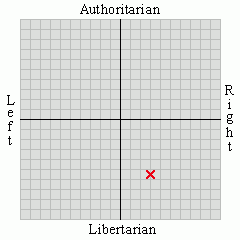
It used to be that the Republicans were a coalition of various interest groups with common interests, as were the Democrats. Candidates would run to the ideological edge of their party in primary elections, and then run to the center to appeal to moderates. But now, left out from these equations are people who otherwise agree with the platforms of one or the other party except for a few big issues, people who are repelled by the corruption and vacuity of political debate, and people like me, who are irreligious but libertarian and find themselves marginalized out of the GOP because we are no longer needed to ensure electoral success. "Pragmatism" is not a unifying ideology.
Small wonder, then, that politics seems to be more about the extremes than the middle. Yes, it's true that Democrats who have enjoyed greater than local success have done so by appealing to centrists who are not part of the traditional Democratic coalition, thus earning the sneering disregard of those liberals who look back on Bill Clinton as some kind of a sell-out. The reason that both parties like to appeal to their extremes rather than their moderates is that a) it's more fun, b) if they win, they can more easily claim a mandate, and c) where are the moderates going to go, anyway?
I don't know of many historical models that illustrate where this kind of political polarization goes. I can't think of a time that both sides of a political discussion simply ignored those whose views were sympathetic to but not in lock step with the ideologically pure arguments offered by one or the other side. All the examples of polarization I can think of end in protracted, bloody, and morally ambiguous struggles: the French, American, and Russian Revolutions, the American or English Civil Wars, the takeover of the Weimar Republic by the Nazis. Not very happy historical precedents, I'm sure you will agree. I've heard it said that "history repeats itself, but only in outline form," or alternatively put that "while history doesn't truly repeat itself, it rhymes a lot."
The self-destruction of the Weimar Republic is an illustrative example; not to suggest that the political actors of today are as mean-spirited as the downright evil Nazis were in Germany, but rather because when confronted with the rising power of ideologues, moderates chose to abidcate their power rather than fight to retain what they had. So is the polarization of the body politic in England before its civil war -- that conflict had religious, economic, and political ideologies in play.
I don't buy in to the idea that the 1960's were some kind of second American Civil War. Yes, there was sharp ideological conflict between different parties, but there seemed to also be a significant moderating force in the middle which buffered the extremes and facilitated generally harmonious (if occasionally acrimonious) co-existence of people with different opinions. That moderate buffer seems to be marginalized out of the political debate today, at least at the national level. I don't see a ready solution.
Labels:
Domestic Politics,
History,
Religion
September 21, 2006
That's A Little More Like It
So I join Chuck Rangel and Nancy Pelosi in saying "Hey, Hugo Chavez! Suck it!"
Labels:
Domestic Politics,
International Politics
September 20, 2006
Hyperbole Reveals A Real Problem
 Today, Venezuelan President Hugo Chavez said that U.S. President George W. Bush was "the devil."
Mira, Señor Presidente, no estoy un big big fan of el Presidente del Norteño myself. But I think that may just be overstating the case just un poco.
While Chavez' breach of protocol at the U.N. is unseemly, of somewhat greater concern than the ravings of one guy is that a lot of world leaders are jockeying for positions near the center of what appears to be a coalescing anti-U.S. group of nations, who collectively have quite a bit of power and money behind them. They are currently called the non-aligned movement but they seem to be aligning themselves up against the U.S. and Israel, and to a lesser extent, the European Union and Japan. The NAM's recent summit in Havana resulted in Fidel Castro being named the President of the movement for the next several years -- a pointed slap in the face of the United States.
Perhaps this is a symbol of the tremendous loss of prestige the U.S. has suffered over the past several years. Perhaps it is a symbol of the resentment of the underdeveloped world of the wealth enjoyed by the West. Perhaps it is nothing more than geopolitical theater being played out for the political advantage of world leaders seeking advantages at home. No one in power wants to wind up like the Prime Minister of Thailand did yesterday.
But it's disturbing all the same. The U.S. cannot afford to continue blithely disregarding the rest of the world. That doesn't mean we disregard our own interests or we do self-destructive things or that we submit our own policy decisions to the United Nations. But it does mean that we should listen to our friends elsewhere in the world before acting, and think carefully and objectively about criticisms they levy at us. It also means that when we act on the global stage, we take the concerns and needs of our friends into account.
Maybe it's better to be feared than to be loved, but only if you have the stomach and the ability to follow through on the threats which inspire the fear in the first place. We won't please everyone, all the time. But if we at least show some other countries a little respect, maybe we wouldn't see so many countries doing their best to play the "I hate America even more than you" card, which is pretty much never going to be to our advantage.
Labels:
International Politics
Free Will
 Is there free will? A vexing question. I've given it a lot of thought for some time now, and I'm still very, very vexed.
Part of the inquiry needed to examine this subject involves figuring out what free will is in the first place. The distinction between a free act and an autonomic response to stimuli is that of the motive for the action.
 If I reach into a fire, my hand and arm jerk back as a reflex caused by the pain. I am not moving my hand back of my own volition – it is an automatic reaction. It takes a significant act of willpower for me to hold my hand in the fire despite the pain. Holding my hand in the fire despite the pain would be an act of free will, perhaps not the most positive way I could exercise my free will, but still a demonstration of my mind’s power to override an autonomic response.
 It is when one matures and acquires a sense of one’s own identity and place within a larger world that the distinction between an autonomic response and an act of free will becomes very problematic very quickly. For instance, I decided to go to college as a teenager. Why? Was it my own free decision? Was it the result of a conscious set of calculations about whether it would be to my advantage to do so? Or was I reacting to the stimuli of my environment in which most of my peers were planning on college, most of the authority figures in my life were guiding me to that path, and most of the models of success that I admired had college in their background? Was it a decision made to please my parents and friends, who very much wanted me to go, and if it was, was that decision a reaction to the pressure of my parents and peers or were those pressures merely part of the economic calculus of the decision? Why did some other teenagers with whom I associated choose to not go to college? Were their sets of stimuli that different than mine? Did they not think they would enjoy it? Or did they simply exercise their free will in a different manner than I? It is very difficult, at least from a psychological level, to really grasp everything that was going on.
 Consider a baby. The stimulus-and-reaction set of babies is quite limited. Babies are reactive to the world. Their ability to experience the world is limited compared to that of an adult. A newborn’s sense of sight is limited to seeing colors and brightness, because the brain has not yet learned how to process binocular vision into shapes and recognition of figures. The baby’s other senses are similarly-limited. Through a combination of the accumulation of experience and physiological development, the baby’s senses – and ability to make us of the sense data generated through those senses – develop and the baby’s abilities to perceive the world improve.
A baby reacts to stimuli. The stimuli may be internal and not obvious to its parents – hunger, for instance, or temperature – but all it does is react to stimuli. The baby does not act of its own volition at all; it responds, in a more or less universal fashion, to what happens around it and to it.
Culture, race, sex, and a variety of other things that seem important to adults has nothing whatsoever to do with the way a baby relates to the world. A baby in the U.S. has the same reaction to hunger or a dirty diaper as a baby in a rural, underdeveloped country of Africa. The baby cries (or not) in reaction to the stimulus. At
 a very young age, the baby lacks the strength and dexterity to even manipulate or attempt to manipulate things in its environment – it lacks the power of speech, the ability to hold a bottle, or even to control its own bowels. It doesn’t matter where the baby is from, who the baby’s parents are, or even if the baby is sick or healthy – the baby is a helpless, reactive being.
So babies do not have free will at all. They are purely reactive; they cannot make independent decisions and they do not act in ways that differentiate one from another in any significant way.
 That is, of course, referring to very young babies; newborns and infants. As the infant matures, the senses come in to focus and there is physiological development. The more a baby acquires experience and physical maturity, the more psychological development takes place. After acquiring a quantum of experience, and after the baby’s body (including its brain) grows to a certain point, the baby begins to exhibit preferences of various stimuli. Here, babies start to differentiate from one another. They begin to distinguish between the tastes of different kinds of food, they prefer light or dark or warm or cool environments. At this point, not all babies are alike. They still lack the ability to give effect to their preferences within their environment and are dependent upon their parents and others around them to satisfy their needs and desires. But, their preferences show some signs of individuality.
 Individuality, at this stage, is not necessarily free will. Determinist psychologists, particularly Freudians, would say that babies exhibiting preferences for one or another kind of stimulus do so because they have acquired the ability to remember past stimuli, and associate pleasure or pain with them. The association of one stimulus with another may not be logical in any fashion discernable to adults. For instance, if the baby experienced hunger when in a dark room, for instance, the baby may develop an aversion to dark places and a preference for well-lit ones.
 The accumulation of sense data experience and the development of the baby’s body and brain are gradual, continuous processes. But the point at which the baby reaches the quantum of development that is necessary to truly possess memories and associations likely is reached as a quantum jump, not at all unlike the excitement of an electron within an atomic structure. If we were to quantify this, we could say that a baby acquires one “developmental unit” with every week of life. A baby with 19 units does not have enough development to associate one experience with another; a baby with 20 units does. A determinist would place great emphasis on the set of experiences the baby has just after reaching this point along its development curve, to account for varying preferences between individuals.
 But, automatic behavior does not vanish at this point. Virtually all babies have similar reactions to some similar stimuli, such as teething, physical proximity to their caregivers, hunger, and recognition of faces and facial gestures. Autonomic, unfree responses to external stimuli never really end, even for mature adults who claim free will for themselves.
 At some point, a human develops the ability to consciously override preferences and act contrary to them. A child may exhibit a preference against eating vegetables, for instance, but the child can muster up the willpower to eat a piece of broccoli despite thinking it will taste bad. If the child then finds that she likes broccoli, the behavior will be reinforced and the child will select broccoli later. But, if the child’s suspicions about the vegetable are confirmed with a displeasurable taste, it is likely that future attempts to get the child to eat broccoli will be met with increasingly greater levels of resistance, requiring increasing levels of willpower on the child’s part to overcome the aversion.
This is all determinism. Free will means that the person can choose to eat the broccoli or not. The exercise of free will is something that becomes easier as the child matures into an adult, much the same manner as the perceived amount of strength required to lift an object can change with maturity – while an adult might easily lift a heavy object, a child is simply not strong enough to do it. So too can adults easily overcome so small an aversion as a dislike of a vegetable and eat it, while the marginal effort needed for a child is much greater. Thus, parents’ great struggles of authority to get their children to eat their vegetables, a battle of wills familiar around at least much of the developed world.
 All of this suggests that it is easier for an adult to exercise free will than a child. It also suggests that free will is rarely, if ever, an absolute state of existence, even for adults. Nor would absolute free will necessarily be desirable. What would an adult able to override all autonomic, reflexive, or unconscious reactions to the world be like? Probably that person would be perceived by others as virtually catatonic. At some point, this person of absolute free will would experience hunger or exhaustion and have to eat or sleep – if the person chose to ignore those internal stimuli, he would risk doing great harm to himself.
 Questioning the existence of free will is thus reduced to the “broccoli question.” A child, who claims to dislike broccoli, nevertheless eats it when commanded to do so by a parent. Is the child exercising free will when she eats the broccoli or is she reacting to a stimulus?
At some point even the most deterministic of psychologists would look at a person subject to multiple and contradictory stressors and concede that the person was making some kind of balancing test: “I’m weak from exhaustion because I’ve been working for eight hours without a break and without food. Should I stop doing my work and go eat and rest?” Sometimes a person answers that question “yes” and sometimes “no.” An adult can ignore hunger or exhaustion, if only for a short time perhaps, and complete a task despite a lack of food or rest.
The child, instructed to eat broccoli against her preferences, is balancing the foreseen stimulus of an undesirable taste against the stimulus of an undesirable reaction from her parent. She weighs the outcomes of either eating or not eating the broccoli and decides which course of conduct is more favorable to her.
If “free will” exists at all, it is found in the making of that judgment.
 The exercise of free will is thus reduced the exercise of free will to an economic calculus. Certainly it is true that, under similar circumstances, different individuals will make different choices. But if “free will” is the weighing of consequences of one’s actions for relative or marginal desirability, then all “choices” can be reduced to what is ultimately an economic calculus – which of several options will produce the maximum net benefit? The only difference between individuals is in how we calculate that “maximum net benefit” and the best we can hope for is to educate ourselves to enable ourselves to optimize those economic judgments.
 To prove that free will exists, then, we must find an example of a person who intelligently makes a choice perceived to be sub-optimal. All of us have made choices that have turned out to be sub-optimal, but that’s a retrospective analysis. If one would prospectively and intentionally choose something known to produce a sub-optimal result, then one has truly exercised free will.
 That is an unanswerable question, I think. I might hold my hand in the fire despite the pain. But I might do so for the pleasure of convincing myself that doing so is proof that I have free will. If my gain of pleasure in my exercise of “free will” exceeds the pain I experience from the flame, then I have made an optimal choice. A determinist can always argue that a person who makes an obviously sub-optimal choice has done so by virtue of an advantage calculus that is askew.
 Finally, there is a third alternative to the free will versus determinism argument. Rather than portraying humans as autonomous actors or reactive automata, perhaps it is the case that our actions are, at least at times, random. Our actions are ultimately governed by our brains, which physiologically are astonishingly complex masses of electrical-chemical circuits made up of organic matter. Science well knows that complex systems react randomly to identical stimuli, and has been able to attribute such differential reactions to random events at the subatomic level of observation. So perhaps my response to a given set of stimuli is not the result of my free will at all, perhaps it is not a trained response based on an economic decision, but perhaps it is based on where in its orbit a particular electron is within one of my neurons at the precise instant that another neuron sends an electrochemical pulse to it.
 This last notion is, in many ways, scarier and more bleak than either the idea that we have free will or that we do not. If we are deterministic, then with wisdom and forethought, we can at least condition ourselves and hope to improve our lot in life and circumstances by teaching ourselves, individually and collectively, to make better decisions. That would be some consolation for having lost the free will we incorrectly believed that we possessed. But if at root our decision points are decided by random factors, then we drift on a sea of probability and statistics with neither the illusion of control nor, ultimately, the hope of improvement.
Labels:
Philosophy

 Posts