October 30, 2006

Dinner Parties

We had a great dinner party on Friday; our friends from Beverly Hills (she's one of my oldest friends; we went to high school together out here in the Antelope Valley) deposited their kids with grandma and grampa, and we had a great time.

They're both attorneys but we really didn't talk about law all that much (well, us guys did while we were barbequing the steak). I think that next week you can see their house on one of The Wife's "lampshade shows" (watch for episode 404). We had an absolutely wonderful time with them -- they've promised to cook next time, and we can't wait.

Next, we have to find a time we can have one of the partners and his wife over; for some reason they claim to rarely go out to other folks' houses so it's quite a special occasion to have them over. I accidentally picked a date for the dinner party that The Wife had reserved for an all-day event, so we'll need to reschedule. But all the same it's a great thing to entertain and I hope we can do more of it in the future.

Sharing good food and good wine with good friends is what it's all about.

The Law of BSG

I am not the only one taking notice of the fact that Battlestar Galactica is one of the best-written shows on television. One guy has suggested that this show is a fantastic lens for analysis of contemporary legal issues. He's absolutely right. This is not a "space opera" with vapid adventure stories, silly monsters, and bad special effects. (For that you can enjoy the classic series.) Science fiction is one of the best vehicles available for exploring contemporary issues in a rapidly-changing society, and it has been so since the first science fiction book was ever written.

BSG has explored the role of military tribunals, succession of office, the ethics of terrorism (and of fighting losing wars against it), political and electoral corruption, the proper role of the legal presumption of innocence, and the oft-explored moral issues of ends and means, desparation for survival versus ethical ideals, and the emotional impact of surviving a catastrophe. There has certainly been some exciting space and military combat, and unusual twists in the plot arc and character devleopment.

Seriously, if you're not watching this show, you're missing out.

Bad Move, Rush

I realize that people who make their living selling political pornography (both on the right and on the left) have to be outrageous sometimes, and unafraid to take on the conventional wisdom, in the hopes of scoring a big hit. But Rush Limbaugh challenging Michael J. Fox was a serious gaffe, and an unkind cut at that. While Limbaugh accused Fox of "under-medicating" himself for his campaign commercial to help Democratic Senate candidate Claire McCaskill, it turns out that Fox was actually over-medicated at the time -- so that he could at least deliver his message while his body engaged in open, painful rebellion against his consciousness.

While the whole affair may not help Claire McCaskill's campaign for Senate in the critical toss-up race in Missouri, it certainly isn't going to help the Republican. Indeed, it does nothing but make Limbaugh look bad, even to people who might otherwise have liked him. I'm reasonably confident that Missouri voters can distinguish between the statements of Jim Talent and those of Claire McCaskill and that this whole sorry episode will likely not impact the election in any significant way (other than the impact of Fox's commercial).

But the whole thing has done at least two good things:

1. It has publicized, in a way that ordinary politics could not, the horror of neurological diseases like Parkinson's, and the role that stem cell research could play in combatting these terrible medical conditions. Seriously, if you've ever interacted with anyone who suffered from a degenerative neurological disease, you wouldn't wish it on your worst enemy. The worry that stem-cell research is going to incentivize abortions is asinine and another example of the kind of anti-science that gets me really upset.

2. It has left a big, slimy egg on Rush Limbaugh's face. Even his half-hearted retraction of his earlier statements is effectively drowned in an avalanche of blustery revisionism and attempts to prove that he was right after all. I take as much relish in seeing Limbaugh exposed for the mean-spirited, intellectually bankrupt diminisher of the popular debate that he is as I do in seeing Air America go financially bankrupt as a result of its failure to be funny, commercially viable, or to present any kind of effective counterpoint to the right which so outraged its unfunny, unoriginal talent.

Copyright Application

Today I got to do something new at work. The firm has commissioned a map to the courthouse to help our clients get there for the unlawful detainers. One of the partners asked if we could trademark it, and I said, "No, but we can copyright it." He said, "Okay, then do it." (No reason for him to have learned the fine distinction between different kinds of

I'd never done a copyright application before and it turns out to be ridiculously simple, for an original piece of art or writing. A copyright on a derivative work or modification to a previously-copyrighted work would be a bit more complex, but again, I doubt it would be out of the ability of a reasonably intelligent layman (who had the information requested). So that was pretty fun and easy, and now my collection of skills and experience has expanded yet again.

Argh! Me Wife Be A Pirate!


The Wife gets to dress up for Halloween at her work tomorrow. (I do not; I have to go to court and there are rules against "bizarre dress" for attorneys). So we got her some props for her costume and she is now the cutest pirate in all the desert!

Stepping Up To The Starting Gate

Congressman Duncan Hunter, a Republican representing East San Diego County, sees himself in the White House. Apparently he's trying to appeal to big-defense, gun-loving "hardy republicans". Translated, this means "Many Republicans (and the women who love them for being manly) who distrust John McCain and think Mitt Romney is kind of weird." So I suppose there's an audience there.

Now, I'm not sure Duncan Hunter is the right guy at the end of the day to be President, and he has the disadvantage of coming from the legislative branch of government -- and the lower house, at that. The last sitting member of the House of Representatives to be elected President was James Garfield. But he seems to think that Republicans are going to want a "tough guy" to be their nominee. Still, I'm willing to listen to what he has to say before I vote.

Both Hillary Clinton and Barack Obama could eat Hunter for lunch (either with or without ketchup) in a Presidential debate. I'm also not real sure where Hunter would raise his money unless he becomes the darling of both the religious right and the gun nuts. So I'm pretty much joining the conventional wisdom in that, although the timing of Hunter's announcement is canny (he's getting in before the 2006 election is over, to establish his credentials) his candidacy is rather transparently one for the Vice-Presidency.

Learn A New Arabic Word

Words have power. Words have meanings -- exact meanings. And when words are translated from one language to another, they can lose their meanings. Tonight, I heard a very interesting bit of commentary about the word "jihad."

You may think you know what that word means. If you live in the United States, or western Europe, it probably means to you "a religiously-motivated war," with a particular emphasis on the religion in question being Islam. You might think of the Crusades of the medieval period as a kind of "Christian jihad" against Muslims.

But, it turns out, the word "jihad" (in Arabic, جهاد) means a "struggle in God's name." It carries a connotation of nobility, moral righteousness, and religious obligation. The first series of jihads were within Islam and were to enforce moral and theological purity; only later in Muslim history was the word directed against followers of faiths other than Islam.

Some language experts suggest that by referring to Muslim terrorism as a "jihad" against the West, or calling the terrorists themselves "jihadis," we are unconsciously giving them political credence and support among the Arab world. We are calling them something like "holy warriors" or "soldiers of God." They suggest instead using the word "hirabah," which originally meant "brigandage" (preying upon travellers in the wilderness, the opposite of the virtue of hospitality) and that has evolved to mean "sinful war." Even the Department of Defense and the Department of Homeland Security has been considering this idea as being of some importance, although there is some concern that the word is somewhat archaic and might not be well-understood by the average contemporary Arabic speaker.

Still, maybe it's high time we started learning, and using, a new word. I doubt it could hurt if we learn about the culture and language that will produce both the battlefields and the warriors of the next generation -- and a more nuanced approach to the politics of that region and area could produce significantly better results than we've been realizing during this bloody Ramadan.

October 29, 2006

Tracking the Polls

This is shaping up to be one of the most exciting, unpredictable elections in memory. It's hard to get into the House races in any meaningful way, because they are going to be local rather than national in their focus. That makes the whole thing hard to predict. The best compilations I've found so far that look at the data on a district-by-district basis are Pollster.com and the New York Times.

Pollster has the Democrats pegged to have a one-vote majority of seats in the House, with 24 additional seats as "toss-ups." The New York Times, on the other hand, lists its polls at 205 for the GOP, 214 for the Democrats and 16 races as "toss-ups." But I have to think both of these are somewhat exaggerated in favor of the opposition party; incumbency has a great deal of power and influence, and people have fewer beefs with their own Congressman than they do with Congress in general.

In the Senate, there are now three "toss-up" races according to Pollster, namely Missouri, Tennessee, and Virginia. According to the Times, New Jersey is also a toss-up, but Pollster is anticipating that the Democrats retain that seat. If the Times is right, the results will be 48-48, with the remaining four seats determining the balance; if Pollster is right, the Democrats will need two out of the three toss-ups to get a majority in the Senate. Both present reasonably plausible scenarios for an exact 50-50 split in the Senate (assuming one counts Joe Liberman as a Democrat, which I know some do not). Senate races tending to be more about national issues, I'm a bit more confident in the reported poll results being more reliable.

This is shaping up to be one of the most exciting, down-to-the-wire elections in memory. It's hard to get into the House races in any meaningful way, because they are local. That makes the whole thing hard to predict. Which, of course, makes it tremendous fun to watch -- as long as you don't have a vested interest in one side or the other winning. I would not be surprised to see either party with control of the House in single-digit margins, and I would not be surprised to see the Senate split within one vote, for one of the most closely-divided Congresses in history. The race will be quite exciting, and will right down to the wire. We may not know the final results for a few weeks after November 7.

October 28, 2006

Gays in New Jersey

The New Jersey Supreme Court last week came to the conclusion that under that state's constitution, the rights of marriage cannot be lawfully withheld from same-sex couples.

If you read the opinion (linked again here) you will see a 4-3 split. The decision was not a one-vote majority in favor of extending the rights of marriage to same-sex couples. On that point, the New Jersey court was unanimous. Rather, the 4-3 split was on the issue of the use of the word "marriage." The minority would have mandated that "marriage," using that word, be offered to same-sex couples. But the majority of the New Jersey Supreme Court voted to give the Legislature six months to decide whether to call this arrangement "marriage," "civil union," or something else, or else the court will take action on its own and likely extend marraige to same-sex couples. It is very likely, given this ultimatum and the politics of the issue, that New Jersey will adopt "civil unions," much like the Legislature in Vermont did back in 2000.

Interestingly, there's one guy a lot of political jukies might remember who would marry his lover if he could.

And predictably, the Republicans are using the decision as a tonic to revitalize their hopes of retaining control of the government, a goal which had been starting to look all but conceded to the Democrats. Socially conservative activists are thrilled to have a bogeyman to rally against and to "energize the base." Sadly, though, the GOP needs to overcome a problem, in that the party's national leader has already endorsed the idea of "civil unions" for gay couples:


That Bush and his cronies today rail against the "judicial activism" of a decision that Bush himself invited is hypocrisy on a high level, which of course is no barrier to political activity.

I have been saying for a long time that there is no logical reason not to extend the rights of marriage to same-sex couples. Like the majority of the New Jersey Supreme Court, I am concerned more with substance than labels and I do not care if the legal institution to be created is called "marriage" or something else; a rose by any other name and all that. But I have consistently insisted that gay Americans be treated like Americans and be given the same ability to plan their lives with the people they have fallen in love with that heterosexuals enjoy. It should be as easy for them as it was for The Wife and I.

Dale Carpenter writes about the issue on Volokh, praising the "rights-forcing" but not democracy-reliant nor "status-forcing" middle way on the issue found by the New Jersey Supreme Court:

Of course no court can mandate social acceptance; but that is not what gay-marriage litigants asked for. What a court can do is remove any role the law might play in reinforcing social inequality. Denying the status of marriage to gay couples lends some continued legitimacy to the idea that they should not be accepted socially as the equal of married couples. For many people, that may be the correct message to send. But we cannot deny that it is sent and that law has played a role in sending it. Erasing that final status distinction at least ensures that, if social inequality between gay and straight couples remains, it will be no fault of the law.

The New Jersey Supreme Court has given that state's political leaders the option to avoid using touchy terminology while preserving and promoting substantive equality for all Americans. Social acceptance of these relationships can come later, and if it does, it will do so as a result of observing that homosexual relationships are created and dissolve in much the same manner as heterosexual ones, and seeing that indeed, the recognition of such relationships causes no harm to anyone else.

Prof. Carpenter also makes an interesting observation -- there are now five states (California, Connecticut, Massachusetts, New Jersey, and Vermont) that have some form of recognition for gay couples. One in six Americans lives in a state that has adopted such recognition through democratic processes; one in five has had substantial democratic input into the process of recognizing this clash of the demands of equality with the shibboleth of "tradition" and observed not a single ill social effect.

So I applaud -- stand up and cheer, really -- this opinion. And Republicans who would use this issue as a wedge should remember that in so doing, they are running afoul of the President's inartful attempt to dodge the issue.

October 26, 2006

Tennessee Senate Race

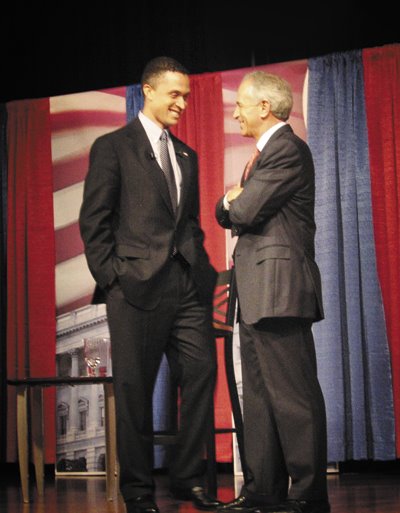
There is one thing that I miss about being in Tennessee right now -- the Senate race between Bob Corker and Harold Ford, Jr. They are neck and neck and the balance of power in the Senate may well turn on the outcome of this single race.

And it looks like there's some great advertisements going on. This one is easily the best -- an attack ad against Ford by the RNC. Ford and his supporters claim the ad is racist, and the accusations have stuck enough that the RNC pulled the ad from broadcast, but frankly I just don't see it. It's really funny.

Now, if Ford really wants to play with the big boys, he needs to learn how to respond to something like this with a punch in the mouth. Wonkette apparently did that on his behalf, this time.

Damn, this is good stuff.

Stephen King Would Approve.

Stephen King wrote in his lengthy essay on the craft of writing fiction, Danse Macabre, that terror is the purest emotion, because it captures the entire mind and emotion of a person. If he can't terrify his reader, he would like to at least horrify his reader with a sense of danger and fear. And if that doesn't work, he'll go for the gross-out.

This story would surely qualify as belonging somewhere in that pecking order. I don't know if my favorite line is "Those fluids can be very flammable ... Sort of like a grease fire" or "The crematorium is back in business and the funeral director said they'll notify the family to assure them their loved one wasn't harmed."

Terrifying? Probably not. But this is at least a gross-out.

Student Loan

I'm taking a short break from grading papers for my recently-concluded online classes and going through some bills that came in the mail today. I notice that my bill for my student loan is unusually low. So I scrutinize the bill and discover that the amount due is equal to the account balance.

This is not an accounting peculiarity. It means that I have finally paid off this student loan! I'd been paying it aggressively for about a year -- more than the minimum balance every month. That's two down, one more (the consolidation loan) to go.

The last one will take a while unless I come in to some money suddenly and can't think of anything better to do with it (like buy a house) but it's also the one with the most gentle interest rates, so the smart thing to do is pay it off slowly since there won't ever be cheaper money than that loan.

All the same it is a nice thing to have that particular weight taken off my shoulders. With the high cost of living in California, having one less bill to worry aobut each month, and another item out of my debt-to-income ratio, is an unvarnished good thing.

October 25, 2006

The Politically Incorrect Richard Dawkins

There are fewer better explainers of evolution than Richard Dawkins. There are also fewer bigger critics of religion than he, and perhaps it's no wonder. No field of science has been attacked more directly, consistently, or successfully than evolution in recent years so it's unsurprising that someone who had decidated his professional life to understanding and advancing that field of knowledge would feel besieged.

I just watched a ninety-minute piece that Dawkins made for the BBC going outside of Dawkins' own field of scientific inquiry (evolutionary biology) and exploring the role of religion in Western society. You can see them here, in two parts -- part one is called "The God Delusion" after his most recent book, and part two is called "The Virus of Faith." Unfortunately, the last segment is cut off about halfway through, although you can get a good sense of where he is going with it before it ends.

Those among the Loyal Readership who adhere strongly to monotheistic religions should be warned. These videos will make you mad. Not only does Dawkins take the (I think) unremarkable position that people without a belief in God are every bit as moral and compassionate and interested in building a good society as theists are, but he goes so far as to suggest that quite often, belief in God gets in the way of morality and in some cases, provides a moral whitewash for things that are downright evil.

The title of the series, according to some sources, was not Dawkins' idea and he claims to have objected to it. I suspect he would have preferred to have used the title of his book rather than the title assigned to the series by the BBC, which suggests that there are limits to even his tolerance for confrontational rhetoric.

But, there is a telling moment early on in the show. Dawkins is accused by a minister in Colorado of arrogance, and I think the shoe fits. (The minister, himself, comes off as wanting in humility, too.) For all of his professing that science and a rational approach to life is fundamentally humble and anxious for being proven wrong, he spends very little time offering a defense for what he proposes in discussions of issues like evolution, Biblical inerrancy, political and individual freedoms, and the morality of (for instance) abortion. He proceeds instead as if it were a given that he was correct, which is not a particularly productive stance to take if meaningful dialogue is the objective. Rather, Dawkins often appears to be picking a verbal fight for the sake of getting good copy on camera. Granted, the subject of his documentary is not evolution but rather religion and morality; there is no pretense that this documentary, like any other, is unbiased and neutral in its approach to its subject. All the same, the discussions of evolution and faith left me wanting more on that subject and less attempts to protray obviously intelligent people who disagreed with Dawkins as rubes and hucksters because they drive big American pickup trucks.

He also seems to have selected outrageous or extreme examples of the religiosity which he so roundly criticizes. For instance, he found an American Jew who moved to a kibbutz in Israel and then converted to Islam -- who launched into a virulent attack, full of hate and ignorance and religious zeal against the sexual excesses of Western society and the moral intolerability of atheism. While Dawkins claimed to have been surprised by the man's attitude during their interview, that seems a little bit facile. The recent convert, and particularly a convert who has undergone so extreme a religious transformation, is bound to possess very strident views.

One thing that Dawkins described, while visiting another fundamentalist Christian church in the United States, is a phenomenon I had never heard of before -- the Hell House. Terrifying and somewhat gory portrayals of various kinds of politically unpopular sins, like abortion or gay marriage, are enacted in a live stage format that is intended to terrify the audience. An actor with an outrageous stage presentation and flame-red hair to play the role of Satan, gleefully refusing to let a woman who changed her mind about getting an abortion up from the operating table where her womb was being mangled, and presiding over a marriage ceremony of two women smirking at one another. He forgot one of his lines about how evil homosexuality was an had to be cued by the pastor, breaking character. The pastor organizing the Hell House Dawkins toured quite freely admitted that he hoped that children as young as twelve would come see the show and be scared, horrified, even terrified into accepting Jesus as their saviors and following the moral commandments of the Bible as a result of what they had seen. Dawkins called this "child abuse." It's worth a view to decide for yourself if the pastor or Dawkins hit the nail closer to the head.

Now, I must admire Dawkins for not conceding the point that atheists are any less moral than theists, he also did not give these people much of a chance to explain why they believe what they believe. He also mentions, in several places, that he believes that most of the people he has spoken to are well-meaning and that not all practicioners of religion are so extreme in their expressions of faith. But his concessions ring hollow as the soundtrack plays Elvis singing "Onward, Christian Soldiers."

In apparent effort to demonstrate that America is a more diverse land than a country of Christian fundamentalists, Dawkins also attends a meeting of "freethinkers" which reminded me in tone and content very much of the group in Tennessee that I enjoyed participating in so much. In that sense, it made me miss many of those friends from Knoxville. But it also made me think of my religious friends from Tennessee, none of whom seemed to have any of the really unpleasant or disturbing qualities of the people Dawkins interviewed. More than anything else, having the experience of knowing these people makes me question Dawkins' choice of interview subjects.

Dawins did interview a "moderate" Anglican priest, and shot some of his most pointed criticism at this man and notes ironically that his criticism of the religious moderates is the same as that of a religious fundamentalist. If you're going to claim to believe in a religion and miracles and God and all of that, don't do it by half measures. After all, how are we to pick and choose what parts of the Bible are real and what parts aren't; the Bible is either true or it is not and nothing in the Bible gives the reader a guide as to how to segregate putative allegories from putative literal reports of historical events. Just because a religious moderate says or believes something that is generally pleasing does not make it either logically or theologically correct.

Of interest to anyone is the way that overtly anti-religious propaganda reflects on its subject. Intellectually, Dawkins' special did not cover any new ground in my thinking or knowledge, at least not for me -- although he did present some of the arguments in a very direct and in-your-face way that seemed almost calculated to offend and shock people of faith. This seems new to me, both in its overt disapproval of all religion as well as in its confrontational tone.

While at the end of the day, I agree with the bulk of Dawkins' message, I really wish he had found a more respectful way of presenting that message than what was on the BBC special. If you're interested in Dawkins' ideas but would prefer to see them expressed in a more humorous and less confrontational format, you might want to consider his book plug on the Colbert Report. The Colbert interview wound up being more about evolution than religion anyway.

October 24, 2006

Gritty Realism

I'm reading Dan Brown's Deception Point right now. I'm unimpressed with the realism. Supercruising planes landing on glaciers, a rather callous disregard of national boundaries, juvenile politics, patently silly escapes from certain death, ice guns, the Aurora project, and and super-micro-robots. It's a reasonably entertaining suspense story, but it lacks the verisimlitude of Angels and Demons. And I'm also pretty sure I've already figured out who the bad guy is after about halfway through the story (which was about when I figured out who the Teacher was while reading Da Vinci). But, the story is well-structured and tense -- and cinematic in its imagery and breathless pacing. I suppose I could do worse than pattern my own writing after this -- Dan Brown's obviously shallow potboilers have made him a very, very rich man.

October 23, 2006

Role of Parties

For better or for worse, America has a two-party system. As one commentator pointed out recently, this is not likely to change for the foreseeable future. Assuming that the Democrats re-take control of Congress, about all we're promised is a bunch of TV fluff and a hike in the minimum wage.

But what the New York Times wrote about today is really kind of old news. Particularly in the West, but really kind of everywhere, people are more and more saying that they "vote for the person, not the party." One wonders whether this is really a good voting strategy, or even any kind of strategy at all -- and it certainly doesn't do anything to send a message to the recently-elected leaders about what it is that the voters want out of their government other than appealing personalities.

We can whine all we like about how things would be better if there were five or six parties -- a moral-values party, a labor party, a libertarian party, an environmental party, and so on. But from there it's a short step to ethnic and religious parties, and all of a sudden we start being Israel. And that's not the vision of political stability that our Founders had in mind for us -- an Italian-style government paralyzed by having to continually remake itself with ever-shifting coalitions is even less efficient than we would otherwise tolerate.

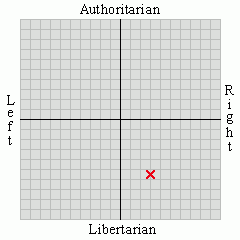
But the big problem with a two-party system is polarization and oversimplification. Too often we have to distinguish between "libertarian Republicans" and "religious Republicans" and "establishment Republicans" and "tax hawks" on the one hand and any of about twenty flavors of Democrat on the other hand (although the "Dixiecrat" of yesteryear is definitely a dying breed).

I'm also mindful of my experiences living in two states. In Tennessee, party identification is a combination of a person's heredity, views on abortion, and zealousness about guns. In California, economics, race, and a vision of the proper role of government are bigger issues. Where Democrats in Tennessee were reasonably palatable to me, there are very few Democrats in California who I would even flirt with the idea of lending even a vote to. For instance, Phil Bredesen seemed to be doing a reasonable job as Governor and the collapse of TennCare cannot be laid at his feet (although his failure to rescue it can). I've no idea if I would have considered voting for Harold Ford or not; Bob Corker doesn't seem to be a particularly attractive figure to me.

Moreover, the relative parity between the parties seems to keep the balance of power such that the will of the voters gets enacted most of the time. The result is actually one of the more libertarian states in the East despite significant power-holders from both parties anxious to impose their vision of the world, through government power, on the rest of the state. (Query, however, whether the state's libertarian skew in government policy is the result of actual voter preference or the necessity of a government starved for money by the absence of an income tax.)

Here, though, I find my feelings are different -- in no small part because I know very well what happens up in Sacramento when you elect Democrats into power. Taxes go up, quality and quantity of public services decrease through the mechanism of corruption and bureaucratic inefficiency, and individual freedoms decrease through increased regulations and enhanced gerrymandering. California confronts some significant problems and there is a role for the government; no one else is going to protect the environment, for instance. But the fact of the matter is that Californians are not under-taxed, they are not under-regulated, and they are not able to cast meaningful votes because there are almost no competitive districts at any level in the state.

So as I recently contemplated when looking at my absentee ballot, it doesn't matter much that I've grown disenchanted with the Republicans. Here in California, there just isn't any real alternative for me. The Democrat running for Assembly here, for instance, has said a lot of things in the local media that appeal to me. But it doesn't matter and I know it. This is a safe, secure Republican district because it was drawn that way. The Democrat just doesn't have a chance -- and even if he did, he and his apparently moderate points of view would be absolutely swallowed by the far-left wingnuts and any pretense of reasonability will vanish -- unless there is a Republican governor to exercise meaningful veto power.

If you are in the United States this November, you've got two realistic choices. (Even in Connecticut, where your choices are Joe Lieberman and Ned Lamont; the Republican in that race is a nonentity who might as well be a Libertarian or a Green.) Certainly you should pay attention to the personality of the person in question. Obviously you should consider the issues that matter most to you. But don't ignore the "D" or "R" after the person's name. It matters.

The Field Narrows

I suspect that this will help Phil Angelides more than Arnold Schwarzenegger. Seriously, how many of her voters were going to vote Republican otherwise?

But, um, I'm still thinking that we're going to see the Governator re-elected.

October 22, 2006

The Crux Of The Problem

As my good friend at the Valley Press points out in an unsigned editorial (that I know perfectly well he wrote) it's clear that the Republicans in the Administration have made a bloody, awful mess of things. But no one has yet explained how they could have done better.

With just over two weeks to go to the mid-term elections, the Republicans stand on the brink of losing Congress as a result of the terrible job they have done running the economy (which actually is not terrible despite an enormous deficit) and running the war. A war which, as was pointed out to me this morning at breakfast, has now lasted longer than the formal definition of America's involvement in World War II. Things have gone so badly that it's clear that the Republicans have lost their mandate to govern.

But the Democrats simply don't deserve to win -- because they haven't come up with anything better. They haven't been able to identify any singificant strategic mistake that the Republicans have made. They haven't been able to point to any policy or decision which, once the war started, they would have made differently. Sure, some of them wouldn't have gone to war with Iraq in the first place and maybe that was the right decision at the time. But since we've done it, and a lot of Democrats thought it was a good idea to go to war too, it's a bit late to be arguing about that now.

So the crux of the problem is that no one really knows what to do. Our alternatives seem to be 1) keep on doing what we're doing (a strategy otherwise known as "stay the course"), 2) immediately pull out and bring our troops home, 3) escalate the extent of our occupation of the government, removing the facade of setting up a democracy, or 4) something that no one else has thought of yet. If anyone can think of what exactly option #4 might be, please feel free to leave a comment -- because numbers 1-3 all look like poor ideas.

October 21, 2006

It's Not Just Here

Turns out one in five schoolchildren in the United Kingdom does not have the ability to locate the United Kingdom on a map. For a long time, we've been bemoaning the lack of education in the United States.

I suppose it's comforting that it's not just American schoolchildren who cannot find their own countries on a map. I suppose it also is useful to deflate the myth that people with British accents are necessarily smart.

But really, it's kind of sad. It's a map. You are on it, somewhere. Knowing where on the map you are is a good thing and it's worth the time to figure that out.

Big Boxes

Is Target better than Wal-Mart? Oh, come on, do you have to even ask? I have had every single experience this guy complains about.

Of course, there's still nothing like Trader Joe's anywhere. Tomorrow The Wife and I need to go do some shopping and if we can avoid Wal-Mart altogether I'll count myself very lucky. TJ's, Petsmart, and the supermarket. And for other stuff -- I'm voting Target.

Speaking of Cleanliness

I've sort of noticed this phenomenon, too, although not really to the degree that the Times describes. When I've last flown, the planes have been reasonably clean. Of course, my last flight was on Midwest Express, which might be a small enough airline to fall under the radar screen of these kinds of surveys.